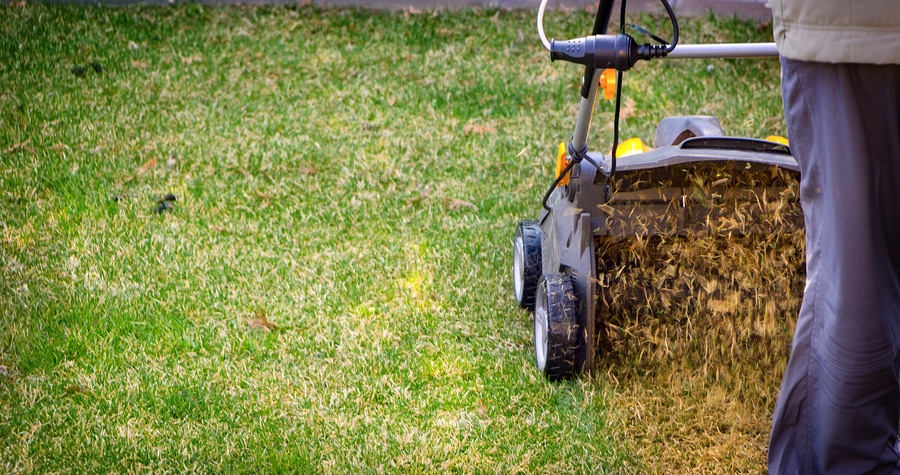
Aeration or “core aeration” is the practice of punching small plugs or cores into the lawn in order to create openings in the turf to allow water and air to penetrate the soil. Overseeding your lawn is the process of planting new grass to fill in any bare or worn patches. Our team at Nature’s Select® wants to help you use both essential practices to maintain a healthy lawn all year long.

Why Aerate

There are many benefits to aerating your lawn, the first of which is more productive irrigation. On an aerated lawn, water penetrates more deeply into the soil, creating a deeper root system that is much more tolerant of drought. Additionally, an aerated lawn is more resilient. Because of the additional oxygen in the soil, the roots will be thick and healthy, making the blades thick and healthy too. Finally, earthworms will thrive in an aerated lawn, moving through the soil and benefiting it with their tunneling and castings.

Why Overseed

By overseeding your lawn, you're able to fill in the bare spots with new grass to strengthen your entire lawn. By creating a thick and uniform bed of grass, you increase its resistance to unwanted pests and weeds.

When to Aerate and Overseed

The best time to aerate and overseed is the fall, when the temperatures have cooled off and the grass is still actively growing, usually late August or September. Because weed seeds tend to germinate in the spring, aerating actually encourages their growth; therefore, it's best to wait for the time when the weed pressure has lessened. Finally, it's important to remember to aerate before overseeding in order to let the new grass roots penetrate deep into the soil.

Call in the Experts

Nature's Select® offers an unbeatable combination of expert lawn aeration services and competitive pricing. To start building a healthy lawn, contact us today at (888) 786-9735 to request your free estimate. We serve Winston-Salem and the surrounding areas, including Pfafftown and Clemmons.


Sources: The Spruce, Lush Lawn

newlyselected

Recent Posts

3 Signs of Brown Patch Disease in Your Lawn

Discover the signs of brown patch disease in your lawn and learn how Nature's Select…

4 days ago

Why Your Lawn Has More Dandelions Than Neighbors

Discover why you have more dandelions in your lawn than your neighbors and how Nature's…

1 week ago

Fungus vs. Insect Damage: How to Tell What’s What

Learn to distinguish between fungus versus insect damage in your lawn with Nature's Select -.…

2 weeks ago

Pre-Emergent for Annual Bluegrass: Timing & Best Practices

Annual bluegrass has a way of sneaking into a lawn like an uninvited party guest…

1 month ago

How to Tell if Dichondra Is a Weed or Feature

Dichondra is one of those plants that keeps lawn people arguing in their heads. One…

1 month ago

Why Grubs Love Grass Roots

Grub damage often shows up fast and under your feet: spongy turf, thinning patches, or…
2 months ago