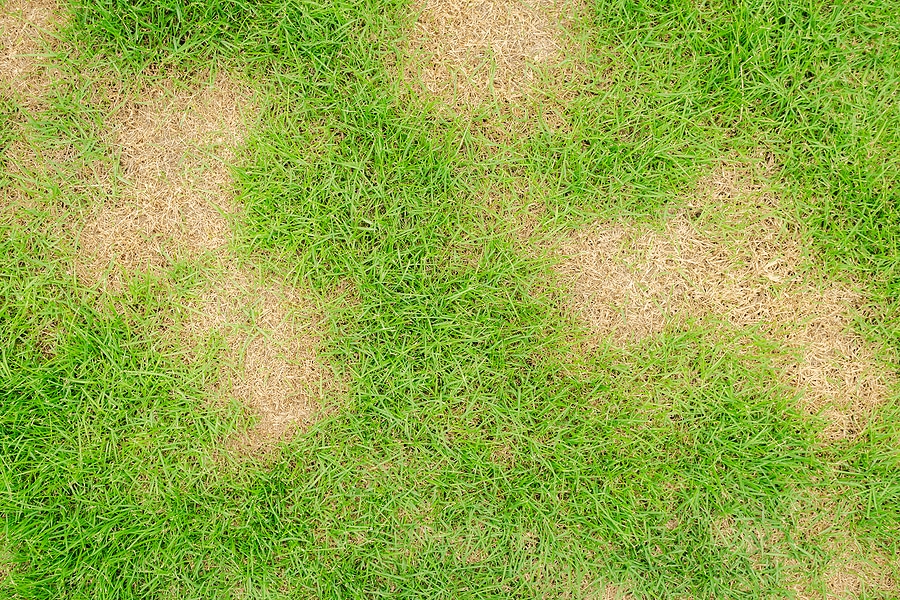
All homeowners want the same thing: a beautiful, lush, green lawn to admire. That’s why there is nothing worse than a bare spot appearing out of nowhere. Ideally, you already have a professional lawn care team to prevent these situations. If not, continue reading to learn more about bare spots on your lawn from the experts at Nature’s Select®
Even if most of your lawn is lush, green, and healthy, it's possible to develop bare spots in small areas. These spots may be caused by heavy foot activity, poor soil conditions, pet urine, grub infestations, chemical spills, fungal diseases, buried rocks, or a number of other things. There are several methods for successfully covering these bare spots, but it's crucial to recognize and deal with the root of the issue in order to prevent your lawn from experiencing the same issue again.
Really, it all depends on the kind of grass you have. If your lawn is made up of Kentucky Bluegrass, Bermuda Grass, Zoysia Grass, St. Augustine Grass, or Creeping Red Fescue, you might be in luck. These grasses can grow sideways and eventually cover any bare spots that may have appeared in your lawn because they have runners, or vine-like stolons, above ground and stem-like rhizomes below ground.
It's time to fix the damage after you've located and dealt with the source of the bare spots. As seeds germinate in the fall to sprout in the spring, you would typically only plant in the late summer, in the months of August or September. However, in the case of bare patches, we advise seeding the area immediately rather than leaving it exposed.
Nature's Select® offers our lawn renovation services to the Winston-Salem area. We also offer tree healthcare, pest control, and much more. Contact us today at (888) 786-9735 for a free estimate.
Your lawn is kind of like that friend who just needs a minute and somehow…
If your lawn could talk, it would probably ask for a healthier soil life, because…
Winter lawn care typically takes a backseat. But while everyone else is waiting for the…
Are you struggling to get grass to grow in your lawn? Sandy soil may be…
If you’ve ever walked out to admire your lawn and instead found the same stubborn…
When winter swings through, and your lawn suddenly looks like it’s gone into hibernation, it’s…