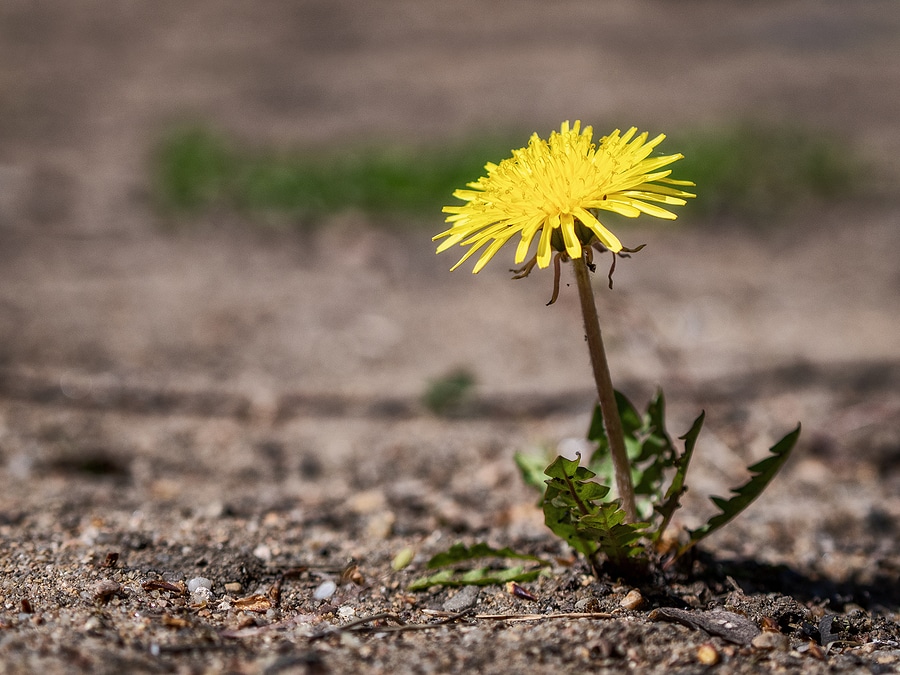
Ever wondered why you’re seeing more dandelions in your lawn than your neighbors’? It’s not a coincidence, but rather a sign that your lawn’s health might need a little boost. And guess what? Nature’s Select® has got you covered. Here’s why you’re seeing more of this weed in your lawn than your neighors.
Dandelions, like many weeds, are opportunistic plants. They thrive in conditions that your lawn might find stressful. Factors such as compacted soil, poor nutrient balance, or even mowing height can make your lawn a dandelion magnet. But don't fret, our lawn care plan is designed to give your lawn the care it needs to bounce back.
The soil in your lawn is more than just dirt—it's a complex ecosystem that your grass relies on. Improving soil health is a crucial part of our strategy. We analyze the soil, replenish depleted nutrients, and balance its pH to create an environment where your grass can thrive and outcompete dandelions.
Dandelions in your lawn tend to multiply rapidly due to their unique growth and reproduction patterns. Each dandelion plant can produce up to 2,000 seeds, which are then easily spread by the wind, animals, or even foot traffic. The seeds can stay dormant in the soil for years, waiting for the right conditions to sprout. This means that even if you think you've gotten rid of all the dandelions, new ones can appear seemingly out of nowhere when the conditions are right.
Understanding this process is key to controlling the dandelion population in your lawn. While it may seem like an uphill battle, with the right techniques and persistence, it's possible to reduce the number of dandelions in your lawn.
One of the most effective ways to manage dandelions in your lawn is to maintain a healthy, thick grass cover. This makes it difficult for dandelion seeds to find a place to sprout. Regular mowing, watering, and fertilizing can go a long way in maintaining a healthy lawn. However, be mindful not to overwater or overfertilize, as this can actually encourage dandelion growth.
So, if you're tired of seeing more dandelions than grass in your lawn, give Nature's Select® in Chapel Hill, NC, a call at (888) 786-9735. We're ready to help you transform your lawn into a lush, green, dandelion-free oasis. Don't just treat the symptoms—get to the root of the issue with us. Call us today for your free estimate.
Learn to distinguish between fungus versus insect damage in your lawn with Nature's Select -.…
Annual bluegrass has a way of sneaking into a lawn like an uninvited party guest…
Dichondra is one of those plants that keeps lawn people arguing in their heads. One…
Grub damage often shows up fast and under your feet: spongy turf, thinning patches, or…
Spring dead spot is a common turf disease that hits warm-season grasses and leaves patchy…
Your lawn is kind of like that friend who just needs a minute and somehow…