Nature's Select Logo
Fall overseeding for a healthy, dense lawn
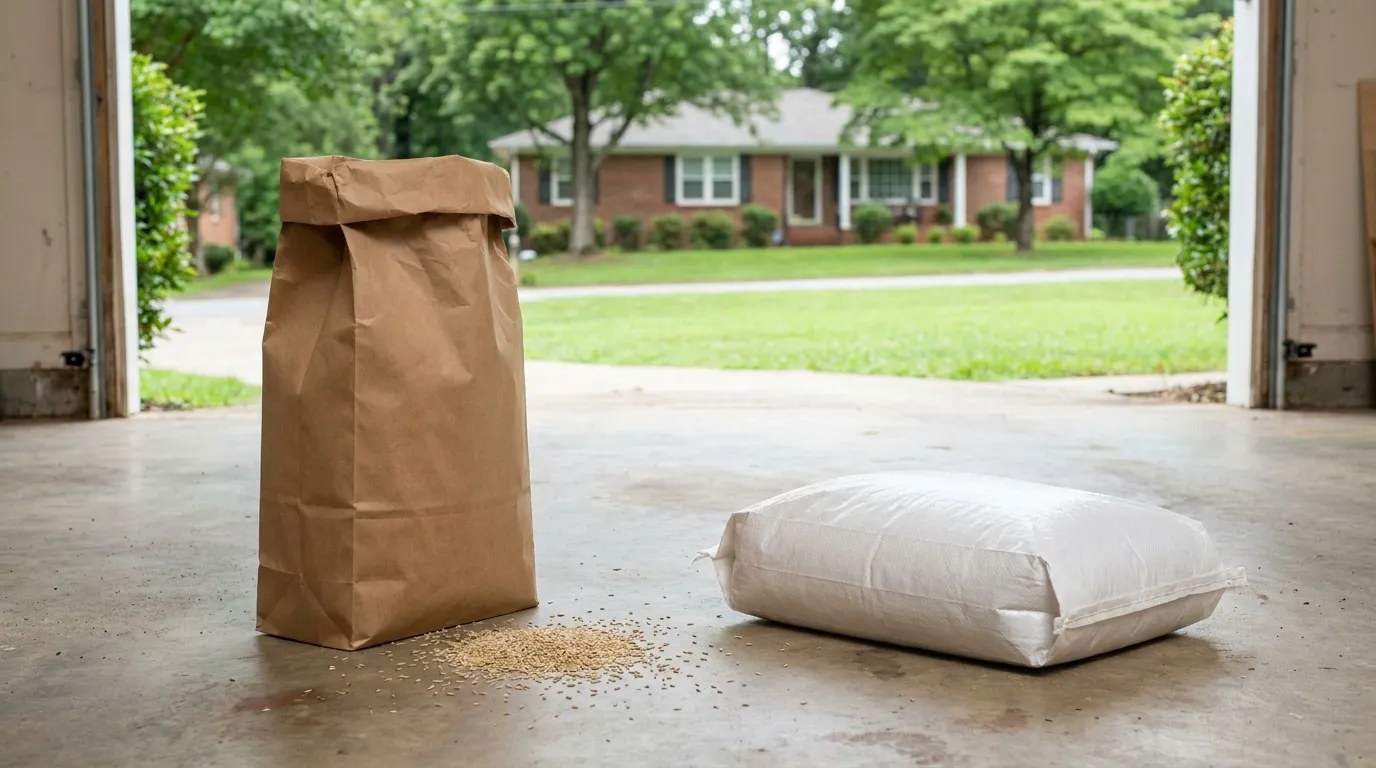
Pre-emergent herbicides stop seeds from developing into seedlings, and grass seed is a seed. Apply most fall pre-emergents, and you block your own overseeding for 12 to 16 weeks. The way out is to choose an active ingredient labeled for use at seeding, or to sequence the two jobs across the calendar. A cart rolls […]
September 21, 2026
18 minutes read
Read article →
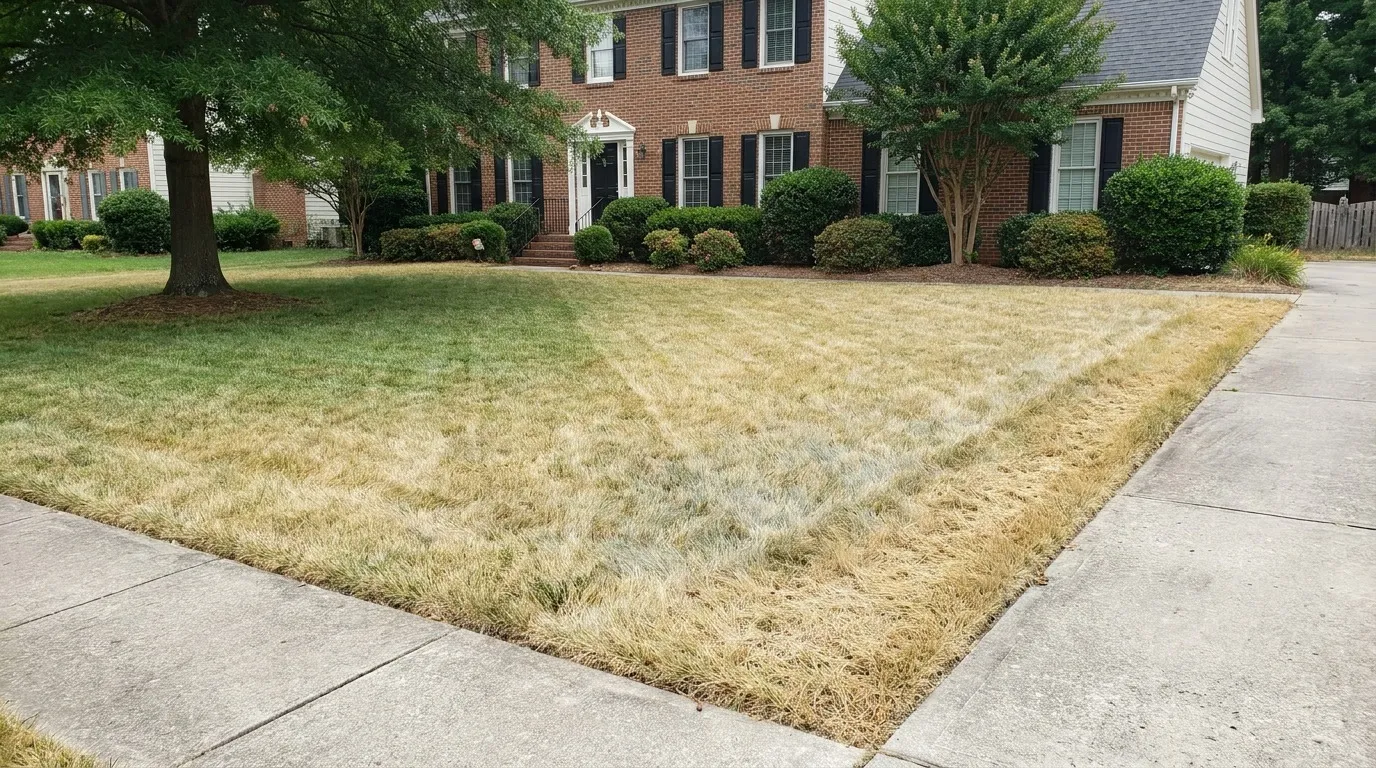
North Carolina residential lawn showing yellow summer stress patches in July heat, tall fescue diagnostic close-up
Your North Carolina lawn is yellowing in July because the transition zone breaks the rules cool-season and warm-season grasses were bred for. Tall fescue is signaling heat and root-zone stress; bermuda or zoysia is signaling nutrient, water, or disease pressure inside its peak growth window. The color shift is a diagnostic message about the soil, […]
July 23, 2026
10 minutes read
Read article →
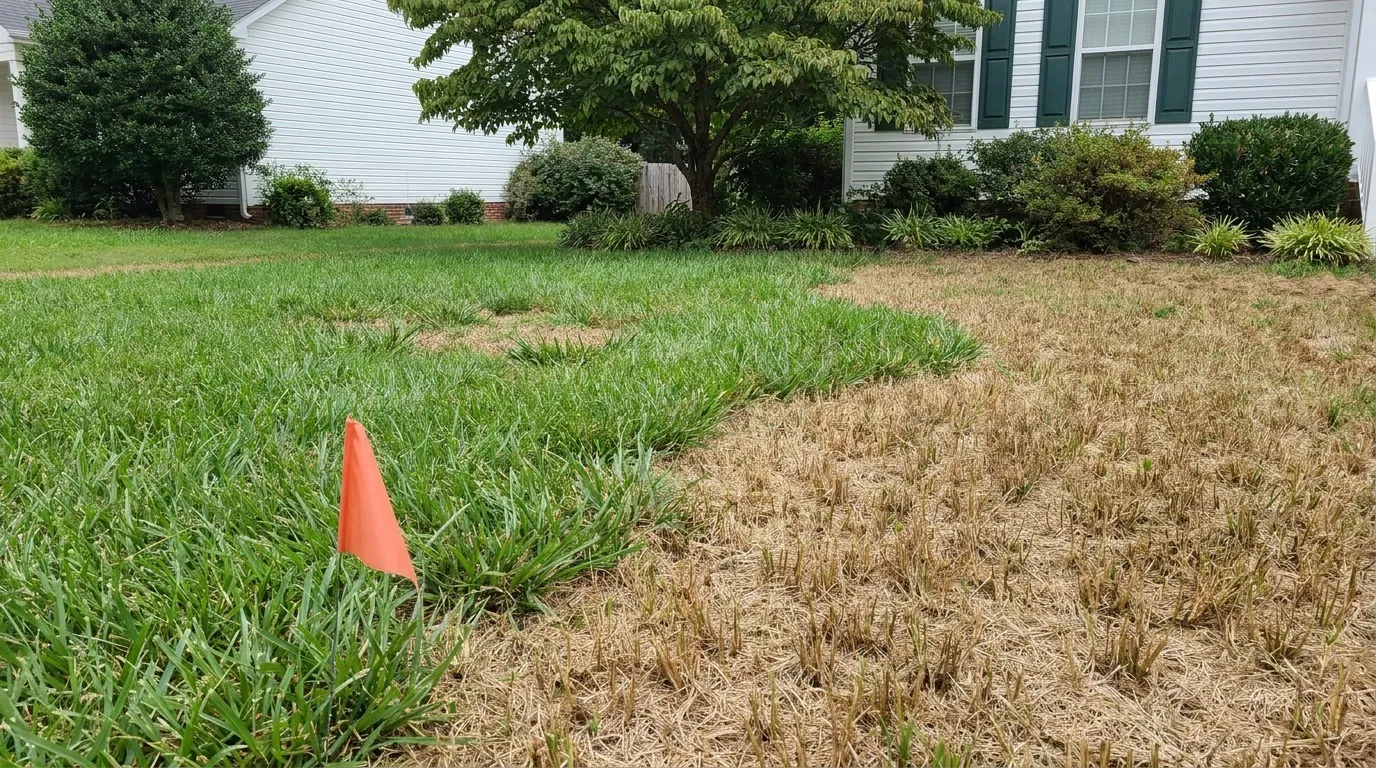
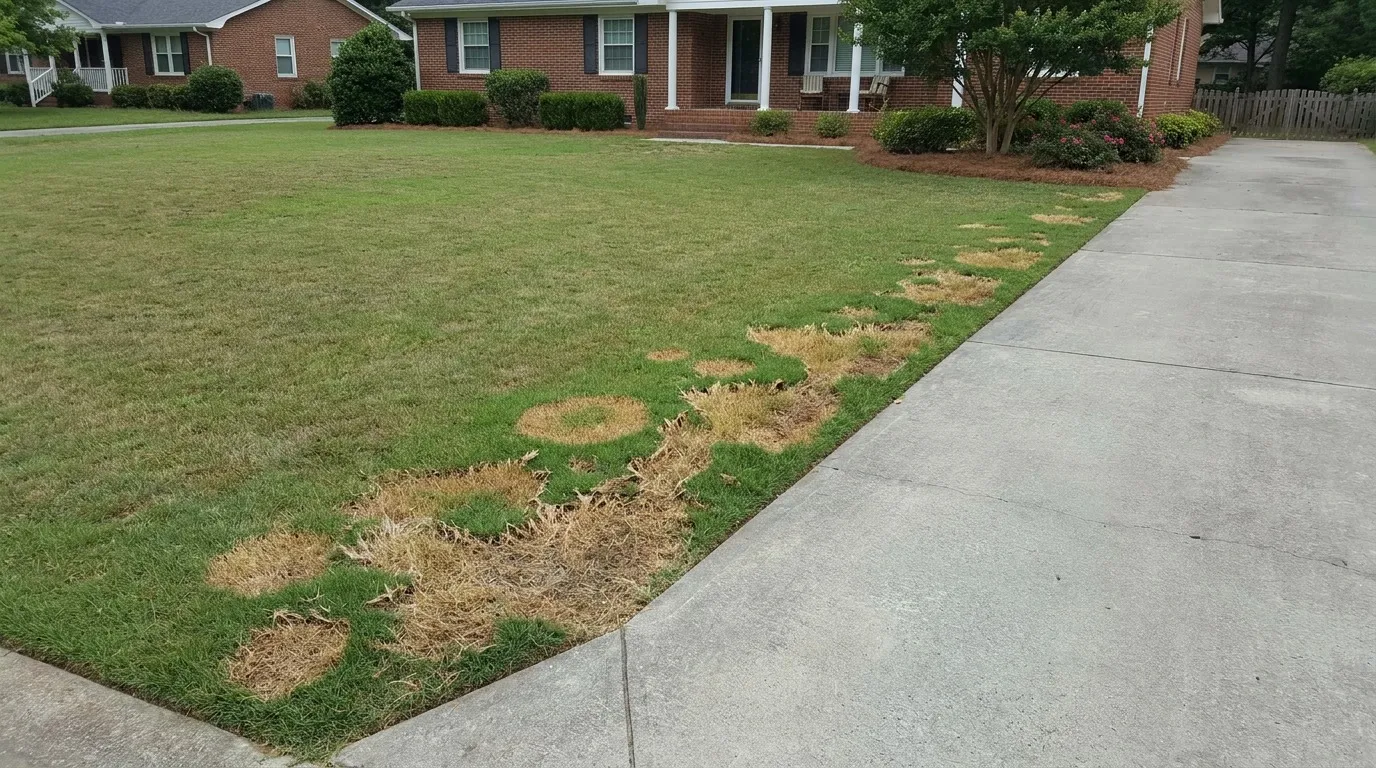
North Carolina lawn showing chinch bug damage in yellow patches along sunny driveway strip next to drought-stressed turf
Chinch bug damage and drought stress can look nearly identical from the driveway: yellow patches, brown edges, wilted turf. The tell is location and behavior. Drought damage spreads uniformly across a lawn and greens back up within 48 hours of a deep watering. Chinch bug damage clusters in the hottest, sunniest strips (often along driveways, […]
July 16, 2026
11 minutes read
Read article →
Weathered North Carolina red clay lawn edge showing the layered structure of Cecil-series soil beneath tall fescue turf in North Carolina.
North Carolina clay soil punishes your lawn because its microscopic plate-shaped particles pack together into a low-oxygen, low-infiltration layer that starves grass roots. What actually helps is a two-part fix: mechanical relief through hollow-tine core aeration, then a steady rebuild of organic matter through composted amendments and biological inputs. Over time, this restructures the soil […]
July 9, 2026
11 minutes read
Read article →
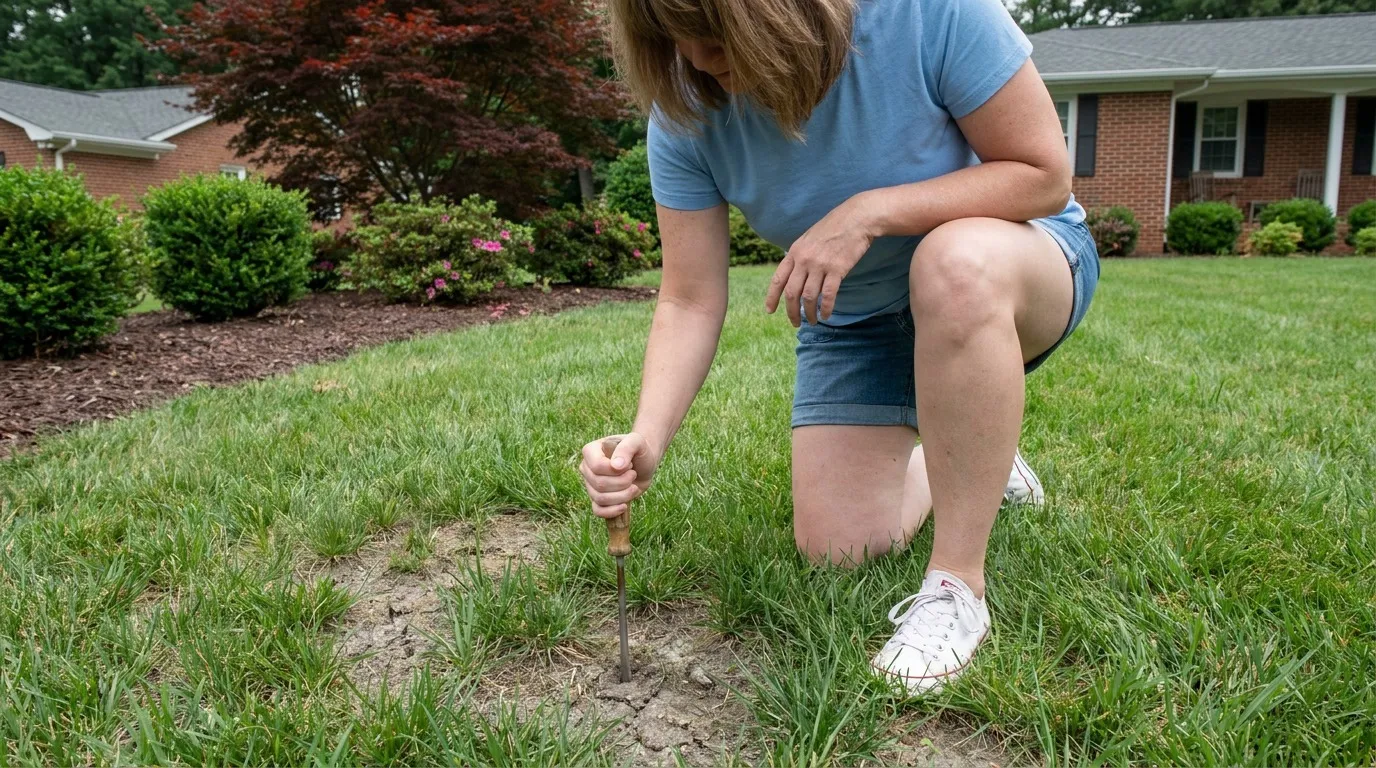
Homeowner performing screwdriver test for signs of soil compaction on a central North Carolina lawn.
The clearest signs of soil compaction are water pooling after normal rain, a screwdriver that will not slide six inches into moist ground, thinning turf even after fertilization, worn traffic paths and matted moss, weed pressure in the bare spots, and mower rutting on level ground. Three or more signs mean the soil structure has […]
July 2, 2026
10 minutes read
Read article →
Fall armyworm damage front on a North Carolina tall fescue lawn with the defined edge between healthy green turf and closely cropped brown feeding zone visible in morning light.
Fall armyworm damage on a lawn moves from invisible to devastating in 48 hours because the caterpillars feed at night in synchronized waves. A single acre can lose most of its leaf canopy in two days. Confirmation is fast: a soap flush at dawn brings larvae to the surface, and any count above two to […]
June 25, 2026
9 minutes read
Read article →
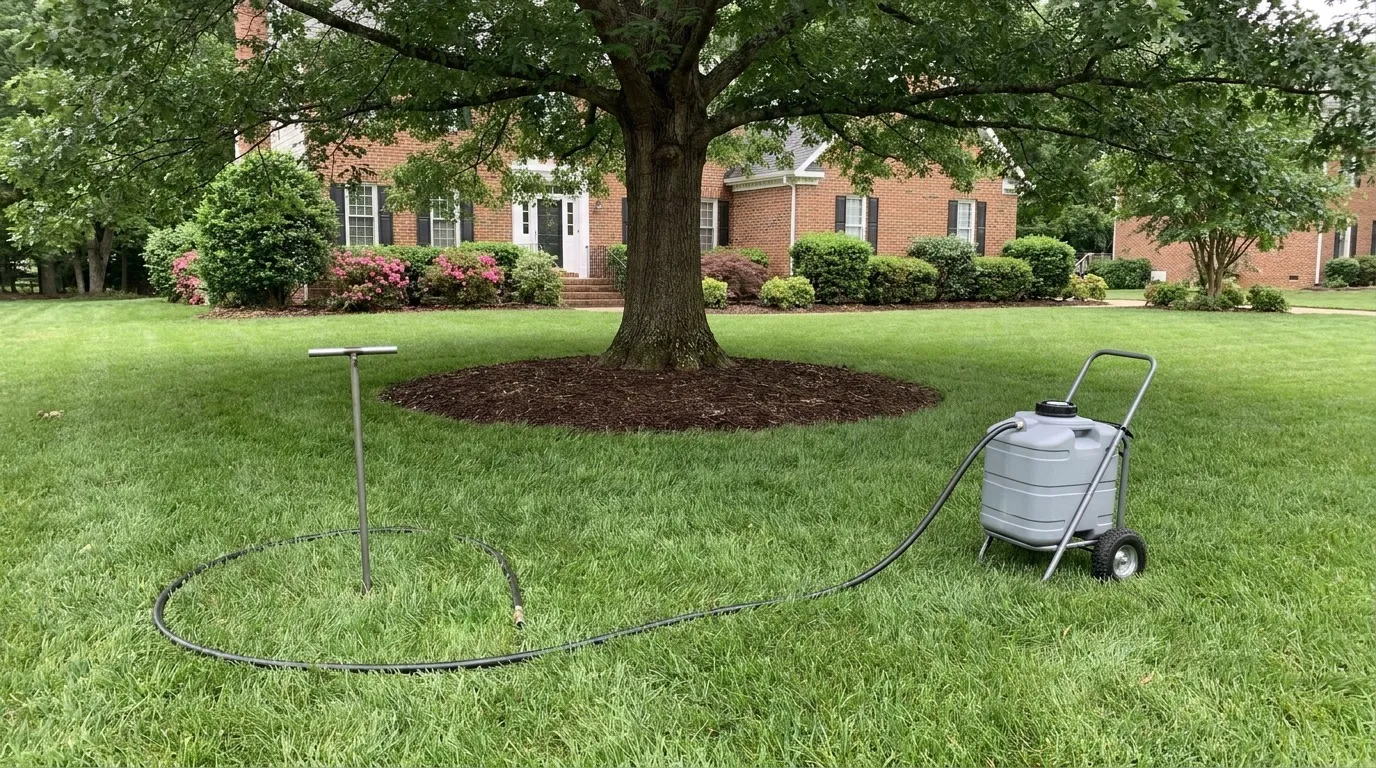
Deep root tree fertilization probe injecting biological nutrients into North Carolina clay soil beneath a mature oak canopy
Deep root tree fertilization delivers biological nutrients directly to the feeder root zone 6 to 18 inches below the surface, where a tree actually absorbs them. In North Carolina, dense clay soil compacts the top few inches so tightly that surface fertilizer rarely reaches those feeder roots. That soil reality is why deep root feeding […]
June 18, 2026
11 minutes read
Read article →
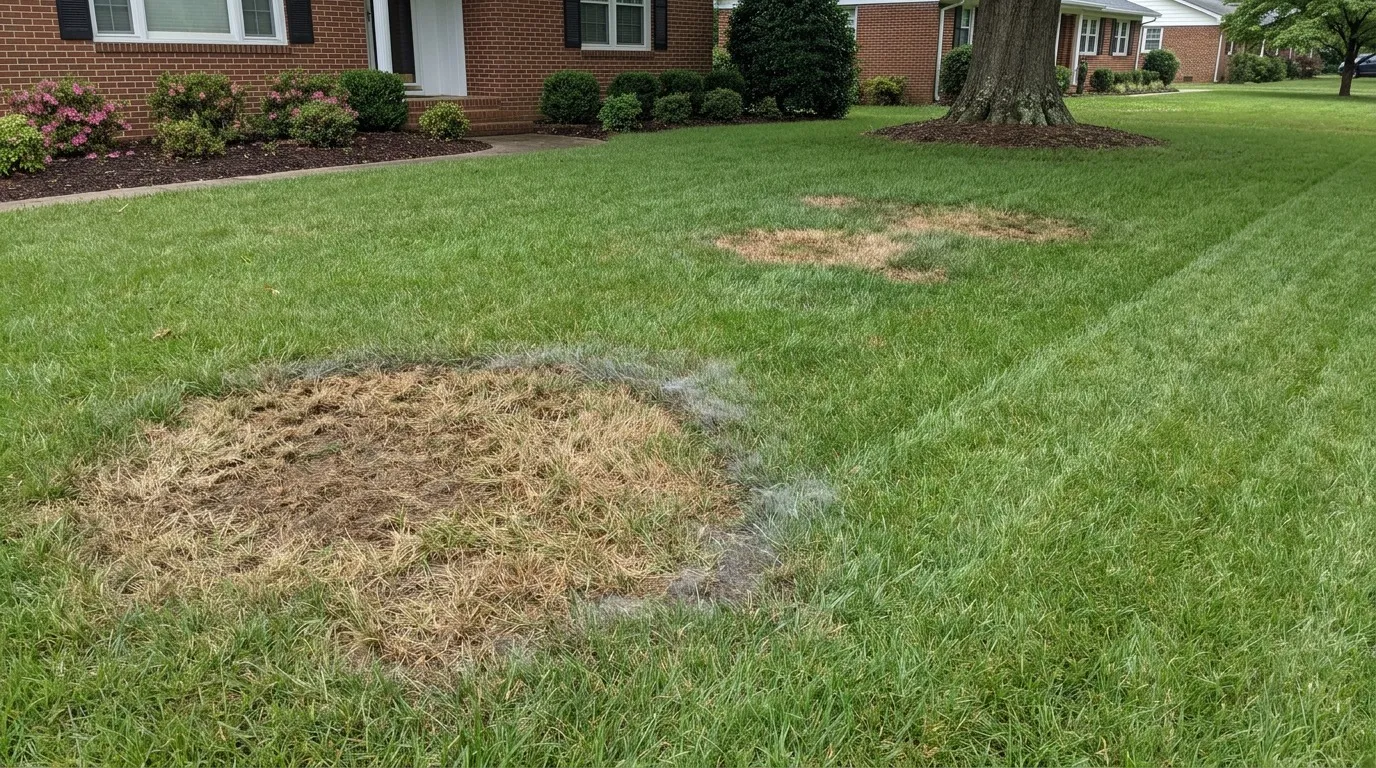
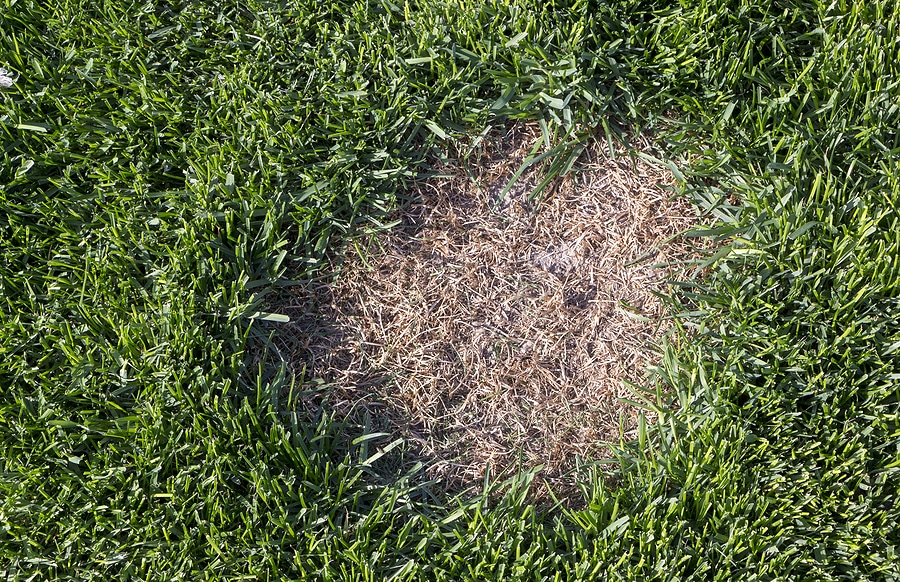
Brown patch disease in a tall fescue lawn, with circular tan patches and a gray smoke ring of fungal mycelium at the edge
Brown patch on tall fescue in North Carolina is caused by Rhizoctonia solani, a soil-borne fungus that turns active when night temperatures stay above 65°F and leaf wetness lasts more than 10 hours. That is why July feels like an on-switch: the pathogen has been in the soil all along, waiting for a specific combination […]
June 11, 2026
12 minutes read
Read article →
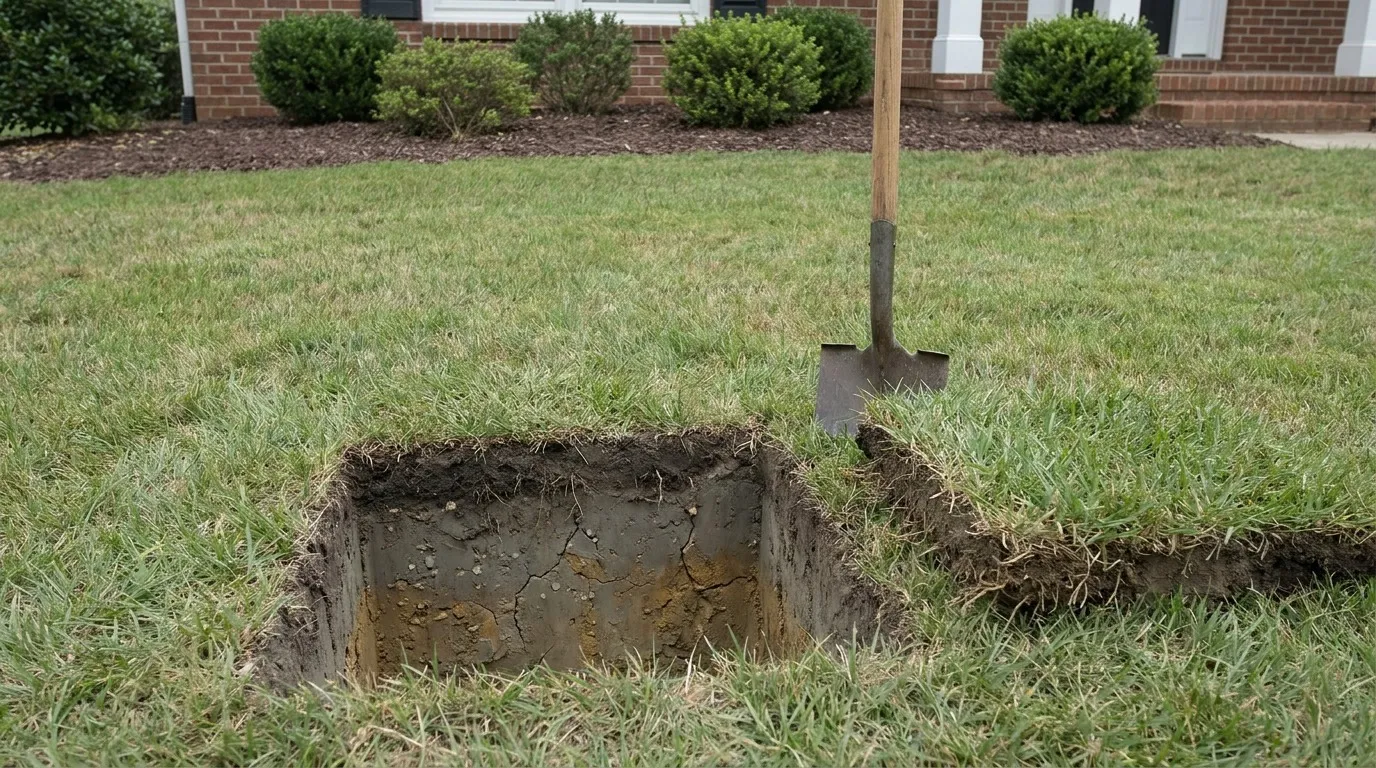
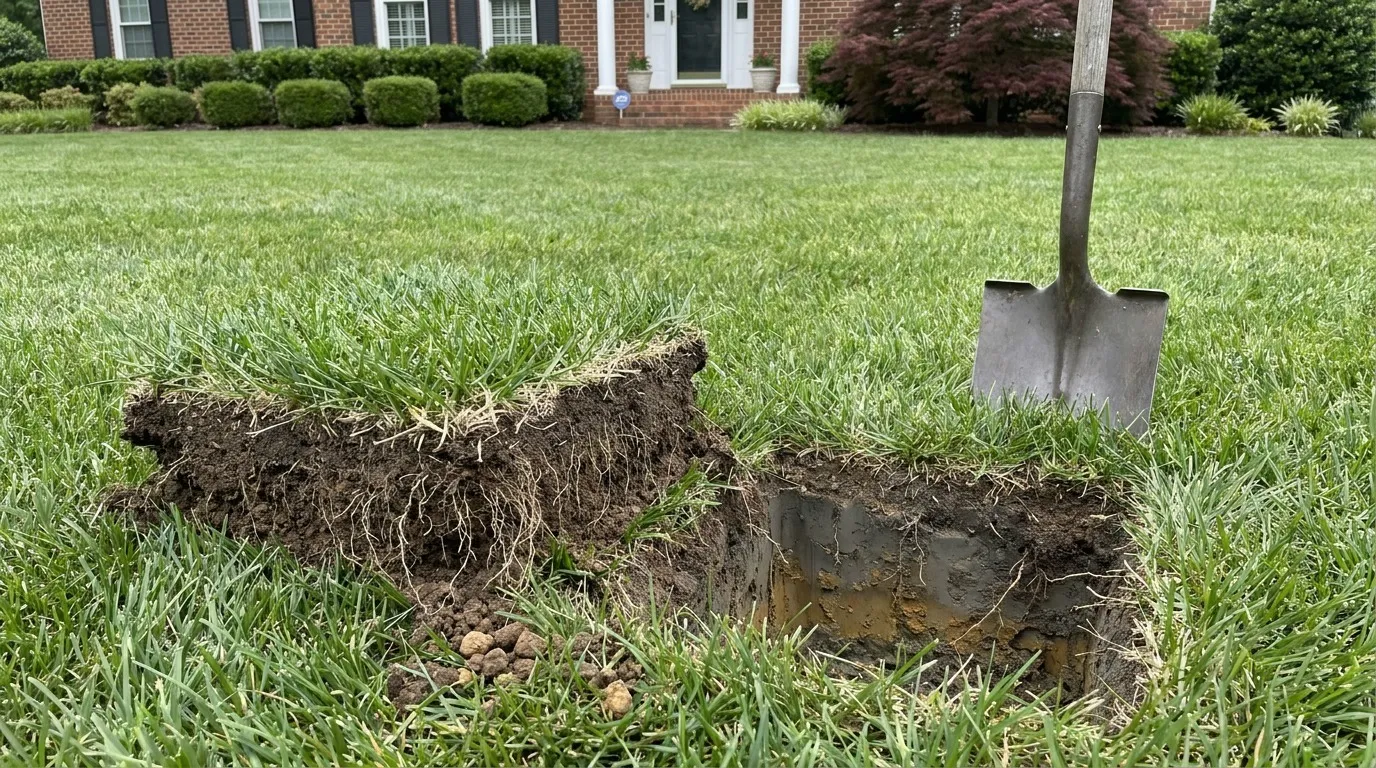
Lifted block of lawn turf showing grass roots and dark topsoil, the root zone where soil microbes live, beside a shovel
Healthy soil fights lawn disease through competitive exclusion, a mechanism in which beneficial soil microbes such as Trichoderma harzianum and Bacillus subtilis outcompete pathogenic fungi at the root and crown before disease can establish. A diverse soil microbiome suppresses pathogens continuously, while broad-spectrum fungicides often weaken the same beneficial fungi that would have prevented the […]
June 4, 2026
11 minutes read
Read article →
Most homeowners do not think about lawn disease until a brown patch appears in June and the grass stops responding to water. By that point, the disease has already been developing for weeks, often tracing back to conditions that were set in motion well before spring. Nature's Select® works with property owners across the region […]
April 29, 2026
2 minutes read
Read article →
You pull them, spray them, and dig them out by the roots — and two weeks later, they are back. If weeds in your lawn feel like a battle you cannot win, no matter what you try, you are not imagining it, and you are not doing anything wrong. The real problem is that most […]
April 28, 2026
2 minutes read
Read article →
userphone-handsetcrossmenu Skip to content