Common Lawn Diseases in North Carolina
Maintaining a healthy and vibrant lawn is a key aspect of a beautiful home landscape. However, there are a number of lawn diseases that can affect the appearance and health of your lawn. Four common fungal diseases that affect lawns are brown patch, gray leaf spot, red thread, and pythium blight. Understanding the symptoms and causes of these diseases can help you identify and treat them effectively. Continue reading to learn more from the team at Natures Select®
Brown Patch
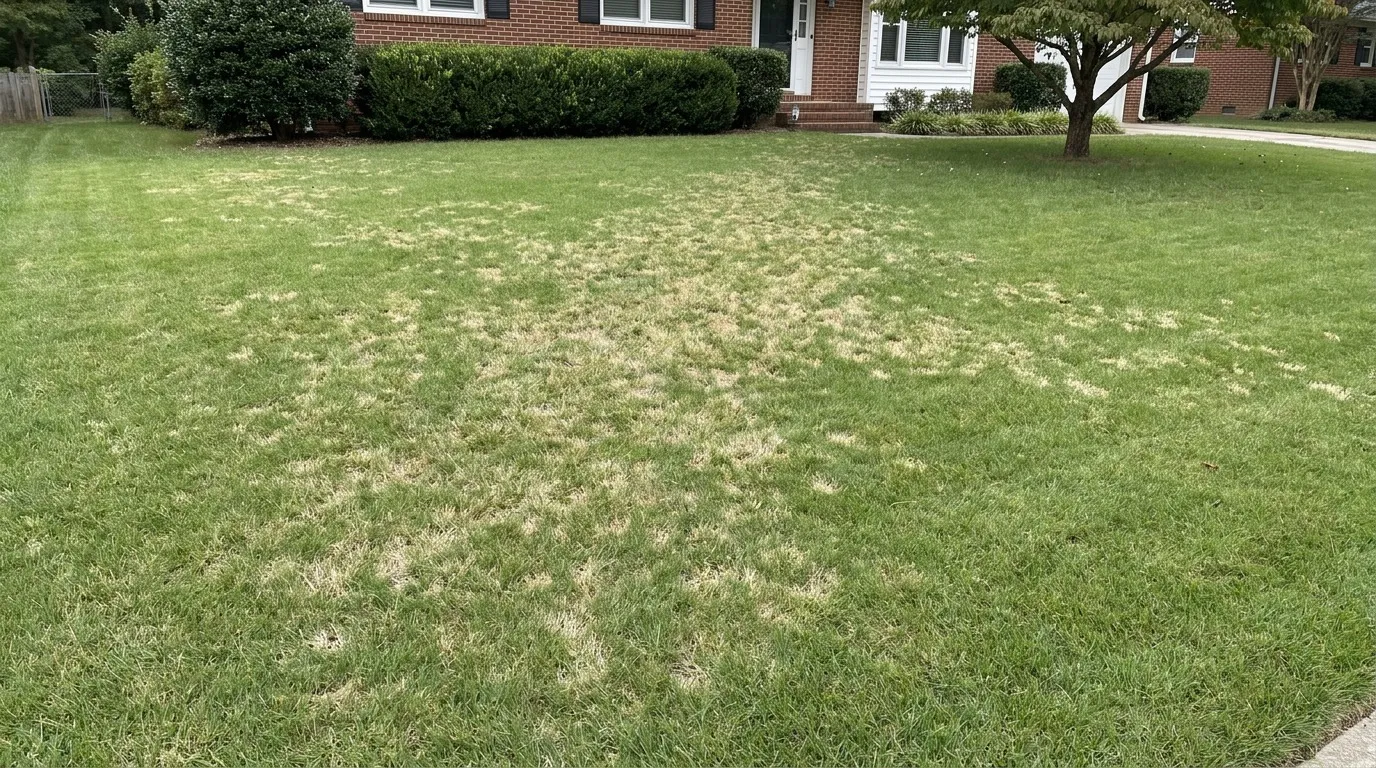
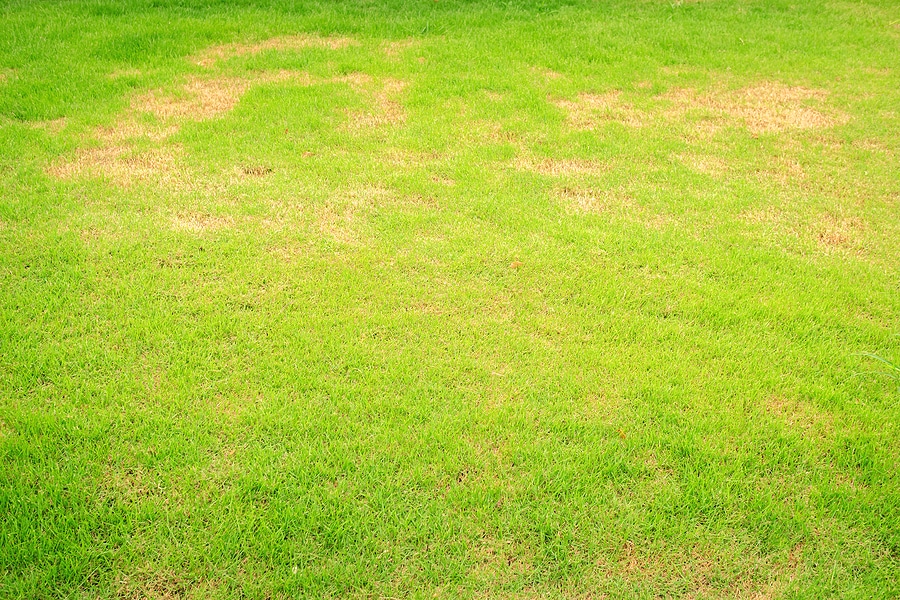
Brown patch is a fungal disease that typically appears in the summer months when the weather is hot and humid. It is caused by the Rhizoctonia solani fungus, which thrives in warm, moist conditions. The disease typically appears as circular patches of brown or tan grass. The patches can range in size from a few inches to several feet in diameter. The blades of grass in the affected area may be yellow or brown and can easily be pulled out from the soil.
Gray Leaf Spot
Gray leaf spot is another fungal disease that can cause significant damage to your lawn. It is caused by the Pyricularia grisea fungus and is most commonly found in lawns that are heavily fertilized and watered frequently. The disease typically appears as elongated gray or tan lesions on the blades of grass. These areas can eventually merge to form large areas of dead grass.
Red Thread
Red thread is a fungal disease that is most commonly found in lawns that are poorly fertilized and have a low nitrogen content. It is caused by the Laetisaria fuciformis fungus and typically appears as pink or red threads that can be seen on the blades of grass. The disease can cause significant damage to your lawn, but it is not usually fatal.
Pythium Blight
Pythium blight is a fungal disease that typically appears in the summer months when the weather is hot and humid. It is caused by the Pythium aphanidermatum fungus and can cause significant damage to your lawn if left untreated. The disease typically appears as circular patches of dead grass that can range in size from a few inches to several feet in diameter. The blades of grass in the affected area may be water-soaked and can easily be pulled out from the soil.
Prevention
To help prevent any of these lawn diseases, it is important to water your lawn deeply and infrequently, avoid over-fertilization, and improve air circulation by trimming back trees and shrubs. It is wise to hire a professional lawn care company to help. They will be able to test the soil, and properly combat any tough diseases.
Serving Winston-Salem, King, Kernersville, and the surrounding areas, Natures Select® is ready to make your lawn flourish. Contact us today to request a free estimate.