Frost and Its Effect on Your Lawn
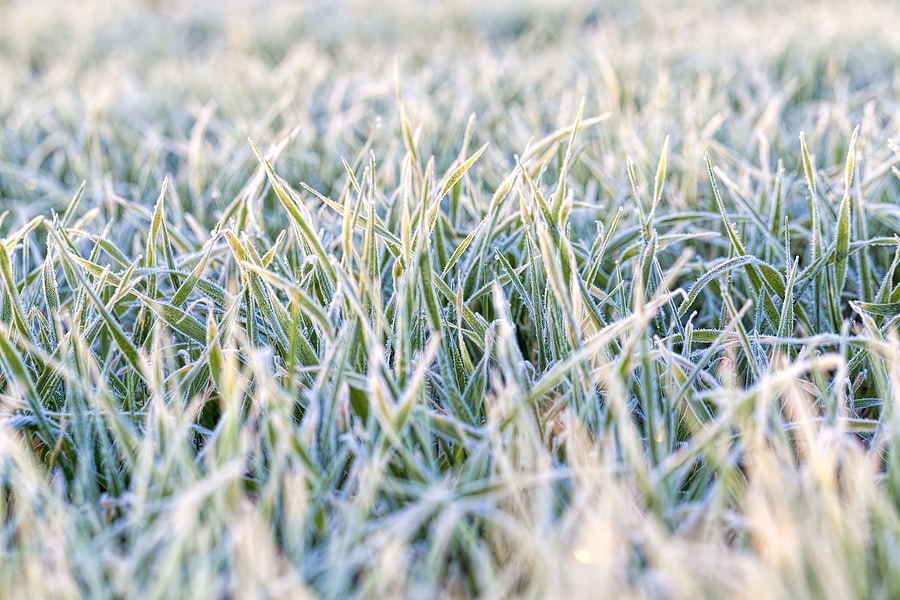
The first frost of the season is upon us and while it can be magical to wake up to those beautiful white tips of grass, you may wonder what it's doing to your lawn. Luckily, grass can stand up against frost as long as steps are taken to protect it. At {{company_name}}®, we use a trademark mix of essential grass plant nutrients, high quality weed controls, and organic and biological products, to protect your lawn year round.

Where Does Frost Come From?
Frost is water vapor that freezes when the outside temperature drops below the dew point. The dew point is when the water vapor or gas turns into a liquid because it is so cold; it forms on the grass and then freezes on the blades. This happens overnight as air temperatures drop, and you will notice that most frost will disappear mid-morning as temperatures become milder and your grass begins to thaw.
Can Frost Damage My Lawn?
Frost itself doesn't damage your lawn, but it does make your grass blades rigid and brittle, and therefore vulnerable. The easiest way to stop frost from damaging your lawn is to stay off of it when there is frost – and this goes for pets too! Grass blades that are walked on when frozen can split and break, and when your lawn wakes up again in spring, it can appear brown or dead.
What Else Can I Do?
Just like all living things, your lawn needs nutrients to fight off damage and disease. At {{company_name}}®, we use a winter fertilizer that provides a much-needed nitrogen source for the lawn. The cold weather months are the time of the year when food sources are stored in the root system of the turf in preparation for the spring growth explosion. Check out our lawn tips for more information about caring for your lawn throughout all the seasons.
{{company_name}}® is the one-of-a-kind lawn care service that goes root deep. We know that healthy lawns are beautiful lawns. Contact us at {{local_phone}} today to request your free estimate. We serve Winston-Salem and the surrounding areas, including Pfafftown and Clemmons.