Preparing Your Lawn for Fall in North Carolina

To prepare your lawn for fall, keep watering while the grass is still growing, mow at the right height, keep leaves off the turf, fertilize for your grass type and repair bare spots on time. Timing depends on your grass: tall fescue is fed and seeded in fall, while bermuda and zoysia get a light feeding or none at all as they head into dormancy.
Summer is over, and it's tempting to put the mower and hose away. But fall is when a North Carolina lawn sets itself up for winter and next spring.
Start by knowing what you're growing. NC State Extension notes that tall fescue is best adapted to the mountains and Piedmont, and it's the grass for a lawn that stays green year-round. Warm-season bermuda, zoysia and centipede grow across the Piedmont and Sandhills and go dormant after the first hard frost. The two types need different things in fall.
Fall Lawn Care at a Glance
| Task | Tall fescue (cool-season) | Bermuda and zoysia (warm-season) |
|---|---|---|
| Mowing height | 2½ to 3 inches in fall, about 3 inches in winter | Bermuda: raise ½ inch in mid to late September in the Piedmont. Zoysia: keep the normal height |
| Fertilizer | 1 lb of nitrogen per 1,000 sq ft in mid-September and again in November | Bermuda: ½ lb of nitrogen at most, low nitrogen and high potassium. Zoysia: no nitrogen, potassium only |
| Bare-spot repair | Seed September 1 to October 1 (Piedmont and coastal plain) | Wait for late spring, then sod, sprig or plug |
| Watering | About 1 inch per week, through fall and winter dry spells | Very little once dormant. Don't let the soil turn powder-dry |
| Aeration | Fall, on clay soils or high-traffic lawns | Late spring or early summer |
Continue Watering
Many homeowners stop watering once fall begins. For fescue, that's a mistake: fall is its main growing season, and the roots it builds now carry it through winter. NC State Extension recommends about 1 inch of water a week for tall fescue, ideally split up rather than applied all at once, and the same guidance applies to dry spells in winter.
Water until the soil is wet 4 to 6 inches down. Piedmont clay takes water slowly, so water until it starts to run off, let it soak in, then finish the job. Sandy soils in the Sandhills drain fast and do better with smaller amounts more often.
Dormant bermuda and zoysia need very little water. NC State's guidance is to water only if the soil turns powder-dry or a winter drought sets in.
Keep It Clean
A neat yard is a healthy yard, and that's true all year.
Mow at the right height
Don't send the lawn into winter scalped or shaggy. For tall fescue, mow to 2½ to 3 inches through fall and keep mowing as long as it grows. We generally aim for about 2½ inches: tall enough to handle the cold, not so long that it mats down.
Bermuda lawns in the Piedmont that aren't overseeded for winter benefit from having the mowing height raised by ½ inch in mid to late September for protection against winter kill. Zoysia stays at its normal height until it goes dormant. Our fall bermudagrass tips cover that grass in more detail.
Rake or mulch the leaves
Stay on top of falling leaves. A thick, wet mat blocks sunlight from fescue that is still growing, and it smothers new seedlings. NC State's lawn calendars call for clearing leaves and debris through the winter months, and on bermuda, leaf removal leads to an earlier, more even green-up in spring. Raking more often keeps the job manageable.
You don't always have to bag them. When the layer is light, run the mower over it to shred the leaves into small pieces that settle into the turf and break down, returning organic matter to the soil. When the leaves are thick enough to hide the grass, rake them up. If you're on the fence, here's our take on whether raking leaves is necessary.
Fertilize for Your Grass Type
Fall feeding is where cool-season and warm-season lawns differ most, so start with a soil test.
- Tall fescue: NC State's basic program is 1 pound of nitrogen per 1,000 square feet in mid-September and again in November, when the grass is green but not actively growing.
- Bermuda: NC State Extension limits fall feeding for bermuda to no more than ½ pound of nitrogen in September, or four weeks before the first expected frost, using a low-nitrogen, high-potassium fertilizer. More nitrogen than that raises the risk of spring dead spot.
- Zoysia: No nitrogen in the fall. NC State Cooperative Extension recommends potassium only at this time of year.
- Centipede: Potassium four to six weeks before the first frost, rather than nitrogen.
Our approach adds a biological layer to this: feeding soil life so nutrients are released steadily, instead of pushing a flush of top growth right before winter.
Repair Dead Spots
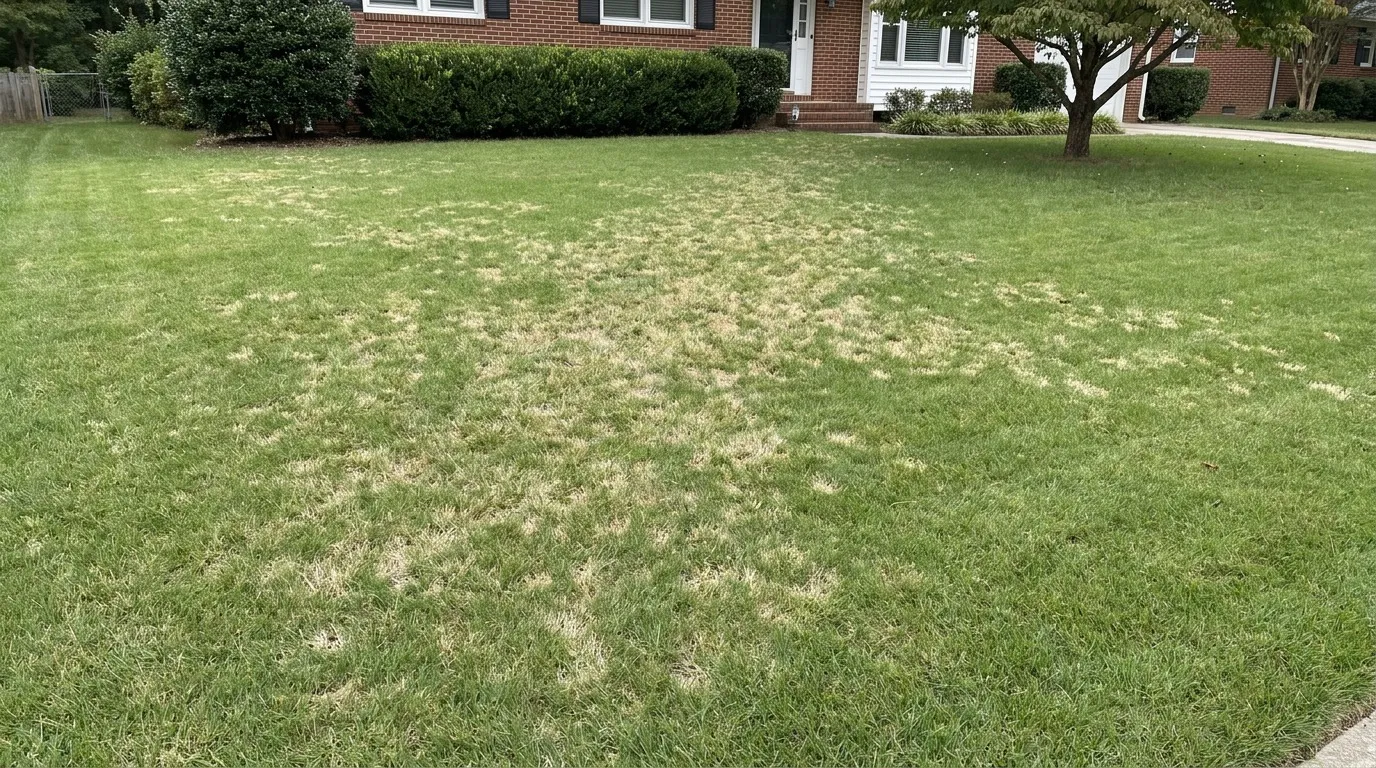
Early fall is the right time to fix bare patches in a fescue lawn. Tall fescue is a bunch-type grass that can't spread sideways to fill gaps, so bare spots larger than about 4 inches across need new seed. NC State's window for the Piedmont and coastal plain is September 1 to October 1. In the mountains it's earlier, August 15 to September 1.
- Rake the spot to loosen the top few inches of soil.
- Spread a blend of turf-type tall fescue seed and lightly rake it in for good seed-to-soil contact.
- Keep the top 1½ inches of soil moist with light watering two or three times a day. That can take 7 to 21 days.
- As the seedlings grow, water less often but more deeply.
If you've missed the window, wait. NC State warns that seeding later raises the chance of failure from winter injury. Bare spots in bermuda or zoysia also have to wait: NC State recommends repairing bermuda in late May with sod or sprigs, and zoysia with sod or plugs, once the grass is growing actively.
Compaction and Thatch
Thatch, a layer of undecomposed stems and roots at the soil surface, builds up in spreading grasses like bermuda and zoysia. NC State says thatch removal generally isn't necessary for tall fescue. The bigger fall issue for fescue on Piedmont clay is compacted soil, which keeps air and water from the roots.
NC State recommends fall core aeration for fescue lawns on clay soils or with heavy foot traffic, and it pairs naturally with overseeding thin areas. Our guide to fall aeration and overseeding covers the details. Warm-season lawns are aerated and dethatched in late spring or early summer instead. Done at the right time, these are the fall projects that lead to a healthy spring lawn.
Frequently Asked Questions
When should I start preparing my lawn for fall?
Late August into September. For fescue, the key dates are the September 1 to October 1 seeding window and the mid-September feeding. For bermuda, it's raising the mowing height and the last light feeding in September.
Do I need to water my lawn in fall and winter?
Fescue, yes: about 1 inch a week, including winter dry spells. Dormant bermuda and zoysia need water only if the soil gets powder-dry.
Should I leave fallen leaves on my lawn?
A light layer can be mulched with the mower. A thick layer should be raked up, because it blocks light from growing grass and smothers seedlings.
Get Your Lawn Ready for Winter With Nature's Select®
Fall is not the time to start neglecting your lawn. Nature's Select® Lawn Care builds healthy lawns from the soil up, with a biological approach that works with your soil instead of against it. Our team handles lawn care, weed control and fertilization, and aeration and overseeding, all timed to your grass type.
We serve homeowners in and around Winston-Salem, Greensboro, Chapel Hill and Pinehurst. To get your lawn on track for winter and spring, request your free estimate today.