
The Chapel Hill location is the Operating Unit where biological lawn care meets a customer base that already lives the philosophy. UNC and Duke faculty, Research Triangle Park scientists, public health professionals, and a Carrboro-Chapel Hill community with one of the highest environmental-awareness indexes in the Southeast all share the same instinct: build the soil first, treat pressure only when it crosses a measured threshold, and stop dumping unnecessary synthetics into a watershed that drains directly into Jordan Lake. The Chapel Hill office covers Chapel Hill, Carrboro, Hillsborough, Durham, and Pittsboro — communities where a soil-first approach is not a sales pitch, it is the default expectation.

The Triangle is the part of North Carolina with the most informed customer base for biological lawn care in the state. UNC sustainability programs, Duke's environmental science department, NC State's nationally ranked agronomy and crop science programs in Raleigh, and a Chapel Hill-Carrboro residential culture that takes Jordan Lake watershed protection seriously all converge to demand more than a calendar-spray program can provide. The Chapel Hill office delivers a soil-first approach, reads each property's soil profile on-site, and applies Nature's Select® Solutions tailored to what the lawn actually needs.
The program applies the same biological principles Nature's Select® has refined since 1994, but Chapel Hill staff context sharpens the practice. Most homeowners here have already researched the difference between biological and "organic" lawn care before the first call — they want specifics, not marketing language. Warm-season bermuda and zoysia are increasingly dominant across the Triangle, anchoring Meadowmont, Southern Village, and the Briar Chapel sustainable-development community. Tall fescue remains common on the older streets near UNC, Westwood, and historic Chapel Hill, where mature shade trees still favor it. Brown patch monitoring runs from May through August when humidity peaks on fescue. Pre-emergent timed before the Triangle area spring green-up. Nature's Select® Solutions, a proprietary blend of carbon , beneficial microorganisms, and organic matter amendments, builds organic matter in clay that would otherwise compact and seal the root zone. Targeted chemistry is used only when measured pressure crosses the treatment threshold — important on properties feeding watersheds that flow into Jordan Lake, the regional drinking water reservoir.
Address: 1712-3 Farrington Point Rd., Chapel Hill, NC 27517
Phone: 919-335-4656
Hours: Monday-Friday, 8AM-5PM
Serving Chapel Hill, Carrboro, Hillsborough, Durham, Pittsboro, and surrounding communities. Call to confirm the office address — listing in progress.
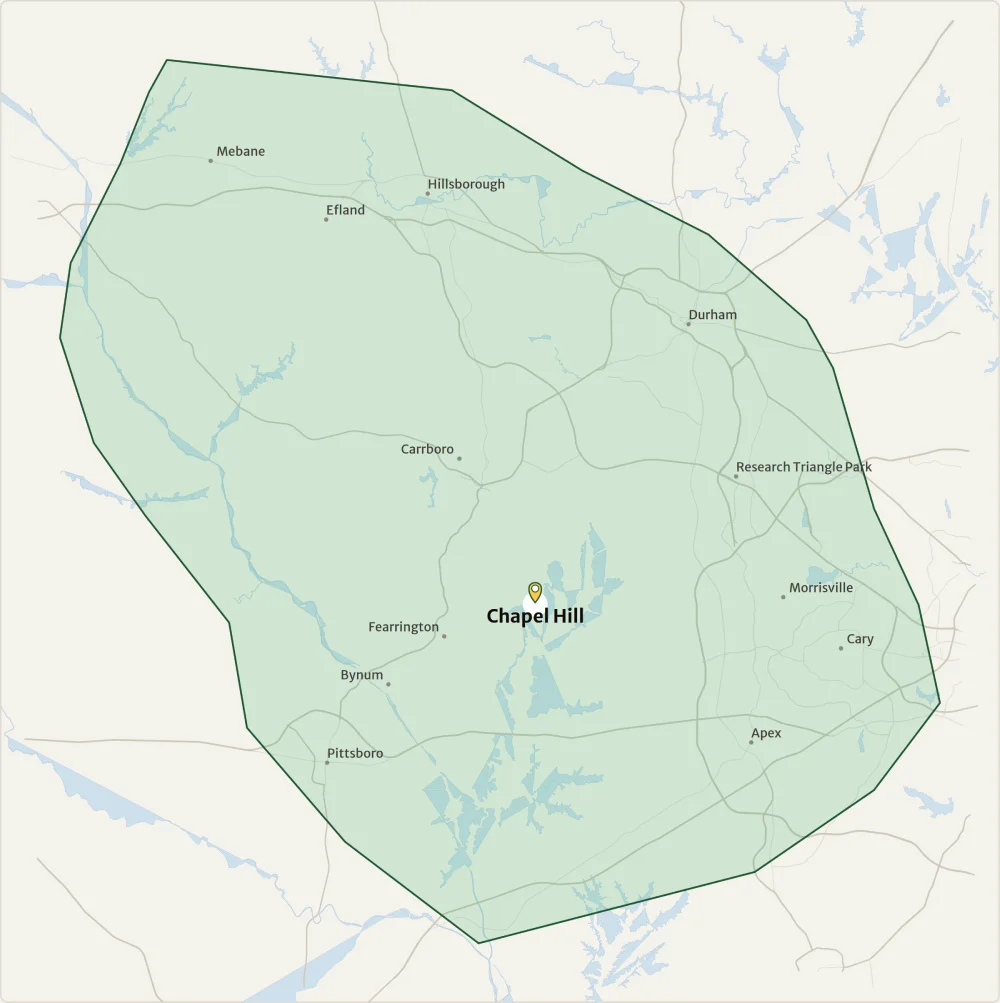
Every service Nature's Select® offers across North Carolina is available across Chapel Hill, calibrated to clay soil and the cool-season/warm-season transition zone.
Year-round biological program of biological inputs, soil amendments, and regenerative soil health practices, calibrated to Triangle clay structure and the mix of warm-season and fescue lawns across Chapel Hill neighborhoods.
Pre-emergent timing calibrated to Triangle conditions, with split applications that respect clay-soil nutrient retention.
Core aeration to recover from clay compaction is essential on established lawns throughout Cole Park, Glen Lennox, and historic Chapel Hill streets. Fall overseeding for cool-season fescue properties.
Pollinator-aware applications around UNC campus periphery properties, Coker Arboretum-adjacent streets, and Meadowmont landscapes. Soil-first nutrition for mature canopies.
Targeted treatment for armyworms, chinch bugs, grubs, and sod webworms common to Triangle lawns.
Large patch, Pythium blight, slime mold, and dollar spot identified on site across Chapel Hill fescue and warm-season lawns.
The Triangle sits in the cool-season/warm-season transition zone of the NC Piedmont, with the added character of a research-triangle community where environmentally aware homeowners often prioritize lower-input lawn care.

The Triangle shares the Triad's Cecil clay topsoil — red-brown clay over weathered rock that holds nutrients well but compacts in older Chapel Hill streets. The soil needs organic matter inputs to stay friable and root-accessible, which is why our program leads with soil amendments on established UNC-area and historic Chapel Hill properties.

Bermudagrass anchors full-sun new construction across Meadowmont, Briar Chapel, and parts of Southern Village, and warm-season coverage continues to expand. Zoysiagrass is increasingly popular for drought-tolerant residential lawns. Tall fescue remains common in established Chapel Hill and Hillsborough neighborhoods with mature tree canopy.

Spring brings the pre-emergent window, spring green-up for warm-season turf, and fescue recovery from winter. Summer (May through August) is the brown patch peak on fescue plus drought stress. Fall pressure shifts to dollar spot and rust as nights cool — also the prime fescue overseeding window — and winter sees dormancy on warm-season turf while fescue stays green and the team continues soil-building applications.
The Triangle's community already knows the science. Our job is to deliver the program consistently — the customer base will not tolerate marketing-language substitutes for actual practice.

Triangle homeowners have an unusually high bar for what counts as "biological" lawn care. Marketing claims do not survive a science PhD asking specific questions about microbial diversity, soil organic carbon, and pre-emergent active ingredients. Nature's Select® Solutions formulation, and 12-18-month compounding curve holds up to that scrutiny because it is a real practice, not branding.

The Triangle's watersheds — Bolin Creek through Carrboro, Morgan Creek through Chapel Hill — flow directly into Jordan Lake, the drinking water reservoir for hundreds of thousands of Triangle residents. Calendar fertilizer dumps from chemical-only programs accelerate nitrogen and phosphorus runoff into that watershed. Our spoon-fed timing keeps nutrients in the root zone where the turf can actually use them.

The Triangle offers more variety than a single soil-and-turf framing can capture: 1920s historic homes near UNC, 1950s established neighborhoods in Westwood and Glen Lennox, 2000s new construction in Meadowmont, and 2010s sustainable-development communities like Briar Chapel. The right program for each property is different, which is why professional lawn care is so important. Brand-name products are designed primarily to provide N-P-K inputs rather than to deliver long-term benefits.

Healthy biological soil suppresses many pressures (e.g., brown patch, dollar spot) before they reach a treatment threshold. Particularly important on properties near the Coker Arboretum, the NC Botanical Garden, and the dozens of street-tree-lined blocks where pollinator habitat is a recognized community value.

The Triangle office is owner-operated with weekly visits across Meadowmont, Southern Village, Glen Lennox, Cole Park, Briar Chapel, and the Westwood-Westside neighborhoods. The technician who walks your property is the one who answers your call — a continuity that matters in a community where the same residents return season after season with detailed questions about specific applications.

Affiliations with local, state, and national associations, including the NC State Beekeepers Association, drive our protocol for every visit: no broad spraying during bloom, the lowest effective rate, and the affected area only. Healthy soil biology also keeps applications fewer near the Coker Arboretum, the NC Botanical Garden, and Chapel Hill's Pollinator Pathway, where residents track pollinator habitat closely.
The Triangle Operating Unit serves the most environmentally informed customer base in the Nature's Select® network. UNC and Duke faculty, NC State agronomy and crop science researchers, Research Triangle Park scientists, public health professionals, and the Chapel Hill-Carrboro community with high environmental literacy create a market that demands specific technical details. The office serves Chapel Hill, Carrboro, Hillsborough, Durham, Pittsboro, and the surrounding Orange County communities, with regular service extending into the Briar Chapel sustainable-development area in Chatham County. The same biological training the original 1994 group carried out is calibrated to Triangle clay, the cool-season/warm-season transition zone, and the watershed sensitivity of properties that feed Jordan Lake.
Region: Chapel Hill Operating Unit serving Orange County, Chatham County, and parts of Wake and Durham Counties
Approach: Same biological training the original 1994 group carried, calibrated to Triangle clay and the cool-season/warm-season transition.
Role in the network: Anchors the Triangle territory in the Nature's Select® franchise footprint (Triad, Triangle, Sandhills).
Geographic Coverage
Regular service in Orange County and Chatham County, plus areas of Wake and Durham Counties. Zip codes 27514, 27516, and 27517 (Chapel Hill), 27510 (Carrboro), and 27278 (Hillsborough), with coverage extending into Durham, Pittsboro, Cary, and Apex. Call the office to confirm coverage for your specific address.

Nature's Select is great to work with. The staff is extremely courteous, communicative, and expert at what they do!
We have worked with Nature's Select® for years. They have always been great at delivering spraying services to our trees and bushes to optimize growth and minimize harm. They are helpful if there are issues with your plant material and will investigate problems to try to resolve them. I highly recommend them.
Nature's Select® delivered the thick green lawn promised. Great service and products have resulted in the best looking lawn I've had in more than 30 years of home ownership. I recommend Nature's Select® without any reservations.
We started using Nature's Select® earlier this year and the service has been top notch. The team is very easy to communicate with, explains what they are doing and why. They are a level above any other landscape or lawn care service I have used before.
Let you know when coming. Show up on time. Grass looks amazing.
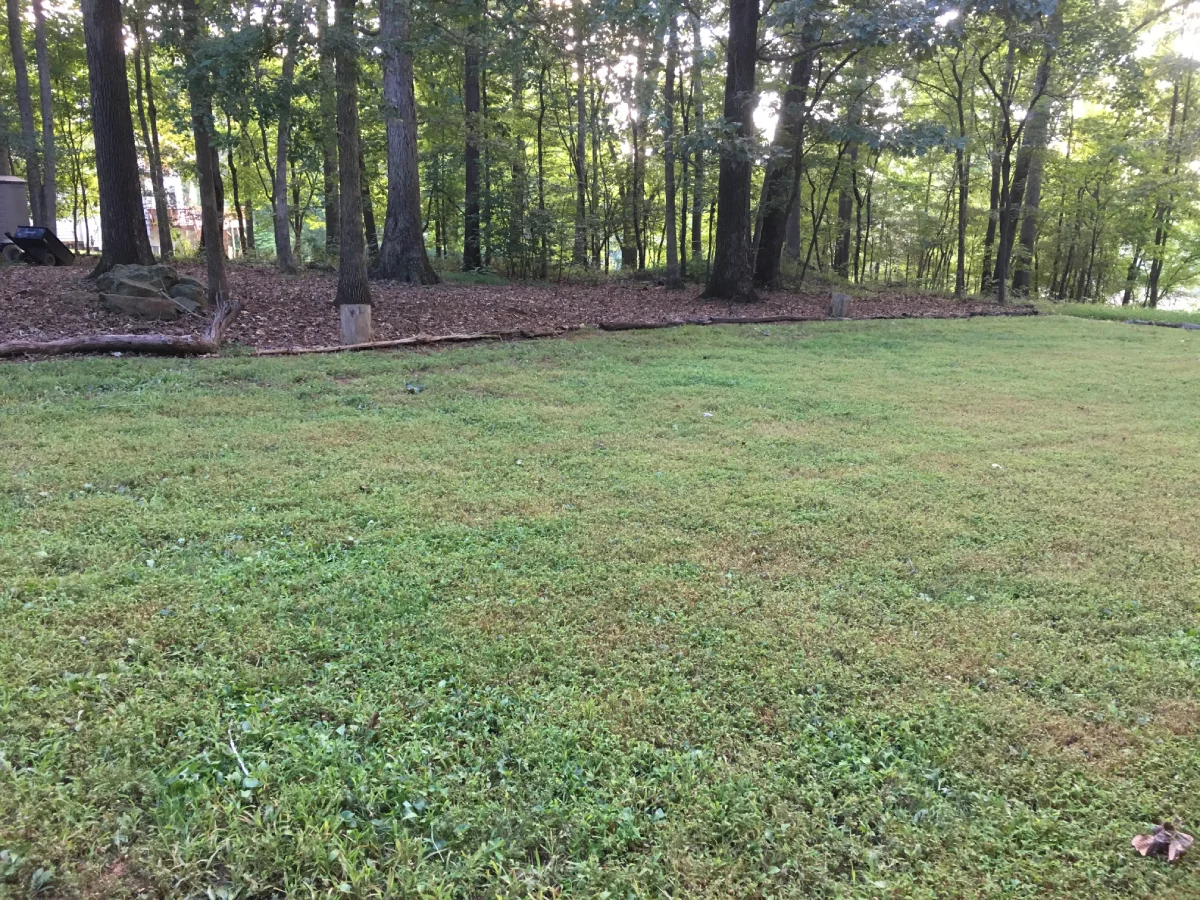
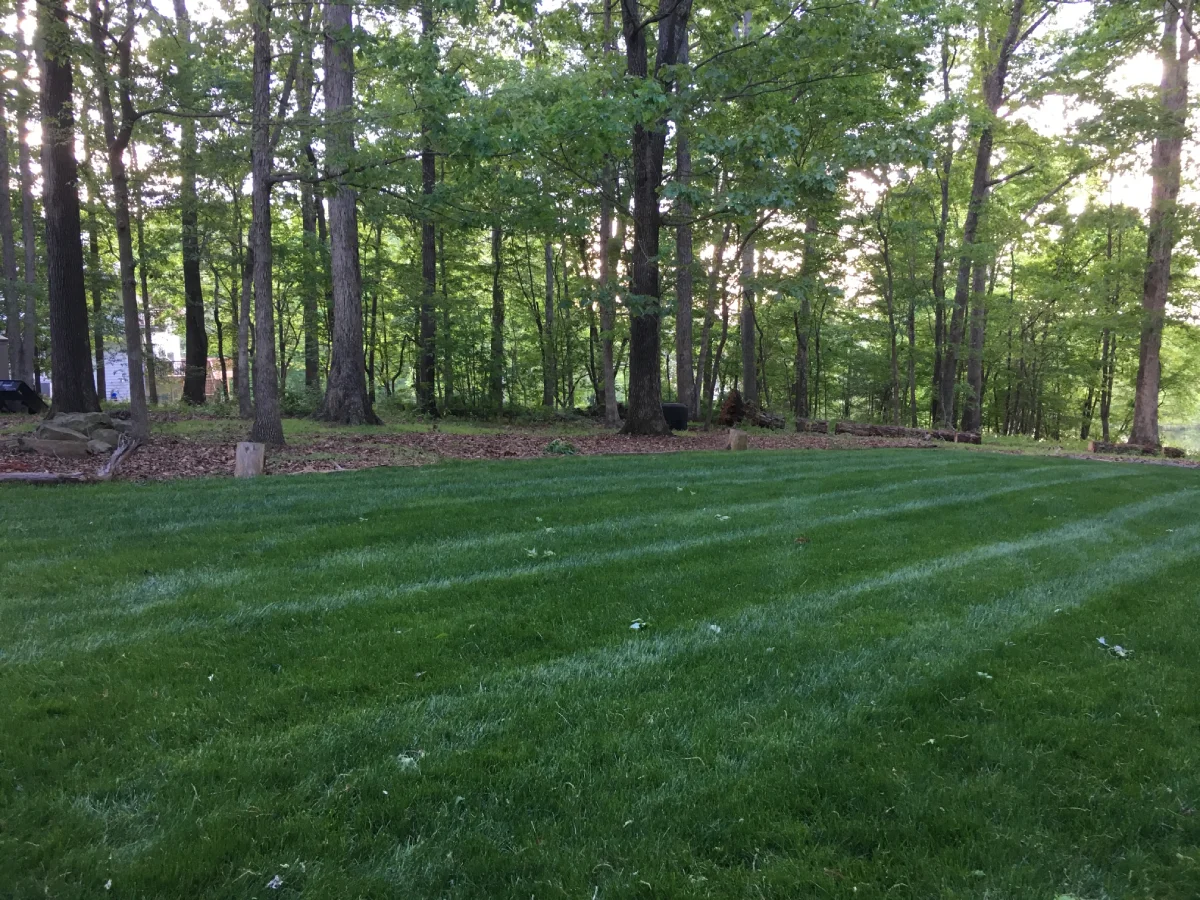
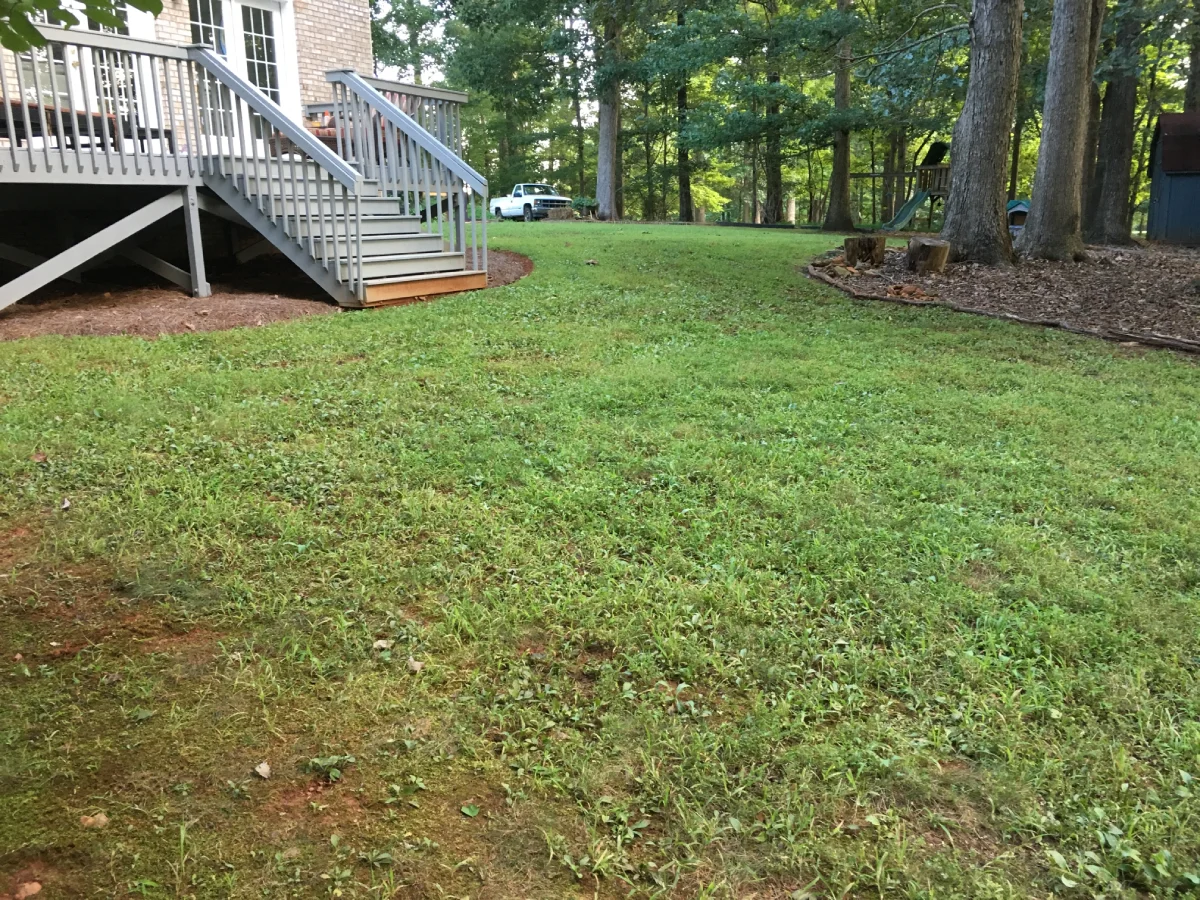
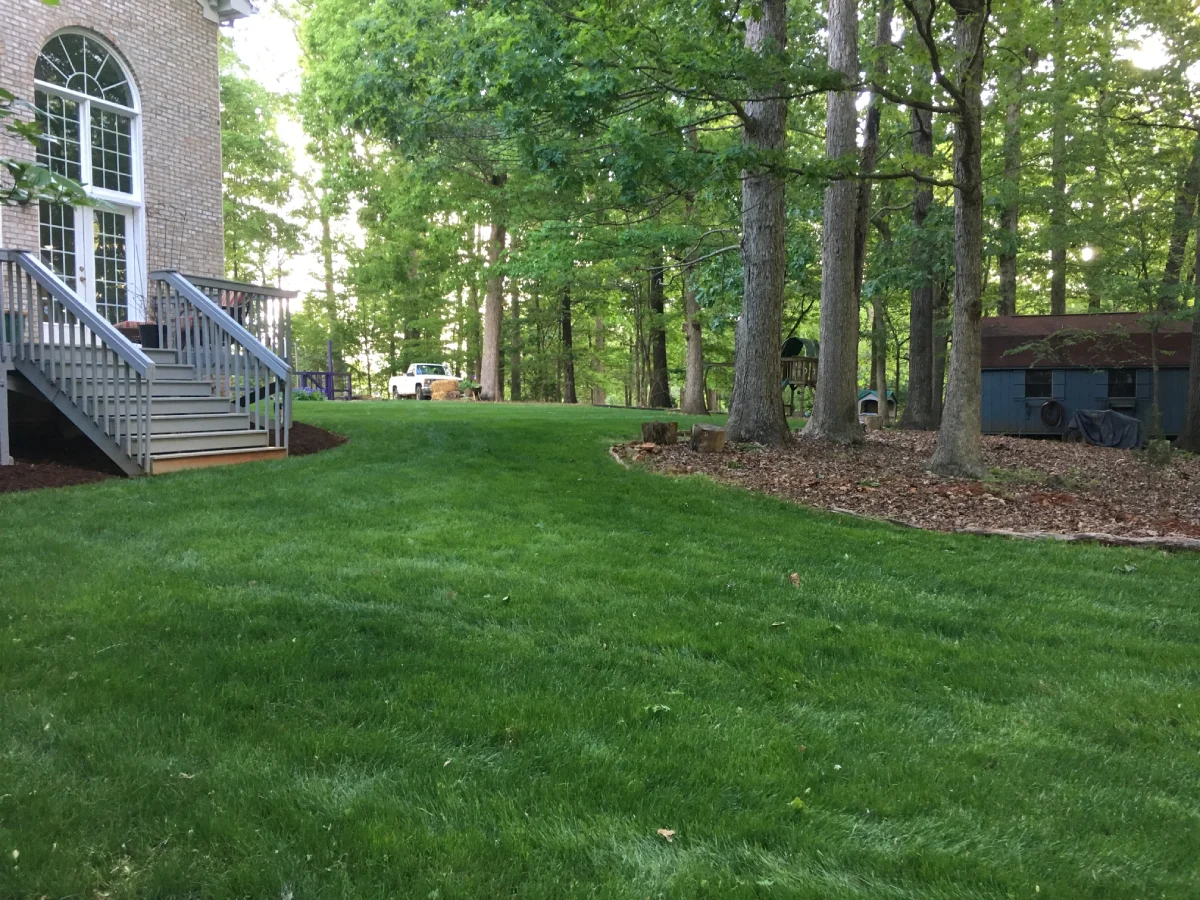
The Triangle office serves Orange County zip codes including 27514, 27516, and 27517 (Chapel Hill), 27510 (Carrboro), and 27278 (Hillsborough), with regular service into Durham, Pittsboro, Cary, and Apex. Call 919-335-4656 to confirm coverage for your specific address.
The right choice depends on sun exposure, soil compaction, and how the property will be used. Bermudagrass is the dominant choice for full-sun new construction including parts of Meadowmont, Briar Chapel, and Southern Village, and warm-season coverage keeps expanding. Tall fescue remains the common cool-season choice in established Chapel Hill and Hillsborough neighborhoods with heavy shade. Zoysiagrass is increasingly popular for drought-tolerant residential lawns.
Brown patch peaks May through August on tall fescue lawns, when nighttime temperatures stay above 65°F and humidity stays high. Established Chapel Hill fescue properties see the most damage. The Triangle office monitors brown patch pressure on every visit during the peak window and applies targeted fungicide at the lowest effective rate only when pressure crosses the treatment threshold.
The Triangle office is in Chapel Hill, NC, with office hours Monday through Friday, 8AM to 5PM. Reach the office directly at 919-335-4656, or use the toll-free number (888) 786-9735 which routes to the right team automatically. Office street address is in the process of being listed publicly — call to confirm.
Yes. The office regularly services residential properties throughout the UNC campus periphery streets, Meadowmont, Southern Village, Glen Lennox, Cole Park, Briar Chapel, and the surrounding Chapel Hill and Carrboro neighborhoods.
Most on-property assessments are scheduled within 48 hours of the initial call. A technician will walk the lawn, identify visible concerns, assess soil conditions, and provide a written estimate before any work begins. Schedule an assessment by calling 919-335-4656.
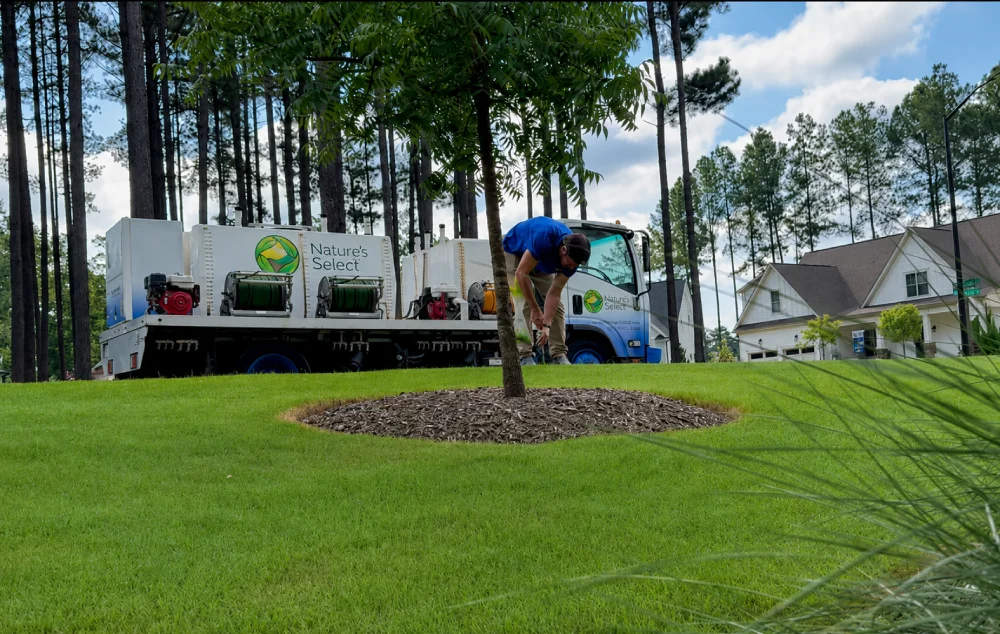
A few looks from properties we care for across North Carolina. Every lawn is different, and every one gets attention built around what the soil, the grass, and the season actually need.
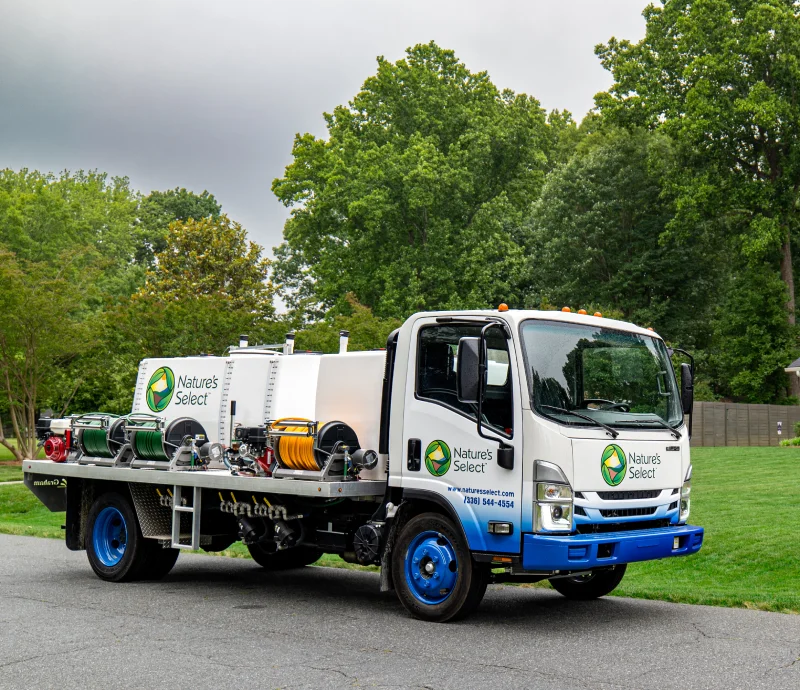
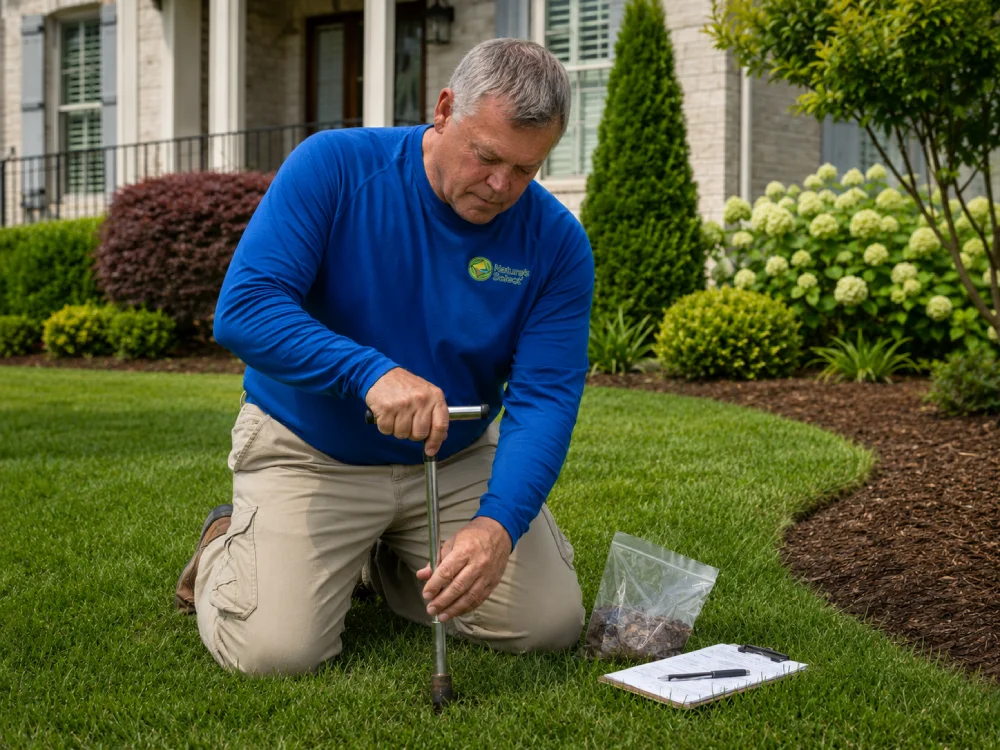
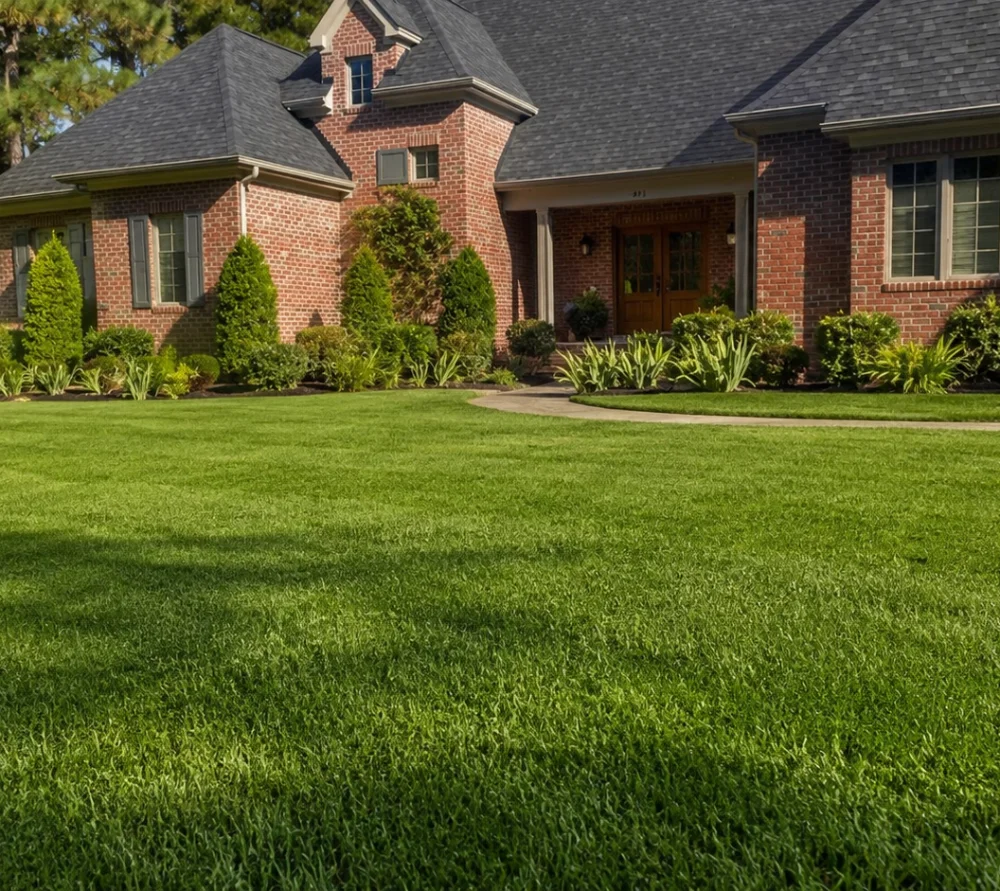

Same-day estimate. 30+ years of biological expertise. Nature's Select® Guarantee. Local franchise, local technician.