
Your trees and shrubs were the most expensive part of your landscape, and they take the longest to replace. Nature's Select® runs a biological tree and shrub care program for North Carolina homeowners: biological soil care, targeted insect and pest control, and selective pruning matched to each plant's bloom and growth cycle. The technician identifies what your specific plantings need on site, with attention to the pollinators that visit them. Same-day estimate.
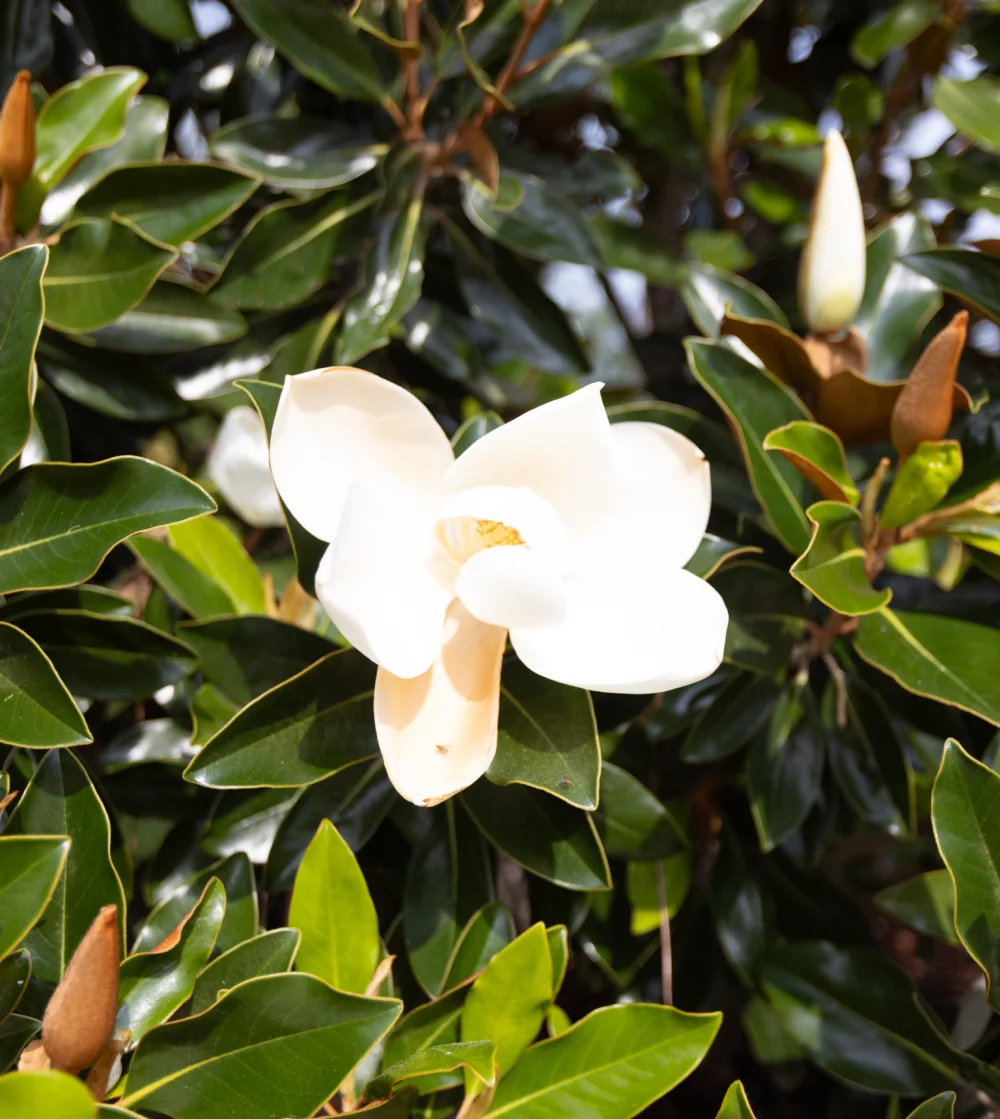

Nutrients are delivered to the root zone, where trees and shrubs actually use them.

Targeted treatment matched to what is actually affecting your plantings.

Affiliated with the NC State Beekeepers Association; treatments timed to protect bees and beneficial insects.

Backed by our Nature's Select® Guarantee.
Nature's Select® tree and shrub care covers biological soil care, deep root fertilization, targeted insect and pest control, regular health monitoring, and selective pruning across the Triad, Triangle, and Sandhills.
Coverage: Biological Soil Care · Fertilization · Insect & Pest Control · Health Monitoring · Selective Pruning
Trees and shrubs feed from a root system that runs 6-18 inches below the surface, which is why soil drench applications and root feeding are so important.. Nature's Select® uses soil drench applications to deliver biological fertilizer plus the proprietary Nature's Select® Solutions blend directly to the root zone. Insect and pest control is matched to what the technician identifies on site (bark beetles, scale insects, aphids, lace bugs, Japanese beetles), with treatment timing that protects pollinators through the NC State Beekeepers Association affiliation.
Trees and shrubs are the most expensive part of your landscape, and the slowest to replace when something goes wrong.

A bark beetle infestation, a vascular disease, or a major storm can kill a 40-year-old tree in a single season. Recovery from replanting takes 15-25 years.

Tree feeder roots run 6-18 inches deep. Foliar targeted applications only feed and protect the plants from the surface and wear thin quickly. Soil drench applications, and additional deep root injections, put nutrients and the Nature's Select® Solutions blend directly where the tree or shrub can use them long term.

Scale, aphids, and bark beetles reproduce fast. By the time visible damage shows, the population is already several generations ahead.

Cut a spring-flowering shrub at the wrong point in its cycle and you remove the buds it already set. Our technicians handle selective pruning as part of the program, matched to each species and its bloom window, so the plant keeps what it spent the season building.
No long phone call, no obligation. From your first call to a written plan matched to your plantings.
A trained technician walks your landscape, identifies the tree and shrub species on site, checks for visible signs of pests or diseases, and documents soil conditions in the root zone. Free, no obligation.
Itemized pricing, recommended schedule for the program (timing varies by species and need), and a species-specific note for whatever the technician identified.
It is best for landscapes to begin with our soil drench application in the spring. This provides the plants with beneficial nutrients to utilize throughout the growing season, and provides early-season protection from pests.
Three services form the standard program, each running on its own seasonal logic and treating a different layer of plant health. Deep root fertilization is available as a supplemental service, added when a particular plant calls for it.
Biological soil amendment around the root zone of trees and shrubs. Compacted soil around mature trees limits root expansion and water infiltration, and the amendment rebuilds the microbial activity that mature root systems depend on.
What it is
Biological soil amendment around the root zone.
Why it matters
Rebuilds the microbial activity that mature root systems depend on.
Targeted treatment for the pest pressures trees and shrubs actually see: bark beetles, scale insects, aphids, lace bugs, Japanese beetles, and sawflies. Identification occurs at the species level on-site, with treatment matched to what is actually there.
What it is
Species-level identification and matched treatment for the pests trees and shrubs actually carry.
How treatment is selected
Horticultural oils as a preventive in the fall and winter for scale. Targeted insecticides where the population requires it; systemic pesticides are restricted to serious infestations.
Pollinator-aware timing
Affiliated with the NC State Beekeepers Association. Treatments timed to protect pollinators, applied at the lowest effective rate, with avoidance of broad spray during bloom on flowering trees and shrubs.
Selective pruning, plus ongoing health monitoring across the program. The technician watches for canker, scale, bark damage, and stress signs you might miss between visits.
What it is
Selective pruning matched to species and season, with ongoing visual monitoring at every visit.
Deep root fertilization is a supplemental service rather than part of the standard program. It uses dedicated equipment and products to pressure-inject biological fertilizer plus the proprietary Nature's Select® Solutions blend directly into the root zone, 6 to 18 inches below the surface. Think of it the way aeration and overseeding works for lawns: valuable, occasionally necessary, and added when a particular plant needs it rather than applied to everything by default.
What it is
Pressure injection of biological fertilizer plus the Nature's Select Solutions® blend into the root zone 6-18 inches deep.
Why it matters
Puts nutrition where the plant actually uses it, instead of where the spreader can reach.
Window
Spring (March-April) and fall (October-November) are the primary windows. Establishment fertilization for newly planted trees can happen outside these windows.
Walk your yard and check for these patterns. If you see one of them, the tree or shrub is telling you something specific. The program addresses the cause.
When leaves yellow between still-green veins, the plant is signaling a nutrient deficiency, most often magnesium. North Carolina's clay is naturally acidic, not alkaline, and that low pH actually keeps iron and manganese plentiful (the red in our clay comes from iron). The nutrients that run short here are usually magnesium, calcium, and phosphorus, which acidic clay leaches away or locks up where roots cannot reach them.
Small entry holes in the bark and sawdust collecting at the base of the tree are field signs of bark beetles or wood-boring insects. By the time these signs are visible, the insects have already been working inside the tree for weeks.
Sticky residue on leaves (or on the patio, driveway, or car parked underneath) is honeydew secreted by scale or aphid colonies. The black sooty mold that often follows is the secondary problem; the insects are the primary one.
Dieback that starts at the branch tips and works inward, or a canopy that has thinned over the last one to two seasons, points to vascular disease or root damage. Both kill the tree from the inside out, which is why the visible canopy change is the late stage rather than the early one.
Wilting or curling leaves in mid-summer can indicate water stress, root issues, or fungal pressure, and each requires a different response. The diagnosis comes from what the soil moisture, the canopy, and the leaf undersides actually show on site.
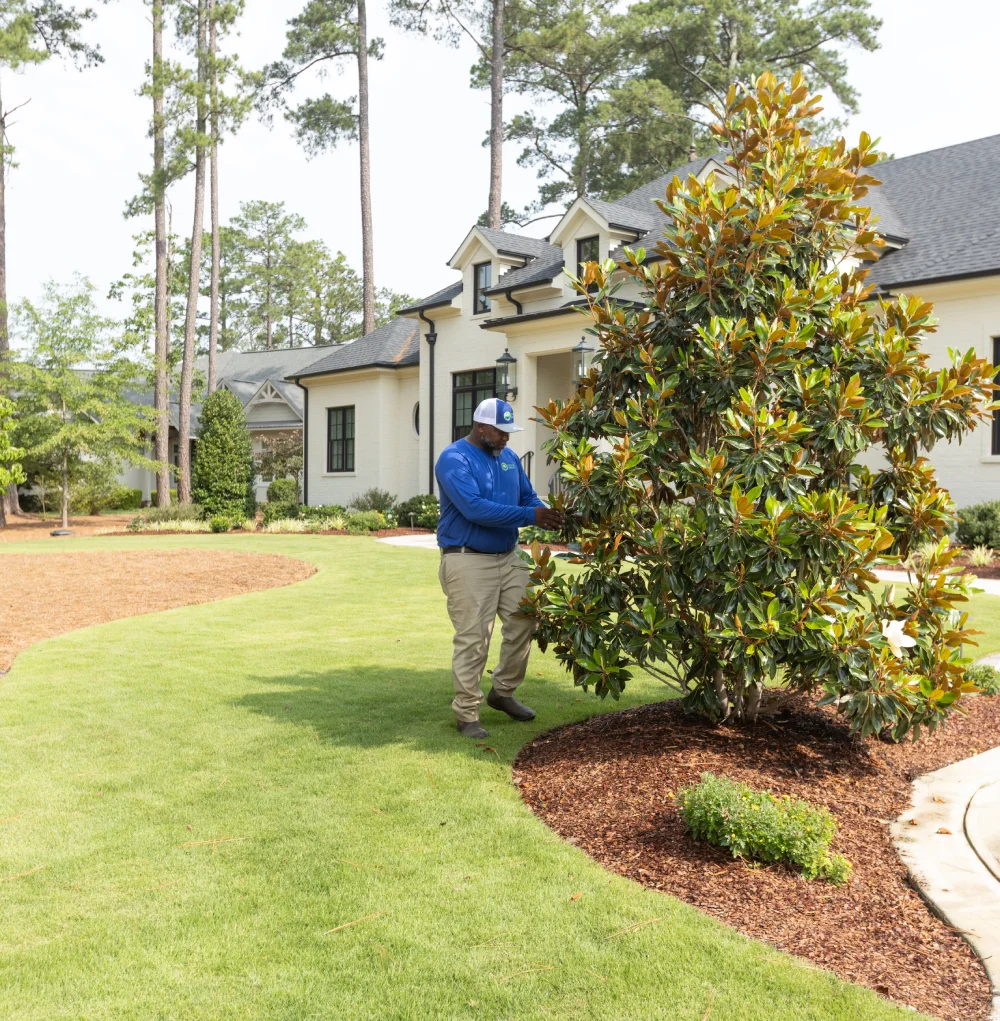
If any of these describe your trees, call (888) 786-9735 or
Founded in Winston-Salem in 1994, Nature's Select® has expanded across North Carolina into the Triad, the Triangle, and the Sandhills, and continues to add franchises across the region. Call the toll-free number and you'll be routed to the office that covers your address.

Serving the Research Triangle (Chapel Hill, Carrboro, Hillsborough, Durham, Pittsboro)
Serving the Piedmont Triad (Greensboro, High Point, Burlington, Summerfield, Oak Ridge)
Serving the Sandhills (Pinehurst, Aberdeen, Southern Pines, Seven Lakes)
Serving the Piedmont Triad (Winston-Salem, Clemmons, Kernersville, Lewisville, King)
Not sure which office covers your address? Call (888) 786-9735 and we will point you to the right local team.

We have worked with Nature's Select® for years. They have always been great at delivering spraying services to our trees and bushes to optimize growth and minimize harm. They are helpful if there are issues with your plant material and will investigate problems to try to resolve them. I highly recommend them.
The Nature's Select® Team have truly earned my 5-star rating. Rob and crew are tremendous professionals and even better people!
Thank you to Jeremy Warren for his service, listening to our needs and providing helpful solutions (ie. a dramatic change in our lawn's appearance this year and suggestions about treating Bermuda grass next June). Very personable and professional!
My grass is the best it's ever looked. You can definitely tell a difference from my yard to the neighbors!! Matt works hard on it!
Curtis has been my technician for several years. He is WONDERFUL. He always goes above and beyond. I've never seen him without a smile on his face
Highly recommend Nature's Select® Sandhills over any other lawn care services! Our yard looks amazing and all of our trouble weeds and low growth spots are taken care of. Two other neighbors have begun using their services because of the success we have had since using Nature's Select® Sandhills. You will be happy you called them!
Austin and Donald were at my house for about an hour. They did an amazing job seeding and aerating our yard. I look forward to seeing a lot of grass start to grow.
We started using Nature's Select® earlier this year and the service has been top notch. The team is very easy to communicate with, explains what they are doing and why. They are a level above any other landscape or lawn care service I have used before.
Nature's Select® is great to work with. The staff is extremely courteous, communicative, and expert at what they do!
Tracie from Nature's Select® was absolutely fantastic! She came out to help me address some insect issues in my yard, and I couldn't be happier with her service. Not only did she thoroughly spray and treat the area, but her extensive knowledge and expertise made me feel confident in the results. Tracie was incredibly pleasant, professional, and genuinely a breath of fresh air compared to others I've dealt with in this industry. I truly can't say enough great things about her and my overall experience. Highly recommend!
He always texts me to let me know when he's coming, and if our dog is out, he is very sweet to her and makes sure that she stays out of the way, or checks to see if we can put her up.
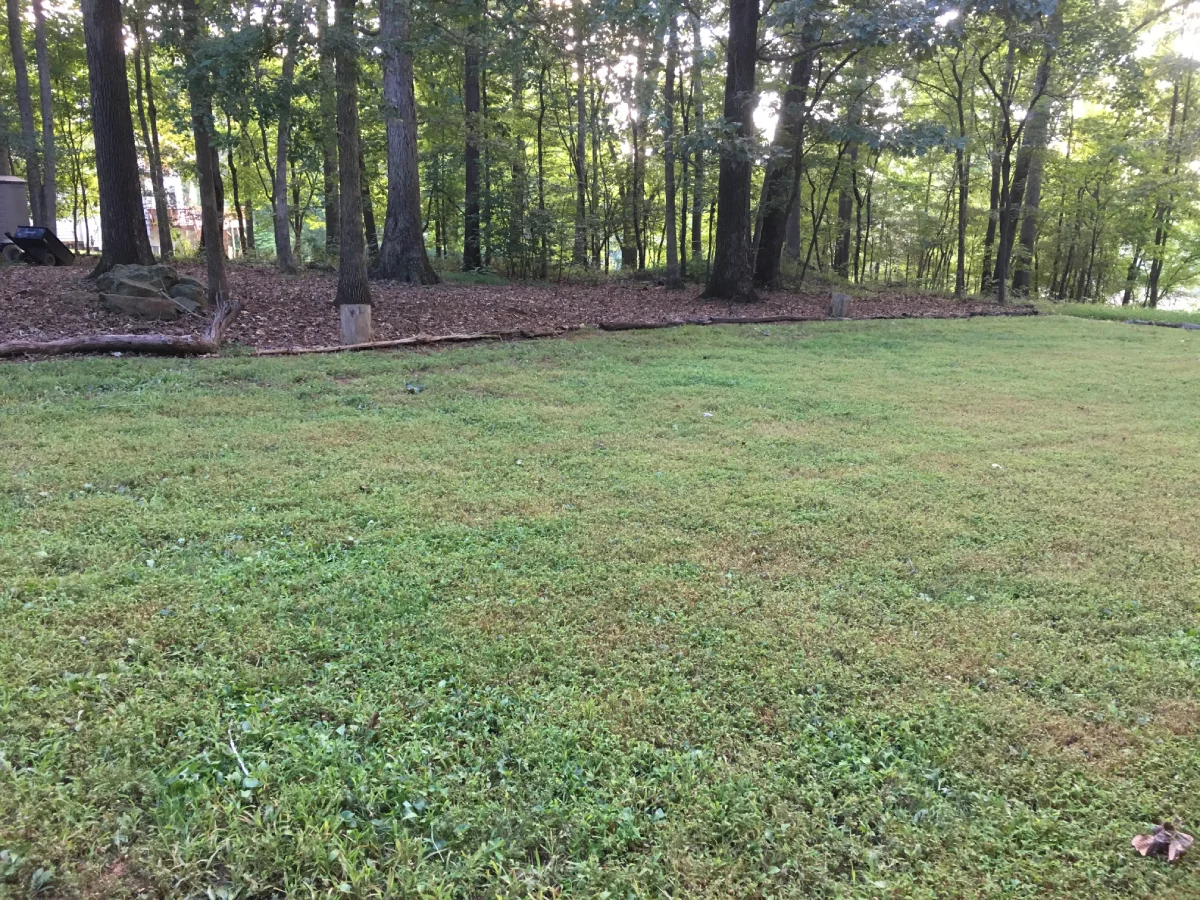
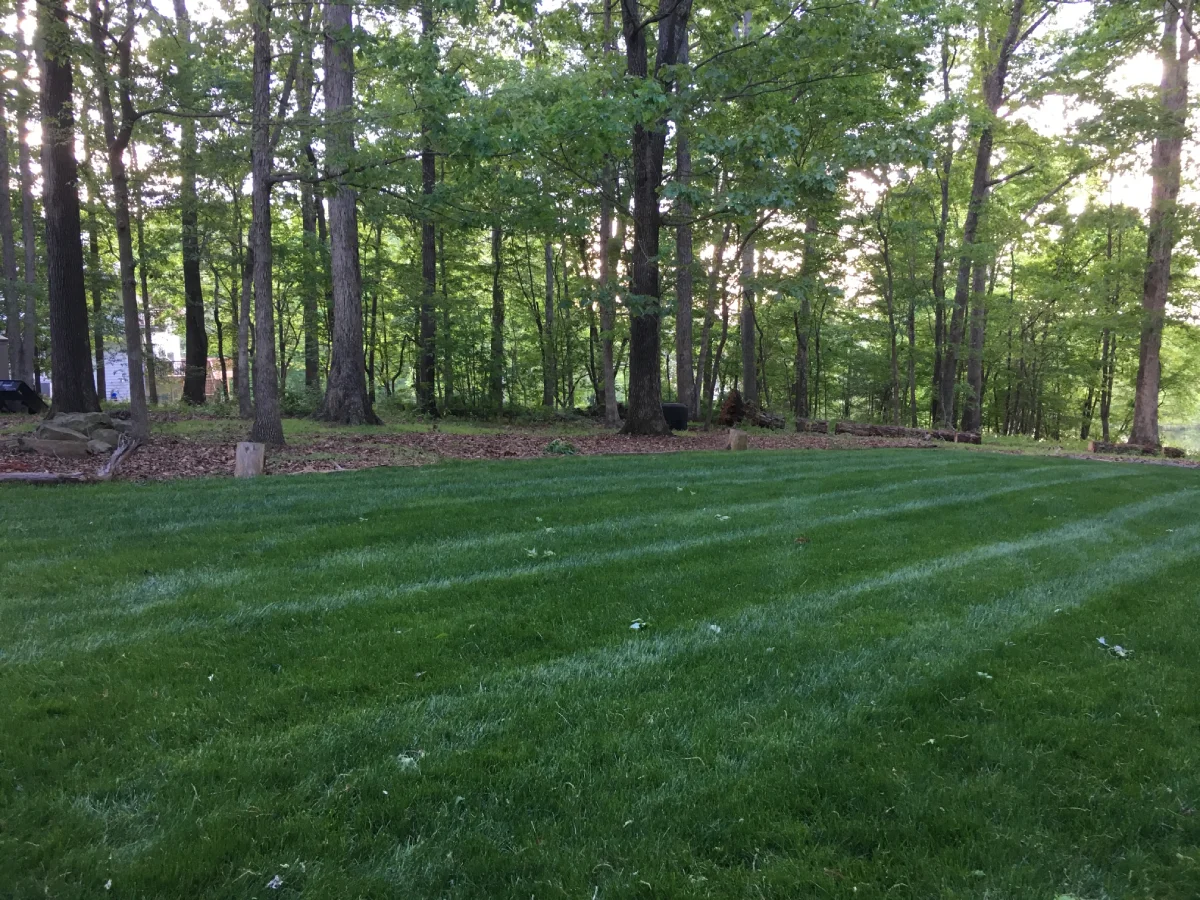
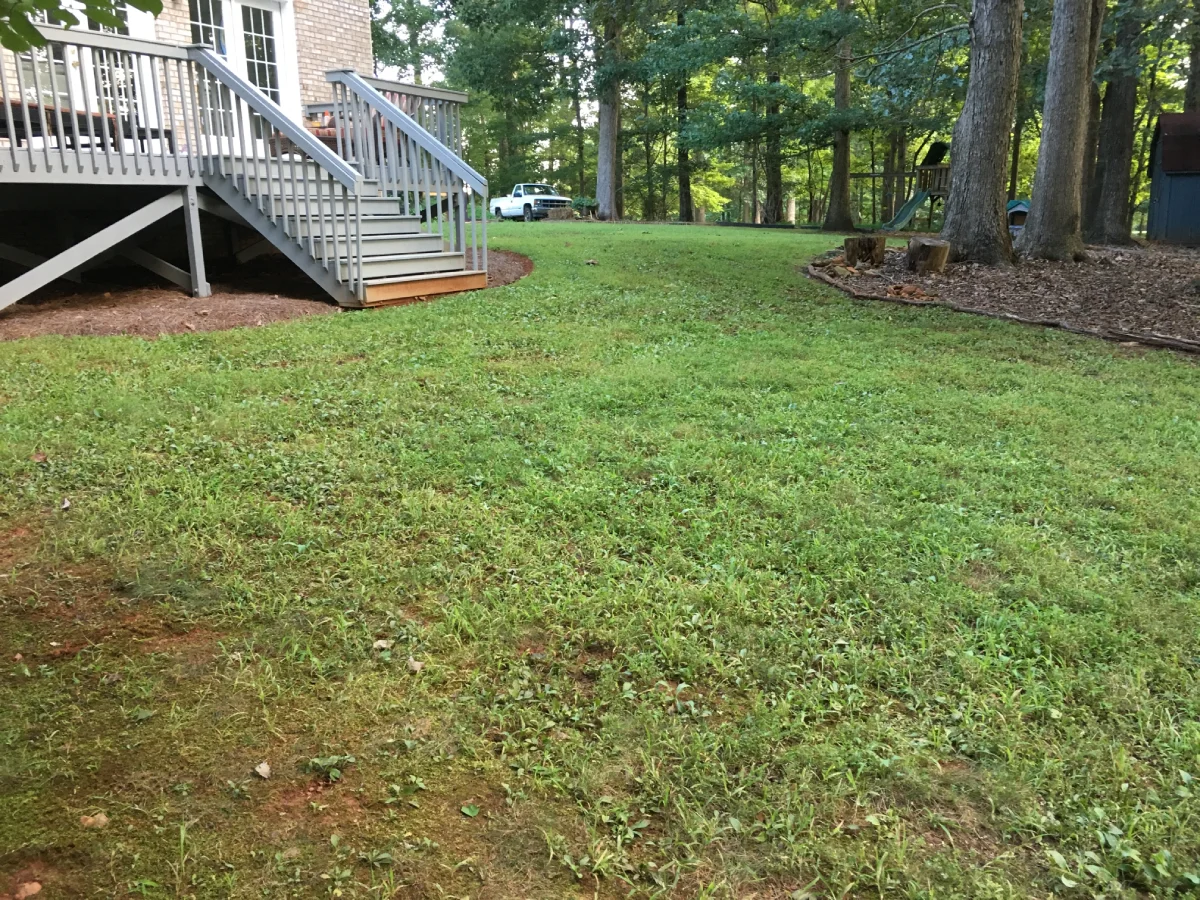
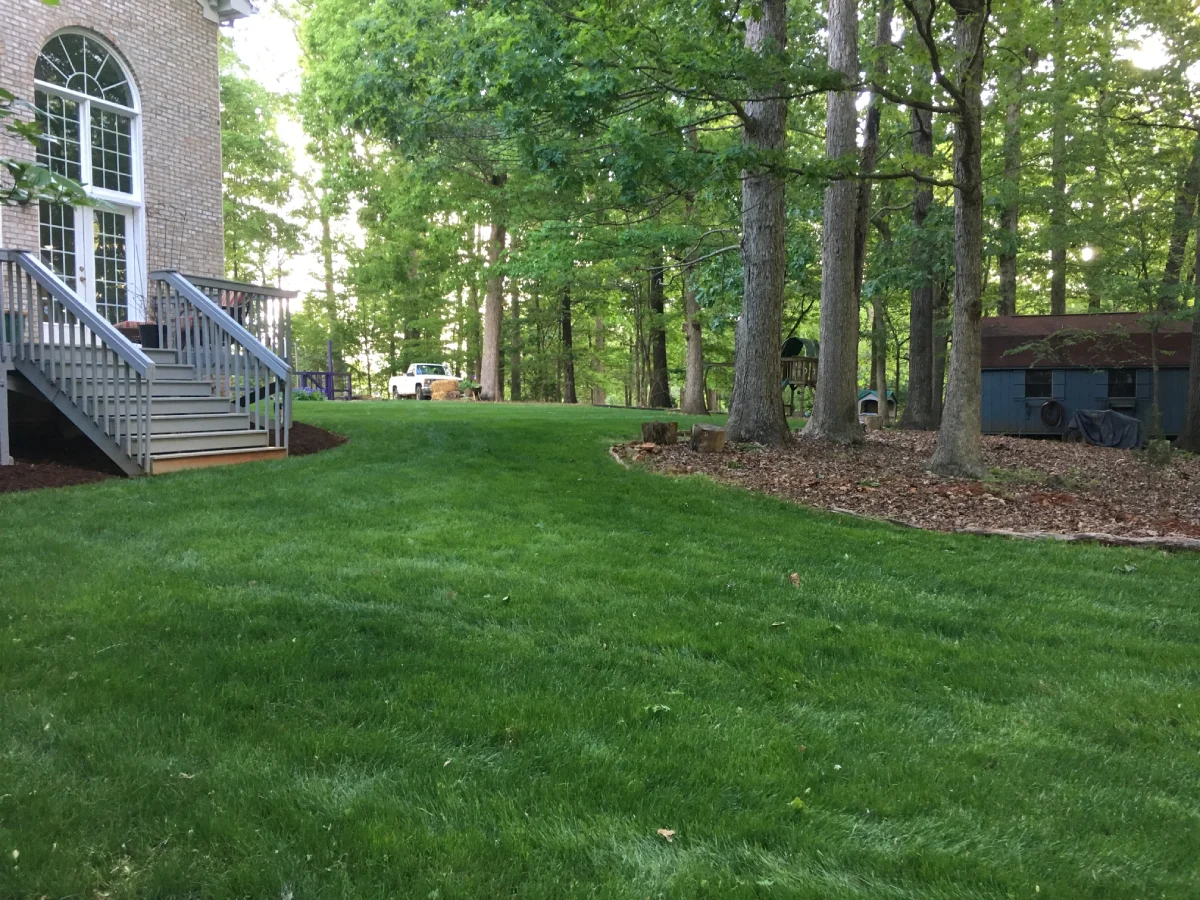
Biological tree and shrub care is a soil-first approach to landscape plant health. The program uses biological soil amendment that rebuilds root-zone microbial activity, deep root fertilization that delivers nutrients to the actual feeder roots, and targeted pest control matched to what the technician identifies on site. Nature's Select® has run this approach across North Carolina since 1994. Treatments are timed to protect pollinators through our affiliation with the NC State Beekeepers Association.
Regular fertilization usually means granular product broadcast on the lawn. It dissolves into the soil, and the tree takes those nutrients up through its roots, but spread across the whole yard, most of it feeds the turf, and some runs off before it concentrates where the tree feeds. Foliar fertilization, sprayed on the leaves, works like an energy drink: absorbed quickly and used up quickly, with no lasting health benefit and a built-in dependence on repeated applications. Deep root fertilization takes the soil-first path. Nature's Select® delivers biological fertilizer plus the proprietary Nature's Select® Solutions blend as a soil drench that reaches the tree's root zone and feeds the plant from the soil up, building long-term soil and plant health, with a deep-root pressure injection used on specialty occasions when a particular plant needs it.
No. Biological tree and shrub care is a soil-first approach built around living soil microbes and the proprietary Nature's Select® Solutions blend. Biological care combines biology and chemistry to give the plant what it needs right away, while building long-term health through soil amendments that strengthen the root zone over time. It can include conventional inputs at low rates where the agronomy calls for them. "Natural" and "organic" are marketing labels used inconsistently across the lawn and tree care industry. Nature's Select® uses EPA-approved inputs and uses the biological label because it describes what the program actually does at the soil level.
The full Tree and Shrub program is built for ornamental landscape trees and shrubs typical to North Carolina: holly, azalea, rhododendron, boxwood, hydrangea, juniper, and many more. Smaller trees under about 20 feet, such as young maples, dogwoods, redbuds, and crape myrtles, benefit from the program too. Larger trees, such as mature oaks, are treated selectively for insects, diseases, or deep-root feeding, rather than enrolled in the full program. Pest and disease treatment is matched to the species the technician identifies on site. Physical large-tree work above approximately 20 feet, such as major pruning or removal, is referred to qualified arborists.
Spring (March through April) and fall (October through November) are the primary windows for fertilization. Spring application supports the active growth season; fall application supports root development before winter dormancy. Newly planted trees can be fertilized outside these windows to support establishment.
Nature's Select® is affiliated with the NC State Beekeepers Association. The program avoids broad spray during bloom on flowering trees and shrubs, restricts systemic pesticides to serious infestations, and uses targeted treatment matched to the actual pest at the lowest effective rate. Protecting bees and beneficial insects is built into how the program is scheduled, not added on afterward.
Tree and shrub care pricing depends on the number of trees and shrubs on the property, the species mix, and the services needed (deep-root fertilization, pest control, pruning, or all of the above). Rather than relying on a one-size-fits-all formula, Nature's Select® provides pricing following your complimentary on-property assessment, so your quote reflects the unique needs of your landscape. Same-day written estimate. Free estimate: (888) 786-9735.
Visible response depends on what was treated. Pest treatment outcomes are typically visible within 2-4 weeks. Deep root fertilization shows in the canopy density of the following growing season. Soil care effects compound across multiple years; the strongest results appear in the second and third growing seasons as the root-zone microbiology stabilizes.
Nature's Select® serves North Carolina from four locations. The Winston-Salem office (336-729-3122) is the original 1994 company and serves Winston-Salem and the surrounding Forsyth County communities across the Piedmont Triad. The Greensboro office (336-221-7680) serves the rest of the Piedmont Triad around Guilford County. The Chapel Hill office (919-335-4656) covers the Research Triangle. The Pinehurst office (910-634-3886) covers the Sandhills
Free on-property assessment within 48 hours, customized estimate the same day. Pollinator-aware program. Local franchises, one team.