
Nature's Select® runs a biological lawn program that includes weed control and fertilization for homeowners across the Triad, Triangle, and Sandhills. Our trained technicians assess your property during each visit to ensure your lawn and landscape receive the care they need. Weeds are controlled each visit, while the Nature's Select® Solutions blend works to build your soil health to create long term weed control through healthier grass.
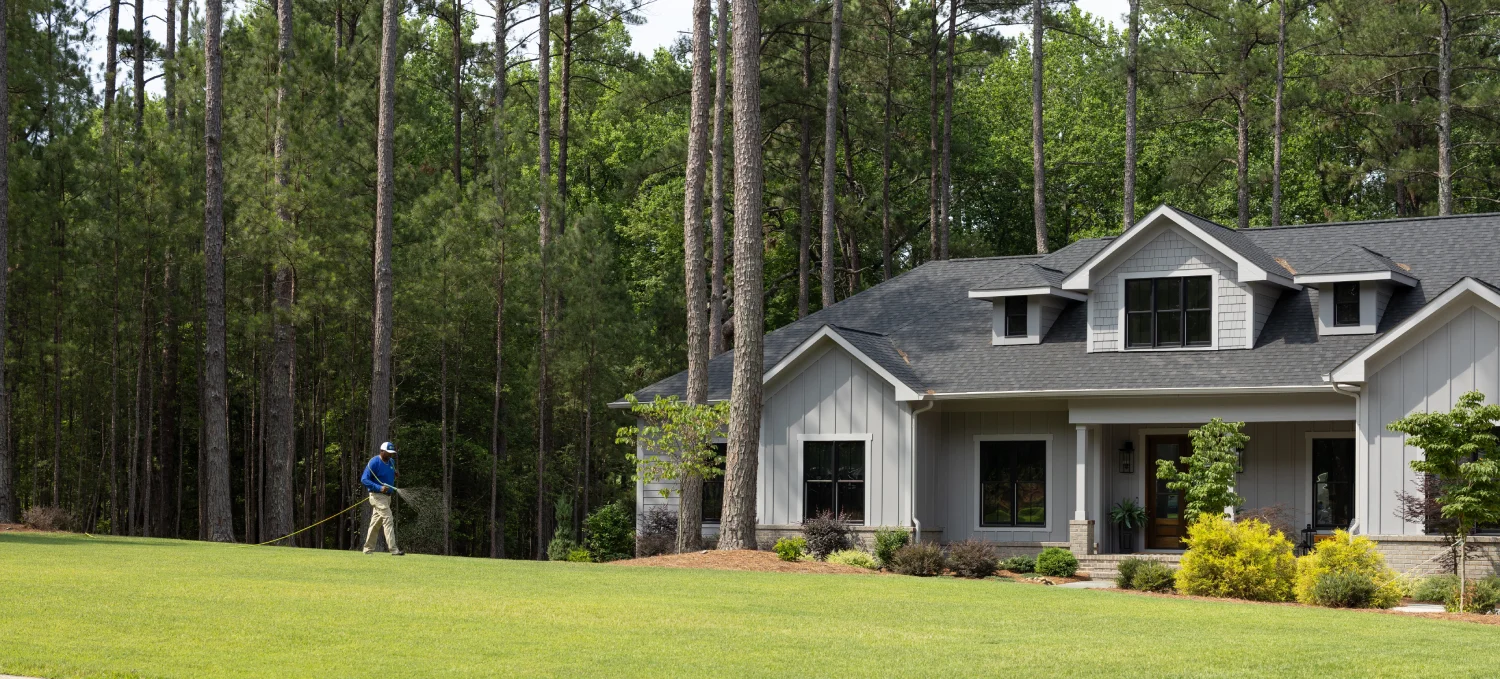

Pre-emergent that lands in the right window. Timed to your soil temperature, not a regional calendar.

Built around the people who use the lawn. Our biological blend means kids and pets are back on the grass once it dries.

Results that compound year over year. Biological soil work means each season your lawn fights back less.

Same-day customized estimate, written the day of the visit. You see the plan and the price before anything is applied.
The Nature's Select® year-round program includes a combination of pre- and post-emergent herbicides to best control common weeds in your region. Our biological soil amendments help improve the overall health of your plants and, over time, allow for lower chemical inputs.
Pre-Emergent. Timed to Soil Temperature.
Pre-emergent applications establish a proactive approach to lawn care each year. By creating a layer of protection against aggressive summer annuals, your lawn can absorb available nutrients more efficiently without competition from weeds.
Post-Emergent. Identified On Site, suppressed at each visit.
Post-emergent identification and treatment occur as weeds break through. Coverage extends to broadleaf weeds (dandelion, chickweed, plantain, dichondra) and sedges (yellow and purple nutsedge).
Biological Soil Amendments. The Long Game.
The biological soil amendments, using the proprietary Nature's Select® Solutions blend, builds the microbiology that is often stripped from our native soil. Over time, the microbiology unlocks bound nutrients in the soil, and allows plants to grow more efficiently. Healthy soil creates healthy lawns, and healthy lawns naturally suppress weed germination.
Weed infestations are not simply a cosmetic concern. Weeds reproduce naturally unlike most grass types. If left untreated, weeds will begin to outcompete in areas of thin or no turf coverage.

What you skip this year, you fight next year. Pre-emergent is the only intervention that stops the seed before it germinates.

Dandelion, plantain, and chickweed germinate in the gaps where the turf canopy has thinned. Once they establish, turf cannot recover the space on its own.

North Carolina weather is unpredictable, and soil can cross that threshold fast. NC State has recorded crabgrass germinating in February in four of the last five years, which is why Nature's Select® starts in late winter. Pre-emergent has to be in place before the soil warms, not after.

Year one: visible patches. Year two: thinning turf around them. Year three: most of the lawn is competing with what should never have been established.
No long phone call, no obligation. From your first call to a written plan tailored to your property in 48 hours.
A trained technician walks your lawn, identifies the weed pressure by species, and documents the conditions on your property. Free, no obligation.
Same day as the visit, you receive a tailored program plan that best suits your lawn and landscape needs. The plan reflects your actual property, not a generic satellite image estimate
Each location operates independently and tailors their approach to the local weather patterns. You can rest assured that your lawn is receiving exactly what it needs when it needs it. Satisfaction Guaranteed
Walk your lawn and check for these patterns. If any of them describe your property, the program is built to address them at the soil and canopy level.

What it means. Pre-emergent was missed or applied too late. The crabgrass has already set seed for next year.
What we do. Treat the active broadleaf and rebuild turf density through our biological soil amendments.

What it means. Turf canopy has thinned. The bloom is what you see; the root system is the actual problem.
What we do. Spot-treat the active broadleaf and rebuild turf density through our biological soil amendments.

What it means. Compaction, drainage, or a stress event has thinned the canopy. Open soil is where weed seed germinates.
What we do. Address the cause first: aeration for compaction, biological soil amendment for soil health, overseeding to rebuild canopy.

What it means. Yellow or purple nutsedge has established, likely in a wet area. Standard broadleaf weed products do not work on sedges.
What we do. Confirm species on site, apply a sedge-specific post-emergent, and recommend drainage improvements where moisture is feeding it.

What it means. A weed is in the eye of the beholder. What one homeowner wants gone, another planted on purpose. Mixed pressure that does not match a single species needs identification before treatment, because what works on one weed may not work on the others.
What we do. Property visit, species ID at the soil line, written plan matched to whatever the technician finds.
If any of these describe your lawn, request a free on-property assessment or call (888) 786-9735.
The technician manages weed pressure during every visit. Treatment is crafted around turf type, and weeds present at the time of our visit. The reference below covers most species in the program, grouped by weed type. If you recognize something on your lawn, it helps to know the category: broadleaf weeds respond differently than grassy weeds, and sedges require a product class of their own.
Broadleaf weeds have wide leaves and conspicuous flowers. They often germinate from seed in fall or spring and respond to post-emergent treatment more readily than grassy weeds.
| Broadleaf Weeds | Details |
|---|---|
| Dandelion (Taraxacum officinale) | Perennial with a bright yellow flower, deep taproot, and rosette growth pattern. Seeds travel on windborne pappus, so a single plant can seed neighboring properties.
|
| Common Chickweed (Stellaria media) | Low-growing winter annual with small white star-shaped flowers and smooth, succulent stems. Thrives in cool, moist soil with poor drainage.
|
| Broadleaf Plantain (Plantago major) | Perennial rosette with broad, ribbed leaves and a flower spike rising 8 to 12 inches above the rosette. Tolerates compacted soil and foot traffic.
|
| Mixed Broadleaf Pressure (Henbit, Purple Deadnettle, Oxalis) | Multiple broadleaf species appearing together typically signals thinned turf canopy or cool soil periods. The technician identifies the dominant pressure and matches a post-emergent that covers the mix.
|
| Dichondra (Dichondra carolinensis) | Low creeping perennial with kidney-shaped leaves that spreads by stolons. Forms dense patches in shaded, moist areas where turf has thinned.
|
Grassy weeds can closely resemble desired turf and are best controlled at the pre-emergent stage when possible. Once established, post-emergent options are species-specific and time-windowed, which is why on-site identification matters.
| Grassy Weeds | Details |
|---|---|
| Crabgrass -- Smooth and Large (Digitaria ischaemum / Digitaria sanguinalis) | Summer annual with a prostrate growth habit and a seedhead that splits into three to five finger-like spikes. One of the most common pressure weeds in local turf.
|
| Goosegrass (Eleusine indica) | Summer annual with a prostrate, flattened growth habit and white or silvery stem bases. Seedheads split into two to seven spikes resembling a zipper. Strongly associated with compacted, hot, sunny areas.
|
| Annual Bluegrass / Poa annua (Poa annua) | Cool-season annual with a light green, fine texture and seedheads visible above the canopy in spring. Germinates in winter, not spring -- which changes the treatment timing entirely.
|
| Bahiagrass (Paspalum notatum) | Coarse perennial with a Y-shaped seedhead and a tough rhizomatous root system. Difficult to eliminate once established because of the deep rhizome network.
|
| Bermudagrass Invading Cool-Season Turf (Cynodon dactylon) | Perennial warm-season turfgrass that becomes a weed when it invades tall fescue lawns. One of the more difficult situations to manage because both plants are turfgrasses.
|
| Mixed Grassy Pressure | Mixed grassy pressure in the same lawn is typically dominated by one species with secondary pressure from others. The technician identifies the dominant weed on site and matches treatment accordingly.
|
Sedges look like grass but have triangular stems and grow faster than turf, producing an uneven canopy. They are biologically distinct and require a product class that has no effect on broadleaf or grassy weeds.
| Sedge and Other Weed Pressure | Details |
|---|---|
| Yellow and Purple Nutsedge (Cyperus esculentus / Cyperus rotundus) | Perennial with triangular stems and rapid upright growth that outpaces surrounding turf. Yellow nutsedge has a light brown seedhead; purple nutsedge has a reddish-brown seedhead. Tubers in the soil support spread.
|
Founded in Winston-Salem in 1994, Nature's Select® has expanded across North Carolina into the Triad, the Triangle, and the Sandhills, and continues to add franchises across the region. Call the toll-free number and you'll be routed to the office that covers your address.

Serving the Research Triangle (Chapel Hill, Carrboro, Hillsborough, Durham, Pittsboro)
Serving the Piedmont Triad (Greensboro, High Point, Burlington, Summerfield, Oak Ridge)
Serving the Sandhills (Pinehurst, Aberdeen, Southern Pines, Seven Lakes)
Serving the Piedmont Triad (Winston-Salem, Clemmons, Kernersville, Lewisville, King)
Not sure which office covers your address? Call (888) 786-9735 and we will point you to the right local team.

We have worked with Nature's Select® for years. They have always been great at delivering spraying services to our trees and bushes to optimize growth and minimize harm. They are helpful if there are issues with your plant material and will investigate problems to try to resolve them. I highly recommend them.
The Nature's Select® Team have truly earned my 5-star rating. Rob and crew are tremendous professionals and even better people!
Thank you to Jeremy Warren for his service, listening to our needs and providing helpful solutions (ie. a dramatic change in our lawn's appearance this year and suggestions about treating Bermuda grass next June). Very personable and professional!
My grass is the best it's ever looked. You can definitely tell a difference from my yard to the neighbors!! Matt works hard on it!
Curtis has been my technician for several years. He is WONDERFUL. He always goes above and beyond. I've never seen him without a smile on his face
Highly recommend Nature's Select® Sandhills over any other lawn care services! Our yard looks amazing and all of our trouble weeds and low growth spots are taken care of. Two other neighbors have begun using their services because of the success we have had since using Nature's Select® Sandhills. You will be happy you called them!
Austin and Donald were at my house for about an hour. They did an amazing job seeding and aerating our yard. I look forward to seeing a lot of grass start to grow.
We started using Nature's Select® earlier this year and the service has been top notch. The team is very easy to communicate with, explains what they are doing and why. They are a level above any other landscape or lawn care service I have used before.
Nature's Select® is great to work with. The staff is extremely courteous, communicative, and expert at what they do!
Tracie from Nature's Select® was absolutely fantastic! She came out to help me address some insect issues in my yard, and I couldn't be happier with her service. Not only did she thoroughly spray and treat the area, but her extensive knowledge and expertise made me feel confident in the results. Tracie was incredibly pleasant, professional, and genuinely a breath of fresh air compared to others I've dealt with in this industry. I truly can't say enough great things about her and my overall experience. Highly recommend!
He always texts me to let me know when he's coming, and if our dog is out, he is very sweet to her and makes sure that she stays out of the way, or checks to see if we can put her up.
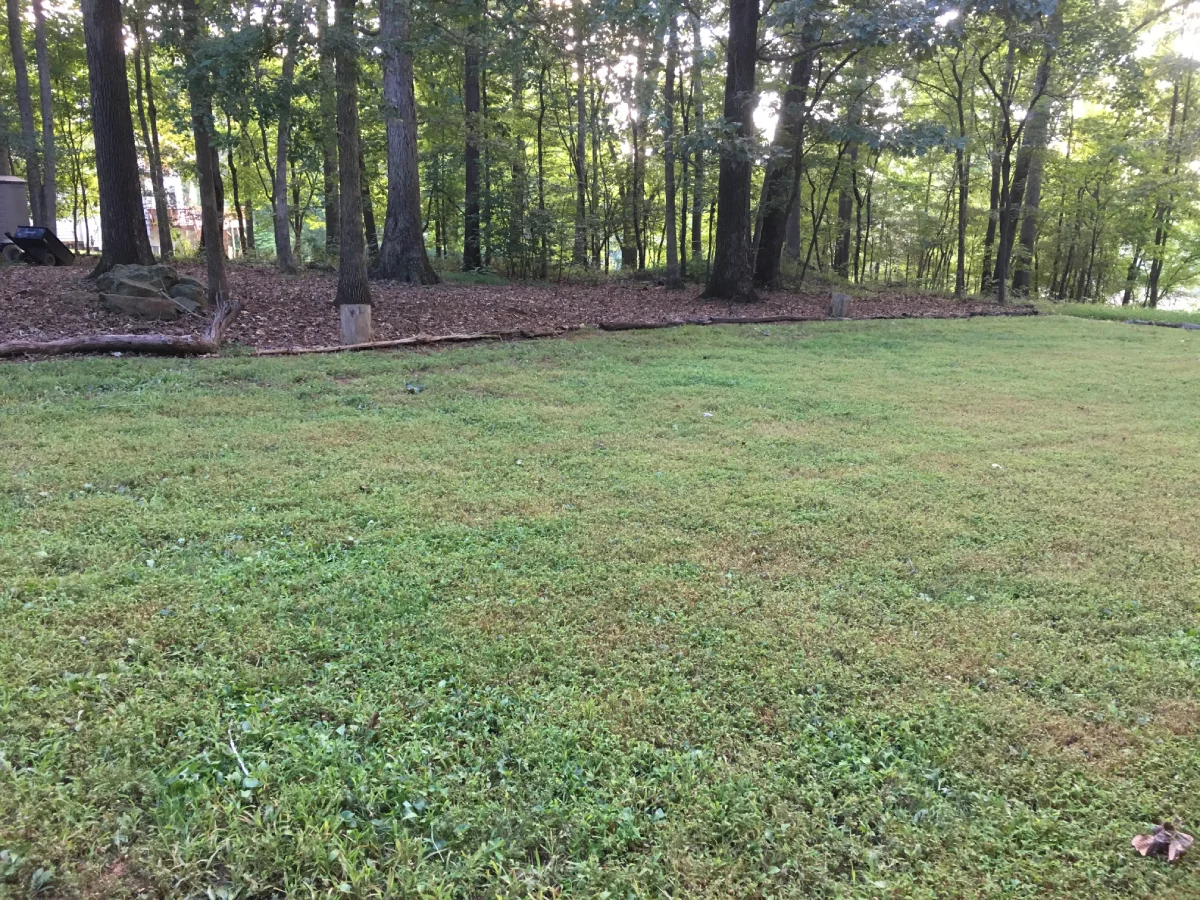
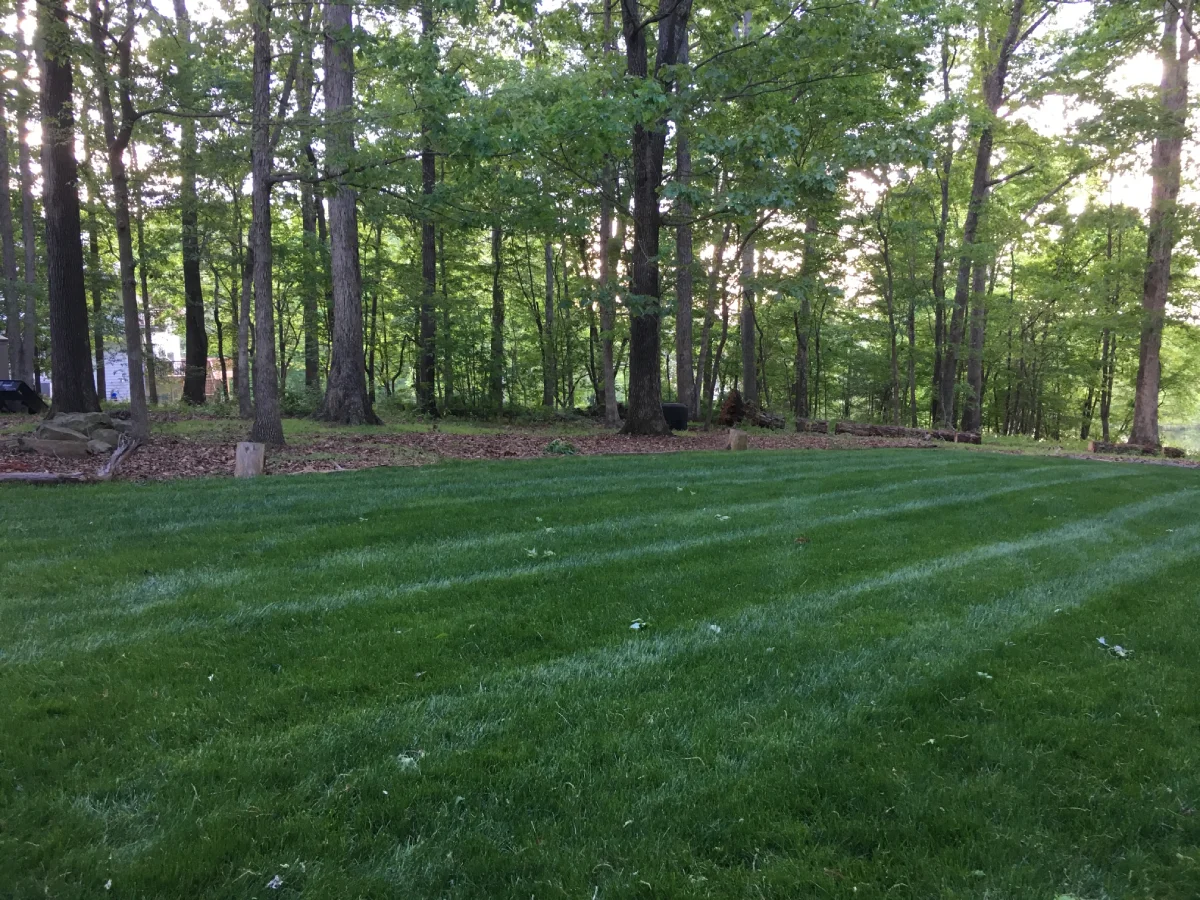
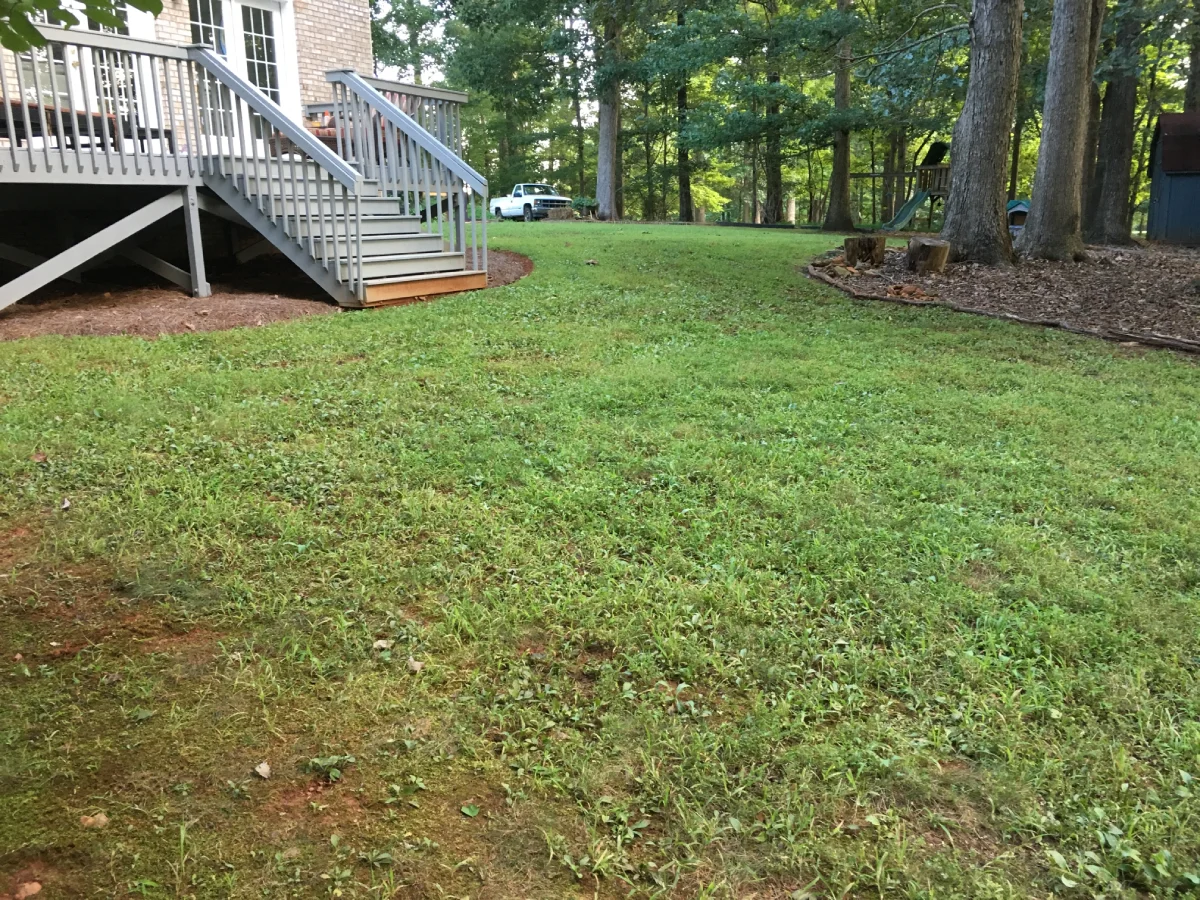
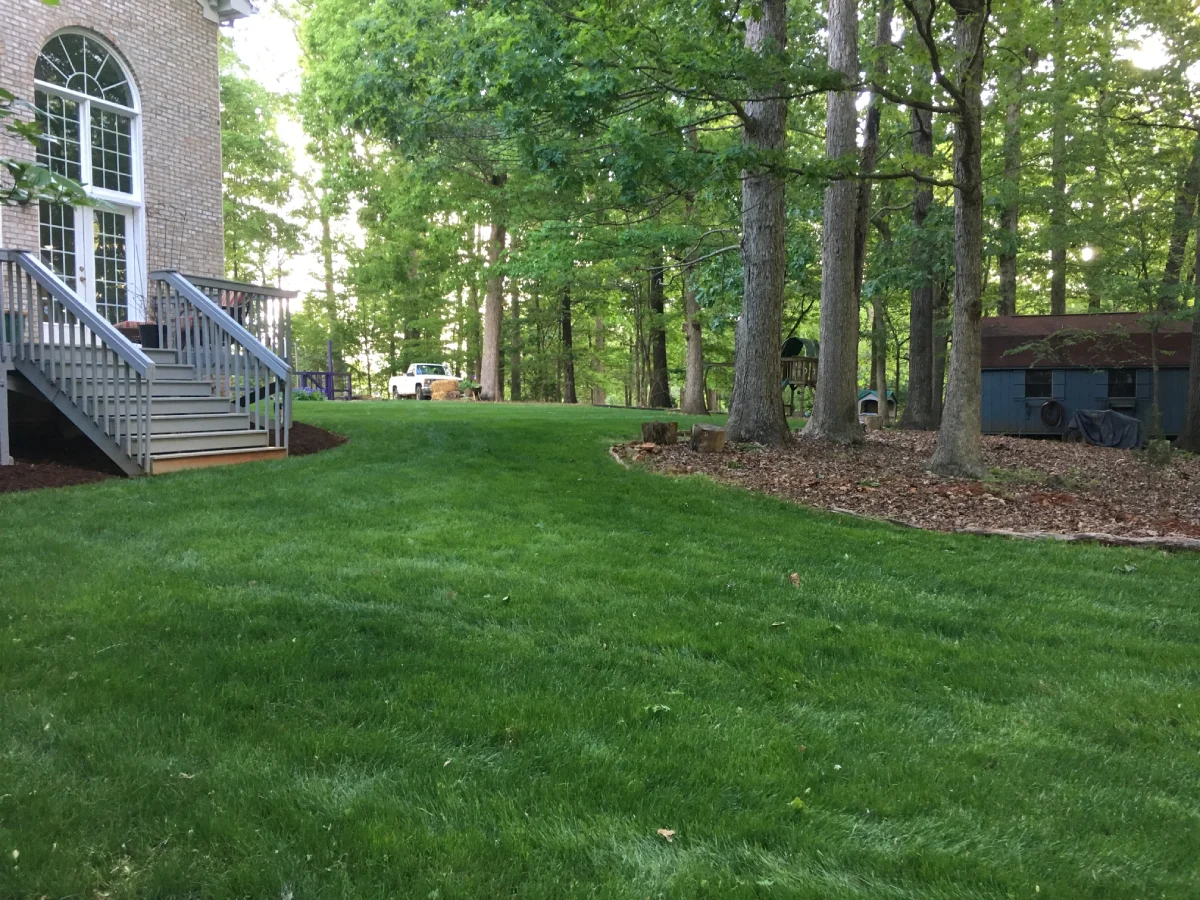
Biological lawn weed control is a soil-first approach to weed pressure. Rather than blanket-spraying synthetic herbicide through the season, the program uses pre-emergent timed to soil temperature, post-emergent identification and spot treatment as weeds appear, and a biological soil amendment that builds the microbiology to suppress weed germination at the root zone. Nature's Select® has run this approach in North Carolina since 1994.
The result is a lawn that needs less synthetic input over time. Biological weed control is not the same as commodity organic weed control; the distinction is in the question below.
Conventional lawn care starts with synthetic fertilizer and weed control. Nature's Select® starts with the soil. We enhance soil biology and design a customized year-round program that uses the proprietary Nature's Select® Solutions blend alongside conventional lawn science.
The result is a resilient lawn that holds up between visits, not just on the day after a treatment. Conventional programs rebuild the same problem every spring. Biological programs build the lawn that solves the problem.
No. Biological lawn care is a soil-first approach built around living microbes and the proprietary Nature's Select® Solutions blend. It can include conventional synthetic inputs applied at low rates where the agronomy calls for them.
Commodity organic lawn care can mean many things, because in lawn care, there is no governing body, including the USDA, that regulates the standards for "organic." An "organic" label also does not guarantee a gentle product, since some organic-labeled inputs carry toxicity comparable to conventional herbicides. "Natural lawn care" is a marketing phrase used inconsistently across the industry. Nature's Select® uses EPA-approved inputs and does not market itself as organic; the biological label describes what the program does at the soil level.
Weed control and fertilization run together as part of the broader Nature's Select® year-round lawn care service. The pre-emergent, post-emergent, and biological soil amendment described on this page are the weed-control components of that larger program.
For full program detail, see the lawn care page. You can enroll in the full year-round service or start with weed control and fertilization specifically; the on-property assessment confirms what your lawn actually needs.
Crabgrass begins to germinate when the 1-inch soil temperature holds consistently above 55 degrees. Young crabgrass is difficult to spot in a lawn until much later in the summer, by which point it has already set seed. For pre-emergent to work, it has to be down before the soil warms, so the application is typically completed in late winter or early spring.
Annual bluegrass (Poa annua) germinates in winter and requires a fall pre-emergent rather than spring.
Most homeowners in this region pay between $80 and $250 per month for weed control and fertilization paired with the rest of the year-round program. Price is driven by lawn size. Rather than relying on a one-size-fits-all formula, Nature's Select® provides pricing following your complimentary on-property assessment, so your quote reflects the unique needs of your lawn.
The written quote is provided the same day as the visit. Free estimate: (888) 786-9735.
The Nature's Select® program uses biological inputs, the proprietary Nature's Select® Solutions blend, and conventional turf science applied at lower rates of synthetic and chemical inputs than a typical weed control program. Technicians can answer property-specific questions, including application re-entry windows, during each visit.
Visible weed reduction on most lawns begins within the first growing season once pre-emergent has been applied at the correct soil-temperature window and the post-emergent program has cleared the existing pressure. The strongest results appear in the second growing season as the biological soil amendment compounds and the turf canopy thickens to suppress germination.
The first visit documents a baseline so progress can be tracked at every following visit.
Nature's Select® serves North Carolina from four locations. The Winston-Salem office (336-729-3122) is the original 1994 company and serves Winston-Salem and the surrounding Forsyth County communities across the Piedmont Triad. The Greensboro office (336-221-7680) serves the rest of the Piedmont Triad around Guilford County. The Chapel Hill office (919-335-4656) covers the Research Triangle. The Pinehurst office (910-634-3886) covers the Sandhills
Same-day written estimate. Nature's Select® Guarantee. Local franchises, one team.