Most plant pathogens remain present in the soil year-round, waiting for the environment (weather) to be conducive for their growth. Disease damage starts small, with lesions on individual grass blades. By the time you see discolored circles or sunken patches appear on the lawn, the fungus has already been cycled for weeks. Nature's Select® offers a disease management program for North Carolina homeowners: the technician identifies the disease on site, offers a treatment plan specific to your lawn, and supplements protection with our soil-first lawn care program.
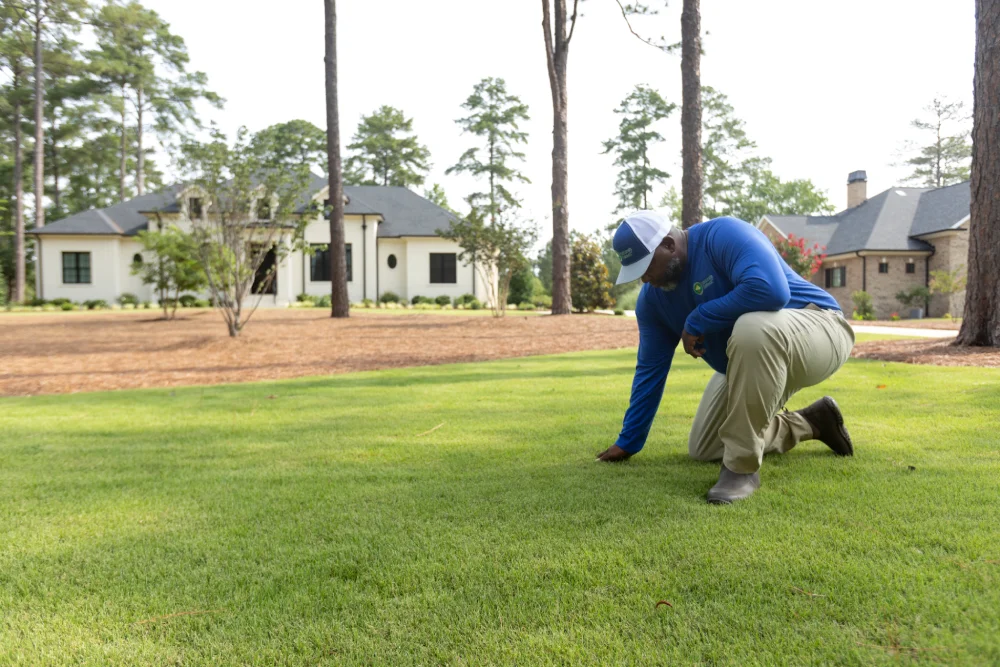

Stop guessing what is wrong with your lawn: The technician identifies the specific disease on site, before any product is applied.

Recover faster because we treat the cause, not the symptom: Soil-first biological care rebuilds the conditions that suppress fungal infection between visits.

Fungicide only when the outbreak requires it: Targeted application at the lowest effective rate stops the active outbreak and protects beneficial soil fungi, while continuous disease management keeps your lawn defended as it recovers and through the months when conditions favor fungal spread.

No pressure, no long-term contract: Same-day customized estimate and a clear treatment plan matched to your lawn, with no annual lock-in.
Nature's Select® lawn disease control covers the most-encountered fungal diseases on North Carolina turf: brown patch, Pythium blight, spring dead spot, and dollar spot. Identification happens at the disease level on site, and treatment is matched to the pathogen, the turf type, and the weather window the disease responds to.
Disease Coverage | What It Means |
|---|---|
18 varieties of turfgrass disease | Treated across the North Carolina service area |
30+ years of biological lawn care | Soil-first program running since 1994 |
4 weather windows | Spring rain, early-summer heat-humidity, late-summer humidity, fall transition |
Our program starts with the soil. A biological soil environment supports the beneficial fungi and microorganisms that compete with pathogenic fungi at the root and crown level, which is the lowest-cost intervention possible. When monitoring identifies an active outbreak above the treatment threshold, fungicide is applied at the lowest effective rate, and timed to the weather window the disease responds to. Across the year, the technician watches for the pathogen each disease brings in its window: brown patch during summer heat and humidity, Pythium during humid stretches at any temperature, spring dead spot symptoms emerging on warm-season turf in spring, and dollar spot during cool-nights-and-warm-humid-days conditions with heavy dew.
Fungal disease on a turf system spreads exponentially when conditions favor it. By the time visible symptoms appear, the pathogen has often been cycling for weeks at the root or crown level. The right program detects the pressure early, treats it at the right weather window, and rebuilds the soil conditions that make repeat outbreaks less likely.

A small early outbreak can turn into widespread thinning and bare patches after a single humid two-week stretch. Most lawn fungi reproduce on a 5 to 10 day cycle in summer humidity, so every cycle you wait, the affected area roughly doubles. An ongoing program catches that pressure early, while the patches are still small and localized, and keeps treatment targeted instead of chasing damage across the whole lawn. Once turf has thinned out, bringing it back usually takes aeration and overseeding alongside disease control, which is why steady, season-long maintenance protects the lawn far better than reacting to one outbreak at a time.


Brown patch, Pythium, slime mold, spring dead spot, and dollar spot all produce circular patches at some point in their progression, which makes them easy to confuse early on. Spotting the signs before the patches spread and merge across the lawn is what allows for a quicker recovery. The technician identifies the disease on site, then matches the treatment and timing to the active pathogen and the weather window it responds to, so the lawn turns the corner sooner instead of after weeks of guesswork.

Broad-spectrum fungicides suppress beneficial soil fungi (mycorrhizae, decomposer organisms) along with the target pathogen, which weakens the soil's ability to suppress the next outbreak. Nature's Select® reserves targeted fungicide for outbreaks above the treatment threshold and applies it at the lowest effective rate.
No long phone call, no obligation. From your first call to a written plan matched to what the technician finds.
A trained technician walks the lawn, identifies the visible disease signs (circular patches, mycelium, leaf lesions, pustules, dieback patterns), checks soil moisture and thatch conditions, and confirms which disease is active or which conditions are setting the stage for one. The assessment is free and there is no obligation.
Recommended treatment timing, the disease the technician identified (or the prevention plan if no disease is active yet), and the threshold above which fungicide treatment makes sense. The plan reflects the unique needs of your lawn and your grass type.
Some outbreaks are handled with soil amendment alone if caught early. When fungicide is required, it is matched to the disease present and applied as quickly as possible to stop the spread, with protection typically holding for three to four weeks. Depending on the disease identified and the weather window you are in, your technician may recommend additional treatments as needed.
Most homeowners considering professional disease control have first tried a bag of fungicide from the box store. The honest comparison spans five dimensions that actually matter, and the gap between a generic broad-spectrum granule and a disease-matched professional treatment is wider than most homeowners expect.
| Dimension | Nature's Select® | DIY Store-Bought Fungicide |
|---|---|---|
| Disease identification | On-site identification at the disease level. Mycelium inspection, leaf lesion check, and weather-pattern review confirm the pathogen before any product is applied. | Guesswork from package pictures. Brown patch and Pythium look almost identical in the early stage but respond to completely different fungicide classes. |
| Treatment timing | Weather-window driven. Treatment lands when the pathogen is most vulnerable: spring rain, early-summer heat-humidity, late-summer drought stress, or fall transition. | Calendar-driven (whatever is on the shelf in May) regardless of the active weather window. Fungicide applied outside the disease's vulnerable window does little. |
| Spectrum control | Disease-matched fungicide reserved for outbreaks above the treatment threshold. Beneficial soil fungi protected. | Broad-spectrum products treat the entire lawn and suppress beneficial soil fungi along with the target. No mycelium-specific targeting. |
| Soil foundation | Soil-first program: biological amendment rebuilds microbial diversity that suppresses pathogens between visits. | DIY products treat the symptom without addressing the soil microbiology that allowed the outbreak. Disease returns next season. |
Skip the trial-and-error. call (888) 786-9735 or
The technician identifies disease pressure at the species level on every visit. Treatment is matched to the pathogen, the turf type, and the weather window, not blanket-applied. The reference below covers the four disease pressures North Carolina turf most commonly sees, in the order they typically appear across the growing year.
A summer fungus that thrives in extended periods of high temperature and high humidity, most damaging on tall fescue in the Piedmont. Brown patch appears as rough circular patches ranging from 6 inches to several feet in diameter, brown or tan with a smoky-gray border. The fungus produces a distinctive gray cottony mycelium visible on leaves in early morning dew, and in active outbreaks a thin black "smoke ring" sometimes surrounds the patches.
Active
May through September; peak pressure July through August when night temperatures stay above 65°F with high humidity
Damage pattern
Rough circular brown or tan patches; gray cottony mycelium on leaves at dawn; black smoke-ring border in active disease
Field detection
Morning canopy inspection for mycelium; weather log review for humidity stretches; soil moisture checka
A water mold (technically not a true fungus) that spreads faster than any other turf pathogen, capable of destroying large turf areas within 24 to 48 hours under the right conditions. On cool-season fescue it strikes during hot humid weather; on warm-season turf it shows up during prolonged humid, rainy, or cloudy stretches. Pythium appears as small sunken circular patches up to 1 foot in diameter that can merge into large irregular dead areas. Leaves take on a matted, greasy appearance and turn orange or dark gray. Gray cottony mycelium is often visible at the patch edges.
Active
May through October; outbreaks track humidity rather than temperature
Damage pattern
Small sunken circular patches that grow rapidly; matted greasy leaves turning orange or dark gray; mycelium visible at patch edges
Field detection
Morning patch-edge inspection; soil drainage check (Pythium thrives in poorly drained soil)
The most serious fungal disease of warm-season turf (bermuda, zoysia) in North Carolina. Spring dead spot infects the roots, stolons, and rhizomes during the previous fall, but symptoms only appear when the turf greens up in spring. The result is circular dead patches 6 inches to several feet in diameter in the same locations year after year, enlarging by several inches annually if untreated. Roots, stolons, and rhizomes within the affected area rot and darken before the patch becomes visible.
Active
Symptoms visible March through May on warm-season turf; the fungus is active in the previous fall
Damage pattern
Circular dead patches that appear when turf greens up in spring; patches occur in the same spots every year, enlarging annually; rotted darkened roots and stolons within the patch
Field detection
Spring inspection to locate the dead patches; root and rhizome examination at patch edge; soil pH check (low pH favors the disease)
One of the most common fescue and bermuda diseases in the Piedmont. Dollar spot appears as small, well-defined circular patches roughly the size of a silver dollar (2 to 6 inches across) and bleached straw-colored. On individual blades, the disease produces distinctive hourglass-shaped lesions with reddish-brown borders. White cottony mycelium is often visible in early morning dew before the patches fully develop. Low nitrogen fertility and prolonged leaf wetness from heavy dew dramatically increase susceptibility.
Active
April through October; peak pressure during cool nights, warm humid days, and heavy dew (typically May-June and again September-October)
Damage pattern
Small straw-colored circular patches roughly silver-dollar sized; hourglass lesions with reddish-brown borders on individual blades; white cottony mycelium in morning dew
Field detection
Early morning canopy inspection for mycelium; blade examination for hourglass lesions; soil nitrogen test
Walk your yard and check for these patterns. If one of them describes what you see, the lawn is telling you a specific disease is active. The earlier the technician catches it, the smaller the treatment area, the lower the cost, and the faster the lawn recovers.
When you see rough circular brown or tan patches several inches to several feet across, and the canopy inside the patch shows gray cottony webbing in early morning dew, you almost certainly have brown patch. The black smoke-ring border on the patch edge confirms active disease. Most common on tall fescue in May and June during hot, humid stretches.
When small sunken circular patches show up after a humid stretch and visibly spread day over day, with leaves looking matted, greasy, and turning orange or dark gray, you have Pythium blight. Pythium spreads faster than any other turf pathogen and does not wait for treatment. Often pairs with poor soil drainage.
When warm-season turf (bermuda or zoysia) greens up in spring and dead circular patches show up in the same locations as last year, getting visibly larger each year, you have spring dead spot. The fungus infects the roots and rhizomes in the previous fall; spring symptoms are the late stage. Fall is the only effective treatment window.
When you see well-defined patches roughly the size of a silver dollar (2 to 6 inches) with straw-colored bleached turf inside, and individual blades show hourglass-shaped lesions with reddish-brown borders, often with white cottony mycelium visible in morning dew, you have dollar spot. Low nitrogen and heavy dew are the typical drivers.
If any of these describe your lawn, the disease cycle is already running. call (888) 786-9735 or
Founded in Winston-Salem in 1994, Nature's Select® has expanded across North Carolina into the Triad, the Triangle, and the Sandhills, and continues to add franchises across the region. Call the toll-free number and you'll be routed to the office that covers your address.

Serving the Research Triangle (Chapel Hill, Carrboro, Hillsborough, Durham, Pittsboro)
Serving the Piedmont Triad (Greensboro, High Point, Burlington, Summerfield, Oak Ridge)
Serving the Sandhills (Pinehurst, Aberdeen, Southern Pines, Seven Lakes)
Serving the Piedmont Triad (Winston-Salem, Clemmons, Kernersville, Lewisville, King)
Not sure which office covers your address? Call (888) 786-9735 and we will point you to the right local team.
Biological lawn disease control is a soil-first approach to managing the fungi and water molds that damage turf. The program builds a healthy soil environment that supports beneficial fungi and microorganisms that compete with pathogens at the root and crown level. When monitoring identifies an active outbreak above the treatment threshold, fungicide is matched to the disease and applied at the lowest effective rate, timed to the weather window the pathogen responds to. Nature's Select® has run this approach across North Carolina since 1994.
No. Biological lawn disease control is a soil-first approach built around living soil microbes and the proprietary Nature's Select® Solutions blend. It is a science-backed approach designed to use less synthetic and chemical input rather than none. Commodity organic disease control is a marketing label used inconsistently across the industry. Nature's Select® uses the biological label because it describes what the program does at the soil level.
The program covers the five most-encountered fungal diseases on Piedmont turf: brown patch (Rhizoctonia solani, peak May through August on tall fescue), Pythium blight (Pythium aphanidermatum, humid stretches at any temperature), slime mold (Physarum and Mucilago species, after heavy rain followng dry weather), spring dead spot (Ophiosphaerella korrae, on warm-season turf with symptoms visible in spring), and dollar spot (Clarireedia jacksonii, cool nights with warm humid days and heavy dew). Beyond these five, the program covers the full range of roughly 18 turfgrass disease varieties seen across the Piedmont service area.
The decision is based on disease, severity, and weather window. For each pathogen, there is a treatment threshold above which fungicide makes sense and below which soil amendment and cultural changes are the right intervention. Brown patch and dollar spot often resolve with mowing-height and irrigation-timing changes alone if caught early. Pythium blight always warrants immediate fungicide because of how fast it spreads. Spring dead spot is treated in the previous fall, not when spring symptoms appear. In every case, treatment lands during the weather window when the pathogen is most vulnerable.
The Nature's Select® program uses biological inputs, the proprietary Nature's Select® Solutions blend, and targeted fungicides applied at lower rates of synthetic input than a typical lawn disease program. The technician can answer property-specific questions before or after the treatment.
Nature's Select® serves North Carolina from four locations. The Winston-Salem office (336-729-3122) is the original 1994 company and serves Winston-Salem and the surrounding Forsyth County communities across the Piedmont Triad. The Greensboro office (336-221-7680) serves the rest of the Piedmont Triad around Guilford County. The Chapel Hill office (919-335-4656) covers the Research Triangle. The Pinehurst office (910-634-3886) covers the Sandhills
Free on-property assessment within 48 hours, customized estimate the same day. Disease-level identification. Nature's Select® Guarantee. Local franchises, one team.