Weed and Feed Products: What Actually Happens to Your Lawn
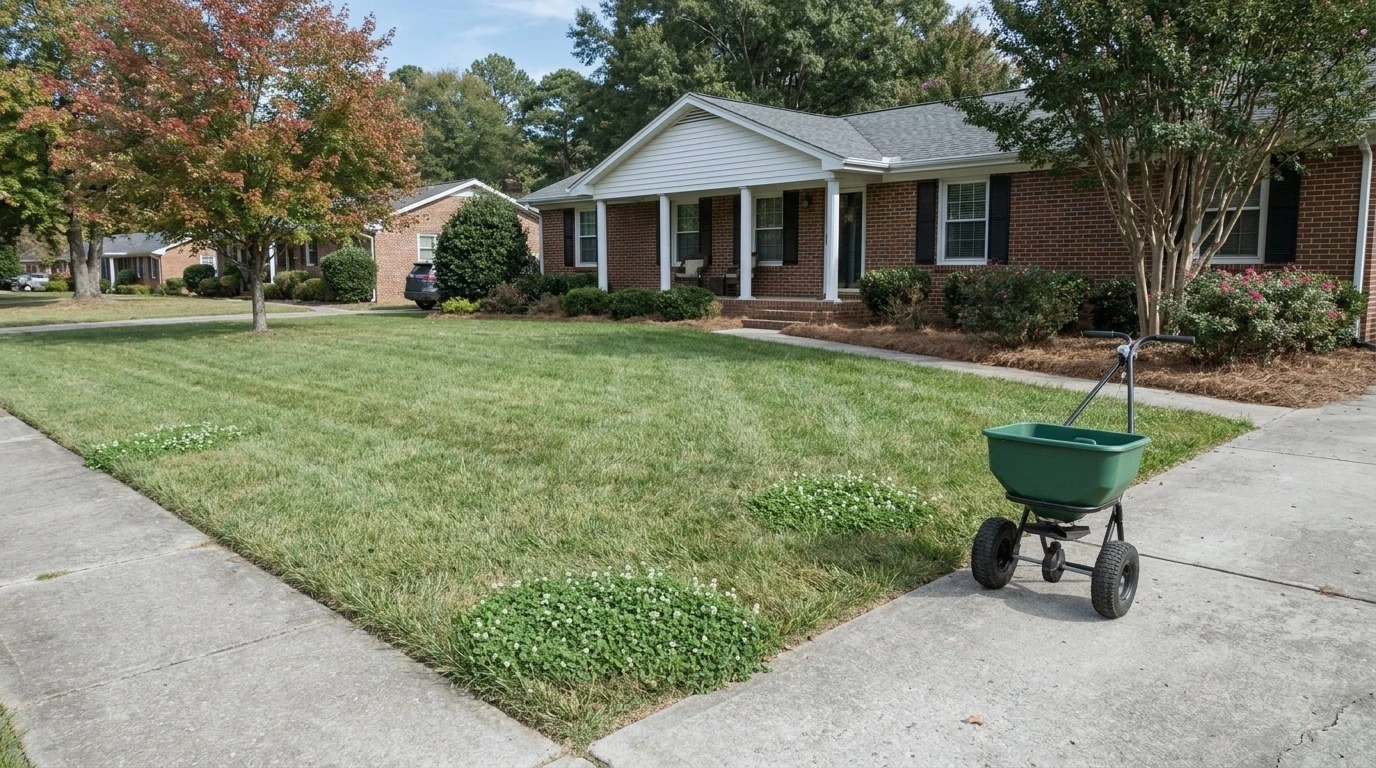
Weed and feed products spread a lawn fertilizer and a broadleaf weed killer in one pass. In North Carolina, what happens next depends on timing: the herbicide works only on actively growing weeds it actually reaches, while the fertilizer feeds whatever is growing, grass or weed. Because tall fescue and warm-season lawns need feeding and weed control at different times of year, one combined product often gets one of the two jobs wrong.
The idea behind weed and feed is simple. One bag, one walk with the spreader, and the lawn gets greener while the weeds disappear. For a busy homeowner, that promise is hard to ignore.
The results are often mixed. Some weeds curl and fade, others shrug it off, and a few weeks later the lawn may look much the same. This guide explains what is in the bag, what happens on your lawn after you spread it, and why timing for your grass type decides whether weed and feed helps or wastes a season.
What Is in a Bag of Weed and Feed?
A weed and feed product is two products blended into one. Part of each granule, or each ounce of liquid, is fertilizer, and part is an herbicide aimed at weeds.
The feed: a nitrogen fertilizer
The fertilizer side is described by three numbers on the bag. The N.C. Cooperative Extension tall fescue calendar explains that the first number always represents nitrogen content, and it shows how to work out how much product delivers 1 pound of nitrogen per 1,000 square feet.
Most weed and feed blends lean heavily on nitrogen, the nutrient that drives green color and leaf growth. Nitrogen does not choose between plants. Grass and weeds both use it.
The weed: usually a broadleaf herbicide
The weed side is most often a mix of broadleaf herbicides meant for weeds such as clover, dandelion and chickweed. Some products add a pre-emergent that stops seeds from sprouting instead. The active ingredients and the grasses the product is safe on are listed on the label.
That label matters more than the marketing. The U.S. Environmental Protection Agency notes that pesticide labels are legally enforceable, summed up in the phrase "the label is the law." The label decides where, how, how much and how often a product may be used.
What Happens After You Spread It
Once weed and feed is on the lawn, the two halves start working on different schedules. Understanding that split explains most disappointing results.
The herbicide has to reach the weed
A broadleaf herbicide works through the weed's leaves, so the product has to land on the weed and stay there long enough to be absorbed. A granule that bounces off a dry leaf, or washes off in the next rain, does little. Many granular labels address this with directions about damp foliage and rain, so read them closely.
The weed also has to be actively growing. A dormant, drought-stressed or cold weed takes up little of the product. The NC State Extension bermudagrass calendar says not to apply herbicides during a drought or when grass and weeds are not actively growing.
The fertilizer feeds everything
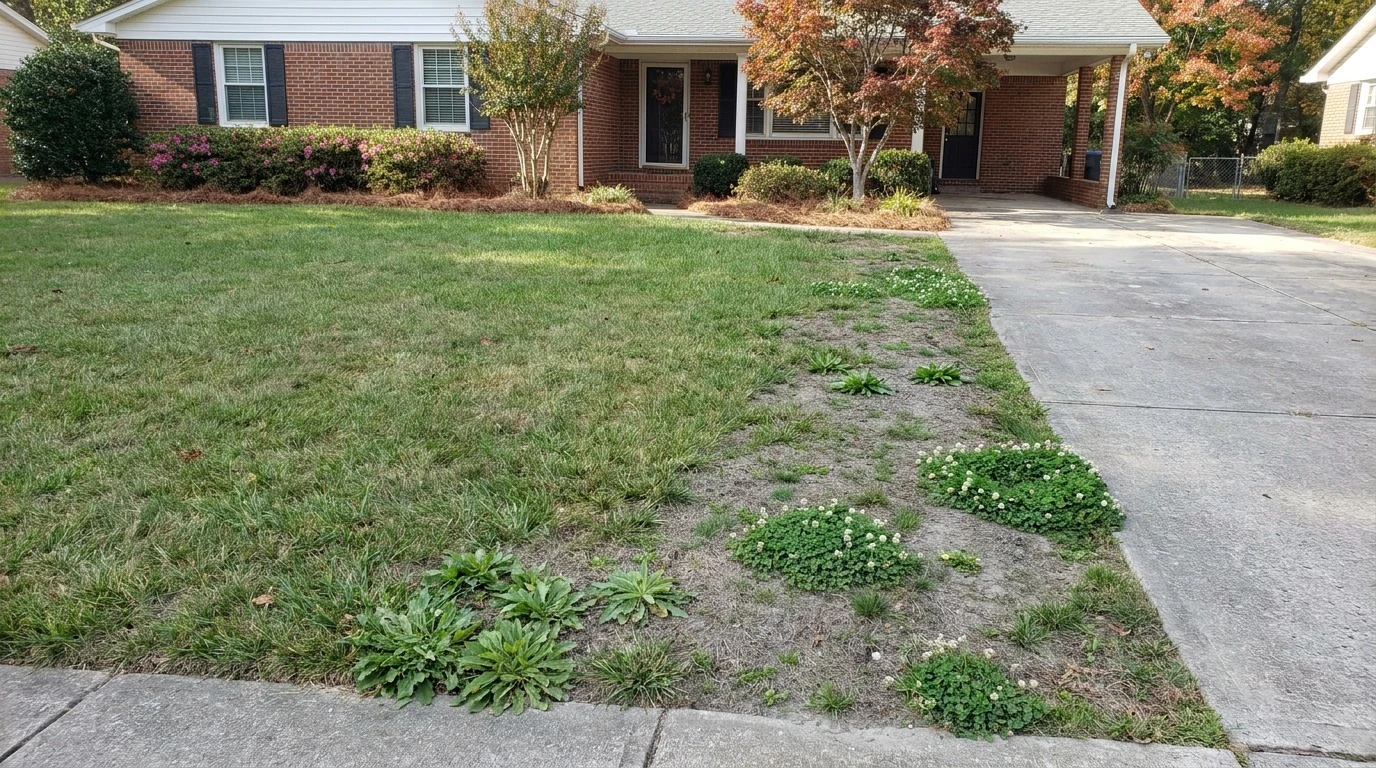
The fertilizer side dissolves into the soil and feeds every plant with roots in reach. Where the herbicide missed, the surviving weeds get fed too. A lawn full of clover in May can get a strong dose of nitrogen that helps the clover as much as the grass.
The whole lawn gets the herbicide
A broadcast spreader puts the herbicide on every square foot, including the large areas with no weeds at all. The NC State Cooperative Extension Carolina Lawns guide describes integrated pest management, where pesticides are used only when necessary and only the areas in need are treated. Weed and feed works the other way around.
The Timing Problem for Tall Fescue Lawns
Tall fescue, the most common lawn grass in central North Carolina, shows the timing problem most clearly. Its feeding calendar and its weed control calendar barely overlap.
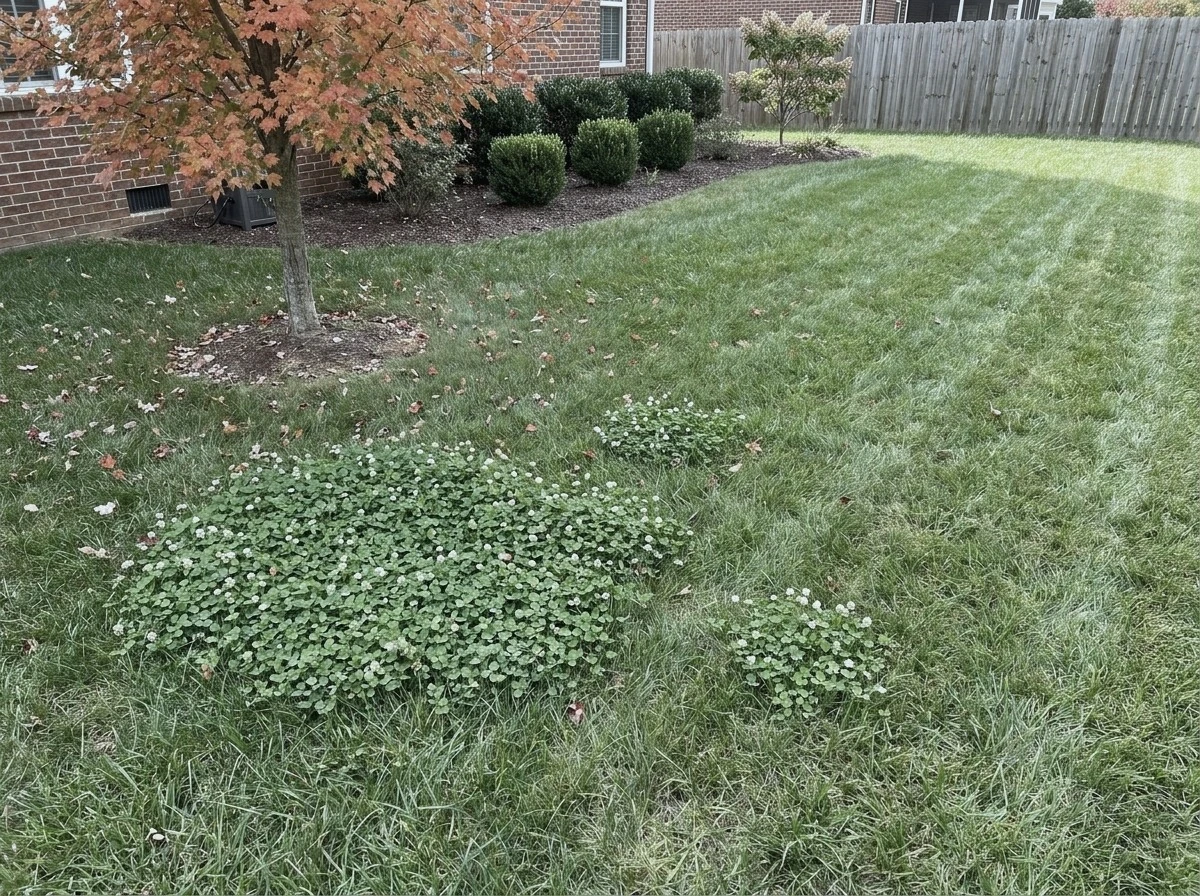
| Season | Tall fescue feeding (NC State calendar) | Weed control (NC State calendar) | Does a weed and feed fit? |
|---|---|---|---|
| September to November | 1 pound of nitrogen in mid-September and again in November | Broadleaf herbicides for winter weeds; caution on new seedings | Only where no seed went down this fall |
| December to February | 1 pound of nitrogen in February | Broadleaf herbicides for chickweed and henbit as needed | Sometimes, if weeds are growing |
| March to May | Light feeding only, 1/5 to 1/2 pound, lower after March 15 | Pre-emergent for summer annual grasses in early March | Rarely: a heavy spring feeding is the wrong dose |
| June to August | Light feeding only as needed | Do not use herbicides | No |
Spring weed and feed pushes the wrong growth
Spring is when most weed and feed bags get sold. Yet the tall fescue calendar recommends only 1/5 to 1/2 pound of nitrogen per 1,000 square feet in spring, with lower amounts after March 15. A full-rate spring weed and feed can deliver far more nitrogen than that, right before the summer months when the calendar keeps feeding light.
Summer is off limits for herbicides
For June through August, the same calendar says plainly not to use herbicides on tall fescue. Heat-stressed fescue and dormant weeds are a poor match for a combination product, so a midsummer application mostly adds risk.
Fall seeding and weed and feed do not mix
Fall is fescue's main feeding season, but it is also the overseeding window, roughly September 1 to October 1 in the calendar. The calendar cautions that some herbicides may affect newly seeded turf. A weed and feed spread over fresh seed can hurt the new grass you just paid for, so the two jobs need separate products and separate dates.
The Timing Problem for Warm-Season Lawns
Bermudagrass, zoysia and centipede lawns, common in the Sandhills and on sunny sites across North Carolina, run on a different clock. Their fertilizer goes down in late spring and summer, not in fall.
Bermudagrass
The NC State bermudagrass calendar recommends feeding several weeks after the lawn turns fully green, typically between early April and May. It lists pre-emergent herbicides from mid-February to early March and postemergence broadleaf control in May as needed.
A weed and feed spread in March to catch early weeds therefore feeds the bermudagrass before it can use the nitrogen. The calendar also notes that products containing two or three different broadleaf herbicides control broadleaf weeds more effectively, and that the product must be labeled for bermudagrass.
Centipedegrass
Centipede is the least forgiving. North Carolina State University advises against applying nitrogen to centipedegrass before mid-May, with a basic program of 1 pound of nitrogen per 1,000 square feet in mid-May. The Carolina Lawns guide adds that centipedegrass is sensitive to many commonly used herbicides.
Put those two facts together and an early spring weed and feed on centipede is a poor bet. It feeds too early and may carry an herbicide the grass does not tolerate.
Trees, Shrubs and Beds Next to the Lawn
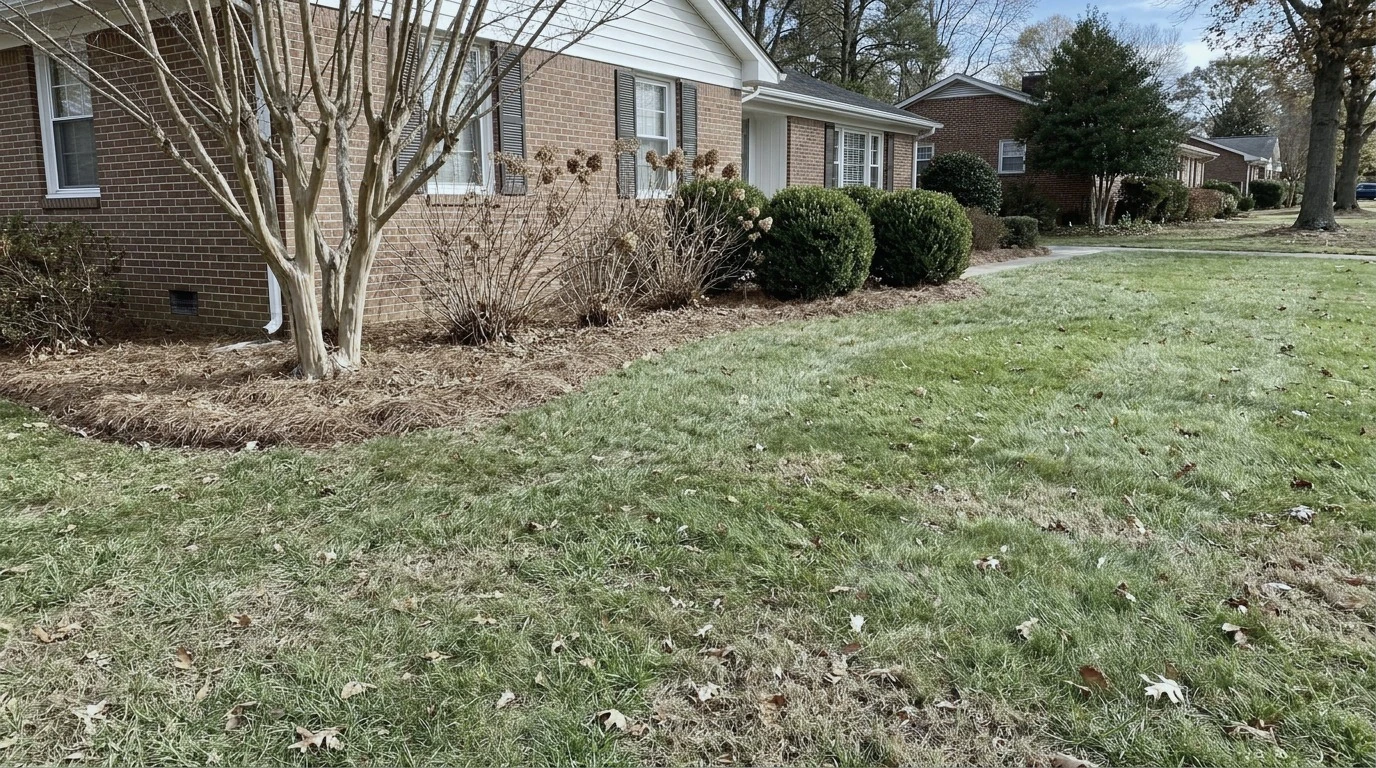
Lawns rarely stop cleanly at the edge of the grass. Tree and shrub roots spread under the turf, often well past the edge of the mulch.
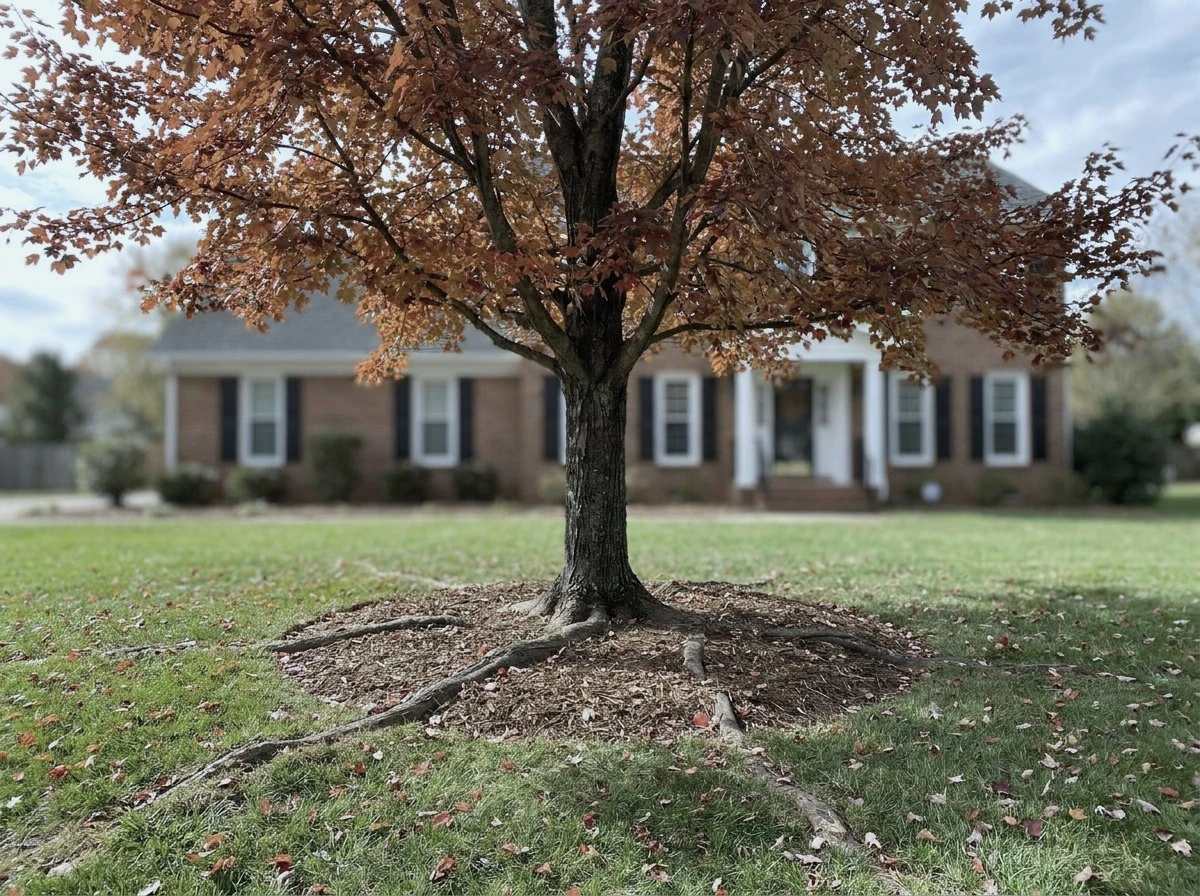
Root zones extend under the turf
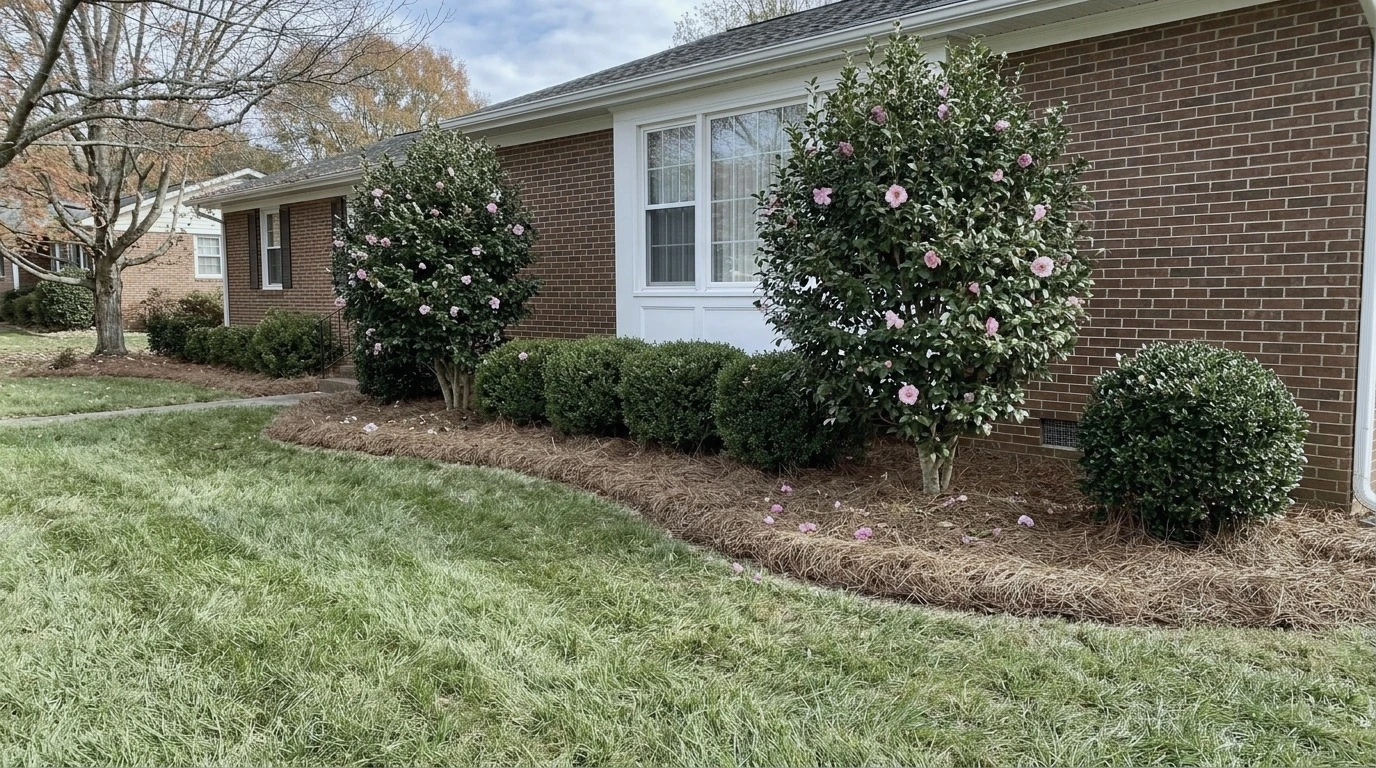
The Carolina Lawns guide warns not to apply certain lawn herbicides, such as atrazine or simazine, over the rooting areas of trees and ornamentals that are not listed as tolerant on the herbicide label. A broadcast weed and feed pass across the whole yard covers those root zones too.
Before using any combination product near dogwoods, crape myrtles, azaleas or a young tree, read the label for warnings about trees and ornamentals. If the label is unclear, keep the product off the area under the canopy.
Keep it on the grass
Granules that land on driveways, sidewalks and patios do not help the lawn. Sweep or blow them back onto the turf after you finish. Use the spreader's edge guard along beds so the herbicide stays out of mulched areas and vegetable gardens.
Does Weed and Feed Actually Work?
Weed and feed can control some broadleaf weeds when the timing, the weed and the grass all line up. It does much less when any one of those is off.
What it can do
On a lawn with scattered broadleaf weeds that are actively growing, a correctly timed weed and feed can reduce them while giving the grass a feeding. For a healthy lawn with a light weed problem at the right time of year, that can be enough.
What it cannot do
Most weed and feed products do nothing for grassy weeds such as crabgrass once they are up, or for sedges, unless the label says so. They do not fix compacted clay, thin turf or a mower set too low, which are the reasons weeds keep returning. Our upcoming guide on why weeds keep coming back covers those causes in detail.
Why results look patchy
Weeds that are hit at the right stage twist, yellow and fade over the following weeks. Weeds that were dry, dormant or missed by the spreader keep growing, now with a fresh dose of nitrogen. That mix is why many lawns look half treated after a weed and feed.
What Works Better Than Weed and Feed
The better approach separates the two jobs so each one happens at the right time for your grass. It takes a little more planning and usually less product.
Feed on your grass type's calendar
Start with a soil test, which the tall fescue calendar recommends before fall feeding, and apply only the nutrients the report calls for. Then feed on the schedule for your grass. The same calendar notes that grass clippings left on the lawn can provide up to 25 percent of the lawn's fertilizer needs.
Our post on fall fertilization before winter explains why fall feeding carries tall fescue through the cold months.
Treat weeds where they are, when they are growing
Spot treat broadleaf weeds with a product labeled for them and for your grass, while they are actively growing. For tall fescue, that means fall and late winter for winter annual weeds. Our older post on killing weeds without harming your grass covers the basics of selective control.
Build a lawn that crowds weeds out
Dense turf is the long-term weed control. Mow at the right height, water deeply and less often, aerate compacted clay and overseed thin tall fescue in early fall. Feeding the soil, not only the grass, supports that density, as our post on why we feed the soil explains.
How Nature's Select® Handles Feeding and Weed Control
Nature's Select® keeps feeding and weed control on separate, grass-specific schedules instead of combining them in one product. Our lawn weed control program uses Nature's Select® Solutions, the proprietary biological blend first developed for lawns in 1994 and refined across three decades.
Weed treatment follows a threshold. Products are used only when pressure crosses a treatment threshold, at the lowest effective rate, on the affected area. Visits come as part of a seasonal lawn care program of 7 visits, typically 4 to 8 weeks apart, with one technician assigned to your property and no long-term contract.
Key Takeaways
- Weed and feed combines a nitrogen fertilizer with a broadleaf herbicide, so one pass tries to do two jobs on one date.
- The herbicide works only on actively growing weeds it actually reaches, while the fertilizer feeds grass and weeds alike.
- Tall fescue is fed mainly in fall and lightly in spring, and NC State says not to use herbicides on it in summer.
- Bermudagrass is fed after full green-up, and centipedegrass gets no nitrogen before mid-May.
- Herbicides can harm new fescue seedlings and the roots of trees and shrubs under the lawn.
- Separate feeding and spot weed control, timed to your grass type, usually works better than a combined product.
Frequently Asked Questions
When should you put weed and feed on your lawn?
It depends on your grass. For tall fescue, a combined product fits best in fall or late winter, when the grass is fed and winter weeds are growing, and never on new seed. For bermudagrass, wait until several weeks after full green-up. For centipede, avoid nitrogen before mid-May. Always follow the product label for timing and rate.
Does weed and feed actually work?
It can reduce broadleaf weeds such as clover and dandelion when they are actively growing and the product stays on their leaves. It works poorly on dry, dormant or missed weeds, and most products do not control grassy weeds or sedges. Results improve when the timing suits both your grass and the weeds you have.
What works better than weed and feed?
Separating the two jobs usually works better. Test the soil, feed on the calendar for your grass type and spot treat weeds while they are actively growing. Pair that with the right mowing height, deeper watering, aeration and fall overseeding for tall fescue. A dense lawn leaves fewer openings for weeds to start.
Does weed and feed kill existing weeds?
The herbicide in most weed and feed products targets broadleaf weeds that are already growing, so it can kill existing clover, dandelion and similar weeds. Products with a pre-emergent instead stop new seeds from sprouting and do not affect weeds that are already up. Check the label to see which type you have.
How long does it take for weed and feed to work?
Treated broadleaf weeds usually twist, yellow and fade gradually rather than overnight. The label gives the expected timeframe and any rules about mowing, watering or rain after application. If weeds are still healthy well past that window, they may have been dormant, missed or not listed on the label.
Can I use weed and feed on newly seeded grass?
Usually not. The NC State tall fescue calendar cautions that some herbicides may affect newly seeded turf. If you overseed fescue in fall, skip weed and feed on those areas and check the label for how long to wait after seeding. Feed new grass with a starter fertilizer instead.
Is weed and feed safe to use near trees and shrubs?
Use care. Tree and shrub roots spread under the lawn, and NC State warns against applying certain lawn herbicides over the rooting areas of trees and ornamentals that are not listed as tolerant on the label. Read the label for warnings, keep the spreader off beds and sweep granules off hard surfaces.
Conclusion
Weed and feed is convenient, but it asks one application to do two jobs that rarely share a calendar. The herbicide needs growing weeds and good contact, while the fertilizer feeds everything and works best on your grass type's schedule. When the dates do not line up, one of the two jobs gets done badly.
Separating feeding and weed control, and timing each one to your grass, gives better results with less product. If you would like a plan built around your own lawn, Nature's Select® can assess your grass, soil and weeds together. Request a free on-property assessment or call (888) 786-9735, and we will route you to the office covering your address.