Why Healthy Soil Fights Disease Better Than Any Fungicide
Healthy soil fights lawn disease through competitive exclusion, a mechanism in which beneficial soil microbes such as Trichoderma harzianum and Bacillus subtilis outcompete pathogenic fungi at the root and crown before disease can establish. A diverse soil microbiome suppresses pathogens continuously, while broad-spectrum fungicides often weaken the same beneficial fungi that would have prevented the next outbreak.
If you have ever sprayed a broad-spectrum fungicide only to watch the same disease return worse the next year, you are not imagining it. The soil beneath your grass is a living ecosystem, and the soil microbes within it determine whether a pathogen becomes a patch. This article walks through what is actually happening in the rhizosphere when your lawn defends itself, why the mechanism has a name (competitive exclusion), and how the soil-first program at Nature's Select® works with that biology instead of around it. You will finish knowing exactly which soil microbes matter for lawn health, how they suppress Rhizoctonia solani and Pythium aphanidermatum at the root, and what the next outbreak in your yard is really telling you about the soil microbial diversity underneath.
What Competitive Exclusion Actually Means for Your Lawn
Competitive exclusion is the ecological principle that when two organisms compete for the same resource in the same space, one will eventually push the other out. In the top four inches of soil beneath your grass, that competition runs every second of every day between beneficial soil microbes and pathogenic fungi. Both sides are after the same real estate: root surface, sugars leaking from root tips, and physical space in the crown of the plant. When the beneficial side wins, the pathogen never gets a foothold. When the beneficial side has been suppressed (by drought stress, soil compaction, or broad-spectrum chemistry) the pathogen finds an open lane and a patch appears in the lawn.
Dr. William Hildebolt, the soil scientist who founded Nature's Select® in 1994, built the company's methodology around this mechanism. The soil-first program does not chase symptoms. It maintains the soil microbial diversity that keeps pathogens outnumbered before a homeowner ever sees a circle in the yard. Three decades of state-licensed specialists across four active North Carolina offices and growing have refined how competitive exclusion translates from soil-lab science into a residential lawn care program. Healthy soil, in this framing, is not a slogan. It is a working population of beneficial microbes doing measurable work in the rhizosphere every day.
The Rhizosphere Is a Battlefield You Never See
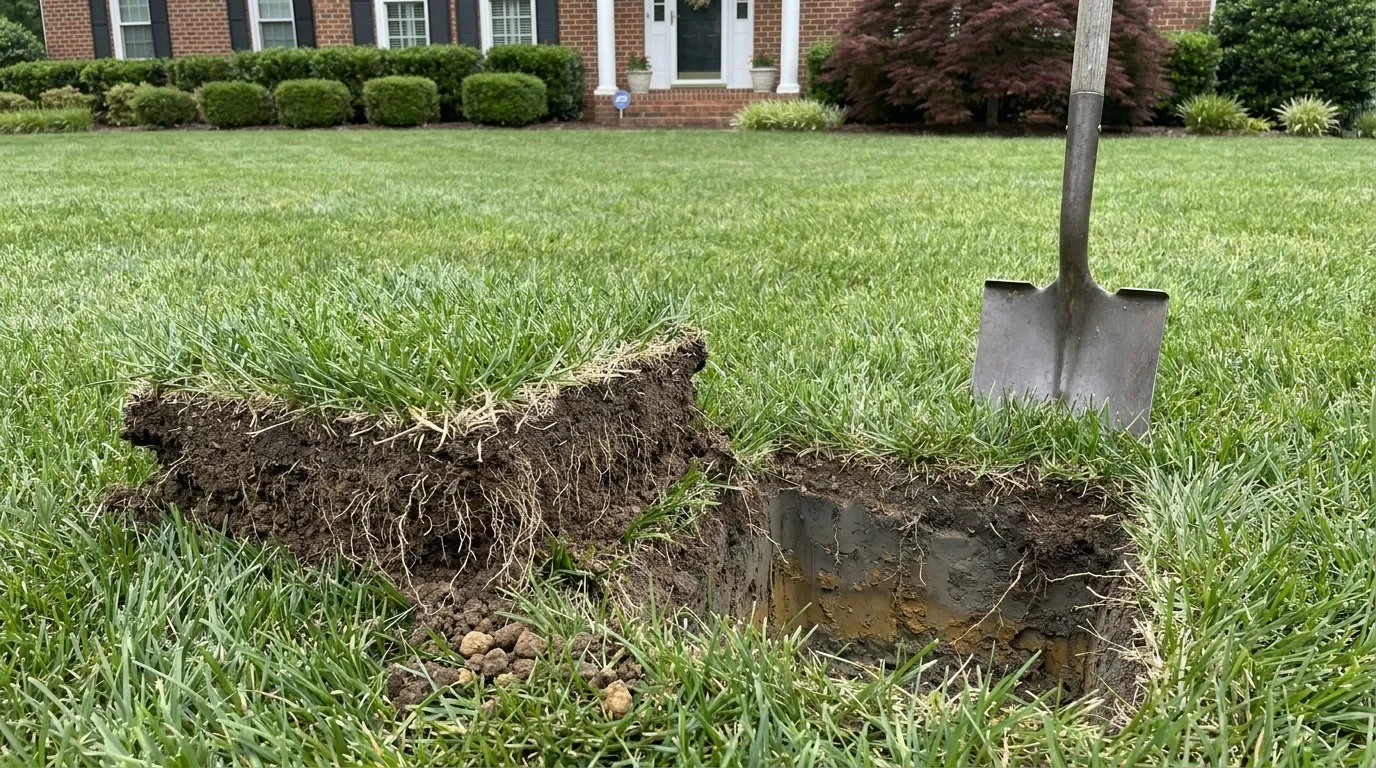
The rhizosphere is the thin zone of soil in direct contact with a plant root, and it is the most biologically active habitat on Earth. Roots leak a slow stream of carbohydrates called exudates, and every microbe within a millimeter of that root is trying to eat them. Beneficial bacteria like Bacillus subtilis form biofilms along the root surface. Beneficial fungi like Trichoderma harzianum colonize the root cortex and coat the tissue in mycelium (the thread-like network fungi use to move and feed). A pathogen arriving at that root has to physically push past this crowd of soil microorganisms before it can infect anything.
That crowding is competitive exclusion in its simplest form. The pathogen is not being killed. It is being outnumbered by soil microbes.
The Five Microbe Groups Doing the Work Under Your Grass
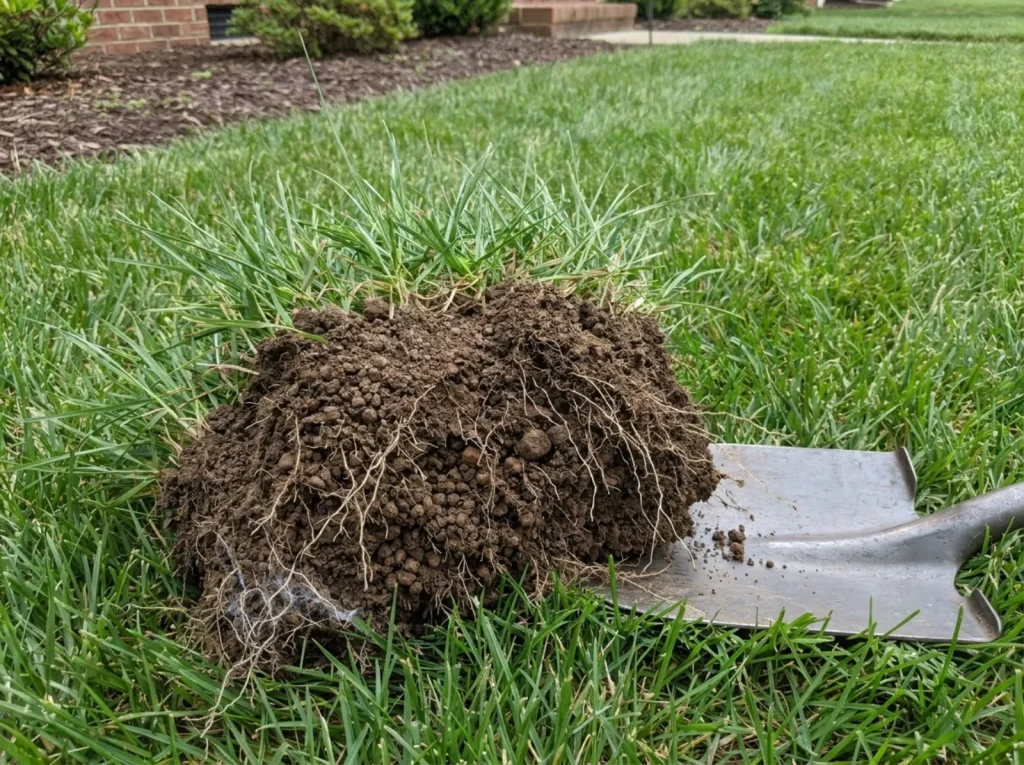
Not every soil microbe suppresses disease. The soil food web is a layered community of soil organisms, and each group has a job. Understanding which soil microorganisms matter tells you why the whole soil ecosystem falls apart when broad-spectrum chemistry hits the top four inches of soil. It also tells you why the same fertilizer bag that promises a greener lawn can leave the soil biology weaker than it started, if the nitrogen source overwhelms the microbial communities that regulate nutrient cycling.
- Beneficial bacteria including Bacillus subtilis and Pseudomonas fluorescens form protective biofilms and release compounds that inhibit pathogen growth
- Beneficial fungi including Trichoderma harzianum and Trichoderma virens parasitize pathogenic fungi directly and colonize root surfaces before pathogens arrive
- Mycorrhizae (specifically arbuscular mycorrhizae) form partnerships with grass roots, extending the root system into soil the plant cannot reach and improving nutrient uptake in exchange for sugars
- Protozoa graze bacteria and cycle nitrogen back into a form roots can use, which is a core part of soil nutrient cycling
- Beneficial nematodes hunt insect larvae and parasitic nematodes without touching plant tissue
When these five groups of soil microbes are balanced, disease pressure stays under the threshold that produces visible damage. When one group is suppressed (usually beneficial fungi, which are the most vulnerable to broad-spectrum fungicide) the pathogens that were being held in check start winning. Microbial diversity, in other words, is the lawn's insurance policy against the next outbreak. Long-running research from the USDA Agricultural Research Service documents this suppressive effect across decades of soil microbiome studies in turfgrass and vegetable cropping systems.
Trichoderma and Bacillus: The Two Names Worth Knowing
Two soil microbes carry more of the disease suppression load than any others on North Carolina lawns. Trichoderma harzianum is a soil fungus that grows toward pathogenic fungi, wraps around their hyphae (the thread-like bodies of fungi), and consumes them. Peer-reviewed biocontrol trials have documented Trichoderma harzianum activity against Rhizoctonia solani (brown patch) and Pythium species (Pythium blight) in turf systems for more than 30 years. Bacillus subtilis is a soil bacterium that produces natural antifungal compounds and forms protective biofilms on root surfaces. Both are components of a broader biological soil program and are living organisms that continuously populate the rhizosphere. Add Bacillus and Trichoderma to the soil microbiome and disease pressure drops without a single application of broad-spectrum chemistry.
Both organisms are studied within the broader classes of soil bacteria and soil fungi, which have documented effects on lawn disease and turf lawn health..
Why Broad-Spectrum Fungicide Often Makes the Next Outbreak Worse
The word "broad-spectrum" describes exactly what the chemistry does: it kills fungi across a wide range, including the beneficial fungi that were suppressing your next disease. This is not a controversial claim. USDA Agricultural Research Service publications on soil microbiology have documented the effect for decades, and NC State Cooperative Extension turf pathology bulletins consistently recommend targeted fungicide over blanket calendar applications for exactly this reason. Pesticide impacts on soil microbes are cumulative, and each broad-spectrum application shifts the microbial community structure toward pathogen dominance.
Here is what typically happens on a residential lawn after a broad-spectrum application:
- The immediate outbreak (say, active brown patch) clears within seven to ten days as the fungicide suppresses Rhizoctonia solani
- Beneficial fungi including Trichoderma species and mycorrhizae are also suppressed, because the chemistry does not distinguish between pathogenic and beneficial fungi
- Bacterial populations remain but their fungal counterweight is gone
- Over the next 30 to 90 days, pathogens rebound faster than the beneficial fungi can recolonize
- The next disease window (often dollar spot in the shoulder season, or spring dead spot infecting warm-season roots in fall) opens with less biological resistance than the lawn had before treatment
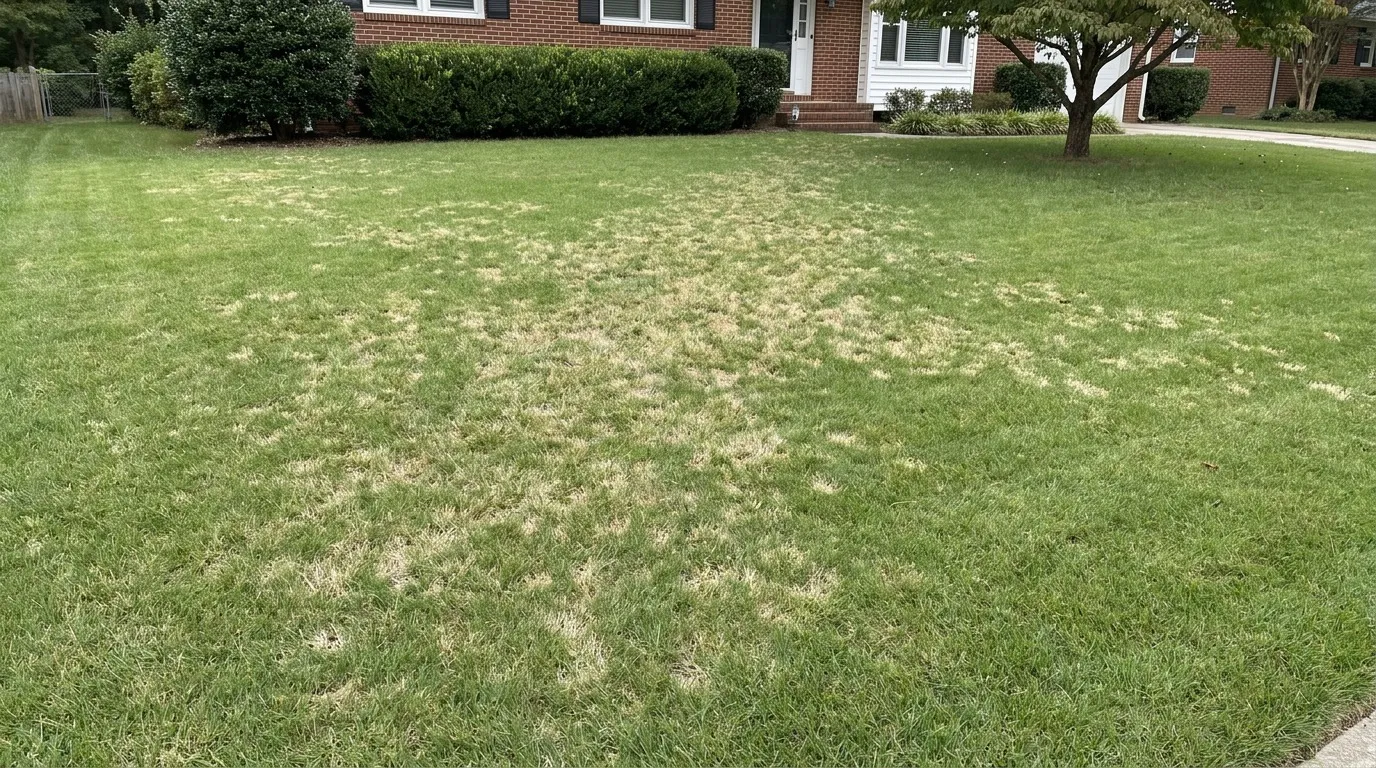
This is why the circles-in-your-lawn diagnostic so often shows the same patches returning in the same spots year after year. The pathogen has memory in the form of resting structures (sclerotia, oospores) that survive in soil, and the beneficial fungi that used to hold them in check have been repeatedly knocked back.
Fungicide Has a Role. It Is Not the Whole Program.
Targeted fungicide, applied to a specific pathogen at the lowest effective rate during the weather window when the disease is vulnerable, is a legitimate tool. Nature's Select® reserves it for outbreaks above the treatment threshold. The problem is not fungicide itself; the problem is treating every disease call as a fungicide call and leaving the soil microbiology unaddressed between visits.
The Disease Triangle and Where Soil Microbes Change the Math
Every turf pathologist teaches the disease triangle: pathogen plus susceptible host plus favorable environment equals disease. Miss any of the three sides and the disease does not develop. Most homeowners hear this and assume the only lever they control is the environment (irrigation timing, mowing height). The fourth variable, the soil microbiome, is often left out entirely.
| Disease Triangle Side | What Most Homeowners Adjust | What Soil Microbiology Adds |
|---|---|---|
| Pathogen | Fungicide to kill it | Beneficial microbes outcompete it in the rhizosphere before infection |
| Susceptible host | Reseed with resistant cultivars | Mycorrhizal partnerships strengthen root systems and drought tolerance |
| Favorable environment | Change mowing height, water timing | Balanced microbiome buffers moisture, cycles nutrients, prevents crown stress |
| Soil microbiome (fourth side) | Rarely considered | Determines whether the other three sides ever line up |
The fourth side is where a soil-first program does the most work. A lawn with diverse soil microbiology tolerates the same humid stretch that triggers brown patch in fescue during July without producing a patch, because the pathogen never reaches the density that overwhelms the biological counterweight. A lawn with suppressed microbiology triggers on the same weather window. Turf pathology guidance from NC State TurfFiles frames disease management around the same triangle and urges cultural practices that protect the soil side before any spray decision.
How Nature's Select® Rebuilds Soil Biology Between Visits
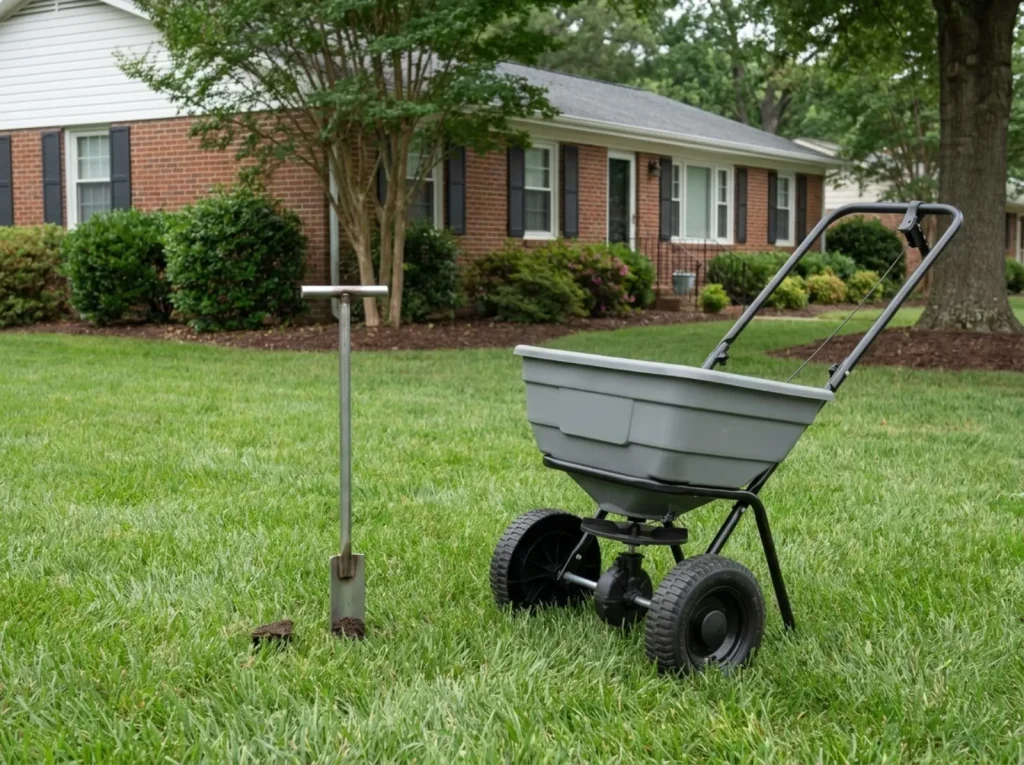
The Nature's Select® program uses the proprietary Nature's Select® Solutions blend across seasonal applications to feed and reintroduce beneficial soil microbes. The soil biology rebuild is deliberate:
- Organic matter as food. The blend supplies carbon sources and organic matter that beneficial bacteria and beneficial fungi consume, supporting population density and nutrient cycling in the rhizosphere.
- Direct microbial reintroduction. Targeted applications of Trichoderma harzianum and Bacillus subtilis species after outbreaks help rebuild soil microbial communities the immediate treatment window may have disrupted.
- Soil structure support. Biological soil amendments improve soil aggregation, soil structure, and porosity, which affects moisture, oxygen, and root access. Improve soil structure and beneficial microbes have more habitat to occupy.
- Targeted fungicide reserved for threshold outbreaks. Matched to the pathogen and the weather window, applied at the lowest effective rate, so beneficial fungi recover faster and pesticide impact on the broader soil ecosystem stays contained.
The program is monitored across the four NC weather windows for lawn disease: spring rain, early-summer heat and humidity, late-summer humidity, and fall transition. Each window carries a different pathogen risk profile and a different soil-biology intervention. Nitrogen timing, compost topdressing during fall renovation, and organic materials layered into the soil surface all feed the microbial populations that keep pathogens outnumbered.
Case Notes From a Fall Renovation That Broke the Cycle
Consider a common pattern the technicians in the Greensboro Triad Office see every year. A homeowner with a tall fescue lawn has been fighting the same brown patch and dollar spot rotation for three summers. Fungicide clears each outbreak, then the disease returns worse the next season. Core aeration in early fall paired with biological soil amendments, compost topdressing, and a fall reseed of resistant cultivars breaks the cycle. By the following July, the humid window still opens, but the patch that used to appear on the same corner of the lawn does not. Mycorrhizal partnerships have re-established. Beneficial fungi are competing for the same rhizosphere real estate that Rhizoctonia used to occupy alone.
That is competitive exclusion at the lawn scale. The pathogen is not gone from the soil. It is simply outnumbered by a rebuilt community of soil bacteria and soil fungi.
What Homeowners Can Do Between Professional Visits
Even without a service program, some soil-microbiology decisions are entirely under a homeowner's control. These lawn care adjustments move the needle most for soil health and soil microbes:
- Mow high (3 to 4 inches for tall fescue, 1.5 to 2.5 inches for bermuda) so root systems stay deeper and the crown carries more mass to support beneficial soil microbes
- Water deeply and less often so soil dries between cycles, which suppresses water molds like Pythium and reduces the humid canopy that pathogenic fungi need to reproduce
- Leave clippings on the lawn unless disease is active, so clippings return carbon, organic matter, and nitrogen that feed beneficial bacteria and fungi
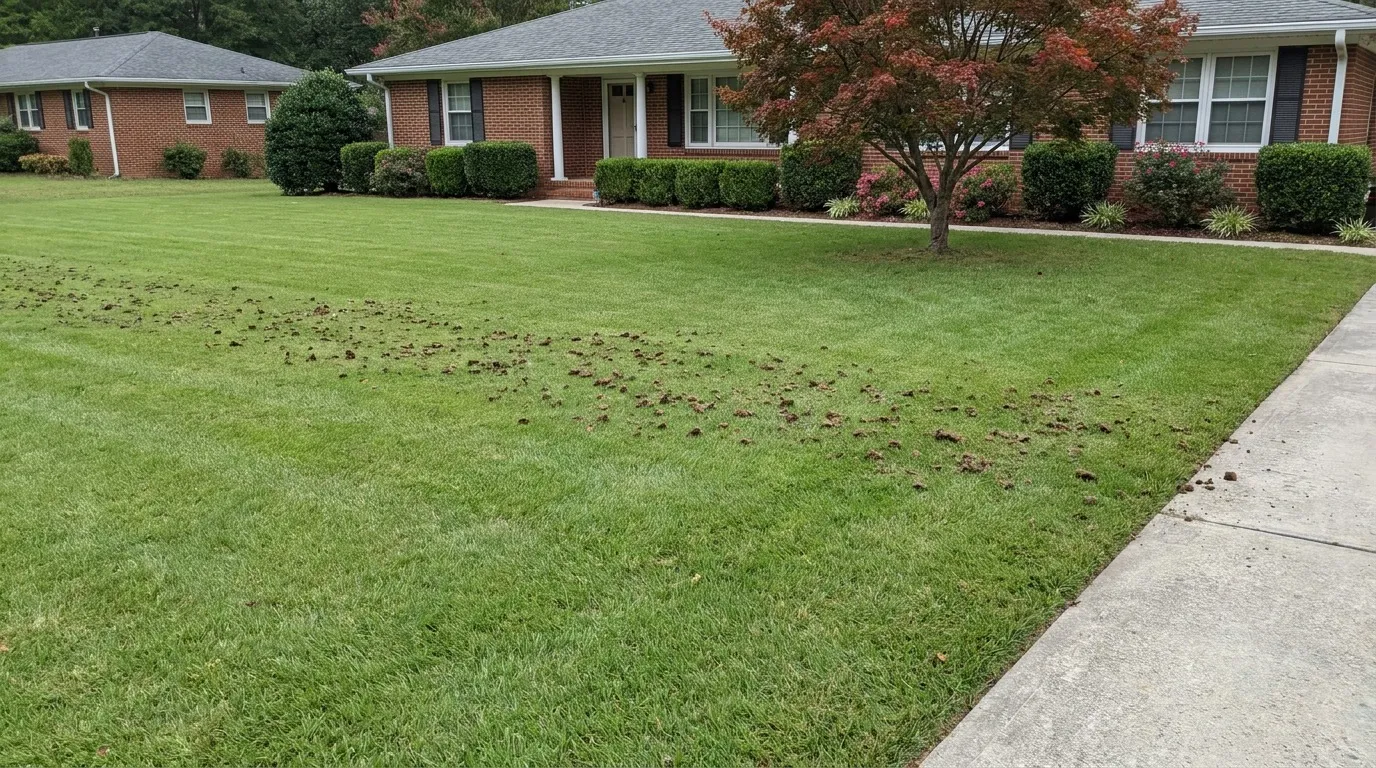
- Aerate compacted soil in the fall so oxygen reaches root zones where beneficial aerobic microbes and soil organisms work
- Avoid blanket calendar fungicide unless a state-licensed specialist has identified a threshold outbreak, because broad-spectrum pesticide use suppresses the soil microbial diversity the lawn depends on
- Topdress with compost during fall renovation to add organic matter, feed soil bacteria and fungi, and improve soil structure across the top inch of the profile
Each of these adjustments supports competitive exclusion by making the rhizosphere friendlier to the beneficial side of the microbial contest and improving soil health on a lawn scale that a homeowner can maintain.
Key Takeaways
- Competitive exclusion is the mechanism where beneficial soil microbes outcompete pathogenic fungi at the root and crown before disease can establish visible patches
- Five microbial groups matter most for lawn disease suppression: beneficial bacteria, beneficial fungi, mycorrhizae, protozoa, and beneficial nematodes
- Trichoderma harzianum and Bacillus subtilis carry more of the disease suppression load than any other microbes on North Carolina lawns
- Broad-spectrum fungicide often makes future outbreaks worse by suppressing beneficial fungi along with the target pathogen
- The disease triangle (pathogen, host, environment) has a fourth side: soil microbiome diversity, and it is the variable that changes the math most
- Nature's Select® maintains competitive exclusion through the proprietary Solutions blend, targeted microbial reintroduction, and reserving fungicide for threshold outbreaks
Frequently Asked Questions
How long does it take to rebuild soil biology after fungicide damage?
Beneficial fungal populations typically need 60 to 180 days to recover after a broad-spectrum fungicide application, depending on soil temperature, moisture, and whether beneficial microbes are actively reintroduced. Beneficial bacteria rebound faster (often within 30 to 60 days) but the fungal side of the community takes longer. A soil-first program that reintroduces Trichoderma harzianum and Bacillus subtilis species after an outbreak shortens that recovery window and restores competitive exclusion before the next disease season opens.
What is the difference between biological and organic lawn disease control?
Biological lawn disease control is a soil-first methodology built around living soil microbes and the proprietary Nature's Select® Solutions blend. It is science-backed and designed to use less synthetic input rather than none. Organic disease control is a marketing label used inconsistently across the industry, often meaning nothing more than the exclusion of synthetic chemistry regardless of whether soil biology is actually addressed. Nature's Select® uses the biological label because it describes what the program does at the soil level.
Can healthy soil prevent every lawn disease?
No. Healthy soil dramatically reduces the frequency and severity of disease outbreaks, but a diverse soil microbiome cannot override every combination of pathogen pressure and weather window. Pythium aphanidermatum under a prolonged humid stretch and Ophiosphaerella korrae on stressed warm-season turf can both produce damage even in biologically active soil. What the microbiome does is raise the threshold, so a lawn tolerates conditions that would trigger disease on a biologically depleted lawn. When threshold outbreaks occur, targeted fungicide handles the acute event and the soil program rebuilds resistance for the next window.
Do mycorrhizae matter for grass, or only for garden plants?
Mycorrhizae absolutely matter for grass. Arbuscular mycorrhizae form partnerships with the roots of most cool-season and warm-season turfgrasses, extending the effective root system through fungal networks that reach soil the plant cannot access alone. The partnership improves drought tolerance, nutrient uptake (especially phosphorus), and root health, all of which raise the threshold at which the crown becomes susceptible to disease. Mycorrhizae also matter for ornamental trees and shrubs, which is why soil-first care applies across a property.
Why does my lawn get the same disease every year in the same spot?
Pathogens leave resting structures in soil (sclerotia for Ophiosphaerella, oospores for Pythium) that survive from one growing season to the next. If the soil biology in that spot never rebuilds enough soil microbial diversity to outcompete the pathogen, the resting structures find their host every year at the same weather window. Fungicide clears the current outbreak but does nothing to change the biological balance that lets the pathogen return. A soil-first program targets the biology in the recurring patch specifically, which is why patches that have returned for years often stop returning after two or three seasons of biological rebuilding.
Is the biological program appropriate for households with pets, kids, and pollinators?
Yes. The Nature's Select® program uses biological inputs, the proprietary Nature's Select® Solutions blend, and targeted fungicides applied at lower rates of synthetic input than a typical lawn disease program. Specific re-entry windows after any fungicide application are emailed to homeowners in the service report after each visit, and the technician can answer property-specific questions before treatment. The affiliation with the NC State Beekeepers Association shapes how the program handles pollinator-sensitive intervals.
Conclusion
The soil under your grass decides more of your lawn's disease story than any fungicide ever will. Competitive exclusion is not a marketing phrase. It is the measurable mechanism where beneficial soil microbes crowd out pathogens at the root before a patch can form, and it is the reason a biological program that rebuilds soil biology between visits produces a healthier lawn over years than any calendar spray program can. If your lawn has been fighting the same disease every year, the answer probably is not another round of broad-spectrum chemistry. The answer is rebuilding the soil microbial diversity that used to keep the pathogen outnumbered.
Nature's Select® has run this approach across North Carolina since 1994. Call (888) 786-9735 or request a lawn disease assessment and a state-licensed specialist from the office covering your address will walk your lawn, identify the pressure at the species level, and build a soil-first plan matched to your property.