The Overseeding + Pre-Emergent Trap NC Homeowners Fall Into Every Fall
Pre-emergent herbicides stop seeds from developing into seedlings, and grass seed is a seed. Apply most fall pre-emergents, and you block your own overseeding for 12 to 16 weeks. The way out is to choose an active ingredient labeled for use at seeding, or to sequence the two jobs across the calendar.
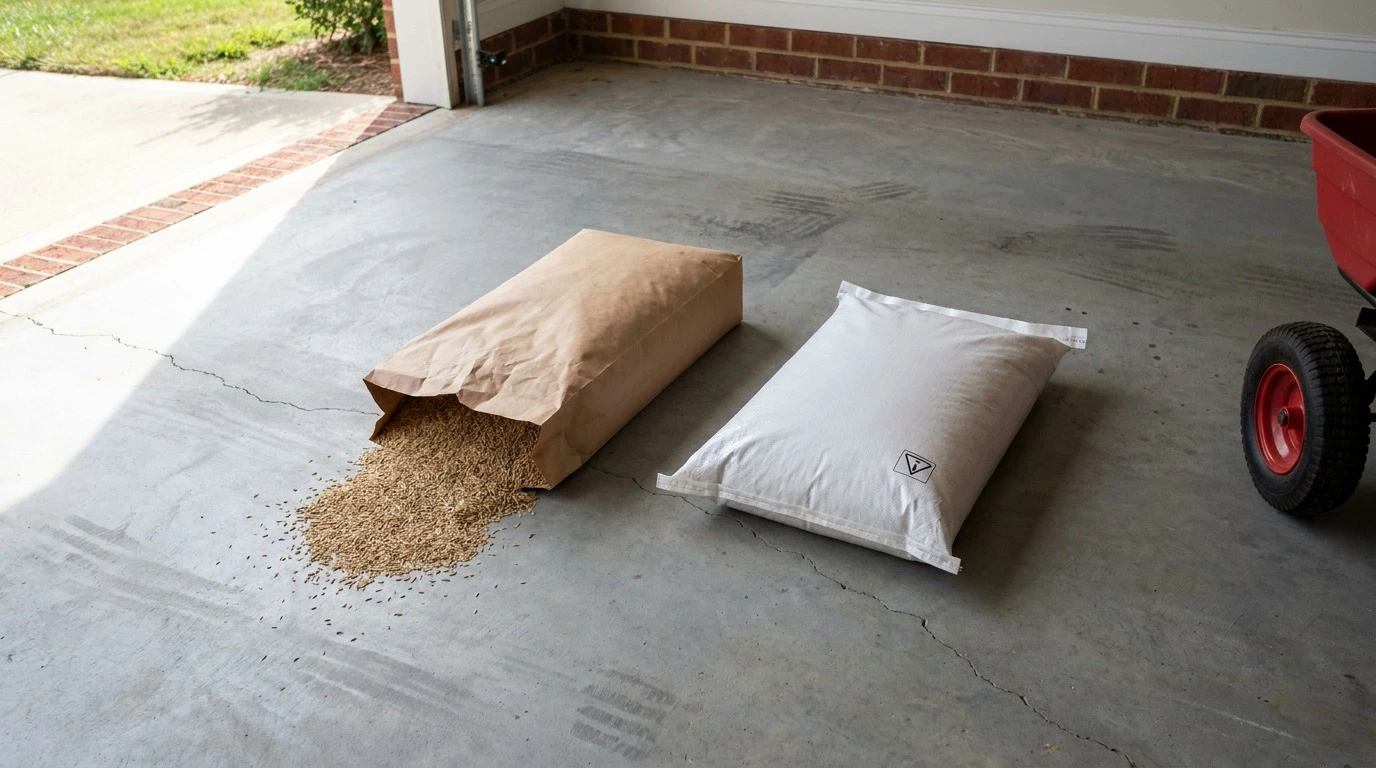
A cart rolls out of North Carolina garden centers every September holding the same two items. A bag of turf-type tall fescue seed. A bag of pre-emergent weed control. Both are the right products. Both are recommended for fall. Bought together and applied in the same week, one of them cancels the other.
This is not carelessness. Two separate pieces of correct advice collide in the same three weeks of the calendar, and almost nobody explains the collision until after the seed fails to come up.
The conflict is mechanical, not mysterious. A pre-emergent herbicide is designed to stop a germinating seedling before it can establish. Your new fescue is a germinating seedling. The herbicide has no way to recognize the difference between the grass you paid for and the crabgrass you are trying to prevent.
This article explains the chemistry in plain terms and gives you the seeding-safe interval for each of the common active ingredients. It then lays out the four workable strategies for a North Carolina lawn and shows what has to be traded away in each direction. Everything here is grounded in NC State Cooperative Extension guidance and the sequencing Nature's Select® has used on North Carolina lawns since 1994.
Why Pre-Emergent and Grass Seed Cancel Each Other Out
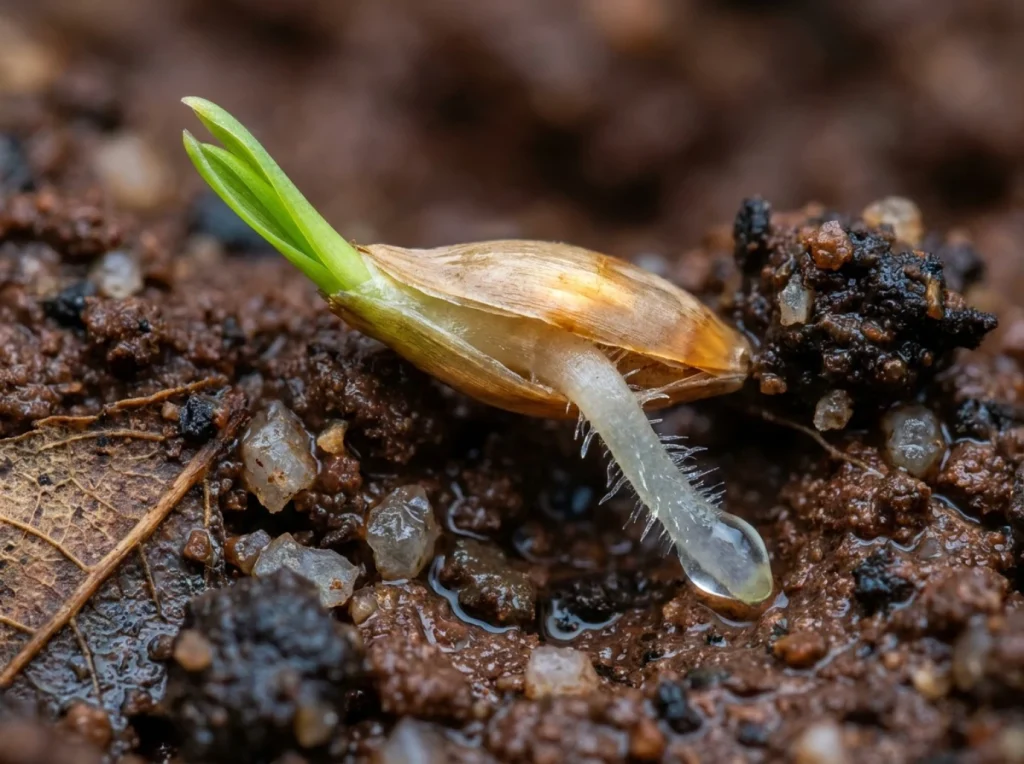
The word "pre-emergent" describes the timing of the application, not the target. These products are applied before weeds emerge. What they actually do is create a treated barrier in the top layer of soil, two to three inches deep, and anything that tries to push a root through that layer runs into the active ingredient.
What a Pre-Emergent Actually Does in the Soil
These products are designed to prevent crabgrass and other weeds from taking hold, and they do it by leaving a chemical barrier in the soil rather than by killing anything you can see. Crabgrass seeds still germinate down there. They just never get past the barrier.
Most traditional pre emergents belong to a chemical family that interferes with cell division. When a seed splits open, the first structure it sends out is a radicle, the primary root. That root tip is a zone of intensely rapid cell division. The herbicide binds to the proteins that pull chromosomes apart during that division, the cells stop replicating cleanly, and the root tip swells and stops elongating.
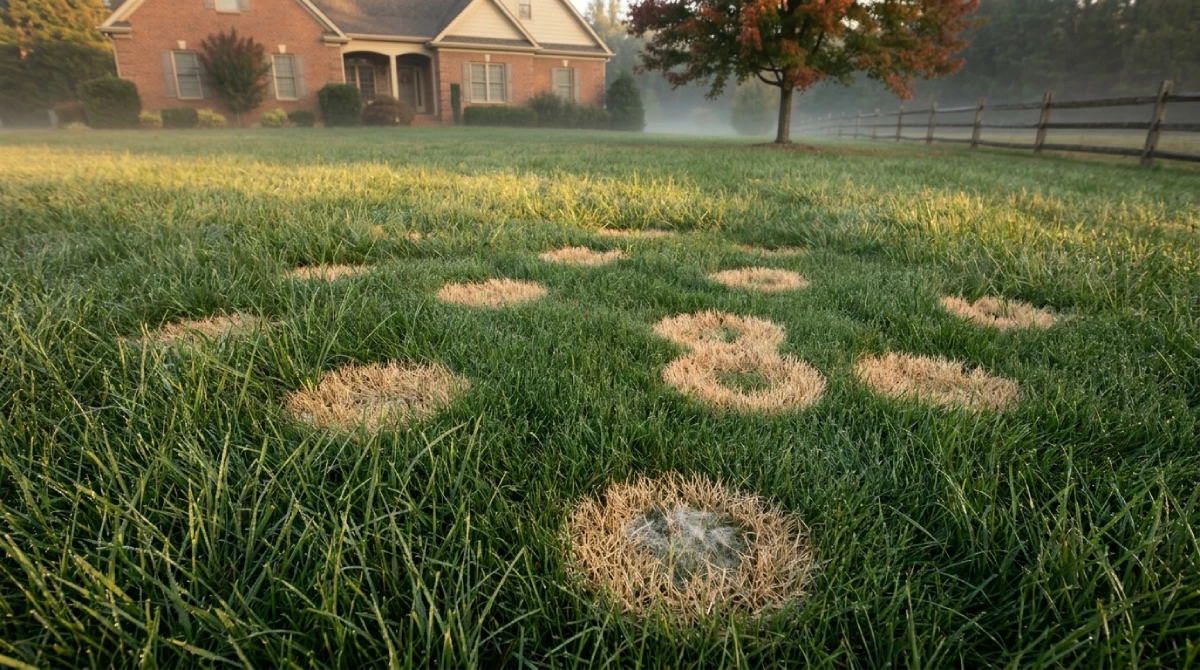
The seed has already spent its stored energy on germination. Without a functioning root, it cannot draw water, and it dies within days. From the surface, nothing appears to have happened at all. The lawn simply stays thin.
That is why the failure is so hard to diagnose. There is no dead grass to look at. There is no visible damage. There is only an overseed that never showed up, and a homeowner who assumes the grass seed was old, or the watering was wrong, or the aeration did not go deep enough.
Why the Herbicide Cannot Tell Fescue From Crabgrass
Selective weed control usually works because a target plant lacks the enzyme system to break the chemical down while the desirable turf can metabolize it safely. That mechanism depends on a mature, established plant with functioning tissue.
A germinating seed does not have any of that. It has a root tip and a few days of stored energy. At that stage a tall fescue seedling and a crabgrass seedling are, from the herbicide's point of view, the same object doing the same thing in the same layer of soil.
Selectivity does not exist yet because there is nothing selective to act on. Pre-emergents are designed to stop crabgrass and other annual weeds before they become visible, and grass seed germination happens by the same mechanism they are aimed at.
This is worth saying plainly because the labels can be misleading if you read them fast. A product marked safe for lawns is safe for the established lawn you already have. It is not safe for the new lawn you are trying to create.
The North Carolina Version of the Trap: Two Fall Jobs, One Window
Many homeowners meet this conflict when seeding in the spring, when crabgrass pre-emergent season overlaps with the urge to patch winter damage. North Carolina gets a harder version, because the state's dominant cool-season grass and its most stubborn cool-season weed both germinate in the fall.
Tall Fescue Wants the Fall Window
Turf-type tall fescue covers the overwhelming majority of lawns around Winston-Salem and Greensboro and roughly forty percent of lawns around Chapel Hill. Fescue does not spread by runners. It grows only from seed, which means the canopy it lost to summer heat can be rebuilt only by adding new grass seed.
That rebuild has exactly one good window. The NC State Extension tall fescue maintenance calendar publishes a seeding window centered on September for central and eastern North Carolina, and the actionable soil temperature range sits between roughly 65 and 75 degrees at four inches. Fall seeding wins for cool-season grasses because the seedlings get months of mild weather before summer heat returns. Detail on how narrow that window really gets lives in the aeration window inside the pre-emergent window.
Annual Bluegrass Wants the Same Fall Window
Annual bluegrass, or Poa annua, is the weed that makes fall pre-emergent worth doing in North Carolina. It is a cool-season annual that germinates from October through January, then shows up as light green, coarse-textured patches with visible seedheads through late winter and spring.
Because it germinates in the fall, spring pre-emergent does nothing for it. The fall application is the primary intervention, which is why so many North Carolina lawn care programs schedule one. Chickweed, henbit, and purple deadnettle follow the same cool-season germination pattern.
Once a long-residual product is down, you cannot effectively seed cool-season grass until the interval clears. That usually pushes the overseed a full year, since spring seeding in North Carolina rarely survives the first stretch of summer heat.
So the calendar looks like this. Fescue seed needs to go down in September. Annual bluegrass pre-emergent needs to go down in September or early October. Both jobs want the same soil, the same layer, and the same three weeks.
Why Nobody Warns You
The two recommendations live in different places. Overseeding advice comes from the seed aisle and the aeration article. Fall pre-emergent advice comes from the weed control aisle and the winter-weed article. Neither one mentions the other, because each is written as though it is the only thing you plan to do.
Many homeowners only discover the conflict when the seed does not come up, and by then the window has closed. Reading the label before you buy is the whole fix.
Pre-Emergent Active Ingredients and Their Seeding-Safe Intervals
The most useful thing you can do before buying anything is turn the bag around and read the active ingredient. The brand name on the front tells you almost nothing. The active ingredient tells you exactly how long you have to wait.
| Active Ingredient | Common Product Names | Typical Wait Before Seeding | Seed at Application? | Notes for NC Lawns |
|---|---|---|---|---|
| Prodiamine | Barricade, Quali-Pro Prodiamine | About 16 weeks | No | Longest residual of the common pre-emergent products. A spring application can still block a September overseed. |
| Pendimethalin | Scotts Halts, Pendulum | About 12 weeks | No | Widely stocked in box stores. Frequently the accidental blocker. |
| Dithiopyr | Dimension, Hi-Yield Turf and Ornamental | About 12 weeks | No | Has some early post-emergent crabgrass activity, which is why it is applied later in spring. |
| Mesotrione | Tenacity, MESO 4SC Select | 0 weeks | Yes, on labeled species | Can be applied at seeding on tall fescue, Kentucky bluegrass, and perennial ryegrass. Residual runs roughly 21 to 30 days. |
| Siduron | Tupersan | 0 weeks | Yes, on labeled species | Older chemistry specifically labeled for use when seeding cool-season turf. Narrower weed spectrum and shorter residual. |
Wait times are typical label guidance rather than a universal rule. Formulations differ, rates differ, and the label is the legally binding document. The EPA pesticide label is the controlling instruction for any product you apply, and the reseeding interval is usually printed under a heading like "Reseeding" or "Rotational Crop Restrictions." Read the label before you apply pre-emergent anywhere near new grass.
Reading the Wait Time on the Label
Three details on the bag decide whether your overseed survives.
- The active ingredient and its percentage. Two bags with the same brand family can carry different chemistry across product years.
- The application rate. Prodiamine at a low rate breaks down faster than prodiamine at a high rate, and the reseeding interval scales with it.
- The reseeding statement. Look for the specific phrase. If the label says do not seed for four months, four months is the number, not a suggestion to hedge against.
Depending on the product, you may need to wait at least three to four months before you can seed, and nothing on the shelf makes that residual disappear faster. If you plan to overseed in September, that number decides your spring lawn care schedule, not the other way around.
One more variable rarely appears on the bag. Residual life is shortened by warm, moist soil with active microbial populations and lengthened by cold, dry, biologically inactive soil. That is one of the quieter arguments for building soil biology through a year-round lawn care program: healthier soil processes residues faster.
Mesotrione: The Active Ingredient Built for This Exact Problem
Mesotrione is the reason this article does not end with "pick one." It is the one widely available active ingredient that solves the conflict directly rather than by scheduling around it, and it is why Tenacity comes up in almost every conversation about seeding and crabgrass control.
How It Works Differently
Mesotrione does not attack cell division in the root tip. It blocks an enzyme in the pigment production pathway, which means treated weeds cannot build the carotenoids that protect chlorophyll from sunlight. The result is unmistakable in the field. Susceptible weed seeds and seedlings bleach to a ghostly white within a week or two, then collapse.
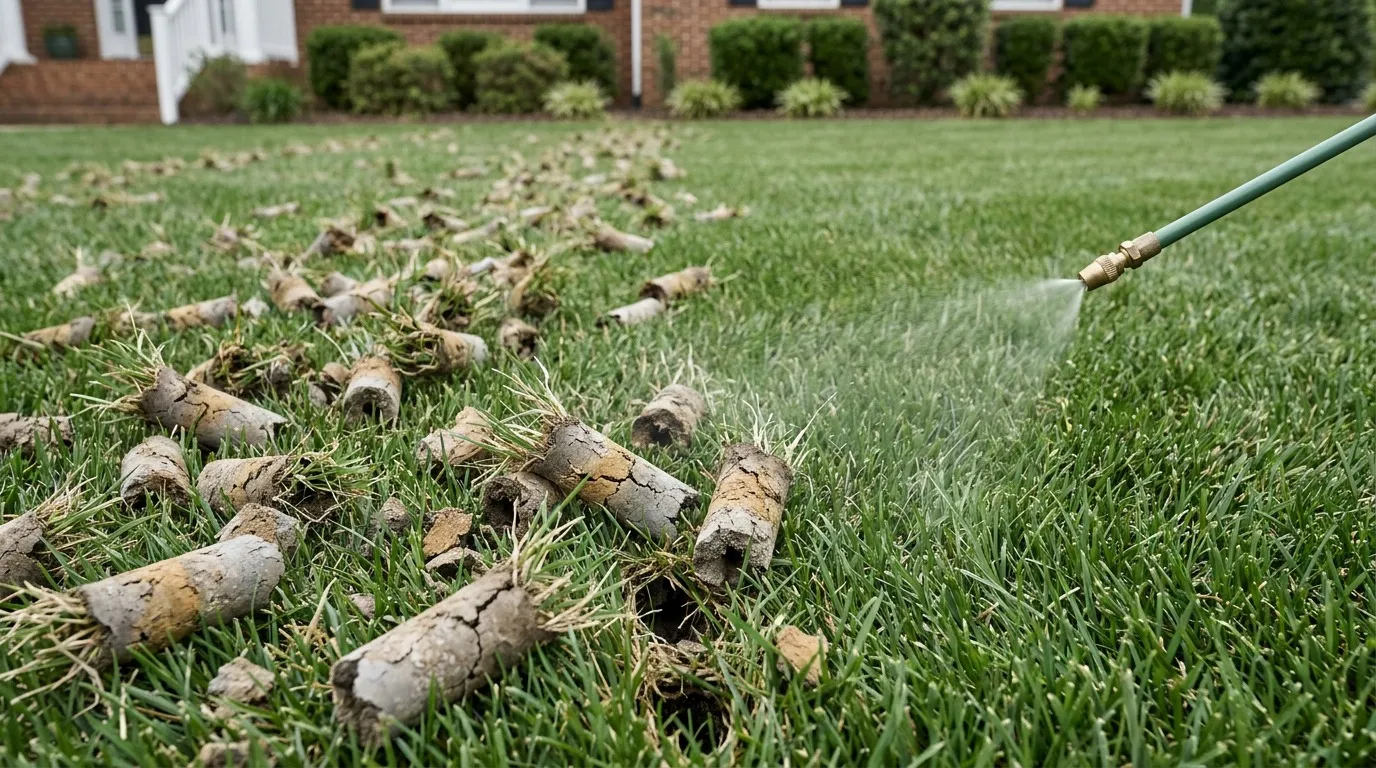
Certain cool-season turfgrass species tolerate it because they metabolize the compound quickly enough to survive the exposure. That tolerance is what allows the product to be applied at the time of seeding on labeled species, including turf-type tall fescue. It is the one common case where you could seed and apply weed control on the same afternoon.
What It Controls and What It Misses
Mesotrione handles crabgrass and a broad list of broadleaf weeds well. It is weaker on some grassy weeds, and its coverage of annual bluegrass is limited compared with a dedicated fall pre-emergent. It also carries species restrictions. Some fine fescues and some warm-season grasses are excluded or restricted on the label, which matters on mixed North Carolina lawns.
The 21 to 30 Day Reality
The other honest limitation is duration. Mesotrione's residual protection runs roughly 21 to 30 days, against three to six months for prodiamine. That is enough to protect a new stand of fescue through its most vulnerable weeks. It is not a season-long weed-free barrier, and treating it as one is how homeowners end up disappointed in February. Some programs add a repeat application after the new grass is established, which is a label-and-rate question rather than a default.
Four Ways Out of the Trap
There is no strategy that gives you complete weed prevention and a full overseed in the same fall. Every option trades something. Choosing well means being honest about which loss you can live with on your lawn this year.
| Strategy | What You Do | What You Get | What You Give Up | Best For |
|---|---|---|---|---|
| Seed first, skip the fall pre-emergent | Aerate and overseed in the September window. No traditional pre-emergent this fall. | A rebuilt fescue canopy going into next summer. | One season of chemical winter-weed prevention. Expect more annual bluegrass and chickweed in late winter. | Lawns that are visibly thin. Canopy density is the bigger problem. |
| Seed with a seeding-safe pre-emergent | Overseed and apply mesotrione or siduron at seeding, per label. | New seedlings plus partial weed suppression during establishment. | Narrower weed spectrum and only three to four weeks of residual. | Lawns that need seed but sit under heavy crabgrass or broadleaf pressure. |
| Pre-emergent first, skip the overseed | Apply the fall pre-emergent in the standard window. No seed this fall. | Full winter-weed prevention and a clean spring canopy. | A year of canopy rebuilding. Thin areas stay thin until next fall. | Lawns with good density that are fighting recurring annual bluegrass. |
| Split the lawn by zone | Seed the thin zones. Run the traditional pre-emergent on the dense zones. | Both jobs done, each where it helps most. | Careful mapping, careful application edges, and two different watering plans. | Larger properties with clearly different conditions front to back. |
Strategy 1: Seed This Fall, Skip the Fall Pre-Emergent
For most thin North Carolina fescue lawns, this is the right answer, and it is the one professionals reach for most often. The reasoning is not that weed control does not matter. It is that canopy density is the most durable way to keep weeds out of a lawn. When the lawn is thin, seed is the higher-value purchase.
A thick stand of fescue mowed at three to three and a half inches shades the soil surface. Annual bluegrass and chickweed both need light at the soil surface to germinate well. Every square inch of soil you cover with turf is a square inch that does not produce a weed come spring.
You will see more winter weeds this season. That is the trade. In return you get a canopy that suppresses them structurally for years, and post-emergent spot treatment is still available in late winter.
Strategy 2: Seed With a Seeding-Safe Pre-Emergent
If the lawn is thin and the crabgrass pressure was severe last summer, applying mesotrione at seeding covers the establishment period without blocking germination. This is the technically elegant option, and it is the one most homeowners have never heard of.
The practical cautions are real.
Check that every grass species on your property is listed on the label.
Follow the seeding-time rate rather than the established-turf rate.
Understand that you are buying three to four weeks of protection, not a season.
Strategy 3: Skip Seeding, Run the Fall Pre-Emergent
If the fescue canopy is already dense and every spring brings a flush of annual bluegrass, then this year's fall pre-emergent is worth more than this year's seed. A lawn without bare spots does not have much for new grass seed to do.
Aeration is still worth doing on its own here. Relieving compaction helps the existing root system without requiring any seed to germinate.
Strategy 4: Split the Lawn by Zone
On larger properties, the front and back yards are often two different lawns. A shaded, thin, traffic-worn back yard needs seed. A dense, sunny front yard that grows annual bluegrass every February needs pre-emergent. Splitting works, but it demands discipline.
Draw the zones on paper before you start, and mark the boundary in the yard.
Leave a buffer of several feet where the two treatments meet, because granular products drift further than most people expect from a broadcast spreader or a sprayer.
Water the seeded zone light and frequent while the treated zone gets nothing.
What You Actually Give Up in Each Direction
It helps to size the loss honestly rather than guessing at it.
Skipping the fall pre-emergent for one season typically produces a visible increase in annual bluegrass and chickweed from late winter into spring. It is a cosmetic season, not a permanent setback.
Skipping the overseed for one season on a genuinely thin fescue lawn means those bare spots stay open through the next summer. Open soil collects weed seeds, holds heat, and sheds water, which compounds the thinning.
Relying on a short-residual product means late-germinating weeds in December and January sit outside your coverage window and will need a post emergent response.
The asymmetry matters. A missed pre-emergent season is recoverable with post-emergent spot treatment. A missed fall overseeding window on a thinning fescue lawn costs a full year, because seeding your lawn in the spring in North Carolina loses to summer heat before the roots are deep enough to survive it.
Timing the Next Twelve Months So You Are Not Trapped Again
The trap is really a planning failure, and it repeats every year until somebody maps the whole calendar instead of the next weekend. Here is how the two jobs sequence across a North Carolina fescue year.
| Season | Weed Control Action | Seeding Action | Why It Fits |
|---|---|---|---|
| Late winter to early spring | Apply pre-emergent in early spring before 1-inch soil temps reach 55 degrees | None | Crabgrass germinates at that soil temperature threshold. Seeding now would be blocked anyway. |
| Late spring | Post-emergent spot treatment on visible broadleaf weeds | None | Fescue seeded in the spring rarely roots deep enough to survive July. |
| Summer | Monitor. Mow high at three to three and a half inches | None | Shade at the soil surface is doing the weed suppression. |
| Late summer | Plan the fall. Confirm which strategy the lawn needs | Book aeration and order grass seed | The decision has to be made before the window opens, not during it. |
| Early fall | Seeding-safe product only, if any | Aerate and overseed in the soil temperature window | The three weeks that decide the next year. |
| Late fall | Traditional pre-emergent only if you did not seed | None | Annual bluegrass germination is underway from October. |
| Winter | Post emergent spot treatment on winter weeds | None | Cleans up what got through without touching seedlings. |
The pattern that comes out of that table is simple. Spring pre-emergent and fall seeding do not fight each other, as long as the spring product's residual has expired by September. That is exactly why the prodiamine interval matters. Sixteen weeks from a late-March application lands in mid-July, which clears the September window. Sixteen weeks from a mid-June application does not.
Best Timing When You Plan to Overseed in the Fall
If you already know you plan to overseed in September, work the calendar backward from that date. Pick the earliest reasonable time to apply your spring pre-emergent, which in North Carolina means applying before soil temperature at one inch holds above 55 degrees. Then confirm the reseeding interval on that specific bag clears your seeding date with several weeks to spare.
Handled that way, the two jobs never touch. Skip that step, and the product you put on the lawn in the spring quietly decides what you can do come fall. If you already know the overseeding rate you were planning, the sequencing question is the last piece before the work is bookable.
What to Do If You Already Made the Mistake
Most people find this article after the fact. Both directions of the error are survivable.
You Seeded Into Treated Soil
If you spread grass seed onto soil that received a traditional pre-emergent inside the wait window, germination will be poor to nonexistent. There is no product that reverses it. Your options are limited to physical disruption and patience.
- On small bare spots, rake vigorously to break through the treated barrier in the top layer of soil, remove the loosened material, add clean topsoil, and seed into that. Disrupting the barrier is the only mechanism available.
- On a full lawn, the honest answer is to wait out the residual and reseed at the next window. Buying a second bag of seed and spreading it on the same treated soil produces the same result.
- Water normally in the meantime. Irrigation and biological activity in the soil both shorten residual life.
You Applied Pre-Emergent Onto New Seedlings
If the seed has already germinated and the new grass is up, a pre-emergent applied over the top is less catastrophic than it feels. Pre-emergents act on germinating seeds, not on plants that have already emerged with a functioning root system.
The concern is the seed that had not germinated yet. In a normal overseed, germination runs across five to fourteen days, so an early application will block the later fraction of the seed. Expect a thinner result than planned rather than a total loss, and hold off on further herbicide until you mow the new grass two or three times.
Warm-Season Lawns Get an Easier Version
Bermuda and zoysia lawns, which dominate around Pinehurst and make up a large share of lawns around Chapel Hill, have a much simpler version of this problem. These grasses spread by rhizomes and stolons rather than seed, so routine overseeding is not part of their maintenance at all.
That removes the conflict almost entirely. A warm-season lawn can run a full pre-emergent program without ever having to protect germinating seed, because the lawn fills its own bare spots by spreading. Aeration still helps these lawns, and it is scheduled during active summer growth once soil temps reach around 70 degrees, so the cores close quickly.
The exception is a lawn renovation or a sod repair, where new plant material has to establish. In that case the same interval rules apply.
How a Managed Program Sequences Both
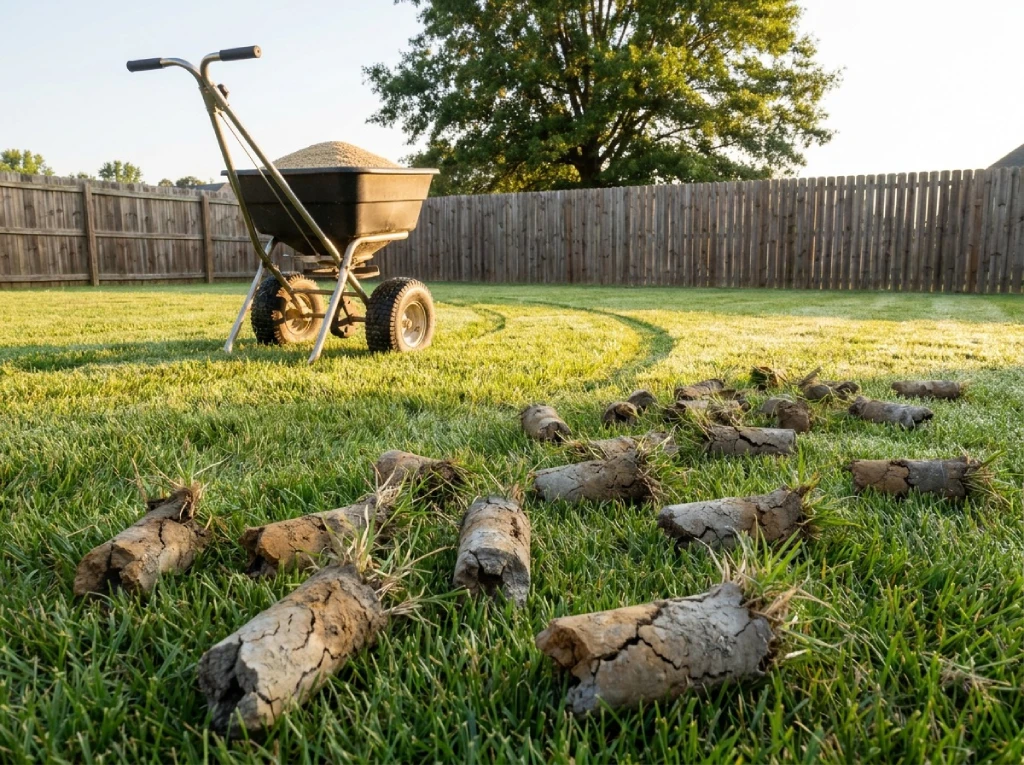
A professional program rarely runs into this conflict, and the reason is not access to different chemistry. It is that the whole year is planned before the first application goes down.
A year-round lawn care program treats pre-emergent timing, overseeding, and fertilizer as one sequence rather than as separate purchases. The spring pre-emergent is selected with a residual that expires before the fall seeding window. The fall visit is decided by what the property actually needs, which is where the on-property assessment does its work.
The same plan decides when to fertilize. A starter feeding supports new grass at seeding, while a heavy nitrogen pass on young seedlings pushes top growth ahead of root growth. Sequencing keeps those two from working against each other the way seed and pre-emergent do.
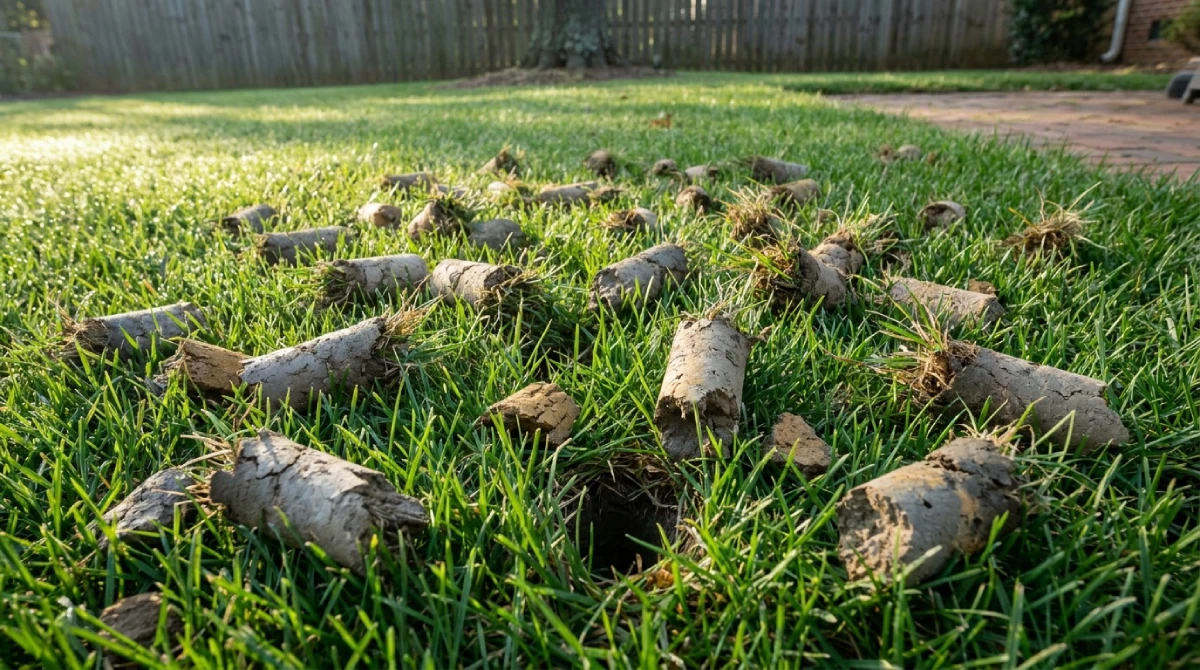
Nature's Select® builds this around soil biology first. Hollow-tine core aeration opens the soil so water, oxygen, and biological inputs reach the root zone. Overseeding goes into that open soil with a custom-blended, multi-cultivar turf-type tall fescue selected for North Carolina conditions. The lawn weed control side of the program then uses pre-emergent timed to soil temperature and post-emergent identification and spot treatment as pressure appears, rather than a blanket schedule that ignores what the lawn is doing.
Over several seasons that sequence changes the math. A denser canopy needs less pre-emergent to stay clean.
If you would rather not gamble a fall on the sequencing, you can book professional overseeding with the pre-emergent sequenced for you and get a written plan for both jobs at a free on-property assessment. The service runs across North Carolina from the Winston-Salem, Greensboro, Chapel Hill, and Pinehurst offices.
Key Takeaways
- Pre-emergent herbicides stop germinating seedlings by disrupting root-tip cell division, and they cannot distinguish new fescue from crabgrass.
- Prodiamine typically requires about 16 weeks before seeding, while pendimethalin and dithiopyr typically require about 12 weeks.
- Mesotrione and siduron can be applied at the time you seed on labeled cool-season species, which is the only direct way to do both jobs at once.
- North Carolina gets the hardest version of this conflict because tall fescue and annual bluegrass both want the same fall window.
- Skipping one season of pre-emergent is recoverable with post emergent spot treatment; missing the fall overseeding window costs a full year.
- Spring pre-emergent and fall seeding coexist fine as long as the spring product's residual expires before the September window.
Frequently Asked Questions
How long after applying pre-emergent can I put down grass seed?
It depends entirely on the active ingredient. Prodiamine products typically require about 16 weeks before seeding. Pendimethalin and dithiopyr products typically require about 12 weeks. Mesotrione and siduron can be applied at seeding on labeled cool-season species. Always confirm against the reseeding statement on the specific product label, because rates and formulations change the interval.
Can I spread pre-emergent and grass seed together?
Only if the pre-emergent is one specifically labeled for application at seeding, such as mesotrione or siduron, and only on the grass species that label lists. Traditional pre emergents like prodiamine, pendimethalin, and dithiopyr will block your new seed from establishing. Applying them together with seed wastes both products and leaves the lawn no thicker than before.
How soon after overseeding can I apply pre-emergent?
Wait until the new grass has been mowed at least two or three times, which usually means six to ten weeks after seeding in North Carolina. By then the seedlings have real root systems and are no longer vulnerable in the way germinating seed is. Applying earlier will block any remaining ungerminated seed and reduce the density you were seeding for.
Can I overseed after a spring crabgrass pre-emergent?
Usually yes, if you are seeding in the fall. A prodiamine application in late March clears its roughly 16-week interval by mid-July, well before the September fescue window. The problem arises with late spring applications. A June application of a long-residual product can still be active in the soil when the fall window opens, which closes the door on that year's overseed.
What should I do if I seeded too soon after pre-emergent?
Germination will be poor or absent, and there is no product that reverses it. On small bare spots, rake through the treated soil, remove the loosened material, add clean topsoil, and seed into that. On a full lawn, wait out the remaining residual and reseed at the next window. Watering normally and healthy soil biology both shorten how long the residue persists.
Should I skip the pre-emergent or skip the overseeding?
Look at your canopy. If the lawn is thin with bare spots showing, seed and skip the fall pre-emergent, because canopy density is the most durable way to keep weeds out. If the canopy is already dense and annual bluegrass returns every spring, run the pre-emergent and skip seed for a year. Thin lawns need seed more than one season of prevention.
Does the fall pre-emergent for annual bluegrass conflict with fescue overseeding?
Yes, and this is the North Carolina version of the trap. Annual bluegrass germinates from October through January, so the fall application is the primary intervention against it. Tall fescue needs to be seeded in September. Both jobs want the same soil in the same weeks, which forces a choice unless a seeding-safe product is used.
Is there a pre-emergent that is safe to use with new grass seed?
Mesotrione, sold as Tenacity and several generics, can be applied at the time of seeding on tall fescue, Kentucky bluegrass, and perennial ryegrass. Siduron is an older chemistry labeled for the same purpose. Both carry species restrictions and shorter residual protection, roughly 21 to 30 days for mesotrione, so they protect establishment rather than the whole season.
Do warm-season grasses have the same overseeding and pre-emergent conflict?
Much less so. Bermuda and zoysia spread by rhizomes and stolons and fill their own bare spots, so routine overseeding is not part of their maintenance. A warm-season lawn can run a full pre-emergent program without protecting germinating seed. The conflict returns only during a lawn renovation or sod repair, when new plant material has to establish.
How long does a pre-emergent stay active in the soil?
Prodiamine is the longest lasting of the common pre-emergent products, holding for several months at label rates. Pendimethalin and dithiopyr run shorter. Mesotrione runs roughly 21 to 30 days. Warm, moist soil with active microbial populations breaks residues down faster than cold, dry, biologically inactive soil, so identical products behave differently on different lawns.
Conclusion
The overseeding and pre-emergent conflict is not a warning about chemicals. It is a scheduling problem created by two good recommendations written without reference to each other. Pre-emergent herbicides do exactly what they are designed to do, and grass seed is caught in the mechanism because it is doing exactly what a germinating seed does.
Once you read the active ingredient instead of the brand name, the decision gets simple. Check the reseeding interval. Decide whether your lawn needs canopy more than it needs one season of prevention. If it needs both, use a product labeled for application at seeding and accept the shorter coverage window. Then set next year's spring application so its residual expires well before September.
If you would rather have both jobs planned as one sequence, Nature's Select® will map it for your property. Book professional overseeding with the pre-emergent sequenced for you or call (888) 786-9735 for a free on-property assessment and a same-day written estimate.
Nathan Reeves is a Senior Content Strategist at Nature's Select®.