Overseeding Rates for NC Fescue: How Much Seed You Actually Need
For most North Carolina tall fescue lawns, plan on 3 to 4 pounds of seed per 1,000 square feet for a routine fall overseed, 5 to 6 pounds for a moderately thin lawn, and 8 to 10 pounds when you are renovating bare or badly damaged turf. That range comes from NC State Extension research, and it beats the box-store rule of "spread until you can barely see the ground" by wide margins for both germination and cost.
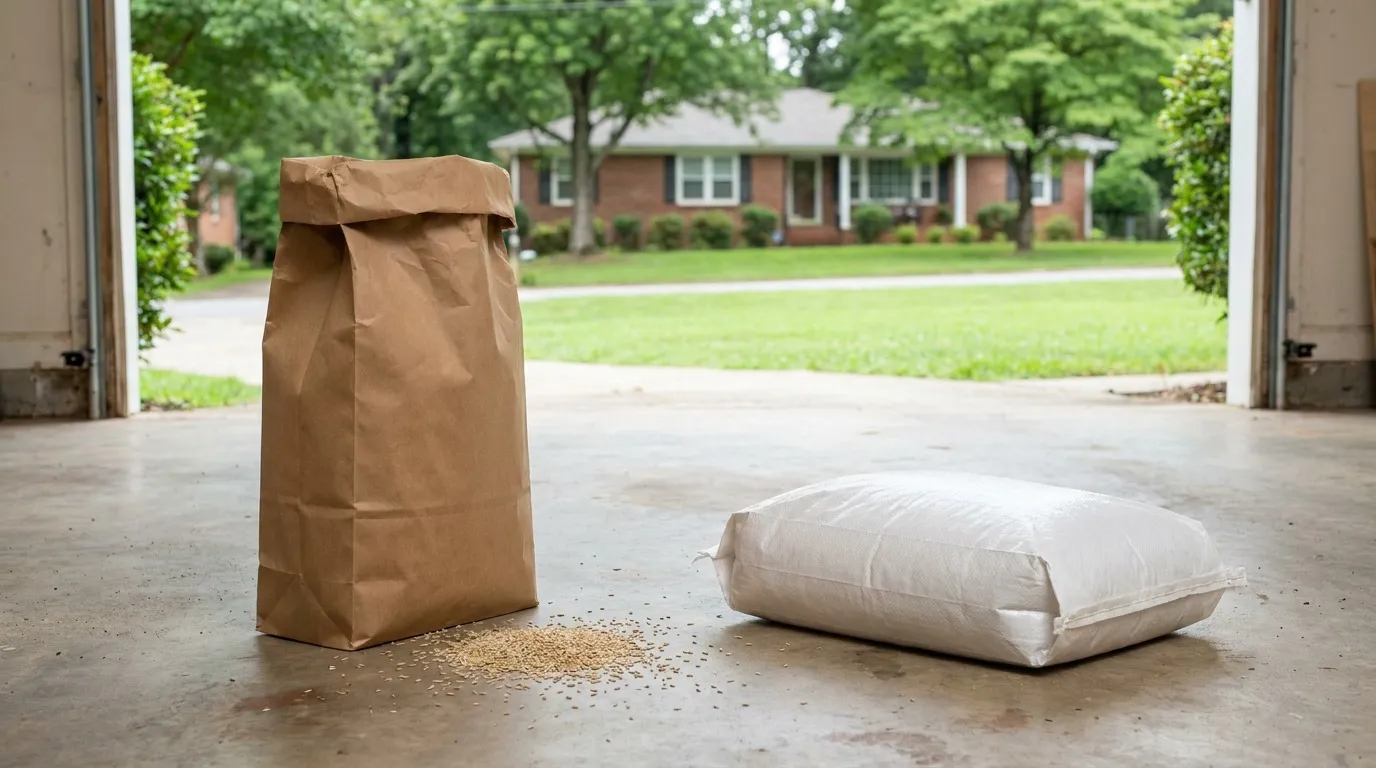
You have probably seen the bag at the box store: forty pounds, sixty dollars, recommended coverage that swings between 2,500 and 6,000 square feet depending on which side of the bag you read. That swing reflects the difference between a full renovation of a bare lot and a routine touch-up of a mature stand of tall fescue. The seed weight you actually need depends on which you are doing.
This guide gives you the numbers NC State Extension publishes for North Carolina tall fescue, walks the math from square footage to spreader setting, and lists the mistakes that cost homeowners a second bag of seed.
The One Number That Anchors Everything: 6 Pounds Per 1,000 Square Feet
The NC State Extension tall fescue maintenance calendar publishes a single seeding rate for full renovation of North Carolina lawns across the central and eastern regions: 6 pounds of turf-type tall fescue per 1,000 square feet, applied between September 1 and October 1. When homeowner guides recommend 3 to 4 pounds for a light overseed or 8 to 10 pounds for renovation, they are scaling that anchor number up or down based on how much bare soil the seed has to cover.
Turf specialists settle on 6 pounds because of coverage density. Turf-type tall fescue has roughly 180,000 to 220,000 seeds per pound. At 6 pounds per 1,000 square feet, that puts about 1 seed on every square inch of soil, dense enough for a full canopy without stacking seedlings so tightly they crowd each other out during their first month.
Three Overseeding Rates for Three Lawn Conditions
Not every lawn needs the same rate. Here are the three tiers that match how most Nature's Select® customers describe their turf during a free on-property assessment.
Light Overseed (Thin But Intact): 3 to 4 Pounds Per 1,000 Sq Ft
Use this rate when your lawn has a full canopy but you can see thinning near driveways, along the sun edges, or across summer traffic paths. The existing tall fescue is holding, and you are supplementing rather than starting over. A 40-pound bag covers about 10,000 to 13,000 square feet at this rate.
Standard Overseed (Moderately Thin): 5 to 6 Pounds Per 1,000 Sq Ft
Use this rate when the canopy is patchy, water pools in the bare spots, and last year's fescue thinned faster than it recovered. This is the NC State standard rate, and most fescue lawns in the Triad and Triangle fall here. A 40-pound bag covers about 6,600 to 8,000 square feet at this rate.
Renovation Rate (Bare Soil or Badly Damaged): 8 to 10 Pounds Per 1,000 Sq Ft
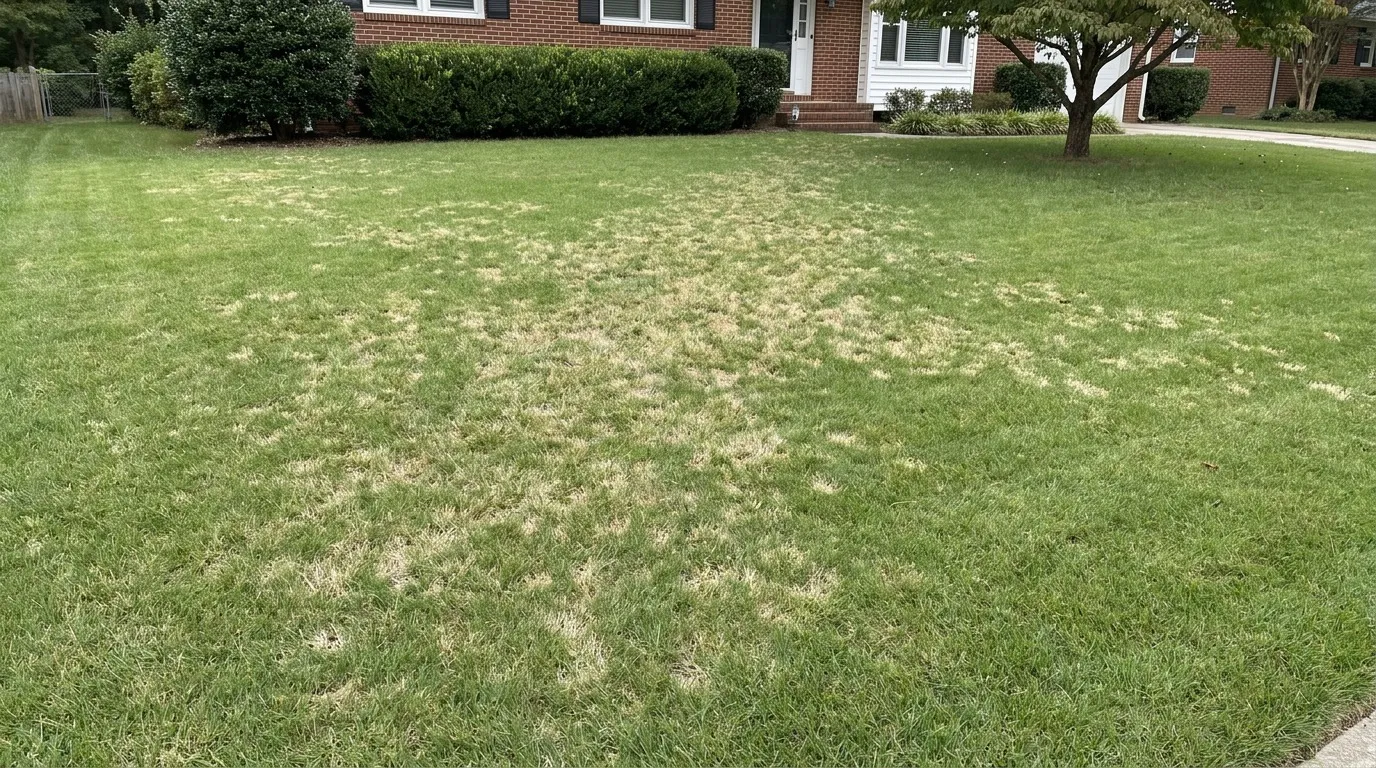
Use this rate when the lawn has 40 percent or more bare soil, dead patches from disease, or damage from brown patch. The seed is doing the work of a new lawn. Above 10 pounds, seedlings compete and thin themselves out. A 40-pound bag covers 4,000 to 5,000 square feet at this rate.
Rates at a Glance
| Lawn Condition | Rate (lbs / 1,000 sq ft) | 40-lb Bag Covers | When It Applies |
|---|---|---|---|
| Thin but intact | 3 to 4 | 10,000 to 13,000 sq ft | Full canopy, minor thinning |
| Moderately thin | 5 to 6 (NC State standard) | 6,600 to 8,000 sq ft | Patchy canopy, general fescue overseed |
| Bare or damaged | 8 to 10 | 4,000 to 5,000 sq ft | Renovation, disease recovery, 40%+ bare |
Converting Rate to Pounds and Spreader Setting
Measure the lawn, divide by 1,000, multiply by the rate. A 7,200-square-foot lawn at 6 pounds per 1,000 needs 43.2 pounds. Walk the lawn in rectangles instead of pulling a satellite estimate; satellite tools include beds, sidewalks, and edges, and routinely overstate the need for seed by 20 to 30 percent.
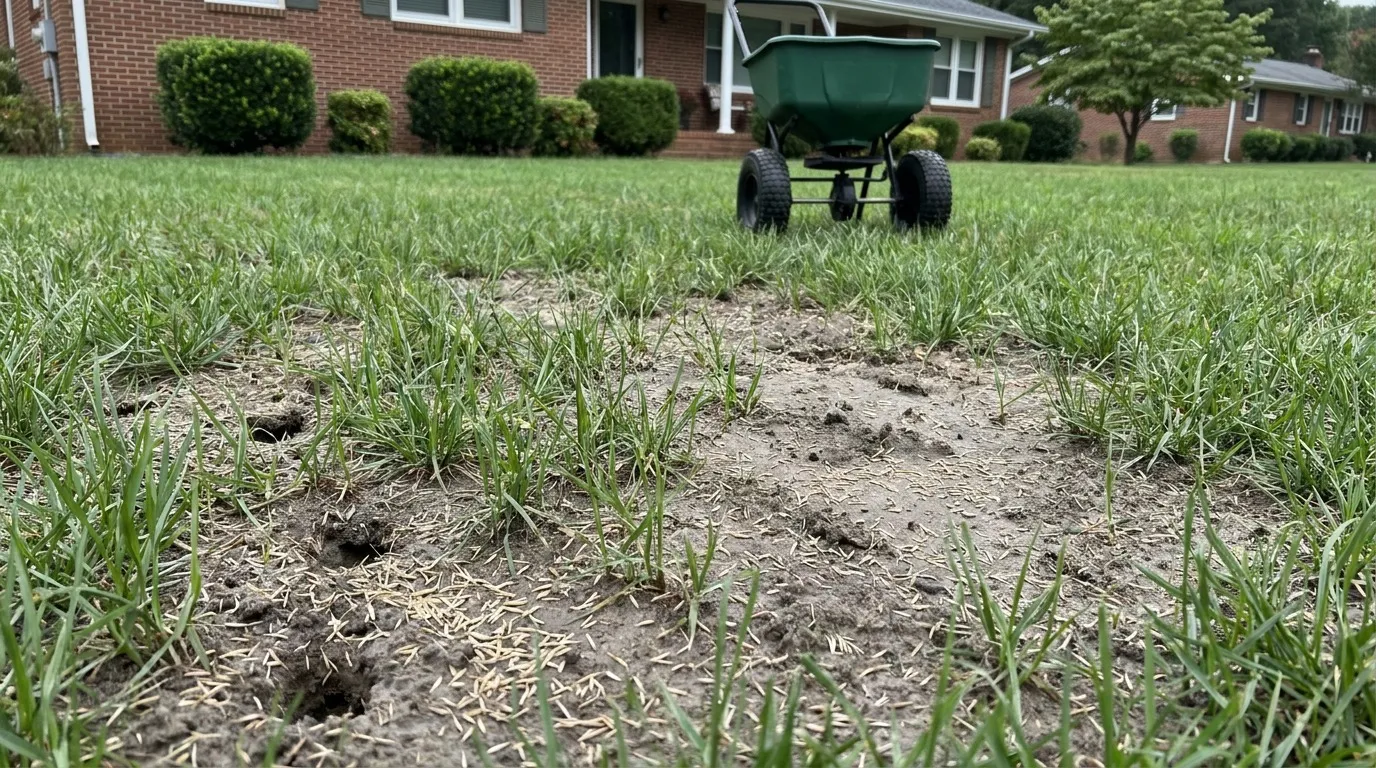
Every spreader uses a different dial range. A Scotts broadcast might use setting 6 for tall fescue; an Earthway might use 21 for the same rate. Most broadcast models put tall fescue between settings of 4 and 8 on a 1-to-15 dial; drop spreaders run higher because the pattern is narrower. The cleanest method: split the total seed into two half-loads, spread the first half in one direction, then spread the second half in the perpendicular direction. Two half-passes cover more evenly than one full pass.
Why Cultivar Blends Matter
The rates above assume a quality multi-cultivar turf-type tall fescue blend. "Turf-type" means the variety was bred for lawns rather than pasture. "Multi-cultivar" means the bag contains three to five different named cultivars, providing the lawn with genetic diversity in shade, drought, disease, and traffic tolerance. A bag labeled just "tall fescue" without cultivar names is a coin flip.
Pure Live Seed: The Bag Label Adjustment
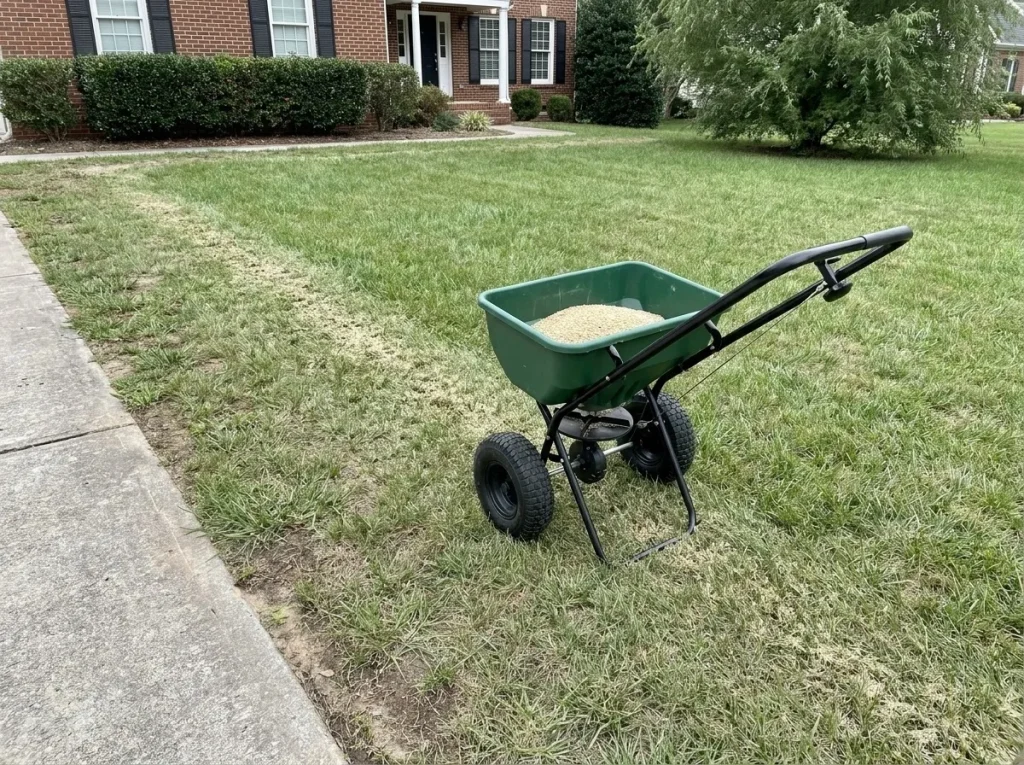
Seed bags list a germination percentage and a purity percentage. Multiply the two for the pure live seed number: a bag at 85 percent germination and 95 percent purity delivers about 81 percent pure live seed. Most bagged tall fescue in North Carolina lands between 80 and 88 percent. If your bag runs at 75 percent or below, bump the rate up 10 percent. That is why the standard rate is a range (5 to 6): it absorbs normal variation across bags.
The Two Weeks After You Seed Decide Everything
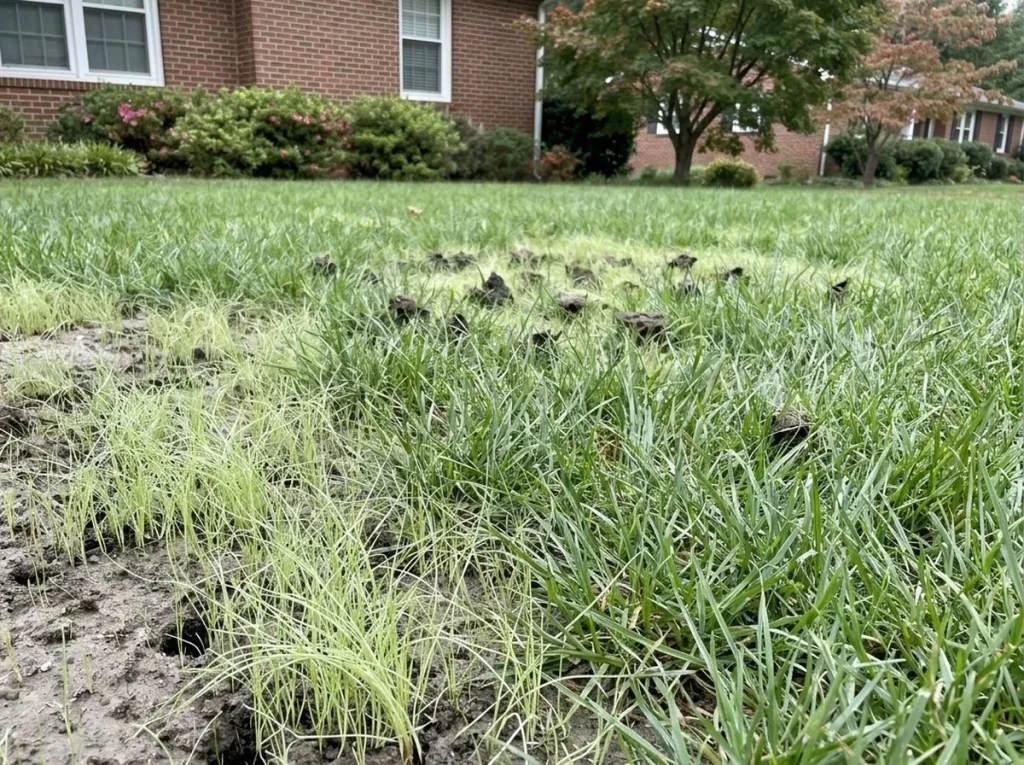
Rate and cultivar get the seed on the ground. The two weeks after decide whether it becomes turf. NC State Extension research shows tall fescue germinates in 5 to 10 days under proper soil moisture and temperature. Water lightly two to three times per day for the first 10 days to keep the top inch moist. Do not mow until the fescue reaches 3.5 inches, and set the mower to 3 inches.
Even a perfect rate fails outside the fall window. NC State publishes September 1 through October 1 for central and eastern North Carolina, though the actionable soil-temperature window is often narrower. According to NC State TurfFiles Time to Seed guidance, soil temperature at a four-inch depth should be between 60 and 75 degrees for reliable tall fescue germination, and the calendar window closes when that reading falls outside that range.
Cultivar selection carries the same weight as rate. Turfgrass trial data published by NC State's top-performing cultivars list shows that top-rated blends can outperform generic bagged seed by 30 to 50 percent on density and disease scores in North Carolina plots. That is why the standard rate of 6 pounds per 1,000 square feet, published in the NC State Extension tall fescue maintenance calendar, assumes you are working with a named-cultivar blend rather than a coin-flip bag.
Common Mistakes That Cost Homeowners a Second Bag
- Broadcasting the whole bag on the first pass. Split into two half-loads and cross-hatch the passes.
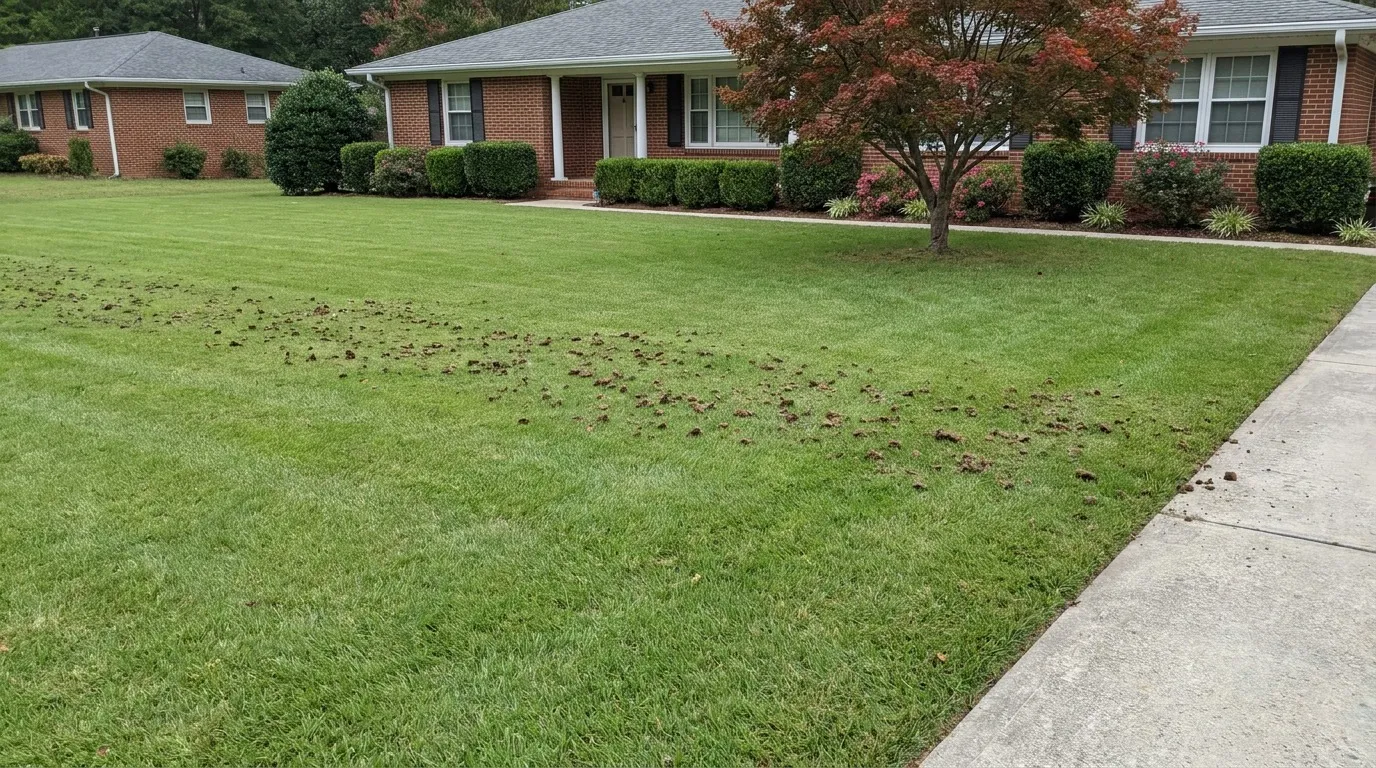
- Skipping aeration. Seed lying on compacted or thatched soil never gets seed-to-soil contact and germination collapses.
- Overseeding warm-season lawns. Bermuda and zoysia spread by rhizomes and stolons and reject overseeded fescue. Sandhills homeowners with warm-season turf get aeration only.
- Watering once a day for 30 minutes. New seed needs surface moisture, not deep saturation. Light and frequent in the first 10 days, then deep and infrequent after establishment.
- Using leftover seed from last year. Tall fescue germination drops noticeably after 12 months even in dry storage.
When to Bring in Professional Help
If your lawn is over 10,000 square feet, has more than 30 percent bare soil, or last year's overseed disappointed you and you are not sure why, professional cultivar blend selection usually pays back the difference. The Nature's Select® approach uses a custom-blended multi-cultivar tall fescue matched to your property, applied at the correct rate, and paired with hollow-tine core aeration timed to the actual soil temperature. The service is available across North Carolina from Winston-Salem, Greensboro, Chapel Hill, and Pinehurst.
Key Takeaways
- The NC State standard tall fescue overseeding rate is 6 pounds per 1,000 square feet for full renovation.
- Use 3 to 4 pounds for a thin-but-intact lawn, 5 to 6 pounds for a moderately thin lawn, and 8 to 10 pounds for renovation or bare soil.
- Measure your lawn by walking rectangles rather than using satellite estimates, which overstate by 20 to 30 percent.
- Split seed into two half-loads and cross-hatch spreader passes for even coverage.
- Insist on a multi-cultivar turf-type tall fescue blend with named cultivars from the current NC State list.
- Adjust rate up 10 percent if the bag's pure live seed calculation falls below 80 percent.
Frequently Asked Questions
How much grass seed do I need per square foot for tall fescue in North Carolina?
For a routine overseed of a moderately thin lawn, plan on about 0.006 pounds per square foot, which is 6 pounds per 1,000 square feet. That is the NC State Extension standard rate. A thin-but-intact lawn needs 3 to 4 pounds per 1,000. A renovation needs 8 to 10 pounds per 1,000. A single pound of turf-type tall fescue contains roughly 200,000 seeds.
What is the best seed for overseeding a lawn in North Carolina?
A multi-cultivar turf-type tall fescue blend built from the current NC State top-performing cultivars list. No single cultivar handles every condition, so a three-to-five-cultivar blend provides the lawn with genetic diversity for shade, drought, disease, and traffic tolerance. Look for a bag that names its cultivars on the label.
When should I overseed tall fescue in the Triad and Triangle?
NC State Extension publishes September 1 through October 1 for central and eastern North Carolina. Soil temperature at four inches is warm enough for germination (5 to 10 days) but cool enough for new fescue to root before summer heat returns. Overseeding earlier risks brown patch; later risks not enough root time before dormancy.
Do I need to aerate before overseeding?
Yes. Seed dropped on compacted or thatched soil has no seed-to-soil contact and germination collapses. Hollow-tine core aeration opens the soil, exposes fresh mineral surface for seed contact, and the plugs decompose back into the lawn over two to three weeks feeding the seedlings.
How much does 40 pounds of tall fescue seed cost?
Quality multi-cultivar turf-type tall fescue runs about $55 to $85 per 40-pound bag in North Carolina. A single 40-pound bag covers about 6,600 to 8,000 square feet at the standard 5 to 6 pounds per 1,000 rate. Most Triad and Triangle lawns need one to two bags per overseed cycle.
Can I overseed bermuda or zoysia with tall fescue?
Not effectively. Bermuda and zoysia are warm-season grasses that spread by rhizomes and stolons and reject overseeded fescue. Overseeding a warm-season lawn produces temporary green cover that fades in early summer and can slow warm-season green-up the following season.
Is more seed always better?
No. Above 10 pounds per 1,000 square feet, seedlings crowd each other, root systems overlap without depth, and the canopy thins itself out. The renovation rate maxes at 10 pounds for that reason.
Conclusion
Overseeding rate is not the mystical number the box-store bag makes it out to be. Six pounds per 1,000 square feet is the NC State anchor for full renovation, 3 to 4 pounds is the light-overseed rate, and 8 to 10 pounds handles bare or badly damaged turf. Measure honestly, buy a multi-cultivar bag with named cultivars, split the seed into two half-loads, and cross-hatch the passes.
If you want the cultivar blend selected for you and the rate calibrated for your exact lawn condition, book professional cultivar blend selection with Nature's Select® at (888) 786-9735.