Armyworms in 48 Hours: The Overnight NC Lawn Disaster Nobody Warned You About
Fall armyworm damage on a lawn moves from invisible to devastating in 48 hours because the caterpillars feed at night in synchronized waves. A single acre can lose most of its leaf canopy in two days. Confirmation is fast: a soap flush at dawn brings larvae to the surface, and any count above two to three caterpillars per square foot in North Carolina turf warrants immediate action.
You mowed on Saturday. The lawn looked fine. By Monday afternoon, half of it has been chewed to the soil. If that description matches what you are staring at right now, you are almost certainly dealing with fall armyworm damage, and the response window is not measured in weeks. It is measured in days.
Fall armyworms (Spodoptera frugiperda) are foliar-feeding caterpillars that arrive in outbreak years without warning, feed almost exclusively at night, and can defoliate an entire lawn between one weekend and the next. Identification is fast; at-home confirmation takes ten minutes, and biological integrated pest management can shut down an active outbreak inside a single treatment window. This guide walks you through what the damage looks like, the soap flush test that confirms it, when to act, and how to think about recovery.
Why 48 Hours Is Not an Exaggeration
Most lawn insect stories play out on a scale of weeks. White grubs feed underground for a month before symptoms surface. Chinch bugs build up populations throughout the summer. Fall armyworms do not follow that pattern.
A single fall armyworm larva eats roughly four square inches of grass blade material per day during its final two feeding instars. In an outbreak year, egg masses of one hundred to two hundred eggs hatch in synchronized waves, and thousands of larvae per acre enter their peak feeding stage on the same night. The caterpillars feed heavily at dusk, through the night, and into early morning, then rest in the thatch during the heat of the day. When you walk the lawn at 4:00 p.m. and see damage that was not there twenty-four hours before, you are looking at a single night of feeding.
The species that hits North Carolina in late summer is the fall armyworm, which migrates north from the Gulf Coast each summer. Outbreak years arrive with weather patterns that carry the moths further and earlier than usual, and 2021 was a national reminder that a two-week window in late summer can undo a full year of lawn care work.
What Fall Armyworm Damage Actually Looks Like
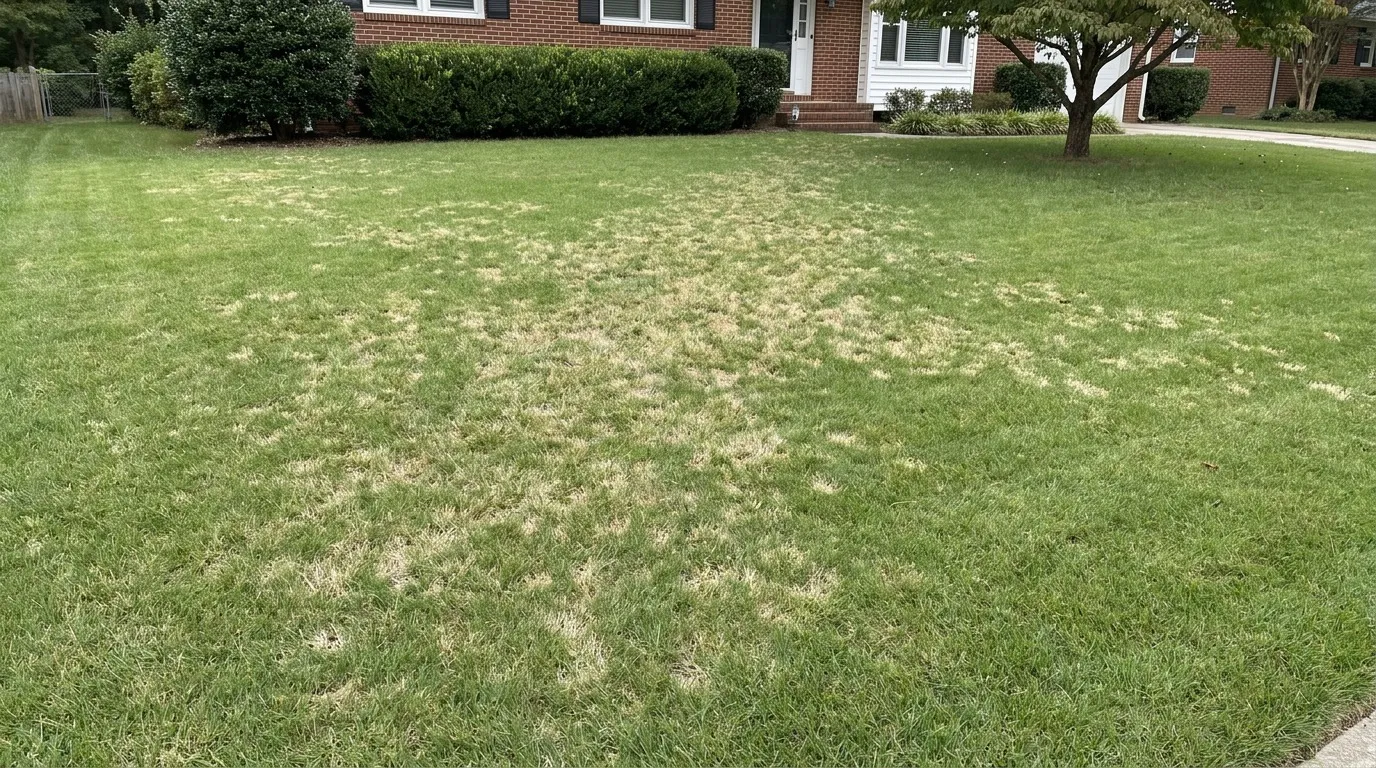
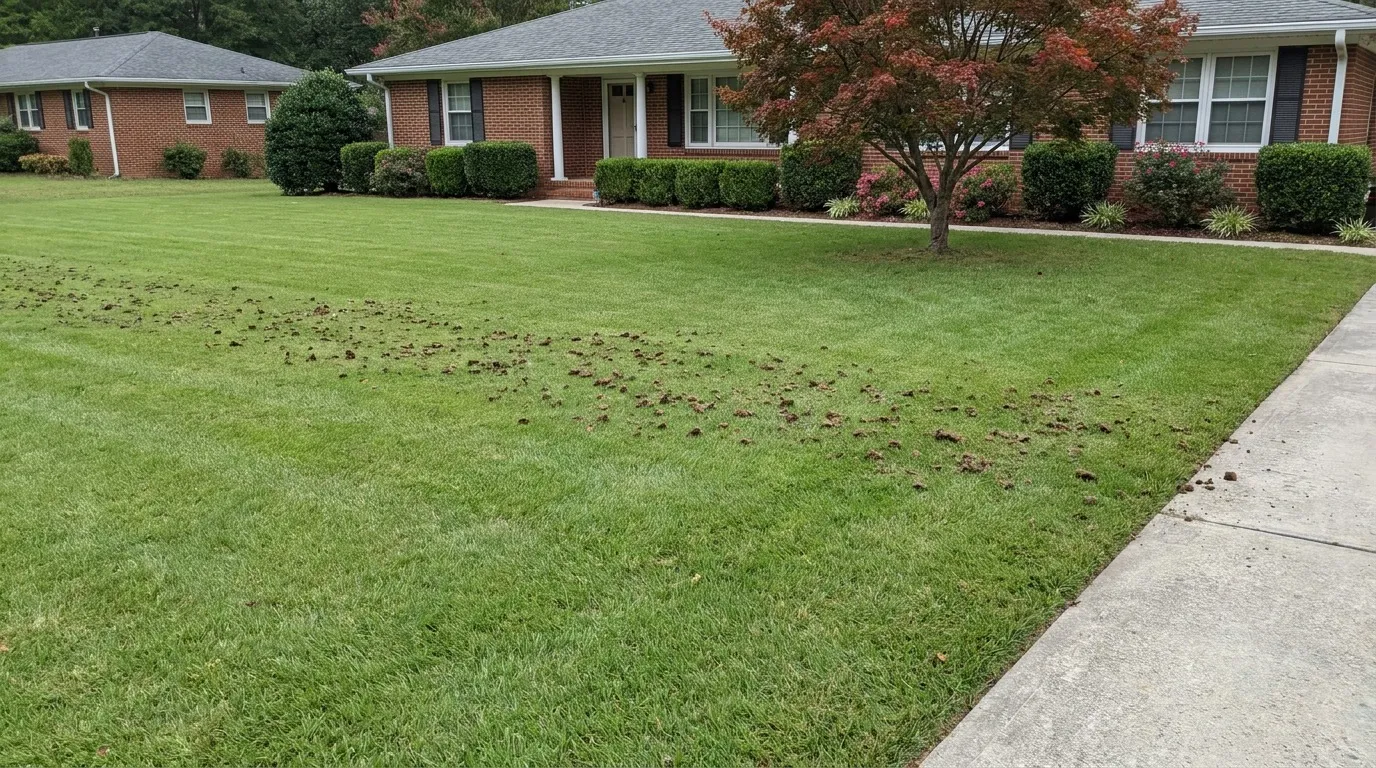
Fall armyworm damage has a specific field signature that separates it from drought, from grub damage, and from turf disease. If you can walk the lawn and match three of the following patterns, you have your diagnosis before you even bend down:
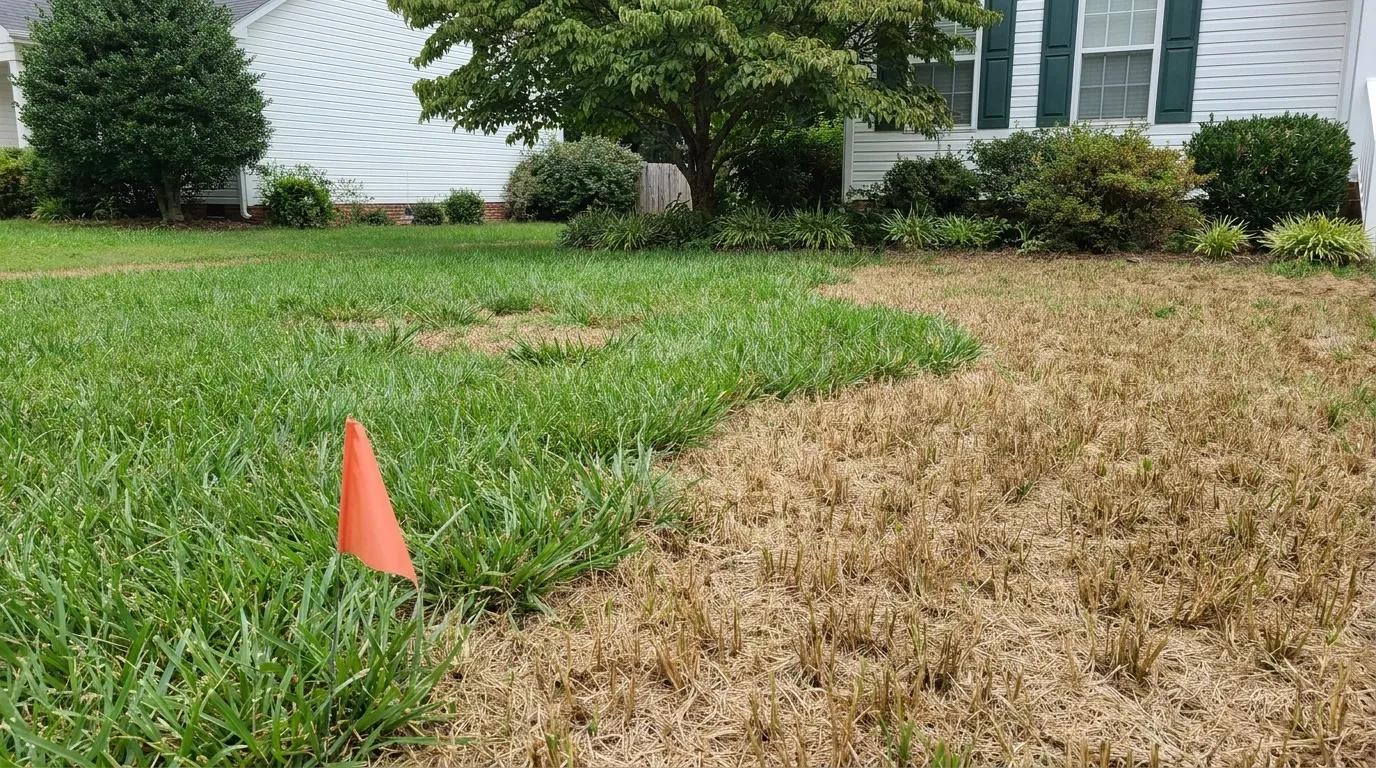
- The damage spreads outward from a defined edge. A clear line separates healthy green turf from brown, closely cropped grass. Flag the edge in the morning and check it at dusk; the front will have advanced several feet.
- Blades are chewed, not wilted. Drought browns blade tips inward and leaves them intact. Armyworm-damaged blades show ragged edges, notches, and short stubs. Root systems are unharmed, so the soil below is not spongy or lifted.
- Brown patches appear where the lawn looked fine 48 hours ago. Fall armyworm damage does not build gradually. It shows up between visits to the yard.
- Bird activity increases. Robins, starlings, and grackles concentrate on affected patches during the day, feeding on larvae resting in the thatch.
- The lawn looks scalped. In severe cases, damage extends down to the thatch line and the affected turf looks like it was mowed too short.
- Tall fescue, bermudagrass, and zoysia are all vulnerable. Fall armyworms feed on both cool-season and warm-season turf during outbreak years across North Carolina.
The larvae themselves grow up to 1.5 inches long at their final instar, range from light green to nearly black, and carry a distinctive light-colored inverted "Y" marking on the front of the head capsule. That mark is the single most reliable field ID feature separating fall armyworm from sod webworm and cutworm look-alikes.
The 10-Minute Soap Flush Test That Confirms the Diagnosis
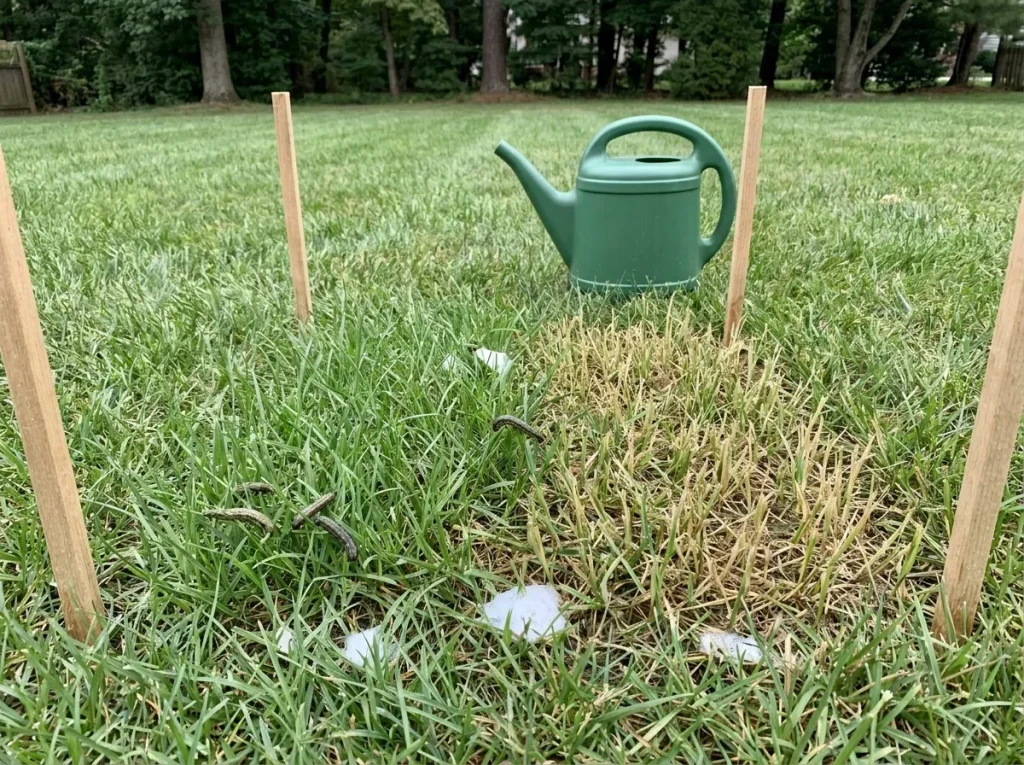
The soap flush test is the standard field confirmation for fall armyworms across the Southeast. A Nature's Select® technician runs it on the first visit, and it works in your own yard with materials from your kitchen.
What you need: One gallon of water, two tablespoons of dishwashing liquid, a watering can or bucket, a phone timer, and a ruler.
Where to test: Pick a spot along the leading edge of the damaged area, where healthy grass meets the affected zone. Larvae rest in the thatch of the still-healthy grass just ahead of the damage front, and that is where the density is highest.
How to run the test:
- Mark off a one-square-foot section of turf with the ruler.
- Mix the two tablespoons of dish soap into the gallon of water.
- Pour the solution slowly over the marked square, saturating the thatch layer.
- Start your timer.
- Wait two to three minutes. Watch the surface.
Fall armyworm larvae respond to the soap by crawling up out of the thatch to the canopy. Count every caterpillar that emerges.
The action threshold for fall armyworm on a home lawn is generally two to three caterpillars per square foot. Anything above that count during an active outbreak warrants immediate treatment. If you see five or more, you are already in the middle of a serious infestation and the response window has narrowed further.
Best time to run the test: early morning between 6:00 a.m. and 8:00 a.m., or late evening between 7:00 p.m. and dark. These are the windows when the caterpillars are most active near the surface. If you see zero caterpillars but damage keeps spreading, the population may have already pupated in the soil, which means adult moths will emerge in ten to fourteen days and lay the next generation of eggs nearby. That is when a professional monitoring visit matters most, because the second cycle is preventable in a way the first was not.
The Response Window: What to Do in the First 48 Hours
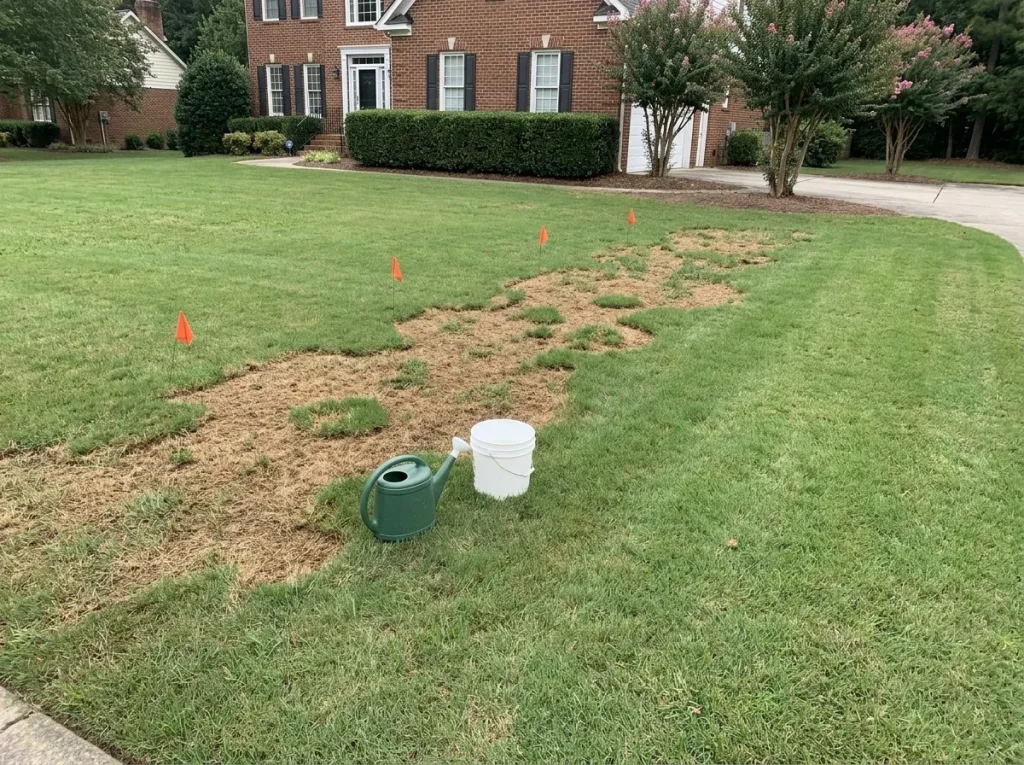
Fall armyworm outbreaks compress the normal integrated pest management decision framework. The response has three phases, and each one calls for a different action.
| Phase | Days | What Happens | Response |
|---|---|---|---|
| Active feeding | 0-3 | Peak-instar larvae destroy leaf canopy | Confirm with soap flush; treat if count is above threshold |
| Egg-laying | 4-14 | Adult moths emerge and lay next-generation eggs | Monitoring visit; time application to early instars |
| Recovery | 15+ | Feeding stops; root system pushes new foliage | Soil-first restoration; overseed thin areas in fall |
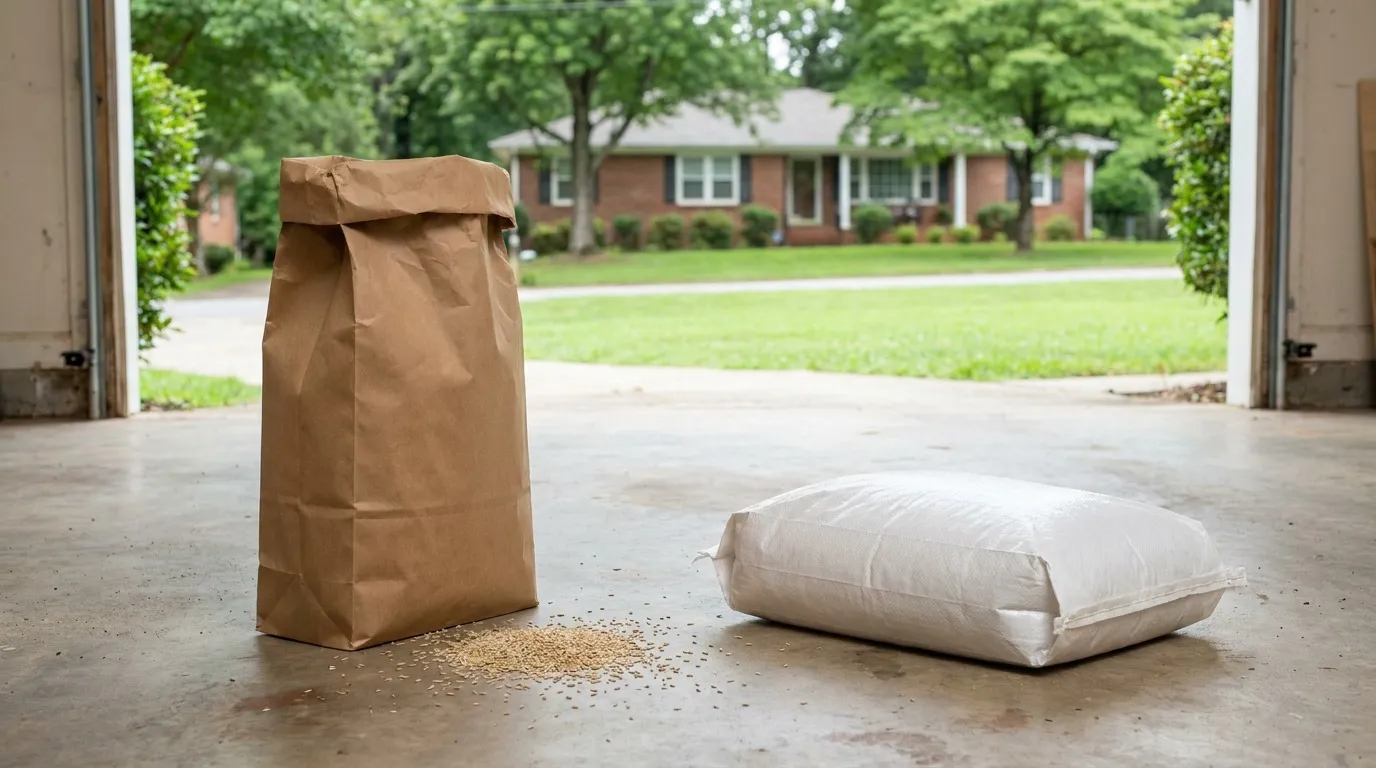
During active feeding, biological targeted treatment with a Bacillus thuringiensis subspecies kurstaki (Bt-k) product works well against small-to-medium caterpillars but loses efficacy against the largest instars. When larvae are already at 1.5 inches, a state-licensed technician will match a targeted material against the confirmed species at the lowest effective rate, applied only to the affected area, with bloom-avoidance protocols intact for pollinator protection.
Most chemical-first lawn care programs skip the diagnosis and treat calendars rather than infestations. A homeowner who calls a national provider in September gets a broad-spectrum spray whether the population is above threshold or below, whether the caterpillars are in early instars or late. That approach works occasionally, but it is expensive, suppresses the predator beetles and parasitic wasps that would otherwise finish the job for free, and does nothing to prevent the second cycle.
Fall armyworms are one of four major insect pressures on North Carolina lawns. Chinch bugs (Blissus insularis), white grubs, and sod webworms (Crambus and Parapediasia species) each produce their own damage signature and each require different confirmation tests. If your damage timeline is measured in weeks rather than days, if the turf lifts like a rug rather than showing chewed blades, or if the pattern favors sunny strips rather than a spreading front, work through the yellow-patch differential diagnostic and the action threshold framework before committing to an armyworm treatment. Once the current outbreak is stopped, the recovery playbook covers reseeding, aeration, and biological soil amendments so the next outbreak has less to work with.
Federal pest tracking supports the late-summer timing, since USDA APHIS armyworm monitoring documents Spodoptera frugiperda migration into the Southeast peaking August through October. For at-home confirmation, the NC State Cooperative Extension TurfFiles Insect ID library recommends the soap flush as the fastest reliable diagnostic when caterpillars are not visible on the surface. The whole-property response framework used by state-licensed technicians follows the USDA SARE Biological IPM approach, which prioritizes species confirmation, targeted materials, and predator protection over calendar spraying.
Key Takeaways
- Fall armyworm damage can defoliate significant sections of a North Carolina lawn in 48 hours because the caterpillars feed at night in synchronized waves during their final two instars.
- The species behind late-summer North Carolina outbreaks is Spodoptera frugiperda, identified by an inverted "Y" mark on the head capsule and a body color that ranges from light green to nearly black.
- The soap flush test (one gallon of water plus two tablespoons of dish soap poured over a one-square-foot section) confirms an active infestation in ten minutes.
- Two to three caterpillars per square foot is the action threshold for a home lawn; anything above that count warrants immediate treatment during an active outbreak.
- The first response cycle stops the current wave; the second monitoring visit prevents the follow-up generation of eggs from launching a second outbreak on the same property.
- Biological integrated pest management stops an active outbreak and protects the beneficial insects and pollinators that keep future pest pressure low, without defaulting to broad-spectrum spray.
Frequently Asked Questions
How fast can fall armyworms actually destroy a lawn?
Fast enough that homeowners regularly report losing significant sections between one visit to the yard and the next. Fall armyworm larvae do roughly ninety percent of their lifetime feeding in the last three to five days of the larval stage, and thousands of caterpillars per acre can enter that stage on the same night in an outbreak year. Damage that took 48 hours to appear can extend across most of a lawn if a second synchronized wave hits before the first one is stopped. The 48-hour framing is not a marketing headline. It matches the actual timeline of a peak-instar feeding cycle.
What does the soap flush test look like and how do I run it?
Mix two tablespoons of dish soap into one gallon of water. Pour the mixture slowly over a one-square-foot section of lawn along the edge of the damaged area, ideally at dawn or dusk. Wait two to three minutes. Fall armyworm larvae respond to the soap by crawling up out of the thatch layer. Count every caterpillar that emerges. Two or three larvae per square foot is the action threshold; five or more indicates an active outbreak that needs immediate attention. The test also brings other soil-surface insects like cutworms and sod webworms to the surface, so field ID against a species reference before treating.
Can a lawn recover from armyworm damage?
Yes, in most cases. Fall armyworms feed on leaf material, not roots, which means the crown and root system of the turf are usually intact after the caterpillars leave. Well-maintained tall fescue and bermudagrass will push new foliage within two to three weeks once feeding stops. Recovery is faster and more complete when the underlying soil is healthy and the ongoing lawn care program supports root development. Thin turf that was already stressed by summer heat may need targeted overseeding in the fall as part of the recovery playbook.
When do fall armyworms show up in North Carolina?
Fall armyworms migrate north from the Gulf Coast each summer and typically reach North Carolina in late July. Peak damage runs August through October, with the worst outbreaks tied to weather patterns that carry the adult moths further and earlier than usual. Outbreak years are not predictable in advance, which is why monitoring the lawn every few days from mid-July through late September is a good habit during any late-summer stretch. Homeowners who scout for damage regularly catch outbreaks in phase 1, when treatment is fastest and cheapest.
Are armyworm treatments harmful to pets and pollinators?
Biological materials like Bacillus thuringiensis subspecies kurstaki (Bt-k) are pollinator-safe and pet-safe when used according to the label. When a targeted synthetic material is warranted for late-instar larvae, application at the lowest effective rate, restricted to the affected area, with bloom-avoidance protocols in place minimizes exposure to non-target insects. Nature's Select® is affiliated with the NC State Beekeepers Association and follows an integrated pest management framework that protects pollinators, beneficial predators, pets, and children. Specific re-entry windows appear on the written report left at the property after every visit.
Should I wait to see if the armyworms move on before treating?
No. Fall armyworm damage during peak feeding is not a wait-and-see situation. If your soap flush confirms two or more caterpillars per square foot and damage is actively spreading, treatment is warranted within the next 24 to 48 hours. Waiting almost always means more damage, more turf to recover, and a higher likelihood of a second cycle from adult moths emerging in the same area. The window for a small, targeted response closes fast in an active outbreak.
Conclusion
Fall armyworm damage is one of the few pest situations where the response window really is measured in hours. If the lawn looked fine three days ago and has visible chewed patches now, the caterpillars are still there and the count matters more than the calendar. A ten-minute soap flush confirms what you are dealing with, the action threshold tells you whether to treat or monitor, and biological integrated pest management stops the current cycle while protecting the beneficial insects that keep future outbreaks smaller. Call (888) 786-9735 or request a free on-property assessment and a state-licensed technician will run the soap flush with you, confirm the species, and match the response to the density on your property. In an active outbreak, same-day scheduling is standard.