Chinch Bugs vs Drought: Why Your NC Lawn Looks Dead in All the Wrong Spots
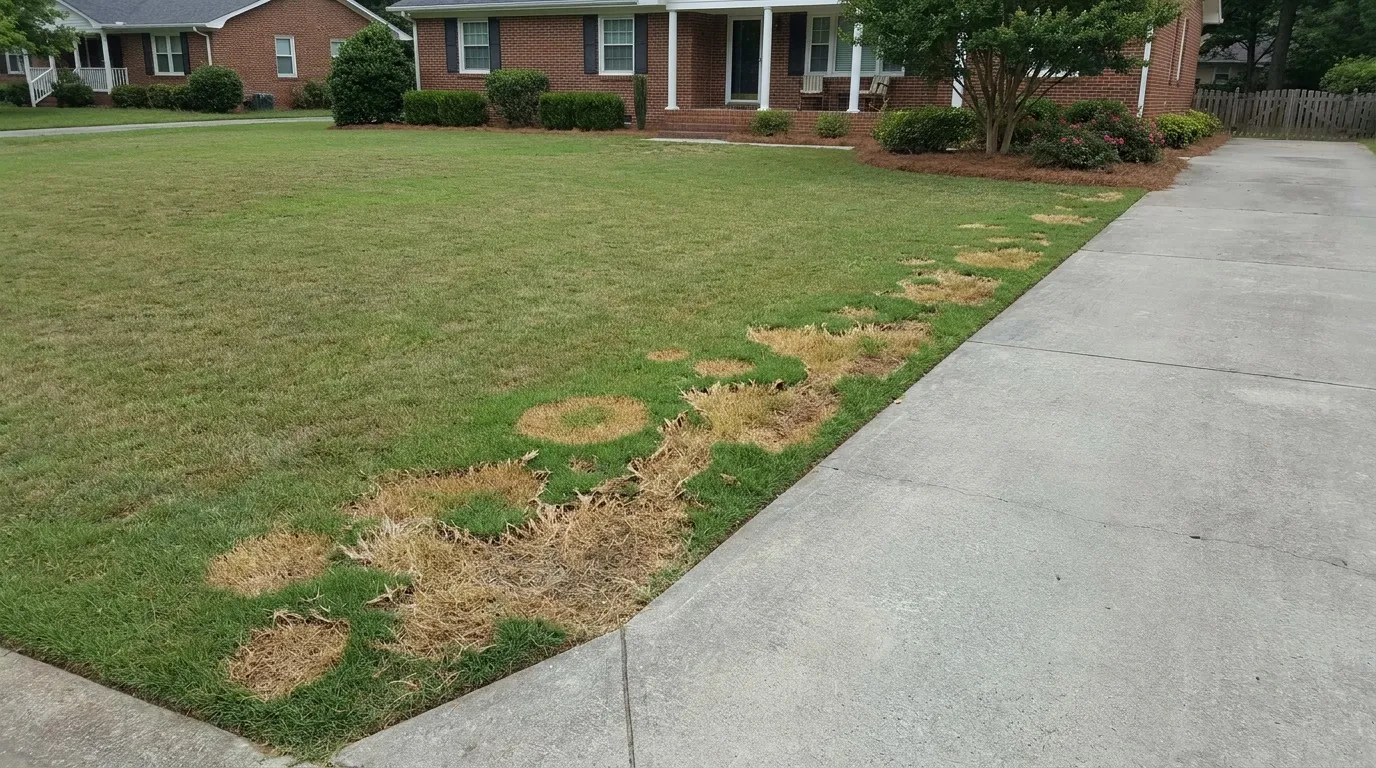
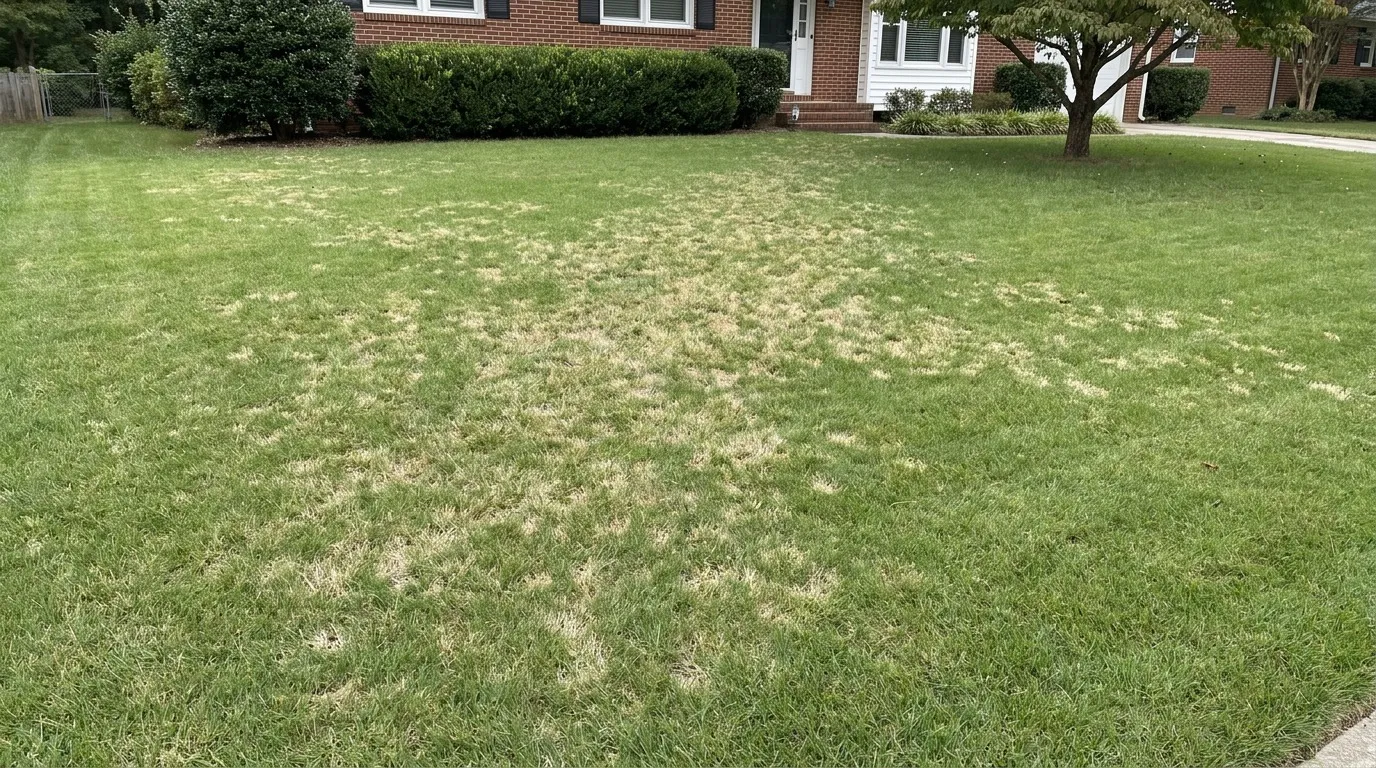
Chinch bug damage and drought stress can look nearly identical from the driveway: yellow patches, brown edges, wilted turf. The tell is location and behavior. Drought damage spreads uniformly across a lawn and greens back up within 48 hours of a deep watering. Chinch bug damage clusters in the hottest, sunniest strips (often along driveways, sidewalks, and south-facing edges), keeps expanding despite irrigation, and reveals tiny black adults with shiny white wings when you part the grass at the patch edge.
If you have watered a yellow patch three times this week and it still looks worse, you are not imagining things and you did not do anything wrong. What most North Carolina homeowners are looking at in July is not a thirsty lawn. It is a lawn under attack by a surface-feeding pest that literally shuts off the plumbing inside every grass blade it touches. Water cannot rescue turf that cannot absorb water.
This guide walks you through the exact field markers a state-licensed technician uses to separate chinch bug damage from drought stress, the two-minute float test you can run at home before you spend a dollar on treatment, and the reason overwatering a chinch bug patch actually makes the problem worse. You will finish this article knowing whether your yellow patches call for the hose or the phone.
Why Chinch Bug Damage Looks Exactly Like Drought (At First)
The southern chinch bug (Blissus insularis) is a tiny surface-feeding insect, no larger than a grain of rice, that lives at the soil line inside the thatch layer of your lawn. Adults and nymphs both feed by piercing grass stems with a straw-like mouthpart and injecting a toxic secretion that blocks the vascular system of the plant. Once the plumbing is blocked, water and nutrients cannot move up the blade, and the grass wilts from the top down.
That wilt looks exactly like drought stress because functionally, it is drought stress. The plant is desiccated. The difference is that the roots are fine. Water is available in the soil. The blade just cannot pull any of it up. This is why the classic homeowner move (more water, more often) never works on chinch bug patches and why so many people spend an entire summer feeding the wrong problem.
Six clues separate the two conditions. Drought stress spreads evenly across the lawn, following the weakest turf and the driest exposure. Chinch bug damage clusters in the hottest, driest, sunniest strips first, then radiates outward in irregular patterns. Drought responds to a deep, one-inch watering within 24 to 48 hours. Chinch bug damage keeps spreading regardless of irrigation. Drought does not leave insects behind. Chinch bug damage does, and you can find them.
The Six Field Markers That Separate Chinch Bugs from Drought
Before you spend money on treatment, walk the lawn once and check every marker on this list. Most homeowners can rule one condition in or out in about five minutes.
| Field Marker | Drought Stress | Chinch Bug Damage |
|---|---|---|
| Location on property | Even, follows exposure and elevation | Concentrated in hottest sunny strips first |
| Pattern | Uniform yellowing across large areas | Irregular patches with sharp borders that expand outward |
| Response to deep watering | Greens back up in 24-48 hours | No response or continues to spread |
| Turf tug test | Blades pull away, roots dry but intact | Blades pull away, adults and nymphs visible at soil line |
| Insects visible at canopy edge | None | Small black adults with white wings, orange nymphs |
| Peak damage window | Anytime rain fails | Late June through August in hot, dry weather |
The two most decisive markers are the response to a deep watering and what you find when you part the canopy at the edge of a discolored patch. Drought stress turf perks up. Chinch bug turf does not, and the reason is walking around at the soil line. If you see nothing after ten seconds of watching the canopy, the odds shift back toward drought or another problem.
Where Chinch Bug Damage Shows Up First on NC Lawns
Chinch bugs love heat, sun, and thick thatch. On a typical Triad or Triangle property, damage almost always starts in the same three places: the strip of turf along the south side of a driveway, the two-to-three-foot band next to sidewalks and curbs, and open lawn along south-facing house walls where the sun hits hardest all day. These edges hold heat, dry out faster, and grow the thickest thatch, all of which the chinch bug population reads as an invitation.
Drought stress does not play favorites the same way. When the weather runs hot and dry for weeks, drought browning shows up first on the highest, driest points of the lawn (slopes, mounds, thin-soil strips over utility runs) and progresses inward from there. If your damage is hugging the driveway and skipping the middle of the yard, that pattern alone is worth a closer look.
The Two-Minute Float Test You Can Run Yourself
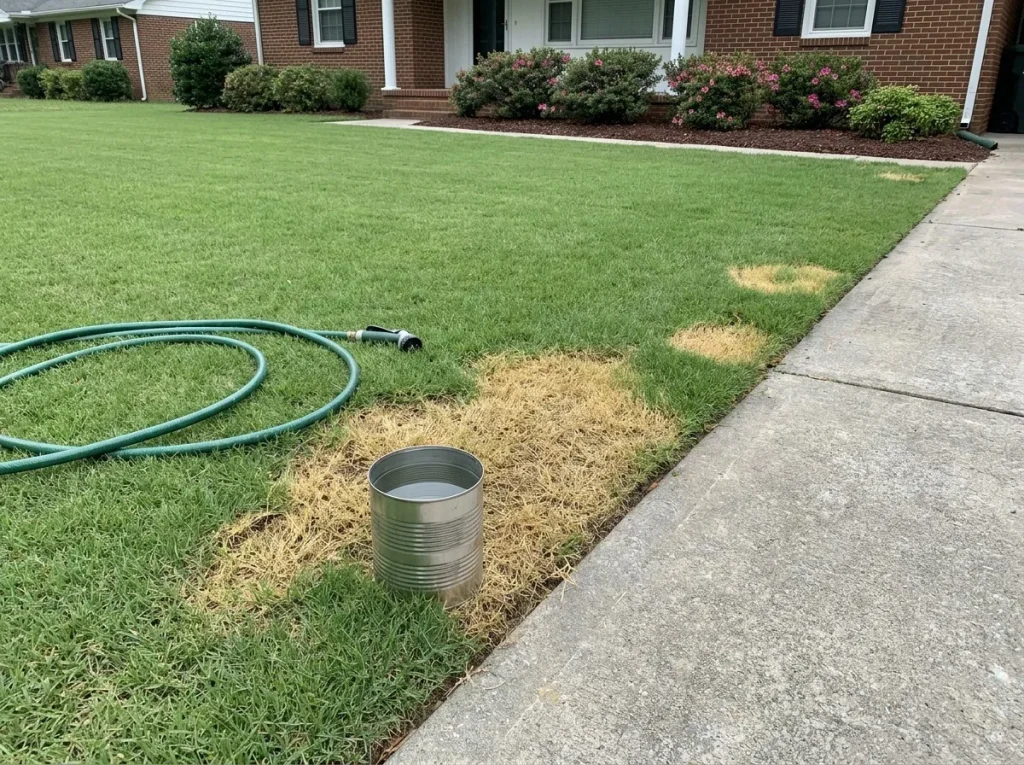
The float test is the same procedure a licensed technician runs during an on-site species identification visit. It works because chinch bugs cannot swim, and it costs nothing beyond a coffee can and a garden hose.
What you need: A metal or plastic can with both ends cut out (a large coffee can works), or a piece of PVC pipe six inches in diameter. A garden hose. A watch or timer.
How to run it:
- Walk to the edge of a suspect patch, right where healthy turf meets the discolored area. This is where chinch bugs congregate.
- Push the open-ended can two inches into the soil so it forms a watertight ring around a small circle of turf and thatch.
- Fill the can with water and keep filling for the next five to ten minutes so the water level stays above the grass blades the whole time.
- Watch the surface. If chinch bugs are present, adults and nymphs will float to the top within two to three minutes.
Adults are about one-sixth of an inch long, black-bodied, with shiny white wings folded flat over the back and a small black triangle where the wings meet. Nymphs are smaller and range from bright orange with a white band to reddish-brown depending on their instar. If you count more than twenty bugs floating in your can, you are past the action threshold and you have a live infestation.
If the water remains clear for 10 minutes and nothing surfaces, chinch bugs are not your primary problem. Move on to drought stress, dollar spot, or the yellow-patch differential covered in the yellow patches diagnostic. The float test requires no product and no turf removal, making it the safest at-home diagnostic in the entire lawn insect control toolkit.
Why Overwatering a Chinch Bug Patch Makes Things Worse
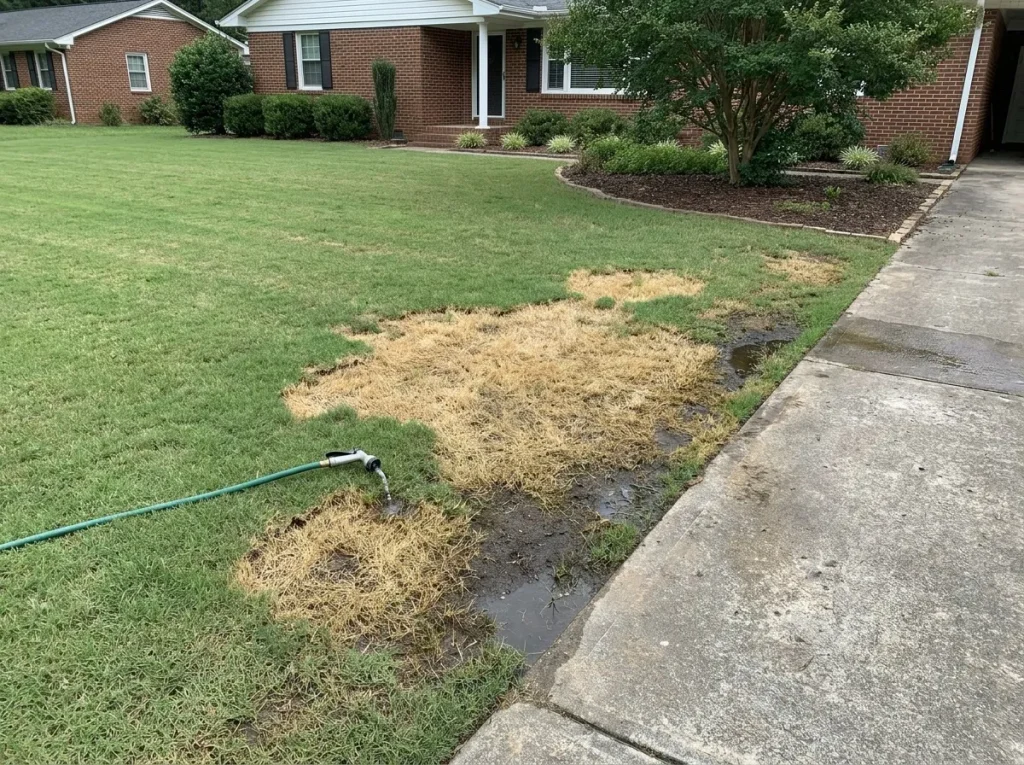
Every homeowner reaches for the hose when the lawn turns yellow. On a chinch bug patch, that instinct backfires in three ways.
First, water does not fix damage that is not caused by drought. The blades cannot pull water through the vascular tissue the toxin has blocked, so extra irrigation does nothing to green up the patch. The turf stays yellow, the homeowner concludes the lawn needs even more water, and the cycle repeats.
Second, more water builds more thatch. Chinch bugs live and reproduce in the thatch layer, and the thicker that layer gets, the better the pest environment becomes. Overwatered fescue and warm-season lawns run thatchy by mid-summer, even in normal years, and adding 20 extra minutes to every zone accelerates the buildup that shelters the next generation.
Third, wet lawns crowd out the natural predators that keep chinch bug populations down. Big-eyed bugs, minute pirate bugs, and predatory beetles all hunt chinch bugs at the soil line, and dry, sunlit thatch is the environment they hunt in. Waterlogged thatch drives them away and leaves the chinch bug population without its natural checks.
The right response to a confirmed chinch bug patch is to hold water at normal turfgrass needs (1 inch per week, including rainfall), reduce the thatch layer through core aeration, and treat only the area above the action threshold. On-site species identification tells you exactly what treatment window the lawn is in and whether targeted intervention is warranted right now or whether monitoring is the correct next step.
Chinch Bug Life Cycle in North Carolina
The southern chinch bug produces seven to ten overlapping generations in a North Carolina summer, which is why damage that starts as a single sunny-strip patch in early July can span half the front yard by late August. Adults overwinter in leaf litter and thatch, emerge in late April and May to lay eggs, and the first nymphs appear as soil temperatures climb through 60 degrees.
Peak damage generally arrives the first week of July and holds through mid-August, with a second surge in late August in wet-warm years when a fresh generation matures. Populations collapse when temperatures drop below 70 degrees at night, which is why chinch bug damage is a summer-heat story and not a spring or fall story. If you are seeing yellow patches in April or October, chinch bugs are almost certainly not the cause and you should walk through the four-culprit yellow patch diagnostic before doing anything else.
When to Call and When to Watch
Chinch bug damage does not always require treatment. State-licensed technicians work off a threshold-based decision framework because a light population under pressure from natural predators often collapses on its own, and treating a light population wastes money and puts unnecessary product into the environment.
The action threshold rule of thumb for southern chinch bug in North Carolina lawns is roughly twenty or more bugs surfacing in a single float test at the patch edge, paired with visible, spreading discoloration in the surrounding turf. Below that, monitoring is usually the right call. Above that, targeted treatment at the lowest effective rate is warranted, ideally within the small-nymph window when the population is most vulnerable and least protected by thatch.
Two situations always warrant a professional visit. The first is any patch that has doubled in size in less than two weeks. The second is any confirmed infestation on a property with young children, pets, pollinator plantings, or a nearby pond. In both cases the on-site species identification, threshold-based treatment, and pollinator-aware timing that come with a Nature's Select® on-property assessment matter more than the treatment itself. The biological lawn insect control program is built around the discipline of identifying first and treating only what needs treatment.
If your at-home float test comes back clean and the discolored patches still respond well to a deep watering, drought stress is the more likely cause and you are looking at an irrigation adjustment rather than an insect problem. If the test surfaces two dozen bugs and the patch keeps expanding despite watering, it is time for the phone.
Field guidance from NC State TurfFiles documents that southern chinch bug (Blissus insularis) damage clusters in the sunniest, driest strips of a lawn and confirms that the soap flush and float test is a reliable at-home diagnostic before any treatment decision. Biological IPM research summarized by USDA SARE supports action-threshold decisions and predator-friendly practices over calendar-driven insecticide applications for turfgrass insects, which is exactly the discipline behind the on-site species identification workflow. Pollinator-aware timing, coordinated with regional guidance from the North Carolina State Beekeepers Association, keeps targeted treatments from harming the big-eyed bugs, minute pirate bugs, and beneficial pollinators that natural checks depend on.
Key Takeaways
- Southern chinch bug (Blissus insularis) is the correct species for North Carolina lawns, and its damage mimics drought stress because the insect blocks water movement inside the grass blade rather than pulling moisture from the soil.
- Drought stress spreads evenly and greens up within 48 hours of a deep watering; chinch bug damage clusters in the hottest sunny strips first, expands in irregular patterns, and does not respond to irrigation.
- The two-minute float test at a patch edge is the same procedure a licensed technician uses on the first visit and requires only a coffee can and a garden hose.
- Adult chinch bugs are one-sixth of an inch long, black-bodied, with shiny white wings and a small black triangle where the wings meet; nymphs are orange to reddish-brown.
- Watering a chinch bug patch does not fix the damage and actually accelerates the problem by building more thatch and driving off natural predators.
- Peak chinch bug pressure in North Carolina runs early July through mid-August; damage outside that window is almost always something else and calls for the yellow-patch differential diagnostic before any treatment.
Frequently Asked Questions
How do I tell chinch bug damage from drought stress in a two-minute test?
Deep water a suspect patch to soak the top four inches of soil, wait forty-eight hours, and look at the patch again. Drought stress turf perks up. Chinch bug turf keeps looking worse. If the patch is still yellow after two days of adequate moisture, run the coffee-can float test at the edge of the discolored area. Any bugs surfacing within three minutes confirms an active chinch bug population and rules drought stress out.
What do southern chinch bugs look like in North Carolina lawns?
Adult southern chinch bugs are tiny, about one-sixth of an inch long, black-bodied, with shiny white wings folded flat over the back and a small black triangle where the wings meet. Nymphs are even smaller and range from bright orange with a white cross-band to reddish-brown depending on their growth stage. You will not see them from standing height. You have to part the canopy at the edge of a discolored patch or run a float test to bring them up.
Why does my lawn keep getting worse even though I am watering it?
Chinch bugs inject a secretion into grass stems that blocks the vascular tissue, so water cannot travel from the roots up into the blades no matter how much irrigation you add. The plant wilts from the top down while the soil below is fully saturated. Extra water in this situation builds more thatch (the layer chinch bugs live and breed in) and drives away the natural predators that would keep the population in check, which is why the patch keeps expanding on the same watering schedule.
When are chinch bugs most active on NC lawns?
Chinch bug populations build through late April and May, peak the first week of July, and hold through mid-August in North Carolina summers. Populations collapse when overnight temperatures drop below seventy degrees, which is why the pest is a summer-heat story and rarely a spring or fall story. Damage showing up outside the June-through-August window is almost always something else.
Should I treat for chinch bugs myself or call a professional?
Homeowners can safely run the float test and confirm whether chinch bugs are present. Treatment is a different question. Southern chinch bug damage follows an action threshold, and treating a population below the threshold wastes money and puts product into the environment for no benefit. A licensed technician identifies the species on-site, counts population density, and treats only the affected area at the lowest effective rate. The biological lawn insect control program applies that discipline every visit and includes re-treatment at no additional cost under the Nature's Select® Guarantee if a confirmed population is not brought below threshold.
What lawn types in North Carolina are most vulnerable to chinch bug damage?
Warm-season turf is the primary target: bermudagrass, zoysiagrass, and St. Augustinegrass all take heavy chinch bug pressure in North Carolina summers. Cool-season tall fescue lawns take chinch bug damage too, especially along sunny driveway edges and south-facing walls where the fescue is already heat-stressed. Any lawn with a thick thatch layer, full sun exposure, and consistent afternoon heat is a candidate regardless of grass species.
Conclusion
The reason so many North Carolina homeowners spend a summer feeding the wrong problem is that chinch bug damage lies. It looks exactly like drought, right up to the point you run the float test and watch two dozen tiny black bugs float to the surface. Once you know what you are looking at, the treatment decision is simple. Below the threshold, monitor. Above the threshold, treat only the affected area, and only in the small-nymph window when it works.
If your at-home test comes back positive or the patches on your property keep growing despite normal watering, book a free on-property assessment. A state-licensed technician will confirm the species, count the population density, walk the perimeter for cross-cluster clues, and put a written estimate in your hand the same day. Request a free on-property assessment or call (888) 786-9735 and we will route you to the office covering your address.