How to Control and Remove Sooty Mold
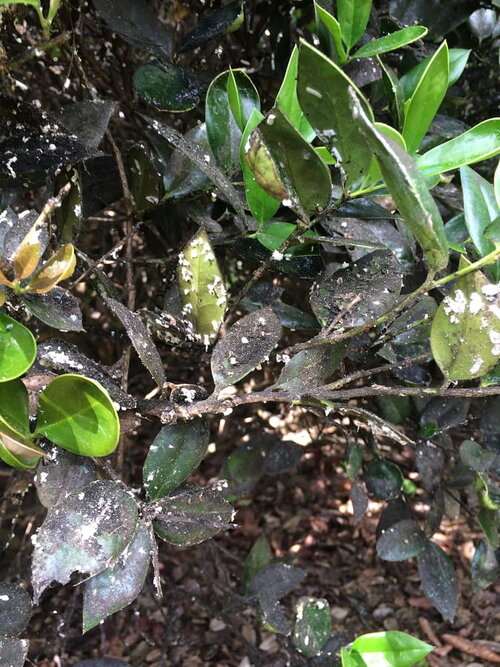

Problem: A black crusty coating covering the leaves of shrubs or other plants*. You determine it is sooty mold.
Solution: Sooty mold usually means an infestation of aphids, scale or whitefly. If you can't find the culprit on the plants with the sooty mold, look up. If the affected shrubs are beneath a taller tree or shrub, the culprit may be infesting the branches overhanging them.
Sooty mold grows on the honeydew dropped by many sap-feeding insects (most commonly aphids, scale and whiteflies). The honeydew is a sugary liquid that the insects excrete as waste. Sooty mold in itself does not feed on plant tissues or cause damage, but it can block enough sunlight to affect photosynthesis which can weaken the plant over time. It is also very ugly and difficult remove (more on that in a bit).
The first step is to identify and treat the insect causing the problem:
- Soft or armored scale (look like small turtle shells affixed to the stems and/or leaves, sometimes very well-camouflaged in color or texture. Egg sacs are often wispy and white),
- Aphids (small green, yellow or tan insects with thin legs & antennae, wooly aphids look a bit like tiny sheep)
- Whitefly (tiny, white-winged flies).
Luckily (?), a population of insects large enough to cause a sooty mold problem is usually pretty easy to spot and identify. Controlling the insects will stop the rain of sugar water that feeds the sooty mold.
The mold itself is difficult to remove, but you can hasten the rate at which it naturally weathers off. Spraying the leaves with insecticidal soap can help soften the sooty coating. Spray late in the day so the soap remains moist for as long as possible. If you can spray a few hours before a heavy rain is forecast the rain will be better able to remove the sooty mold.
If the plant has a rugged leaf, like holly or gardenia, you can follow the soap application with a strong jet of water from your garden hose after you've given the soap a little time to soften the mold. Be careful with softer-leafed plants and new growth, as a strong water stream can tear or bruise leaves. You’ll probably have to repeat the process a few times to wear the coating of sooty mold off over time.
If your insect eradication was successful, you’ll see that new growth on the sooty mold affected plants will remain fresh and clean. The mold does not spread without the honeydew to grow on, so new sooty mold indicates a continuing insect problem.
*Sooty mold can affect non-plant items also. Outdoor furniture, swing sets, grills and other items under insect affected trees can begin to grow a coating of sooty mold if they get covered with honeydew. Fortunately, once the insects are controlled, these items are easier to scrub clean of the mold. Here’s a recommended cleaning solution for plastic or painted surfaces affected by sooty mold:
- Powdered household detergent - 1/3 cup
- Household liquid bleach - 1 qt.
- Trisodium phosphate - 2/3 cup
- Water - 3 qts
Be sure to wear rubber gloves when cleaning with this solution. Do not use this solution on plants!
Cleaning solution recipe from the U.S. Forest Service