Fall Aeration & Seeding - Before & After
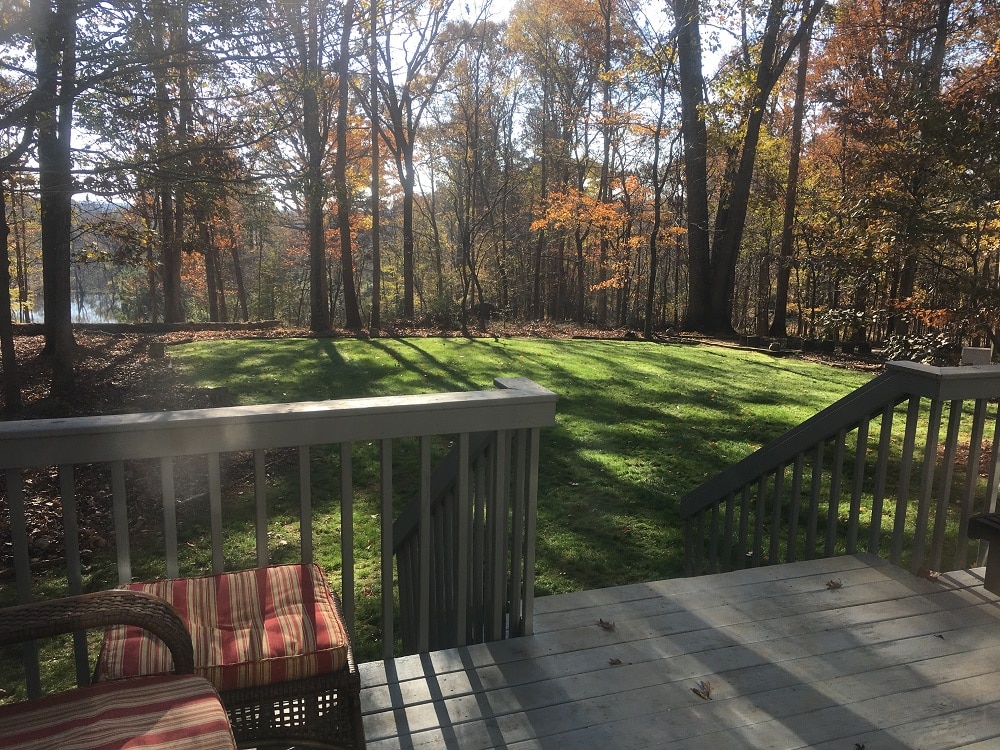
So we’ve written before about the benefits of fall aeration & seeding, but nothing illustrates the amazing results that you can get with aeration & seeding like a picture! Let’s see what the process looks like start-to-finish with progress pictures.
Before: Late August 2018
We have a rocky start -literally- with our subject lawn. Neglected for years, it had been completely overtaken by weeds. The shadier areas were almost completely Japanese stiltgrass and moss, while sunnier areas had plantain and other broad leaf weeds, weed grasses, and bare spots. The site was an old cow pasture, and the soil is very heavy clay with lots of rocks. Mowing during dry spells kicked up plenty of dust, and it was just plain ugly. This isn’t just an Aeration & Seeding, it’s basically a renovation.
During: Early - Late Sept. 2018, The Start-weed Kill-out
During: Oct. & Nov. 2018, Seedling Growth
After we’ve eliminated most of the weeds, it’s time for aeration/aerovation and seeding. We use a custom fescue seed blend specially formulated to perform well in your area. At the same time, a fall blend fertilizer is applied to nourish the seeds as they sprout and encourage strong root growth. After three or four weeks the grass is sprouting nicely!
You’ll see at this stage that the grass seed is coming up “patchy”. There were a few significant rain events (aka hurricanes) during the course of this process, and the lawn is visibly sloped. This did result in some seed shifting, but you’ll see in the following pictures that this is not overly concerning at this point.
What we didn’t get a picture of: Rocks were loosened and brought to the surface by the aerovation. Homeowner spent an hour or so finding and removing the loosened rocks immediately after aerovation, before grass germinated. Since ground was pretty bare they were easy to spot/remove.
After: April 2019
Grass continued to grow and thicken through most of the winter and through early spring. The Select program was continued, with Fall II, Winterizer and Spring I applied up to the time of the “after” picture. There was no additional seeding-all the visible thin areas filled in perfectly on their own!
Oh, and this lawn is not irrigated.
If we can get great results on this lawn, imagine what we can do for yours! Request an estimate.
Additional tips:
- Weekly leaf removal during leaf fall keeps leaves from smothering grass seedlings.
- Minimal foot traffic after seedlings emerged, no foot traffic while ground is wet.
- Control weeds and feed new grass with regular Select biological lawn program applications.
Before & After
Before: Lawn had very little grass, “lawn” was mostly weeds , moss, and lots of rocky bare patches.
After: Healthy, thick grass, no visible weeds or bare patches. (And it holds mowing stripes beautifully!)
Before & After
Before: Bumper crop of weeds and dirt (and rocks).
After: No weeds, bare patches filled in.