How Do I Green Up My Lawn in Summer?

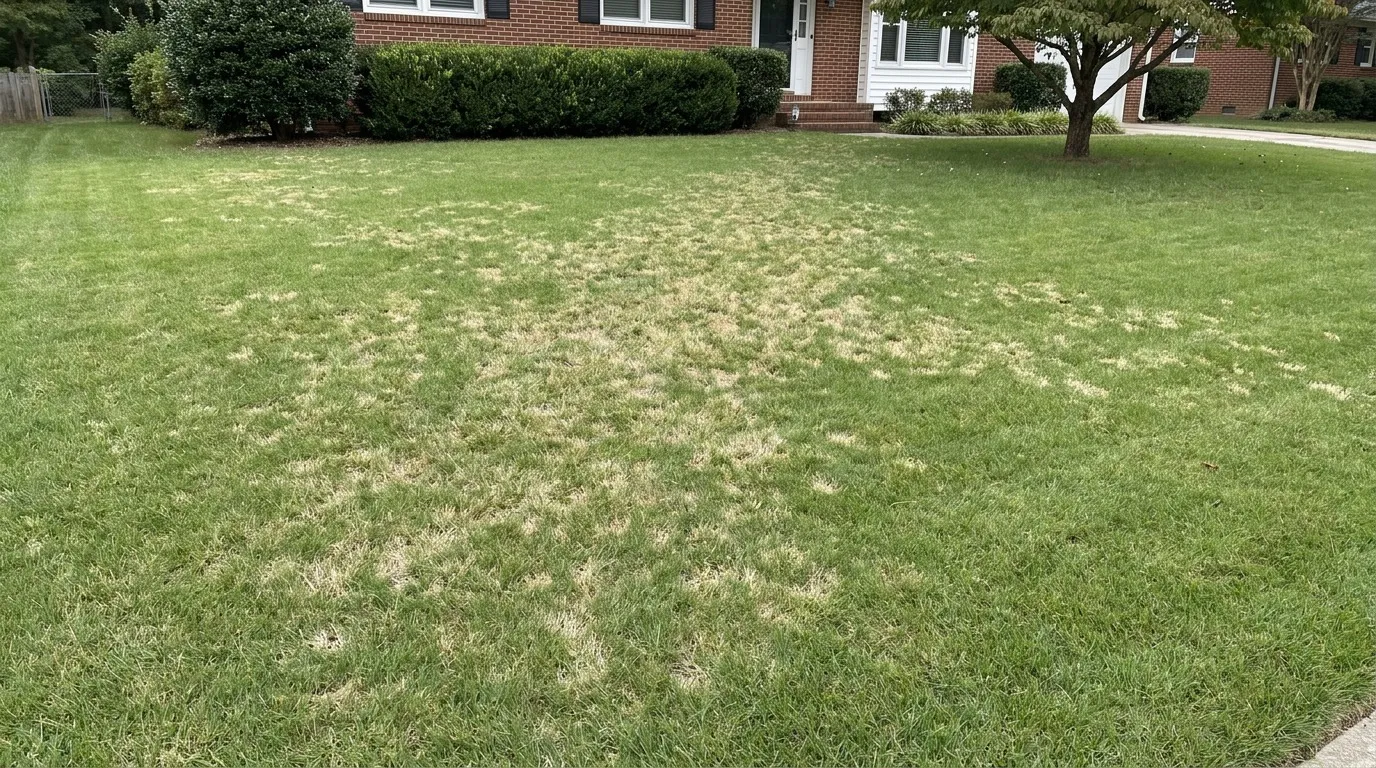
It's July and your lawn looks dull and yellowish. What's the harm in putting a few pounds of fertilizer down to green it up? Well, if you're not careful about timing, quantity or fertilizer content, you could cause serious damage to your lawn.
When to fertilize depends on if your lawn is made up of cool season grass or warm season grass. Cool season grasses (tall and fine fescues, Kentucky bluegrass, perennial ryegrass) look best when the weather is cooler: fall, winter and spring. In times of hot, dry weather they can go dormant. Warm season grasses (Bermuda, zoysia, centipedegrass) thrive in hot summer conditions, but go semi- to completely dormant in winter.
For cool season grasses, chemical fertilizer applications should stop between mid-March and mid-September, the ideal time of application being October, November and February. Warm season grasses should be fertilized from the time of green up in spring through September. So, if your lawn is a warm season grass go ahead and fertilize in summer to keep it nice and green. (About a pound of nitrogen for every thousand square feet every 4 to 6 weeks should do it.)
Cool season grasses have some issues when it comes to fertilizing in summer. Excess nitrogen can make a lawn much more susceptible to brown patch. It can cause rapid growth, meaning you'll have to mow more frequently (you don't want that, do you?) And if you use too much or apply when the temperatures are too high, you can burn or even kill the grass.
But wait -- you've seen lawn services fertilize cool season lawns in summer. Why shouldn't you? Phil Stilson of Nature’s Select explains it like this: “Our process is similar to spoon feeding. (We use) enough N (nitrogen) in a slow-release form to keep color without stimulating an abundance of new growth and promoting disease. I think it would be safe to say that many homeowners do not know how much N they are putting out and many believe a little is good so more is better.”
If you miss the window of opportunity in early spring, what safe options do you have to keep your lawn green in summer? One source of nitrogen that is often overlooked is the lawn clippings themselves. When left on the lawn to decompose, they return nitrogen to the soil, up to 25% of a lawn’s nitrogen needs. This requires frequent enough mowing that the clippings are not excessive.
Another option is to apply lime to the lawn, which can be done safely at any time. Many nutrients are easier for grass to take from the soil and use at a pH range of 6.0 to 7.0. As you can see on the pH chart, any nitrogen in the soil will be more available at 6.0-7.0 range than 5.0-6.0. If a soil test shows your lawn’s pH dropping below 6.0, adding a quick acting calcium product like Turf Turbo from Bonide may give you some greening without excessive growth and risk of disease.
Finally, if you really feel need to feed your lawn in summer, consider using organic products formulated for lawns. With lower (yet still effective) levels of nitrogen in slow release form, you can get nice greening safely. Organic products work best when used as part of a year round organic program rather than a one-off application.
And remember, nothing will revive color in a fully summer-dormant lawn but cooler temperatures and irrigation.