Nature's Select Logo
Home
Resources
Blogs
3 Surprising Facts About Voles
3 Surprising Facts About Voles

July 18, 2021
2 minutes read

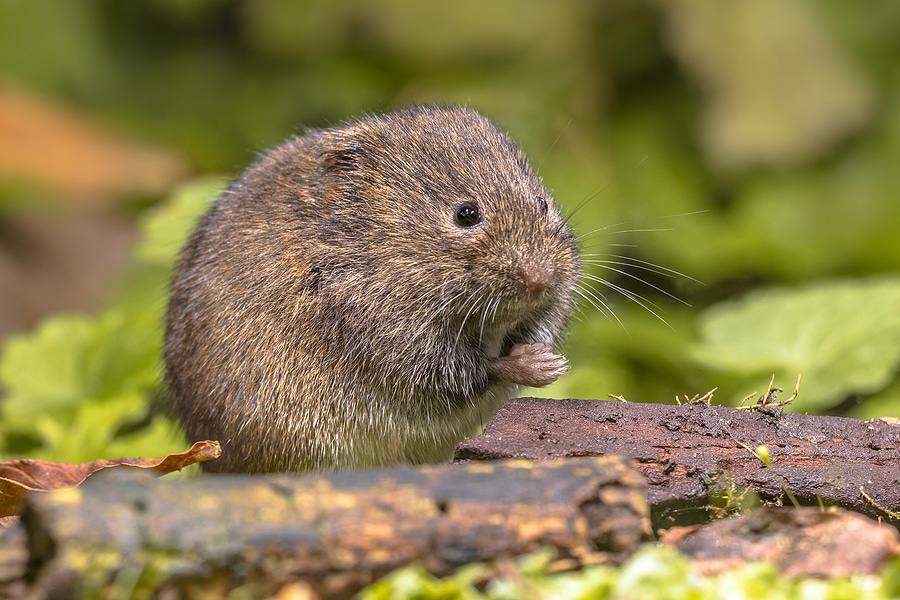
Voles are mouse-like rodents that spend most of their time underground. They are notorious for damaging growing bulbs, trees, turf, and plant roots. They tend to live in underground colonies, going undetected for months. Therefore, understanding vole behavior and diet is crucial for preventing their damage. Nature's Select Triangle has a team of experts who are ready to help control these lawn pests, and here are some surprising facts.

3 Surprising Facts About Voles

1. Voles Have a Short Lifespan

For such a tiny body, voles tend to do a lot of damage. Yet, what's even more surprising is that they do so in a short amount of time. In the wild, the average vole has a lifespan of just three to six months. So, from birth to adulthood, these rodents don't live long, which explains why they're in such a hurry to eat and breed. 

2. Voles Live in Colonies

As semifossorial rodents, voles can live in a wide range of habitats. However, they are most common here in North America and live in complex underground colonies. Generally speaking, a vole colony is no bigger than a quarter of an acre, but can be larger in areas with few natural predators. 

3. Voles Reproduce Rapidly

If you feel like your vole problem just won't go away, you're not wrong! Female voles reach maturity in just 35 days and will have 5-10 litters in less than a year. Each litter usually has about three to six pups, making it extremely difficult to control their population. Trapping and getting rid of a vole colony often requires expert help because of how quickly they reproduce. 

Control Lawn Pests

Are grubs, insects, and rodents taking over your lawn? Then it's time to call Nature's Select Triangle. We understand how much time and effort you've put into manicuring your lawn and how quickly pests can destroy it. We also treat lawn diseases, tree diseases, and boxwood diseases throughout Chapel Hill and Durham, NC. So, give us a call today at (919) 240-4239.

NS Plant White Icon

Join a proven brand with a simple, effective process.

Explore Franchise Opportunities

More Articles

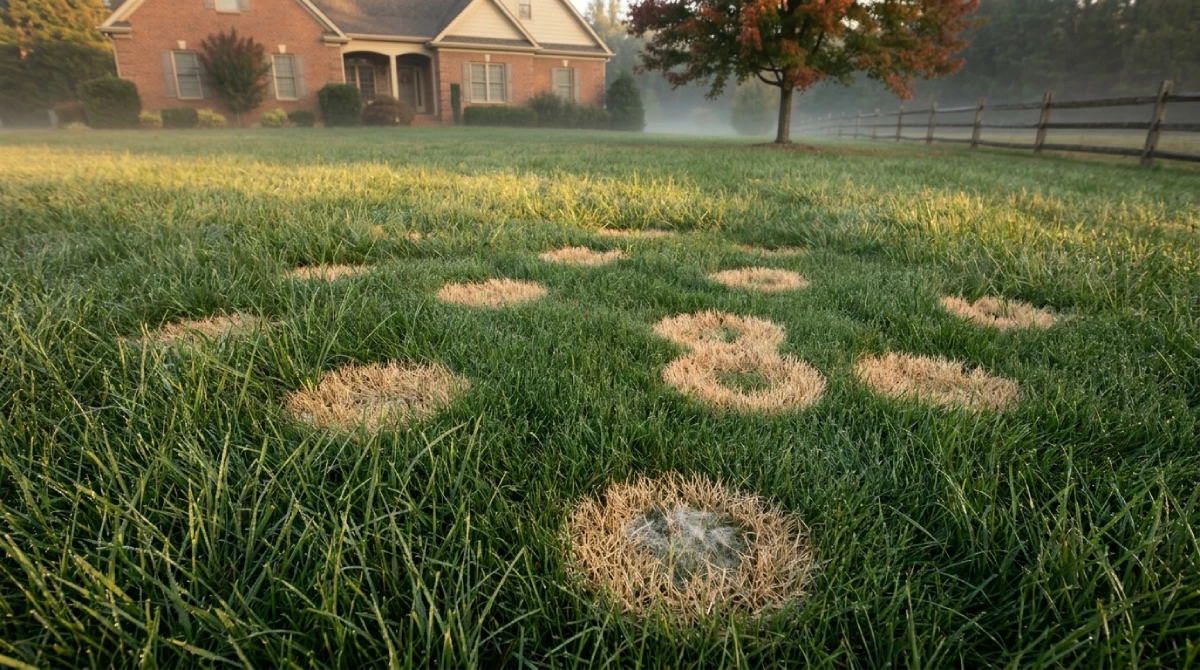
Dollar spot lawn disease showing bleached silver-dollar-sized circles on North Carolina tall fescue at dawn with heavy dew
Dollar spot is a foliar lawn disease caused by Clarireedia fungi that produces bleached, silver-dollar-sized circles when nights turn cool, days stay mild, and dew sits on the canopy for hours. North Carolina homeowners routinely mistake it for drought, dull mower blades, insect feeding, or brown patch, which sends the wrong fix at the wrong […]
September 21, 2026
20 minutes read
Read article →
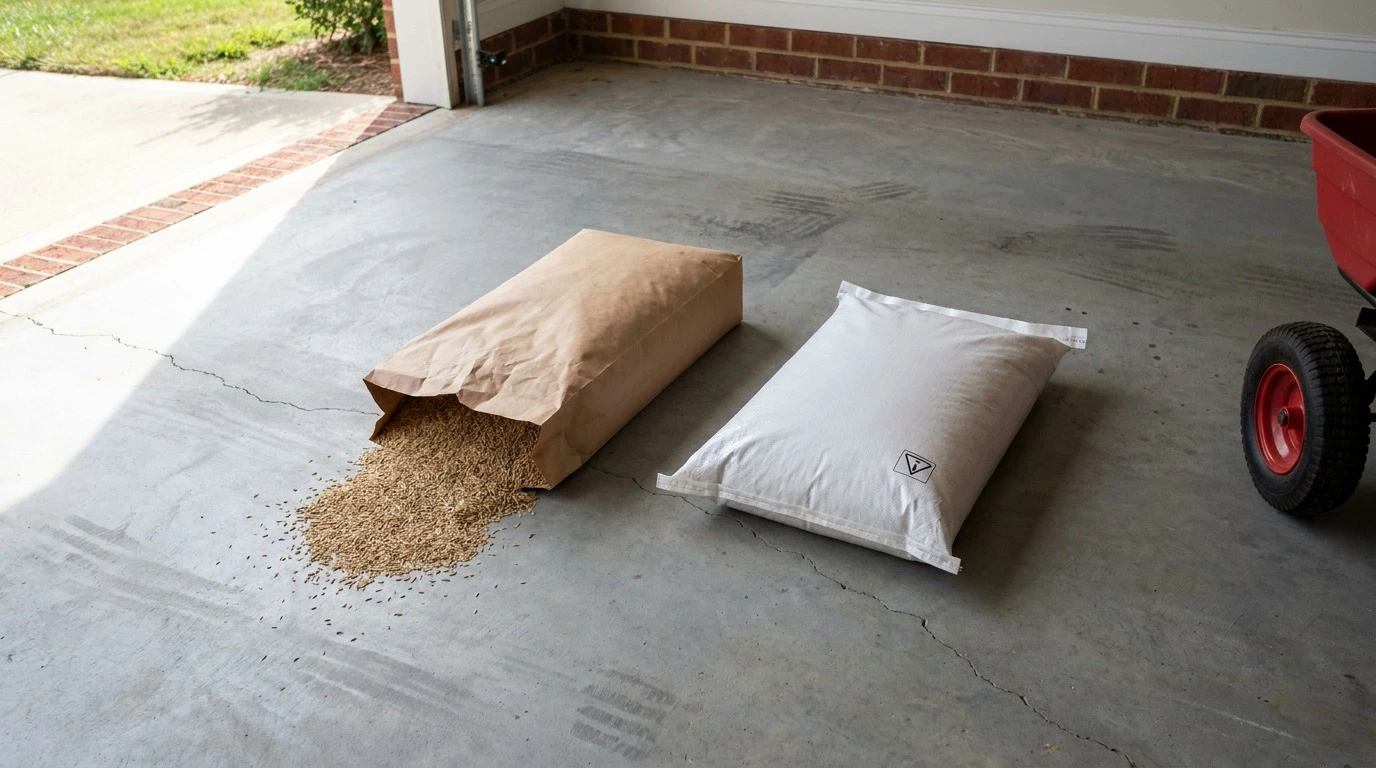
Grass seed bag and pre-emergent herbicide bag side by side on a garage floor showing the fall overseeding and pre-emergent conflict in North Carolina.
Pre-emergent herbicides stop seeds from developing into seedlings, and grass seed is a seed. Apply most fall pre-emergents, and you block your own overseeding for 12 to 16 weeks. The way out is to choose an active ingredient labeled for use at seeding, or to sequence the two jobs across the calendar. A cart rolls […]
September 21, 2026
18 minutes read
Read article →
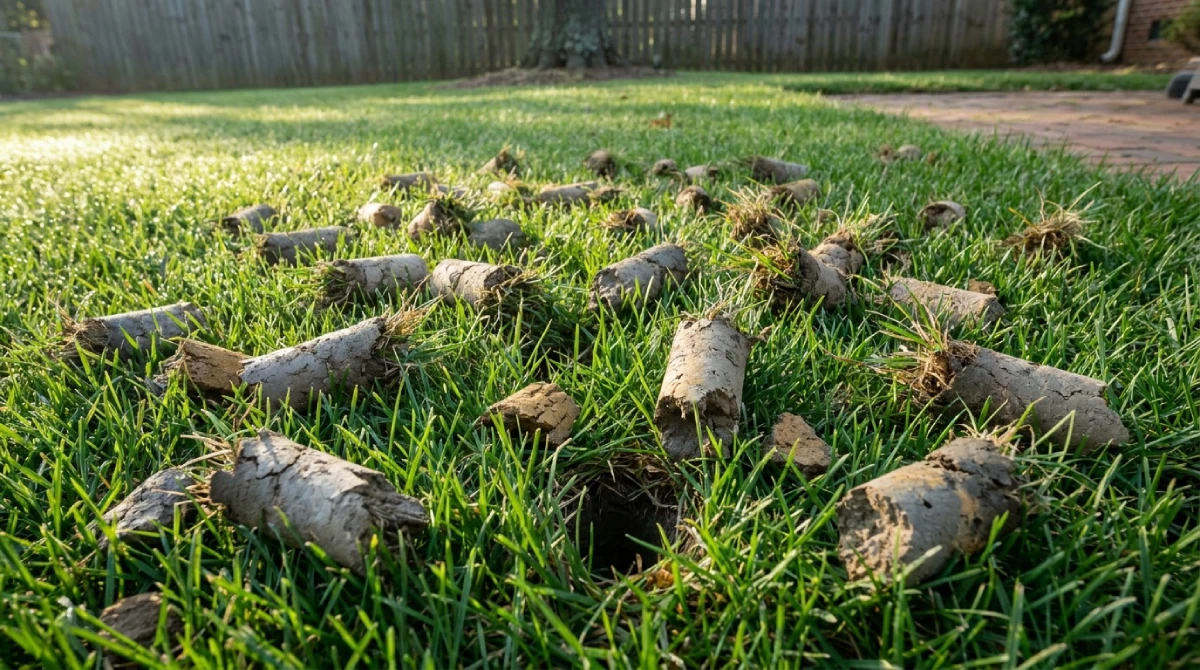
Freshly pulled soil cores scattered across a North Carolina tall fescue lawn on day one of post-aeration lawn care.
Lawn care after aeration comes down to fourteen days. Water lightly two or three times a day for the first week to keep the top inch of soil damp, and leave the soil plugs in place to break down. Stay off the turf, hold off on mowing until new fescue reaches 3.5 inches, and skip […]
September 21, 2026
18 minutes read
Read article →

Ready for a Free On-Property Assessment?

Same-day estimate. 30+ years of biological methodology. Nature's Select® Guarantee. Local franchises, one team.
homeuserphone-handsetcalendar-fullcrossmenulist Skip to content