5 Must-Know Facts About Centipede Grass in North Carolina

Centipede grass is a slow-growing, low-maintenance warm-season lawn grass. It grows in full sun to moderate shade, prefers acidic soil, and needs less fertilizer than any other common lawn grass. It does not handle heavy shade, foot traffic, soil compaction or long dry spells, and in North Carolina it does best in the Sandhills and the coastal plain.
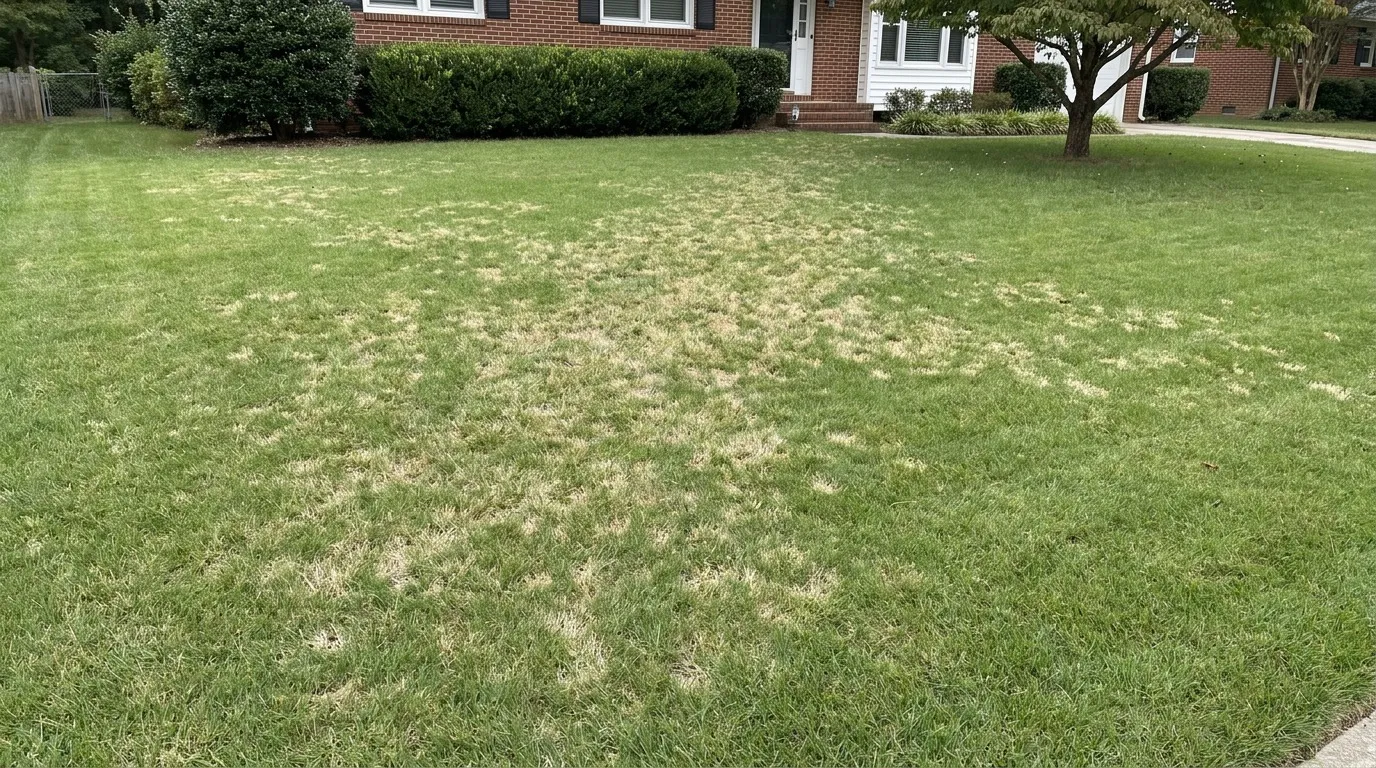
Centipede grass was first introduced in the United States in 1916. Originally from China, it is now found mostly across the Southeast. Homeowners sometimes call it "poor man's grass" or "lazy man's grass" because it gets by on so little. It also has a reputation problem: its coarse, apple-green blades get mistaken for a weed, and a lawn that is pushed too hard with fertilizer or foot traffic thins out fast.
Treat it on its own terms and centipede grass makes a dense, even lawn that rarely needs mowing. Here are the five facts that decide whether it will thrive in your yard.
Centipede Grass at a Glance
| Trait | What to expect |
|---|---|
| Season | Warm-season. Greens up late spring, goes dormant and brown after the first hard frost |
| Light | Full sun to moderate shade. Not heavy shade |
| Soil | Acidic, lower-fertility soils. Lime is rarely needed |
| Mowing height | 1 to 2 inches. Never let it pass 2½ inches |
| Nitrogen | The lowest of the common lawn grasses. None before mid-May |
| Water | About 1 inch per week while actively growing |
| Foot traffic | Poor. Not a play-yard grass |
| Establishment | Slow. Two to three years from seed |
1. Centipede Grass Needs Warm Weather
Centipede grass is a warm-season grass, so it does its growing in the heat. Most homeowners don't see the lawn turn fully green until late spring or early summer. That late start pays off in July and August, when centipede stays green through temperatures that stress cool-season lawns.
Where you live in North Carolina matters. NC State Extension notes that centipede grass is most common east of Interstate 95. The sandy, acidic soils of the Sandhills around Pinehurst suit it well. In the Piedmont, around Chapel Hill, Greensboro and Winston-Salem, it is closer to the edge of its comfortable range. Heavier clay, compacted soil and colder winters all work against it there, so site choice and soil care matter more.
2. It Grows in Poor, Acidic Soil
Unlike most lawn grasses, centipede grass can live and thrive in soil that is less than ideal. It is a good fit for properties sitting on more sand than topsoil, and it is comfortable in acidic ground where other grasses struggle.
That tolerance comes with limits. Centipede dislikes high soil pH, high phosphorus and low potassium. A yellow lawn is often an iron shortage linked to soil that is too alkaline, not a lack of fertilizer. Before adding lime or fertilizer, a soil test from the NC Department of Agriculture and Consumer Services shows what your soil actually needs. For centipede, the answer is often less than you'd expect.
3. It Grows in Sun or Moderate Shade, Not Heavy Shade
Will centipede grass grow in shade? Yes, in moderate shade. It grows well from full sun to partial shade, which makes it a practical choice for yards with a few trees, where other warm-season grasses thin out.
It still prefers sun, and it will not cover ground under dense shade. Seedlings in particular need sunlight to establish. If a spot gets only a few hours of filtered light, plan on a shade-tolerant groundcover or mulch bed there instead of grass.
Keep foot traffic in mind too. Centipede grass does not recover well from constant use, so a lawn that doubles as a play area or a dog run is a poor match.
4. It Is Genuinely Low Maintenance
Centipede grass grows slowly, which means less mowing. Keep it at 1 to 2 inches and don't let it get taller than 2½ inches. Mowing it high and infrequently builds thatch, and thick thatch is one of the conditions centipede does not tolerate.
It also needs very little feeding. Of all the common lawn grasses, it has the lowest nitrogen requirement. Too much nitrogen does more harm than good: it pushes soft growth, builds thatch and sets the lawn up for decline. A basic program from NC State is a single feeding in mid-May, and no nitrogen before then.
5. It Goes Dormant in Drought, but It Isn't Drought-Proof
During a long dry spell, centipede grass protects itself by going dormant and turning brown. Once rain or irrigation returns, a lawn with healthy crowns and roots greens back up.
That dormancy is a survival response, not drought tolerance. Extended drought can thin a centipede lawn or kill patches of it, especially on sandy soil that drains fast. While it is actively growing, give it about 1 inch of water per week from rain or irrigation. On sandy soils, smaller amounts more often work better. After it goes dormant in the fall, water only enough to keep the soil from turning powder-dry.
Centipede Grass vs St. Augustine Grass
These two coarse-bladed warm-season grasses get compared often. Here is how they differ, based on NC State Cooperative Extension guidance.
| Centipede grass | St. Augustine grass | |
|---|---|---|
| Shade tolerance | Full sun to moderate shade | Very shade tolerant |
| Cold tolerance | Limited. Best east of I-95 and in the Sandhills | The least cold-tolerant lawn grass |
| Best NC region | Sandhills and coastal plain | Coastal plain. 'Raleigh' handles the eastern Piedmont |
| Growth rate | Slow, infrequent mowing | Fast, frequent mowing |
| Mowing height | 1 to 2 inches | 2½ to 4 inches |
| Fertilizer needs | Lowest of the common lawn grasses | Moderate to high |
| Planting | Seed, sod, sprigs or plugs | Sod, sprigs or plugs only (no seed) |
If your yard is shadier and closer to the coast, St. Augustine may be the better fit. If you want the lowest-input lawn possible and your soil is sandy and acidic, centipede usually wins. For other options, see our guide to warm-season grass.
Where Centipede Grass Runs Into Trouble
Most centipede problems trace back to one of these:
- Compaction and traffic. Compacted soil starves the roots of air and water.
- Overfeeding. Too much nitrogen or phosphorus.
- High pH. Shows up as yellowing.
- Thatch. Builds up when the lawn is mowed high and infrequently.
- Weed control products. Centipede is sensitive to many common lawn weed products, including 2,4-D, so read every label.
- Soil pests and disease. It is susceptible to plant-parasitic nematodes, ground pearls and fairy ring.
Frequently Asked Questions
Will centipede grass grow in shade?
Yes, in partial or moderate shade. It grows from full sun to moderate shade but will not fill in under heavy shade, and seedlings need sun to establish.
How short should I cut centipede grass?
Mow at 1 to 2 inches and never let it grow past 2½ inches. Taller, less frequent mowing builds thatch.
Does centipede grass need fertilizer?
Very little. It has the lowest nitrogen needs of the common lawn grasses. Skip nitrogen before mid-May, and let a soil test guide anything beyond a single basic feeding.
Why is my centipede grass turning yellow?
Yellowing in centipede grass is often an iron deficiency, usually tied to soil pH that is too high. A soil test confirms it before you add anything.
Is centipede grass drought tolerant?
Not really. It survives short dry spells by going dormant and brown, but long droughts can thin or kill it. Water about 1 inch per week while it is actively growing.
Is centipede grass a good choice in the Piedmont?
It can work, but it is most at home east of I-95 and in the Sandhills. In Piedmont clay it needs well-drained, uncompacted soil and a sunny-to-moderately-shady site.
Centipede Grass Care, Done Right
Nature's Select® Lawn Care builds healthy lawns from the soil up, with a biological approach that feeds soil life instead of forcing top growth. That matters for a grass like centipede, which suffers when it is pushed too hard. Our team handles lawn care, weed control and fertilization, lawn disease control and lawn insect control for centipede, bermuda, zoysia and fescue lawns.
We serve homeowners in and around Pinehurst, Chapel Hill, Greensboro and Winston-Salem. If your centipede lawn is thin, yellow or losing ground, request your free estimate today.