Why NC Clay Soil Punishes Your Lawn (And What Actually Helps)
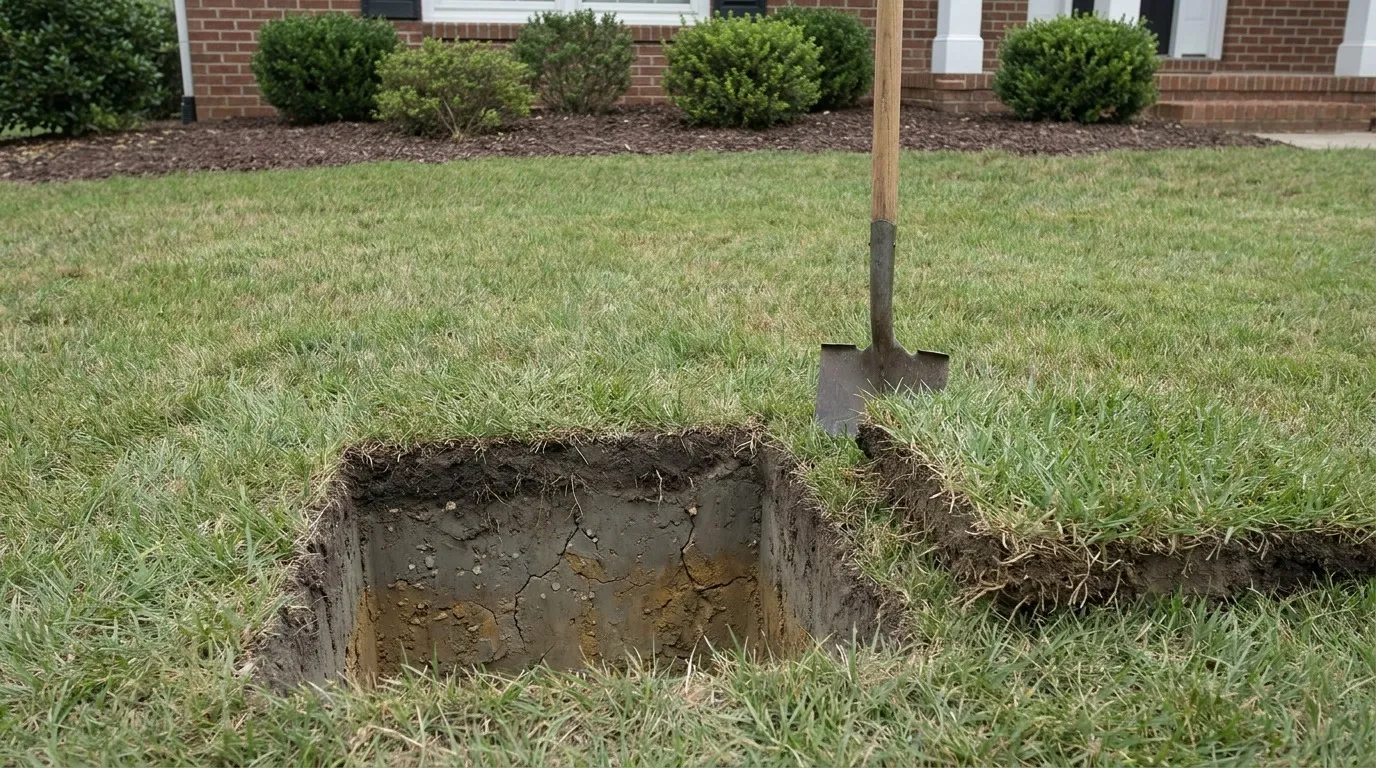
North Carolina clay soil punishes your lawn because its microscopic plate-shaped particles pack together into a low-oxygen, low-infiltration layer that starves grass roots. What actually helps is a two-part fix: mechanical relief through hollow-tine core aeration, then a steady rebuild of organic matter through composted amendments and biological inputs. Over time, this restructures the soil so water, oxygen, and roots can move again.
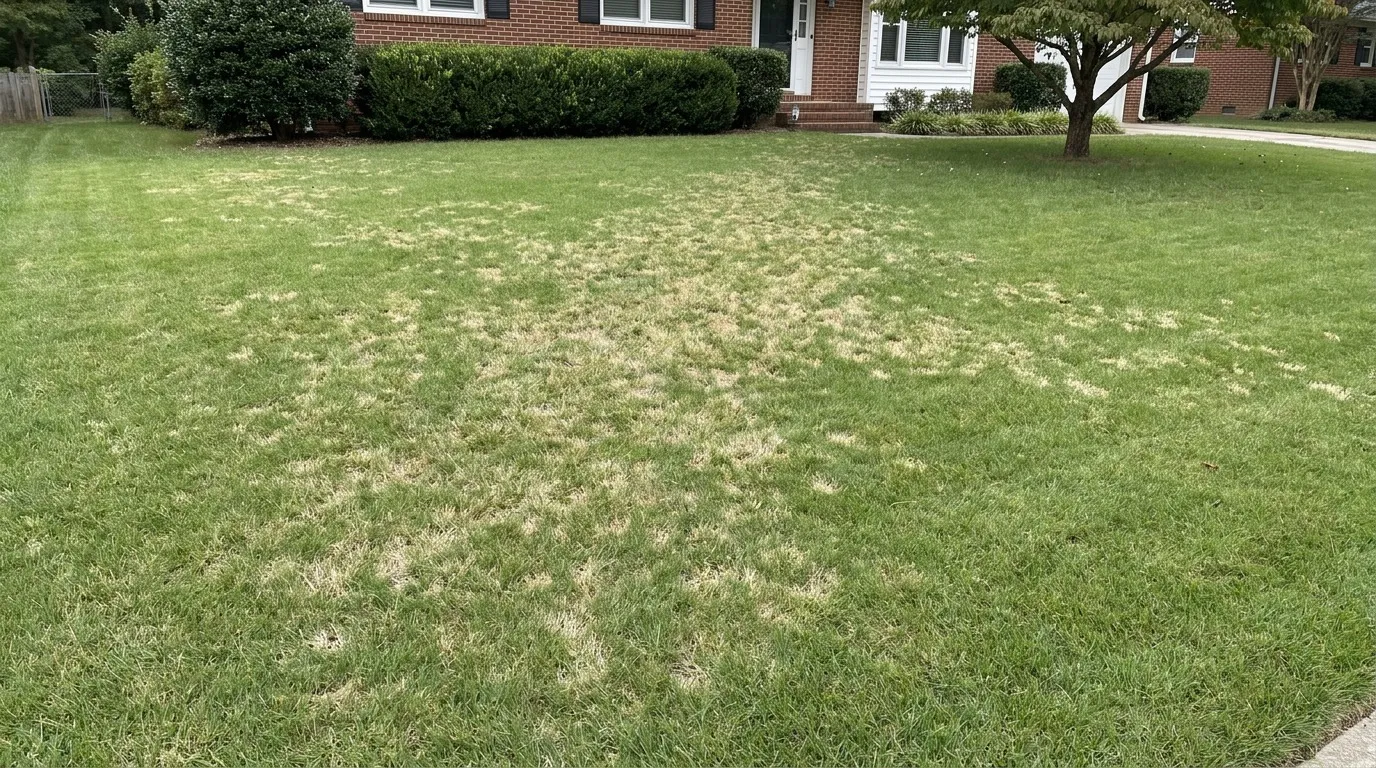
If you have spent money on fertilizer, seed, and irrigation and your lawn still looks tired by mid-July, the problem is almost certainly not what you are putting on top of the soil. It is the soil itself. Across North Carolina, lawns sit on some of the most demanding turf soil in the eastern United States. Cecil-series red clay looks solid, holds nutrients tightly, and feels stable underfoot. That same behavior is exactly what starves the roots of fescue and bermuda.
This article walks through the particle-level science of NC clay, why it behaves differently than the loam soils covered in generic aeration content, and the practical interventions that actually change how clay performs. Every recommendation is grounded in NC State Cooperative Extension research and the soil-first methodology Nature's Select® has practiced across North Carolina since 1994.
What Makes North Carolina Clay Different from the Soil in Most Lawn Care Articles
Most national lawn care content assumes a loam soil profile: a balanced mix of sand, silt, and clay with roughly 40% pore space and rapid drainage. That is not what most NC homeowners are working with. North Carolina sits on ultisols, deeply weathered soils dominated by kaolinite clay, with the widely mapped Cecil series covering more of the state than any other single soil type. Cecil clay is a red, iron-rich subsoil that during new construction often gets pushed to the surface as the topsoil is scraped away and hauled off.
That construction history matters. According to NC State Cooperative Extension, soils with high clay content already tend to have slow water movement, and the compaction that occurs during grading, foundation work, and landscape finishing exacerbates the problem. By the time a homeowner takes possession, the "yard" may be several inches of compacted subsoil clay with almost no organic matter.
Cecil Clay at the Particle Level
Clay particles are not miniature sand grains. They are plate-shaped mineral sheets, less than 0.002 millimeters across, that stack together like a deck of cards. When wet, these plates slide against each other, which is why clay is sticky and moldable. When dry, they lock together into the brick-like surface every NC homeowner recognizes in August.
That plate structure creates two behaviors that punish turf:
- Water hits the surface and either pools or runs off because the pathways between plates are too small for gravity drainage to move it downward at a reasonable rate.
- Oxygen cannot diffuse to the root zone because the same tight structure closes off the air-filled pores roots need to respire.
Grass roots, whether fescue in the Triad or bermuda in the Sandhills, need oxygen every day. A soil that traps water and locks out air suffocates the root system a few inches below what looks like a green lawn.
Why Standard "Fixes" Fail on NC Clay
Search any generic lawn advice site and you will find a familiar list: add sand, add gypsum, till it in, or top-dress with a thin layer of compost. Some of that advice is useful. Some of it is actively harmful on North Carolina clay. Here is what the research actually shows.
| Common Advice | What Actually Happens on NC Clay |
|---|---|
| Add sand to loosen the soil | NC State Extension is explicit: unless sand is added at four to five times the volume of the clay, the result behaves like concrete. Homeowner-scale sand applications make the problem worse. |
| Spread gypsum every spring | Gypsum can shift structure on sodic clays out west, but NC ultisols are not sodic. On Cecil-series clay, gypsum's structural benefit is marginal at best and often invisible. |
| Till in fresh organic matter | Fresh material settles as it decomposes and pulls nitrogen from the soil while microbes digest it. Composted material is the correct input; raw material is not. |
| Aerate once and call it done | A single aeration on compacted clay opens temporary channels that close within one growing season without ongoing organic-matter inputs. |
| Water more to soften the surface | Waterlogged clay drives oxygen out of the root zone faster than dry clay does. Frequency and volume both matter more than sheer quantity. |
The interventions that do change NC clay behavior fall into two categories: mechanical structure relief and organic-matter rebuild. Neither works alone. They work in sequence, over multiple seasons, on a schedule that respects the grass type on the property.
What Actually Helps: The Mechanical Side
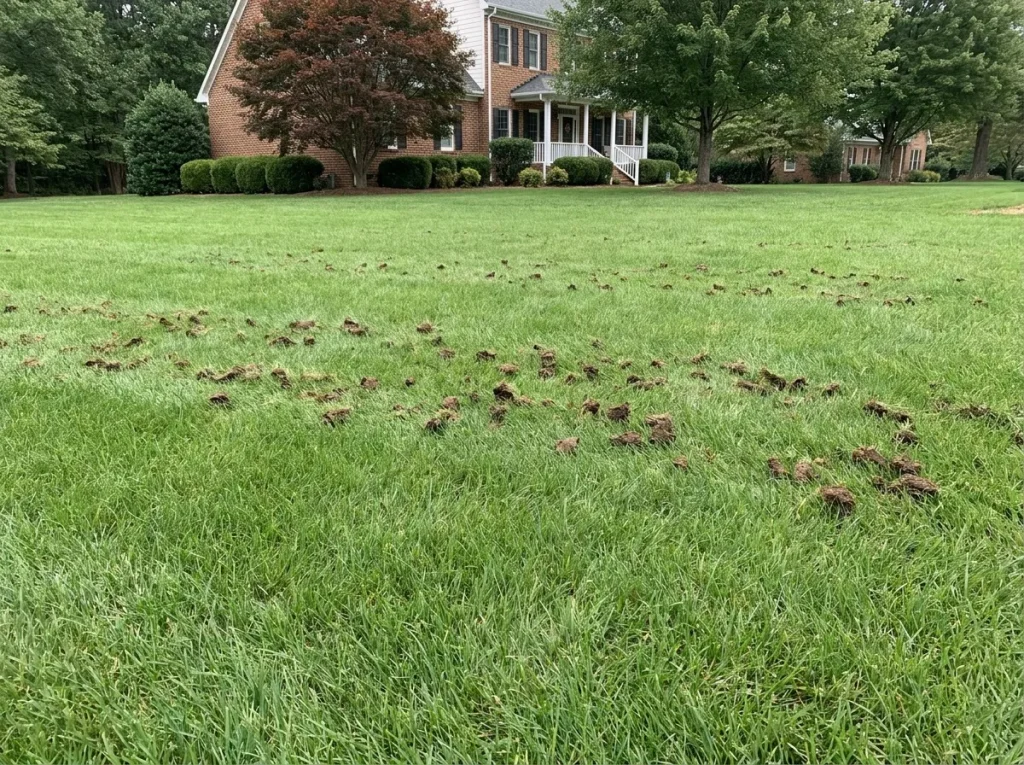
The physical structure of compacted clay has to open before any biological or nutritional intervention can reach the root zone. Two mechanical tools do the work: hollow-tine core aeration on established lawns, and deeper tillage on renovations or new installs.
Hollow-Tine Core Aeration Removes Material
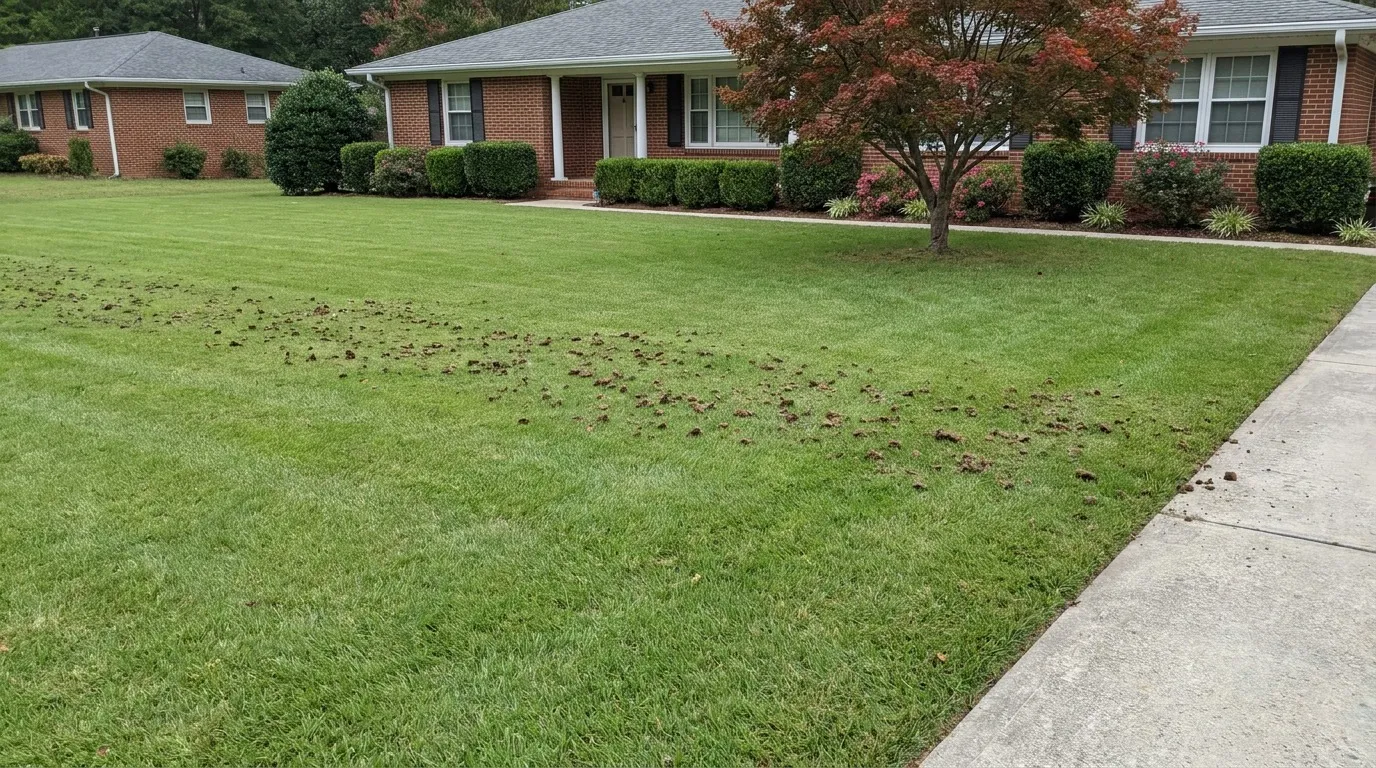
Spike aerators push a solid tine into the soil, displacing clay sideways and often sealing the hole back within days. Hollow-tine cores remove a cylindrical plug of soil roughly three-quarters of an inch across and two to three inches deep, leaving an open channel that stays open until the plug breaks down and the surrounding soil relaxes. The plugs decompose on the surface over two to three weeks and return organic matter to the soil.
On NC clay, hollow-tine core aeration accomplishes three things spike aerators cannot:
- It opens a physical pathway for water infiltration, dropping runoff and increasing the fraction of rainfall that actually reaches roots.
- It creates channels for oxygen exchange, which supports root respiration and microbial activity in the loosened zone.
- It creates entry points where organic amendments and biological inputs can actually reach the subsurface instead of resting on top of an impermeable layer.
For most Triad and Triangle fescue lawns, aeration lands in the fall window. For Sandhills warm-season turf, aeration lands in late spring during active bermuda or zoysia growth. Getting the timing right matters as much as the technique. If you are thinking about the aeration decision itself, our article on core versus liquid on clay walks through when each method fits.
Tillage Is a Renovation Tool, Not a Maintenance Tool
For new installs or full renovations, tilling to at least four inches, and preferably six inches, breaks up the top layer of compacted subsoil and gives amendments a home. NC State research shows that six-inch till plus compost delivers the highest infiltration rate of any treatment tested, higher even than twelve-inch till alone. Depth alone does not solve the problem; the combination of depth and organic matter does.
Tilling an established lawn destroys the turf, so this is not a routine intervention. It is what you do when you are starting over.
What Actually Helps: The Organic Matter Rebuild
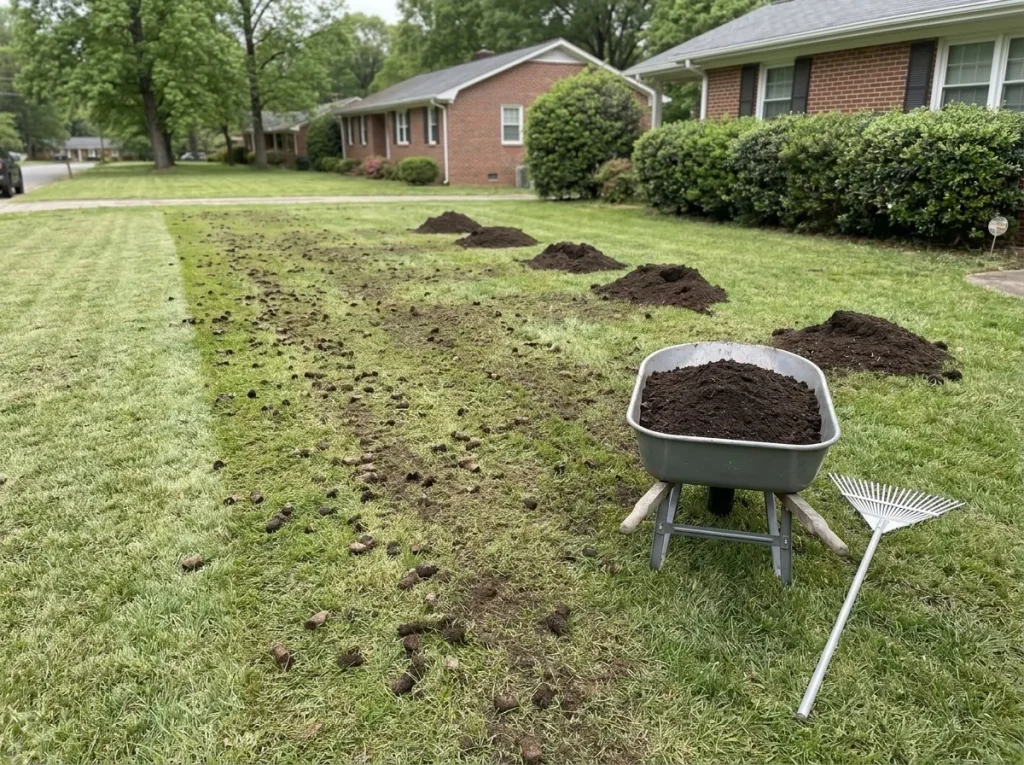
If mechanical relief is the physical reset, organic-matter rebuild is the process that keeps clay from returning to its default compacted state. This is where a seasonal lawn care program earns its keep. Nature's Select® has run this rebuild across North Carolina since 1994 through a proprietary blend called Nature's Select® Solutions, applied year-round as part of the biological methodology the brand was founded on.
Composted Materials, Not Raw Materials
Composted leaves, aged wood bark, and finished yard-waste compost are the inputs that improve clay over time. Fresh material is not. NC State Extension is direct on this point: "Fresh organic materials will settle as they decompose" and pull nitrogen from the soil during microbial breakdown, creating a short-term deficiency for the grass you are trying to support. Composted material has already done the settling and the nitrogen draw-down. It enters the soil ready to work.
A thin top-dressing of composted material after aeration, worked into the open cores by rainfall or irrigation, does more for clay soil structure over three years than any single big application ever will. The rebuild is patient work.
Biological Inputs Feed the Microbial Layer
Living soil is not a metaphor. A single teaspoon of healthy topsoil holds billions of bacteria, fungi, and other microorganisms that break organic matter into plant-available nutrients, produce structural aggregates that hold soil particles apart, and defend roots against pathogens. Compacted clay starves that microbial community. Restoring it requires both the organic matter these microbes eat and, on many lawns, a direct biological inoculant that reintroduces the species missing from a construction-scarred yard.
Nature's Select® formulates biological inputs into every visit precisely because pure fertilizer and seed cannot rebuild a microbial community. The biological layer is what turns mechanical aeration into a lasting structural improvement.
The Seed Blend Matters as Much as the Soil
On cool-season lawns across the Triad and Triangle, a custom multi-cultivar turf-type tall fescue blend performs materially better on clay than any single-cultivar seed. Different cultivars exhibit varying tolerances to shade, heat, traffic, and disease pressure, and a blend gives the canopy multiple chances to close over the same square foot. Warm-season lawns in the Sandhills do not receive overseeding; bermuda and zoysia spread by rhizomes and stolons and reject introduced seed. Grass type drives the plan.
A Realistic Timeline for Turning Around NC Clay
Homeowners often expect a single fall aeration to fix a clay lawn. It does not. Structural improvement is measured in growing seasons, not weeks. Here is what a realistic timeline looks like on a typical North Carolina fescue lawn.
| Season | What Happens | What You Notice |
|---|---|---|
| Fall Year 1 | Aeration, overseed, biological amendment, first composted top-dressing | Plug decomposition over two to three weeks; visible germination in seven to fourteen days |
| Spring Year 1 | Seasonal lawn care program continues; roots settle in cooling clay opened the previous fall | Canopy fills in; fewer bare spots than the prior spring |
| Summer Year 1 | The first hot stretch tests the new root system | Turf holds color longer than it did the year before, though some thin areas remain |
| Fall Year 2 | Second aeration and overseed cycle; further organic-matter input | Cores come out cleaner; less resistance under the tines |
| Year 3 and beyond | Cycle continues; microbial activity accelerates | Infiltration measurably improves; heat and drought tolerance climbs |
Homeowners who commit to two or three cycles see the compounding effect. The first year is the setup. The second and third years are when clay begins to behave less like a barrier and more like a soil.
If you would rather have the plan built for you, book aeration on North Carolina clay from Nature's Select® and get a written estimate, a matched seed blend, and a written aftercare roadmap in a single visit.
What Homeowners Get Wrong When They DIY the Clay Fix
The Saturday-rental route can work on a lawn that mostly needs a light aeration. It fails most often on genuinely compacted NC clay for three specific reasons.
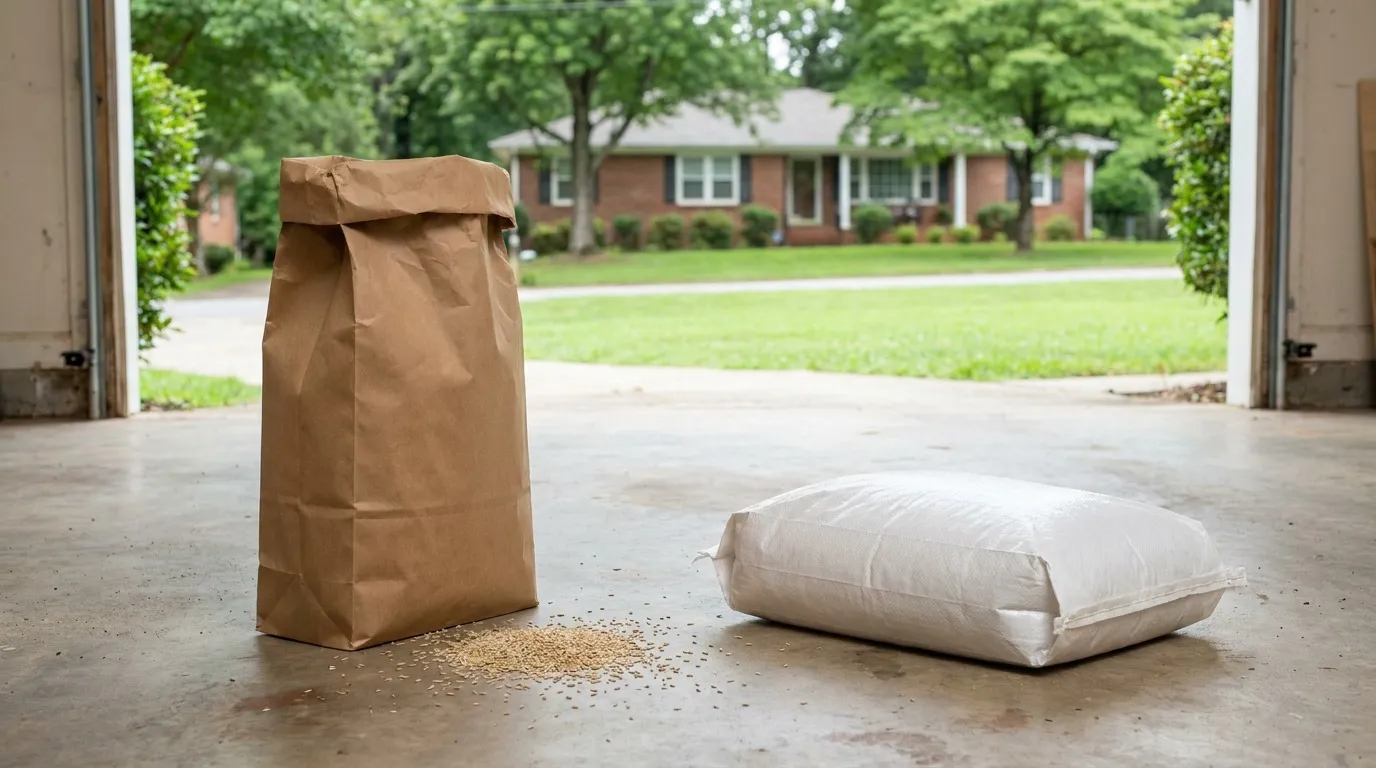
- Timing is driven by rental availability, not soil temperature. Rental cores go out to homeowners in August, which is the worst time to aerate fescue and outside the active growth window for bermuda. Timing the work to the grass and the soil is more important than the machine.
- Rental tines are worn. A tine that has punched fifty thousand holes no longer pulls a clean plug. It punches and seals, and the homeowner leaves the day thinking they aerated when they mostly compressed the surface further.
- The seed and amendment layer is skipped. Aeration without organic-matter input closes back up within one growing season. The mechanical reset only holds if something fills the space.
None of this is a reason to disparage DIY. It is a reason to be honest about what a DIY visit will and will not accomplish on NC clay, and to know the six signs your soil is compacted before choosing a method.
Where Grass Type Changes the Answer
Every recommendation above sits inside a broader question: what grass are you growing? NC lawns fall into three groups.
Tall Fescue on Triad and Triangle Clay
Cool-season fescue dominates Winston-Salem, Greensboro, and much of Chapel Hill. Fall aeration paired with overseeding is the standard cycle because fescue rebuilds only from seed, and the cooling clay of September and October is the only window where new seedlings root deeply enough to survive the following summer.
Bermuda and Zoysia in the Sandhills
Around Pinehurst and the Sandhills fringe, warm-season grasses handle heat and drought better and spread by rhizomes and stolons rather than seed. Aeration lands in late spring during active growth. Overseeding is not part of the plan.
Mixed Lawns Across central North Carolina
A large share of Triangle-area lawns and some Triad-fringe properties carry both cool-season and warm-season grasses in different areas of the yard. A trained technician identifies the dominant grass on site during a free property assessment and matches the aeration approach to what is actually growing.
Key Takeaways
- North Carolina clay is dominated by Cecil-series ultisols with plate-shaped particles that trap water and lock out oxygen at the root zone.
- Adding sand to clay in homeowner quantities makes the problem worse, not better; the required volume is four to five times the clay itself.
- Hollow-tine core aeration removes a plug of soil, opens infiltration channels, and gives amendments a path to the subsurface; spike aerators only make holes.
- Composted organic matter is the correct amendment; fresh material settles and steals nitrogen while it decomposes.
- Structural improvement on NC clay is measured in growing seasons, not weeks; the compounding effect appears in years two and three.
- Grass type drives the aeration plan: fall aeration and overseed on Triad and Triangle fescue, late-spring aeration only on Sandhills warm-season turf.
Frequently Asked Questions
How do you know if your NC lawn has a clay problem?
Push a screwdriver into the soil after a dry stretch. If it stops in the first three or four inches with hard resistance, you have compacted clay under the surface. Pooling water after rain, runoff during heavy irrigation, and a lawn that hardens like a driveway in August are all consistent signals. New-construction homes almost always have a clay problem because the topsoil has been graded off and the subsoil is at the surface.
Does gypsum actually help NC clay lawns?
Not much, and not for the reasons often claimed. Gypsum works on sodic clays common in parts of the western United States where sodium ions bind particles together. NC ultisols are not sodic. Gypsum can supply some calcium and sulfur if a soil test shows a deficiency, but its structural effect on North Carolina clay is minor. Composted organic matter and mechanical aeration deliver measurably better structural returns.
Should you till your existing lawn to fix clay?
Only if you are starting over. Tilling destroys established turf, so it is a renovation tool for a full lawn install or a large bare area. On an existing lawn, hollow-tine core aeration paired with composted top-dressing does the equivalent structural work over several cycles without killing the grass you already have.
How long does it take to fix clay soil for a lawn in North Carolina?
Meaningful structural improvement takes two to three growing seasons of consistent aeration and organic-matter input. The first cycle is setup. Year two and year three are when infiltration measurably increases, root systems deepen, and heat and drought tolerance climb. Skipping a year restarts the process because compaction returns quickly on ultisols.
What is the best grass for red clay lawns in North Carolina?
Turf-type tall fescue blends handle clay best in the Triad and Triangle, especially multi-cultivar blends selected for regional heat, shade, and disease pressure. In the Sandhills and southern fringe, bermuda and zoysia handle clay drought stress better because they spread laterally and put down deeper roots during active summer growth. The grass type matches the region more than the soil.
Can biological lawn care actually change how clay behaves?
Yes, over time. Biological inputs feed the microbial community that produces the aggregates and organic acids that hold clay particles apart. Compacted clay starves that community; a soil-first program restores it. This is the mechanism behind the Nature's Select® methodology since 1994, and it is why lawn disease prevention improves alongside structural improvement: healthy microbial communities suppress the pathogens that thrive in weakened turf.
Is one aeration a year enough on NC clay?
For a fescue lawn under a full seasonal lawn care program, one fall cycle of aeration and overseed is usually enough to maintain gains once the first two or three cycles have opened the soil. For a warm-season lawn, one late-spring aeration cycle is the standard. Lawns with heavier compaction sometimes need a second annual aeration in the first year of rebuild.
Conclusion
North Carolina clay soil is not a defect. It is a soil profile with real limitations that respond to specific interventions applied in the right sequence. Mechanical relief through hollow-tine core aeration opens the physical structure. Composted organic matter, biological inputs, and a matched seed blend rebuild the microbial and root systems that keep the structure open. Given two or three growing seasons of consistent work, the same clay that punishes an untreated lawn supports a dense, deep-rooted turf that holds up through July.
If you want that plan built and executed on your property, request a free on-property assessment or call Nature's Select® at (888) 786-9735 for a same-day written estimate.