The 4 Lifecycle Stages of Mosquitos
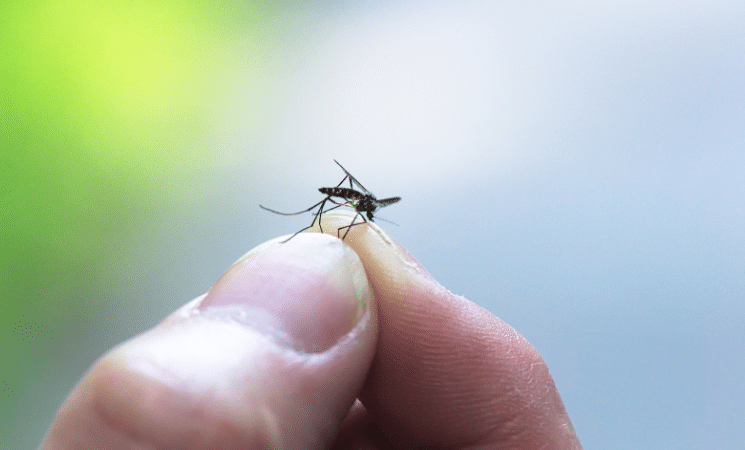
Nothing can discourage you from enjoying your backyard and patio like a giant swarm of mosquitos. While you can put out bug spray and candles to deter them, you're not really getting to the root of the problem. The team at Nature's Select Triangle knows how important it is to protect your home from these outdoor pests, and we pride ourselves on early prevention and treatment. Here are the lifecycle stages of mosquitos, and how our program reduces populations by up to 90%!
1. Egg
Female mosquitos lay all their eggs at once, often in shallow pools of stagnant water or damp soil that will be flooded by water. Some species lay their eggs in "rafts," while others lay them singularly without forming the raft. Regardless of where they're laid, mosquito eggs end up floating on the surface and hatching within 48 hours.
2. Larva
Once the eggs have hatched, the larva remains in the water, living off microorganisms and organic material. Some larva species have a siphon tube to breathe above the water's surface, while other species continue to lay on the surface of the water source. During this stage, the larva sheds its skin four times. By the fourth time, the larva has entered the third stage of its lifecycle: the pupa stage.
3. Pupa
During this stage of life, a mosquito pupa does not feed, but rather attempts to keep itself alive by avoiding predators. It also tumbles and flips, reacting to light sources and using its tail to make its way to the bottom of the water source where it awaits to turn into an adult. This stage is similar to the metamorphosis phase of butterflies, and the entire process takes about two days.
4. Adult
Once development of the pupa is complete, a full-grown adult mosquito emerges from the pupa's skin. This is usually when the mosquito is first spotted by homeowners, as the adults generally rest on top of the water source. This short time allows the mosquito to dry out and spread its wings as it prepares to fly away in search of a new food source: blood.
Let's Build that Mosquito Barrier
A backyard full of lawn pests is no fun. Mosquitos have a knack for ruining outdoor parties and making your outdoor living spaces unbearable. That's why residents throughout Chapel Hill, NC, and the surrounding area trust Nature's Select Triangle. Our philosophy of working with nature and not against it also applies to mosquito control, and we can help you build a barrier against current and future generations. We can also help you with your lawn care and treat tree diseases or lawn diseases around your home. Give us a call today at (919) 240-4239.