Boxwood Nematodes: 3 Signs, How to Test, and How to Manage Them
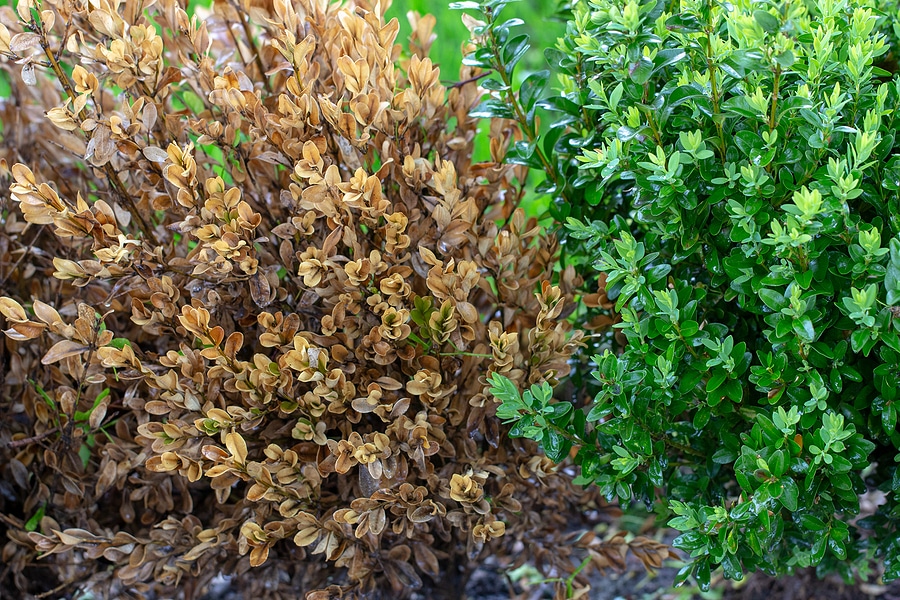
Boxwood nematodes are microscopic roundworms that feed on boxwood roots. They cause yellowing leaves, stunted growth and branch dieback that look a lot like drought or a nutrient problem. The only way to confirm them is a soil and root test, and in North Carolina that test costs $10 through the state's Nematode Assay Laboratory.
Gardening enthusiasts and homeowners with boxwoods, this one's for you. Nematodes are tiny, but their impact on a boxwood planting can be significant, and because they work underground, they often go unnoticed until real damage has been done. Here is what they are, how to recognize the damage, how to confirm it, and what actually helps.
1. What Boxwood Nematodes Are
Nematodes are microscopic, worm-like organisms that live in soil. Most are harmless, and some are beneficial: they are part of the soil food web, and certain species prey on insect pests. The problem group is plant-parasitic nematodes, which feed on plant roots.
According to NC State Extension, five types of nematodes can damage boxwoods:
- Root-knot (Meloidogyne)
- Lesion (Pratylenchus)
- Spiral (Helicotylenchus)
- Ring (Mesocriconema)
- Stunt (Tylenchorhynchus)
They range from about 0.01 to 0.04 inches long, far too small to see. What you can see is the damage. As they feed, they injure the roots and disrupt the plant's ability to take up water and nutrients.
2. Three Signs of Nematodes in Boxwoods
Nematode damage above ground looks a lot like other problems, which is why it is so often misdiagnosed. Watch for these three signs, especially when they don't improve with good watering and feeding.
Sign 1: Yellowing or Browning Leaves
The first sign is foliage turning yellow or brown and staying that way despite proper watering and fertilization. Nematodes feeding on the roots cut off the plant's supply of water and nutrients, so the leaves show it. Left alone, the discoloration can spread across the whole plant.
Sign 2: Stunted Growth
The second sign is a boxwood that simply stops growing the way it should. Damaged roots can't absorb what the plant needs, so new growth slows or stalls even with good maintenance. Stunting is easy to miss on a slow-growing shrub, so compare the plant to healthy boxwoods nearby.
Sign 3: Dieback
The third sign is dieback: branches or whole sections of the plant dying back. Weakened roots also leave the boxwood more open to diseases and other stresses, which speeds the decline.
What the Roots Show
If you dig carefully at the edge of an affected plant, the roots tell the rest of the story. NC State lists:
- root rot and general root damage
- short, stunted roots
- knots or galls on the roots (root-knot nematode)
- black or brown lesions on the roots (often lesion and stunt nematodes)
Because boxwood plantings stay in place for many years, nematode populations build up over time. That is why symptoms often appear slowly and get worse year after year.
3. Why Nematodes Build Up Around Boxwoods
Boxwoods are long-lived plants that often sit in the same bed for decades. That gives nematodes a steady food source and years to multiply.
Plant stress makes the damage worse. A boxwood growing in soil with the wrong pH, poor fertility, or soil that swings between soggy and bone-dry has fewer reserves, so it shows nematode injury sooner. A vigorous boxwood in well-managed soil can tolerate low to moderate nematode pressure without obvious decline.
There is no resistant variety to plant around the problem. NC State notes that no known boxwood varieties resist plant-parasitic nematodes, so every type of boxwood can be affected.
How to Confirm Boxwood Nematodes
Since the symptoms mimic drought, root rot and nutrient deficiency, testing is the only way to know. The NC Department of Agriculture and Consumer Services runs a Nematode Assay Laboratory that checks soil and root samples for plant-parasitic nematodes. A diagnostic sample is $10 for North Carolina residents, and samples can be sent any time of year.
How to take the sample:
- Scrape away the mulch. Mulch should not go in the sample.
- With a soil probe or small trowel, collect 4 to 6 soil cores around the base of the affected boxwoods, 6 to 8 inches deep.
- Include a few small pieces of root. It helps the lab find the nematodes.
- Mix the cores in a clean plastic bucket, then submit a smaller portion following the lab's sampling instructions.
Turnaround is usually about two weeks in October and November, and four to eight weeks from December through February.
If the test comes back clean, look at other causes. Boxwood root rot and common boxwood pests produce similar decline.
What Helps Boxwoods Live With Nematodes
There is no quick fix that clears nematodes from an established planting. Management focuses on keeping the boxwood strong enough to tolerate them.
- Keep growing conditions at their best. Correct soil pH, balanced fertility and steady soil moisture all increase a boxwood's tolerance of low to moderate nematode pressure.
- Feed the soil biology. Working composted leaves, grass clippings or other organic matter into the soil improves structure and moisture retention. It also encourages biological activity that may naturally reduce nematode numbers. It won't eliminate them, and organic matter may call for a little extra nitrogen.
- Replant smart. If heavily infested boxwoods must be replaced, remove and replace the soil around the planting with fresh, nematode-free soil, and dispose of the old soil away from other plants. It won't wipe out the population, but it gives new plants time to establish first.
- Solarize empty beds. For a bed that is cleared before replanting, cover lightly moistened soil with clear plastic, seal the edges, and leave it for 1 to 2 weeks in mid-summer sun. This works best in full sun.
For the routine side of keeping boxwoods healthy, see our boxwood care guide.
Frequently Asked Questions
Can boxwoods recover from nematodes?
Boxwoods under low to moderate pressure can hold up well when soil pH, fertility and moisture are kept at their best. Heavily infested plants often keep declining and may need replacing along with the surrounding soil.
Are any boxwood varieties resistant to nematodes?
No. NC State Extension notes there are no known boxwood varieties resistant to plant-parasitic nematodes.
How do I know if it's nematodes or root rot?
You can't tell reliably from the leaves alone, because both cause yellowing and dieback. A soil and root test from the NCDA&CS Nematode Assay Laboratory confirms whether nematodes are present.
Are all nematodes harmful?
No. Many soil nematodes are beneficial, and some prey on insect pests. Only plant-parasitic nematodes feed on roots and damage boxwoods.
Set Your Boxwoods Up to Thrive
Healthy boxwoods start with healthy soil. Nature's Select® Lawn Care uses a biological approach that builds soil life and plant vigor, which is exactly what boxwoods need to stand up to nematodes and other stresses. Our tree and shrub care team looks after boxwoods, ornamental shrubs and trees, and we also handle lawn disease control and lawn care.
We serve homeowners in and around Greensboro, Winston-Salem, Chapel Hill and Pinehurst. If your boxwoods are yellowing or dying back, request your free estimate today.