10 Lawn Care Tips for New Homeowners in North Carolina

The best lawn care tip for a new homeowner is to learn what you have before you change anything. Find out your grass type, test the soil, then mow, water and feed on that grass's own schedule. In North Carolina, that schedule is very different for tall fescue than it is for bermuda, zoysia or centipede.
Congratulations on your new home! A healthy lawn adds value to your property and gives you a place to relax and play. It also takes more than watering once in a while, especially in your first year, when you are still learning what the previous owners (or the builder) left behind.
These ten tips are in the order we recommend tackling them.
1. Evaluate the Lawn You Inherited
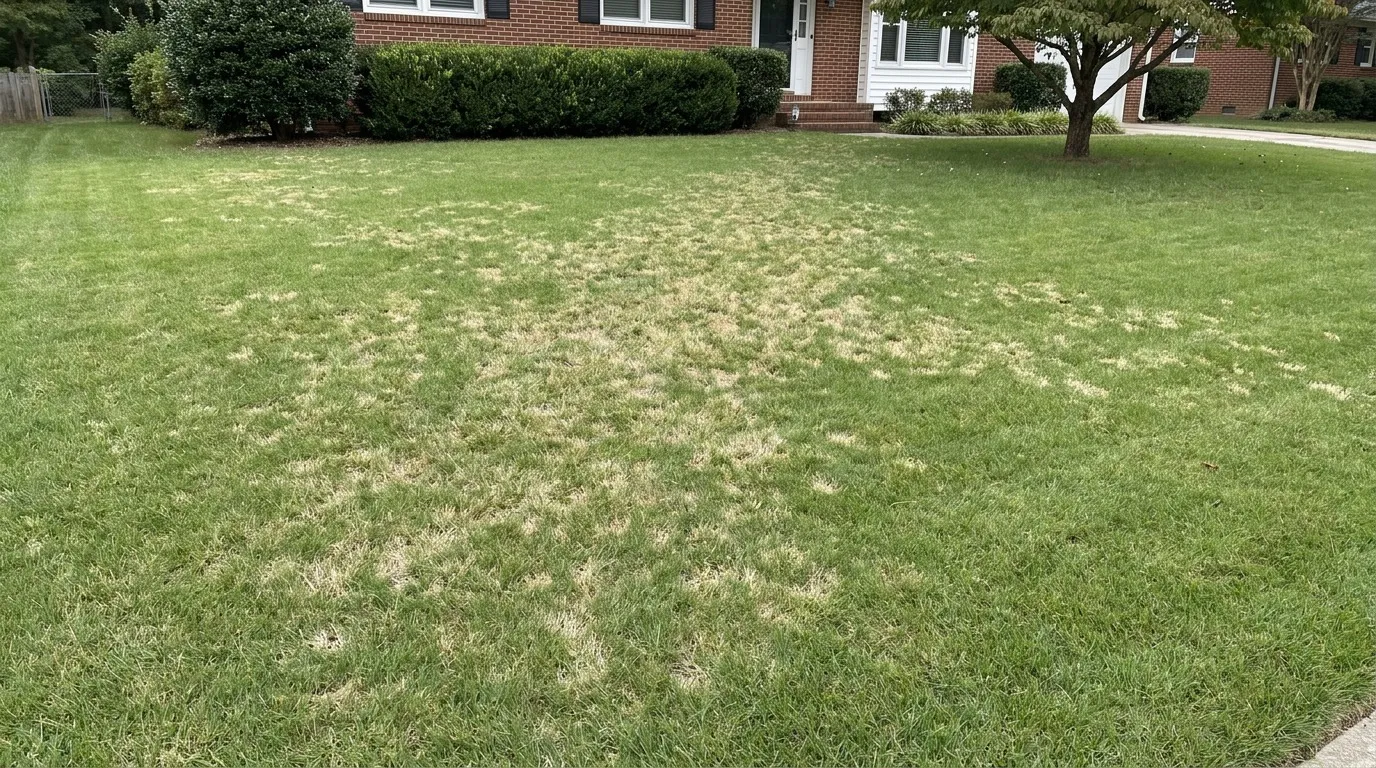
Before you make a plan, look at what you have. Walk the yard and note thin areas, bare spots, weeds, low spots that hold water and hard, compacted ground. If you moved here from out of state, you may be dealing with a different type of turf than you're used to.
If the previous owners let the lawn go, it may need renovations and repairs rather than routine care. A professional evaluation can sort that out quickly.
2. Find Out What Grass You Have
North Carolina lawns fall into two groups. Cool-season grasses, mostly tall fescue, are the main lawn grasses in the mountains and the Piedmont, around Winston-Salem, Greensboro and Chapel Hill. They stay green through most of the winter and are stressed by summer heat. Warm-season grasses (bermudagrass, zoysiagrass and centipedegrass) green up in spring, thrive in summer and go dormant and brown after frost. Centipede is most common in the eastern part of the state.
Almost every other tip depends on this answer. If you're replacing grass, see our guide on how to pick the right grass seed.
3. Test the Soil Before You Add Anything
Clear out stones, weeds and any construction scraps first. Then test. The NC Department of Agriculture and Consumer Services runs the state's soil testing lab and reports exactly how much lime and fertilizer your soil needs.
According to NC State Cooperative Extension, most lawn grasses do best at a soil pH of 6.5 to 7.0, while centipedegrass prefers more acidic soil, close to 5.5. Most North Carolina soils are acidic, so lime is common, but only a test tells you how much. Learn more in why soil acidity matters for your lawn.
4. Mow at the Right Height for Your Grass
Mowing at the wrong height thins the turf and gives weeds like crabgrass an opening. Whatever your grass, NC State's rule is to remove less than one-third of the leaf with each mowing, and to mow with a sharp blade.
| Grass type | Mowing height (NC State Extension) |
|---|---|
| Tall fescue | 2½ to 3½ inches in spring, 3½ inches in summer, 2½ to 3 inches in fall |
| Bermudagrass | 1 to 2 inches with a rotary mower |
| Zoysiagrass | ¾ to 2 inches |
| Centipedegrass | 1 to 2 inches, never taller than 2½ inches |
5. Water Deeply, Not Daily
New seed is the exception. Keep the top 1½ inches of soil moist, which can mean light watering two or three times a day for one to three weeks. After the third mowing, switch to deep watering about once a week.
Established tall fescue, bermudagrass and centipedegrass need about 1 inch of water per week from rain or irrigation. Zoysiagrass needs ½ to 1 inch. Watering early in the morning, between 2 a.m. and 8 a.m., reduces some diseases.
6. Fertilize on Your Grass's Schedule
A "spring and fall" rule doesn't fit every lawn. The NC State Extension tall fescue calendar puts the main feedings in mid-September and November, with another in February and only light feeding in spring. Warm-season lawns are the opposite: feed bermuda and zoysia after they green up in spring and through summer, and give centipede no nitrogen before mid-May. Let your soil test guide the details, or let our weed control and fertilization team handle it.
7. Get Weeds Under Control Early
If you bought a yard full of weeds, don't wait for next year. A thick, healthy lawn is the best long-term weed defense, because weeds move into thin turf and bare soil first. A year-round program that feeds the soil and fills in thin areas works better than chasing weeds once they're up.
8. Aerate and Seed in the Right Season
Timing depends on your grass. Tall fescue lawns should be aerated and overseeded in fall: September 1 to October 1 in the Piedmont and coastal plain, and a little earlier in the mountains. Warm-season lawns are cored in late spring or early summer, when they are actively growing. If you close on a fescue lawn in late summer, you're right on time. See our NC aeration window guide or our aeration and overseeding service.
9. Prepare the Lawn for Winter
Clear fallen leaves off the lawn, which NC State notes helps warm-season grass green up earlier in spring. Keep tall fescue mowed at about 3 inches through winter rather than scalping it short. In the Piedmont, raise a bermudagrass lawn by ½ inch in fall to help protect it from winter kill. If your soil test calls for lime, winter is usually the best time to apply it.
10. Take It Slow
Landscaping is the fun part of a new home, but it is a long-term investment of time and money. Get the lawn and soil healthy first, then add beds, shrubs and features over a season or two instead of all at once.
Frequently Asked Questions
What should a new homeowner do first for the lawn?
Figure out your grass type and get a soil test. Those two answers decide your mowing height, fertilizer timing and when to aerate or seed.
How short should I mow my lawn?
It depends on the grass. Tall fescue stays at 2½ to 3½ inches, while bermudagrass, zoysiagrass and centipedegrass are mowed at about 1 to 2 inches.
I moved in during the fall. Should I wait until spring?
Not if you have tall fescue. Fall is the best time to aerate, seed and feed a fescue lawn in North Carolina. Warm-season lawns can wait for late spring.
How often should I water new grass seed?
Keep the top 1½ inches of soil moist with light watering two or three times a day for one to three weeks, then water deeply about once a week.
Establish a Great Lawn Early
Nature's Select® Lawn Care works with nature, not against it. We build healthy soil biology so your new lawn grows thick enough to crowd out weeds on its own. Our team can test your soil, identify your grass and set up a lawn care program that fits it. We also help prevent lawn diseases and lawn pests.
We serve new homeowners in and around Winston-Salem, Greensboro, Chapel Hill and Pinehurst. Request your free estimate and start your first year off right.