Nature's Select Logo
Home
Resources
Blogs
Preparing for Fall Lawn Care
August 13, 2019
2 minutes read

Try as we might to hold onto summer, back-to-school season is here. And, before we know it, the air will turn crisp and fall will be here. As the seasons change, so does your lawn's needs. Instead of growth, it needs maintenance and fall is the prime time to set the stage for a beautiful lawn next year. But, if you’re ready to retire the landscaping tools for the season, our experts at {{company_name}}® are prepared to take over. In addition to fall lawn care tips, our expert service will result in the lawn you’ve always wanted!

Fall Lawn Care

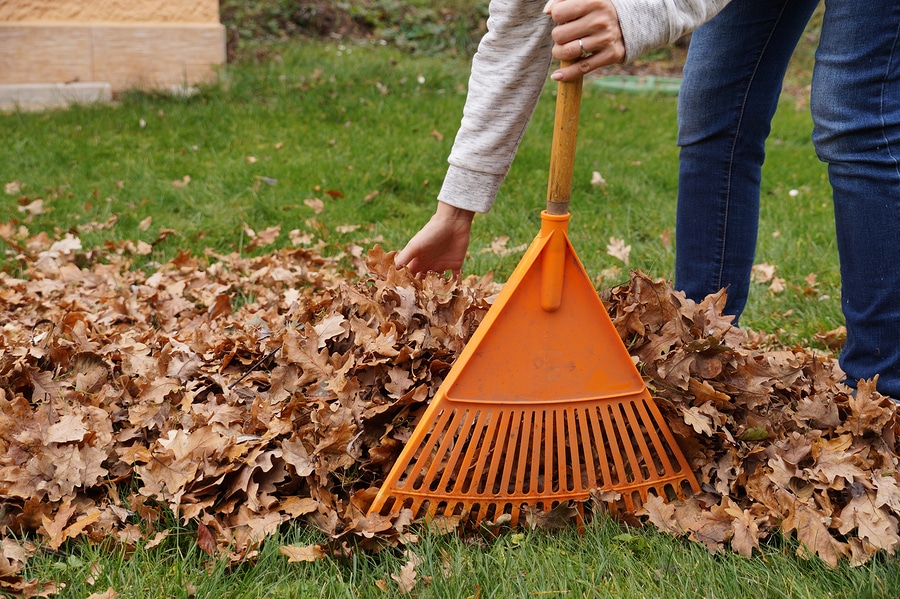
Rake Leaves

It’s important to be on top of leaf removal this fall. If left too long, leaves can suffocate the grass and cause fungal diseases. More frequent raking makes the job more manageable, and is best for the grass.

Fertilize Lawn

After aerating your lawn, fertilize it. Applying an even layer of winterizing fertilizer prepares the grass for the next year while deterring dandelion growth in early spring. Attacking springtime weeds is a process that starts now.

Repair Dead Spots

The weather is just right in early fall to repair bald spots in your grass. Begin by raking the area to loosen the soil, and plant a lawn repair mixture. Our philosophy is scientifically unique, and our biological products are specifically tailored to your soil. We make a formulation based on a soil sample from your lawn that helps us create just the right mix. Then, it's important to keep the area moist for 2 weeks, or until you see blades of grass growing.

Our lawn care team is proud to serve our Winston-Salem neighbors by keeping lawns green and thriving every year. Don’t stress about your lawn care to-do list; enlist the help of {{company_name}}®. Contact us today at {{local_phone}} to make an appointment for fall lawn treatments .

NS Plant White Icon

Join a proven brand with a simple, effective process.

Explore Franchise Opportunities

More Articles

Sod webworm silk webbing shimmering in dawn dew across a tall fescue lawn in central North Carolina during August peak damage window
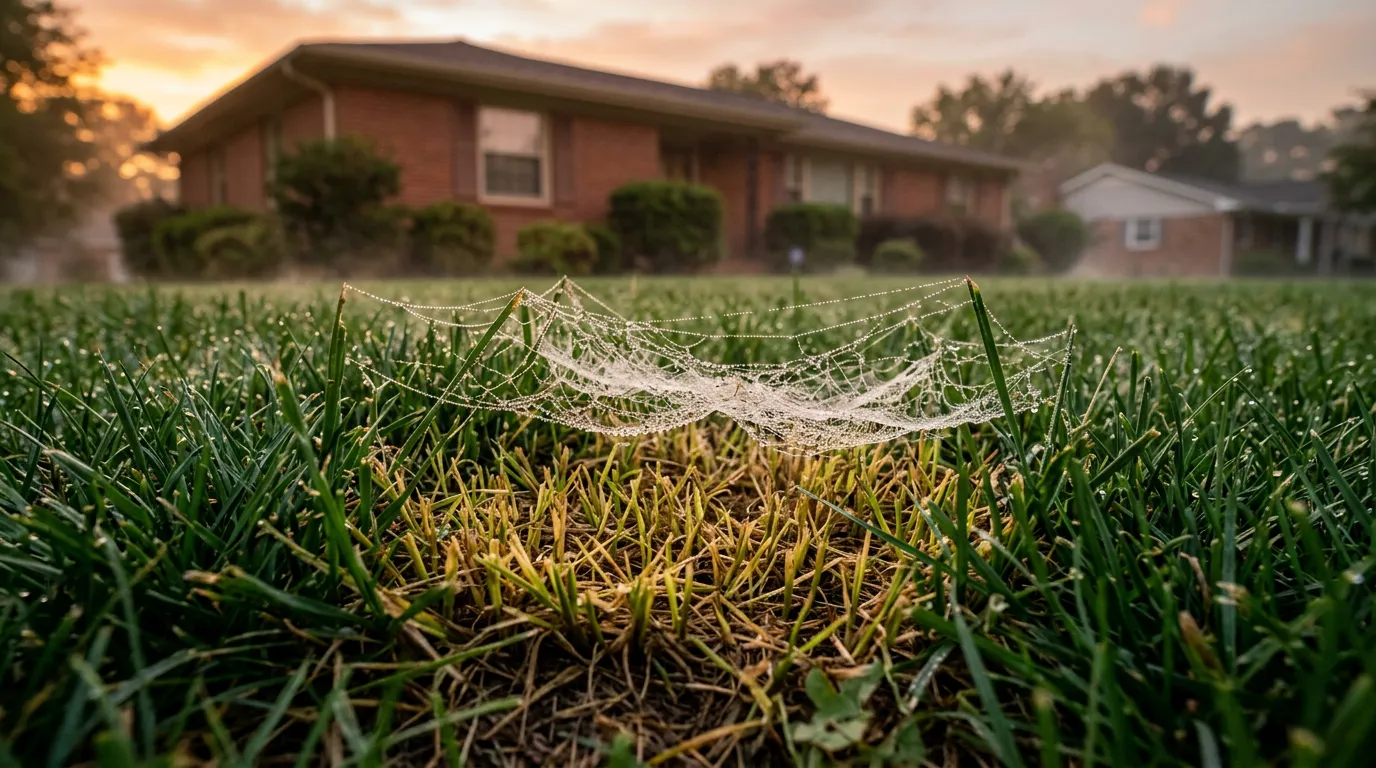
Sod webworms are caterpillars of small light-brown moths (Crambus and Parapediasia species) that feed on tall fescue and warm-season turf at night from July through August across North Carolina, cutting grass blades at the thatch line and dragging them into silk-lined tunnels. The tells are dawn silk webbing shimmering in the dew, dusk zig-zag moth […]
August 12, 2026
14 minutes read
Read article →
Homeowner's hands cupping turf-type tall fescue seed above green lawn showing overseeding rate for North Carolina fescue.
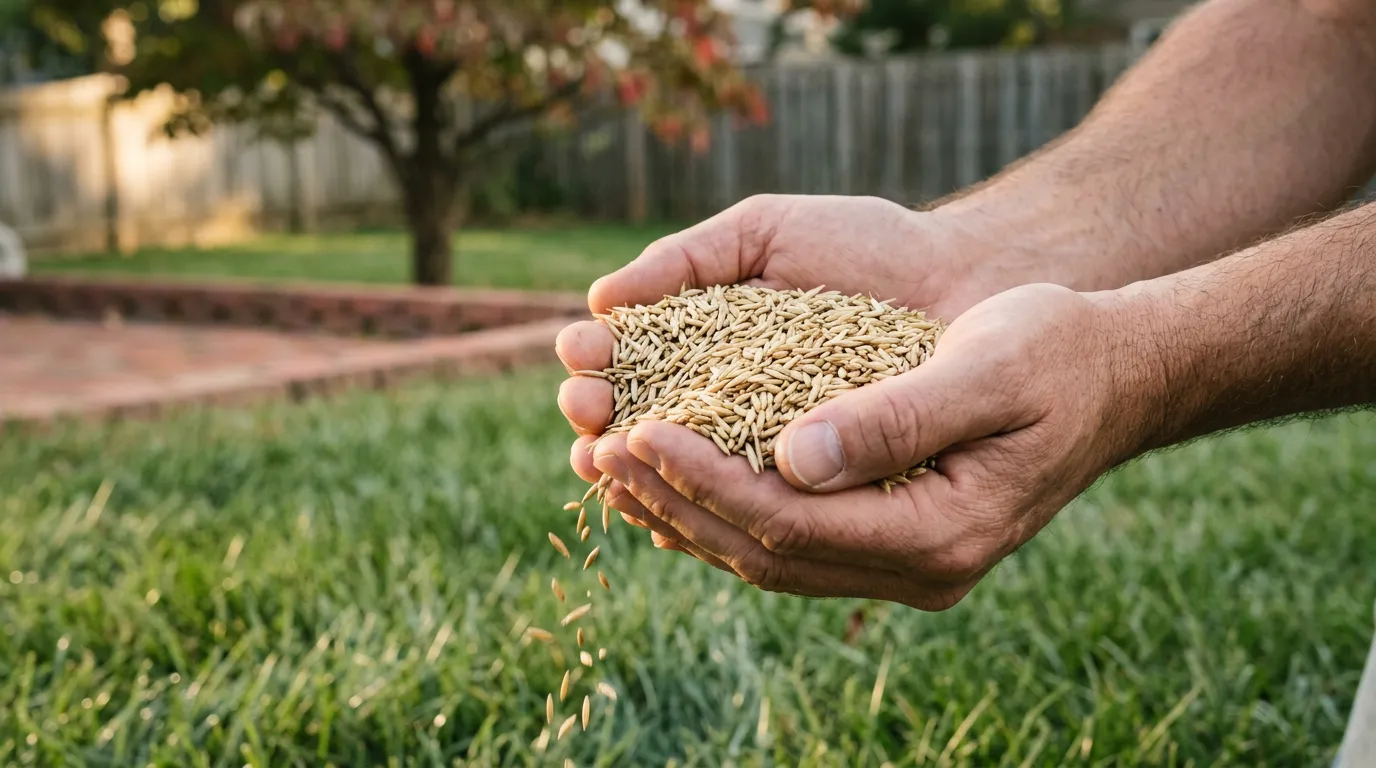
For most North Carolina tall fescue lawns, plan on 3 to 4 pounds of seed per 1,000 square feet for a routine fall overseed, 5 to 6 pounds for a moderately thin lawn, and 8 to 10 pounds when you are renovating bare or badly damaged turf. That range comes from NC State Extension research, […]
August 9, 2026
7 minutes read
Read article →
Soil thermometer reading four-inch depth in a tall fescue lawn in central North Carolina during the fall aeration window with early-morning autumn light.
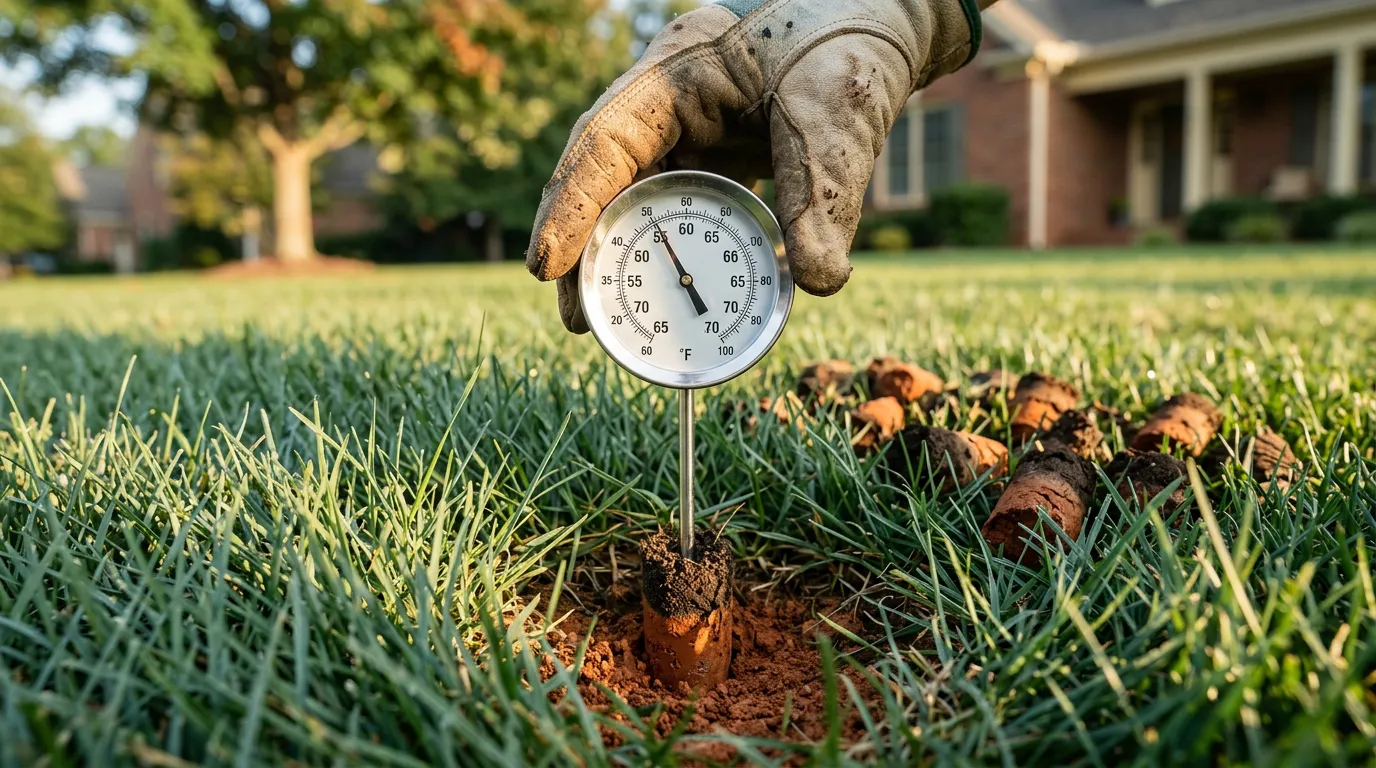
The best time to aerate a lawn in North Carolina is when soil temperature at four inches sits between 65 and 75 degrees Fahrenheit. For tall fescue in the Triad and Triangle, the ideal time to aerate and overseed falls between mid-September and early October and lasts roughly three weeks. For bermuda and zoysia in […]
August 6, 2026
14 minutes read
Read article →

Ready for a Free On-Property Assessment?

Same-day estimate. 30+ years of biological methodology. Nature's Select® Guarantee. Local franchises, one team.
homeuserphone-handsetcalendar-fullcrossmenulist Skip to content