Slime Mold 101: What You Should Know

Imagine waking up to find strange, spongy patches decorating your well-manicured lawn—it’s not an alien invasion; it’s slime mold! While this colorful and quirky organism isn’t here to destroy your yard, it can certainly be an unwelcome guest. At Nature's Select®, we’re here to arm you with the knowledge and tools you need to tackle slime mold while keeping your lawn healthy and vibrant.
Slime Mold Explained
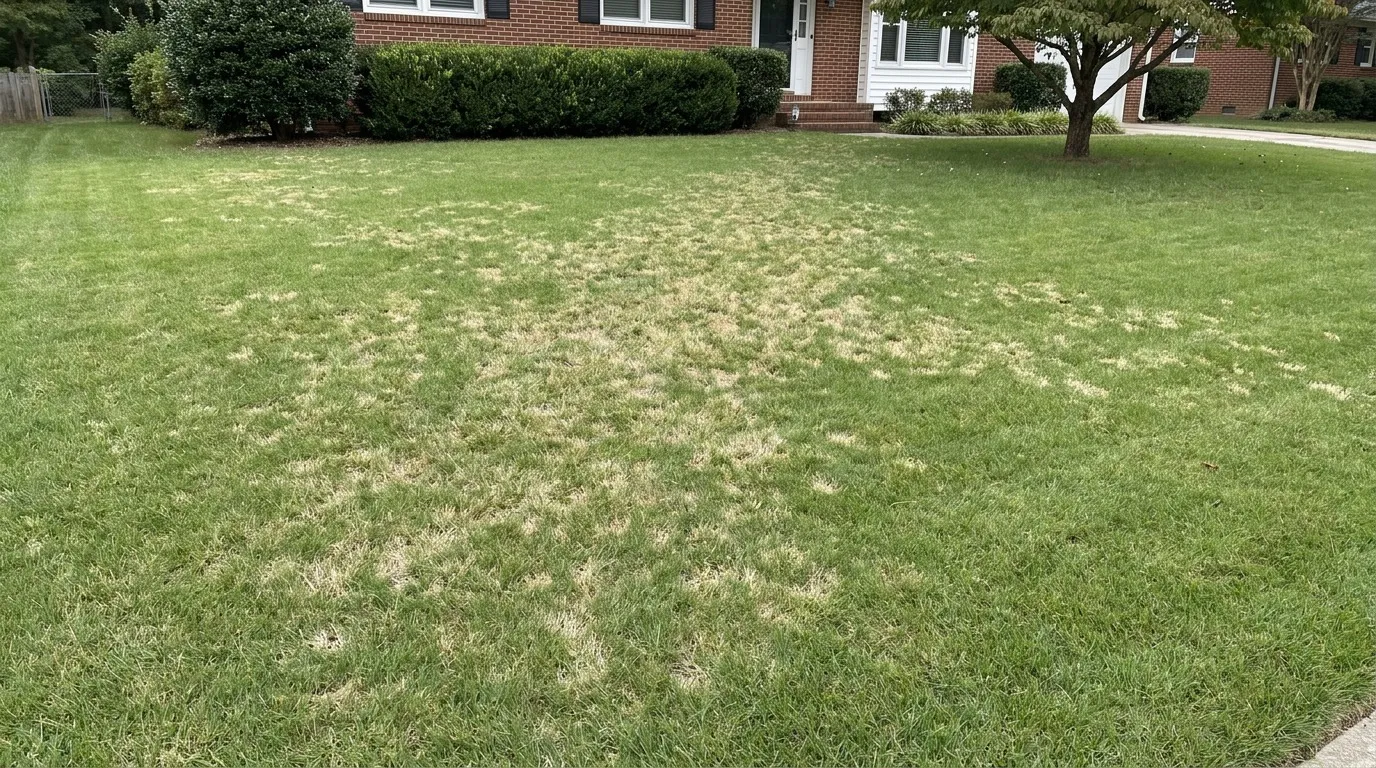
Slime mold is a fascinating organism that lives on decaying organic matter, including the thatch layer on your lawn. While they’ve earned a reputation for their vivid hues—yellow, orange, or even purple—they’re not fungi at all. They’re classified as protists and thrive in warm, humid conditions, which is why homeowners in North Carolina often notice them in late spring and summer. The good news? Slime mold isn’t harmful to your grass. It doesn’t feed on your lawn but rather uses it as a platform for growth. However, its spongy and powdery appearance can be unsightly, leaving many homeowners eager to remove it.
What Causes It to Appear?
Slime mold loves moisture and thrives in overwatered soil or areas with poor drainage. Combined with high humidity, it can rapidly spread across areas of your yard. Our state's warm climate is particularly inviting for slime mold, and practices like improper mowing (too short) or infrequent aeration can make your lawn an even more enticing home for this pesky visitor.
How to Remove and Prevent It
If you find this mold on your lawn, don’t worry—it’s easy to handle. The simplest way to remove it is to rinse it off with a garden hose or brush it away with a broom. However, prevention is always better than cure. Here are some proactive tips to keep its growth at bay:
- Improve Drainage: Ensure your lawn has proper drainage to avoid excessive moisture.
- Aeration and Seeding: Regular aeration reduces soil compaction, while overseeding promotes dense, healthy grass growth.
- Biological Lawn Care: Using environmentally friendly lawn care practices can help maintain a balanced ecosystem in your yard.
- Mowing Habits: Keep your grass at a proper height and mow frequently to prevent heavy thatch build-up.
Take Control of Your Lawn Today!
At Nature’s Select®, we believe every lawn deserves some TLC, especially in the face of slime mold and other challenges. Our biological lawn care services, including aeration and seeding, lawn disease control, and insect control, ensure Greensboro, NC, homeowners have lush, healthy yards year-round. Don’t let slime mold or other lawn issues ruin your outdoor space. Call us today at (888) 786-9735 to request your free estimate and take the first step toward a gorgeous lawn!