Sod Webworms: The Nighttime Pest That Ruins August NC Lawns
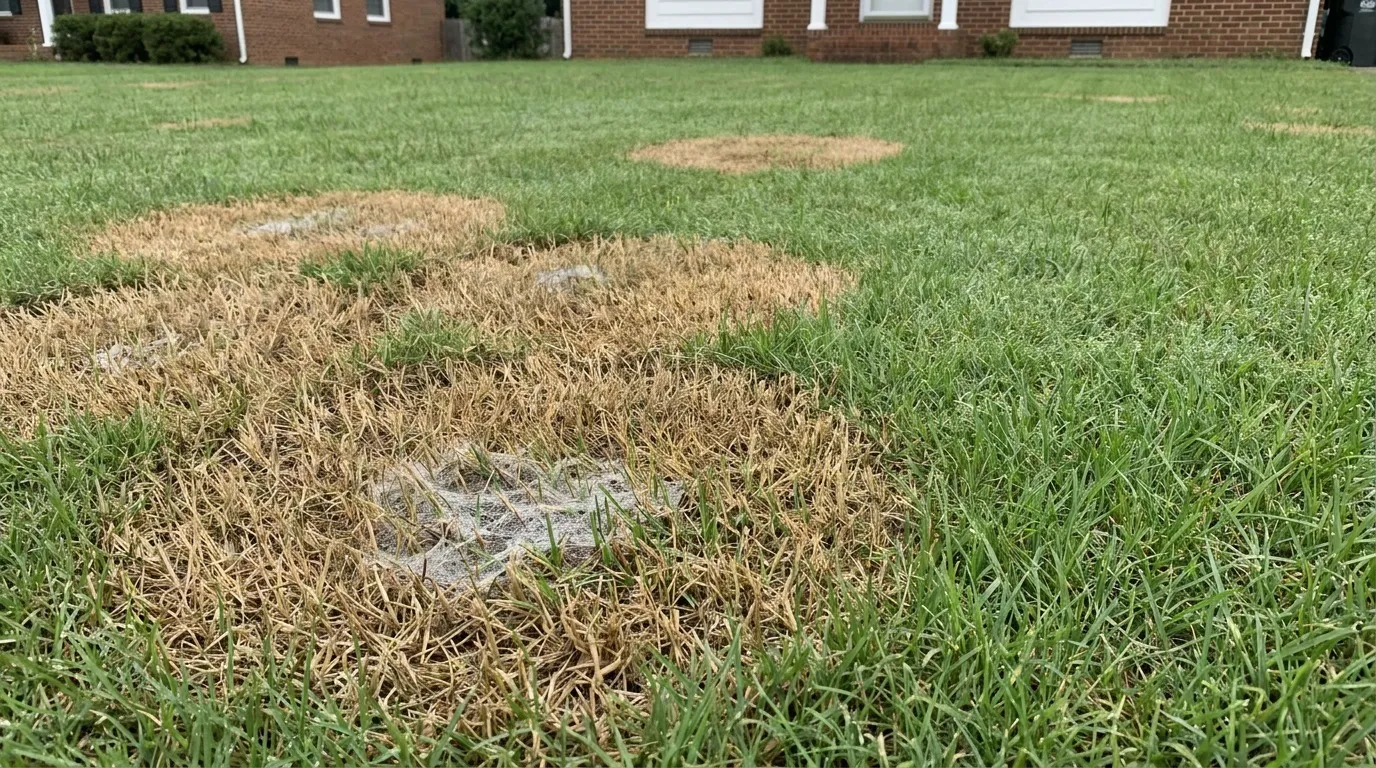
Sod webworms are caterpillars of small light-brown moths (Crambus and Parapediasia species) that feed on tall fescue and warm-season turf at night from July through August across North Carolina, cutting grass blades at the thatch line and dragging them into silk-lined tunnels. The tells are dawn silk webbing shimmering in the dew, dusk zig-zag moth flights just above the canopy, and small closely cropped brown patches with chewed blade tips. A two-minute soap flush at the patch edge confirms the population. Biological treatment with Bacillus thuringiensis (Bt) targets the caterpillars without harming pollinators.
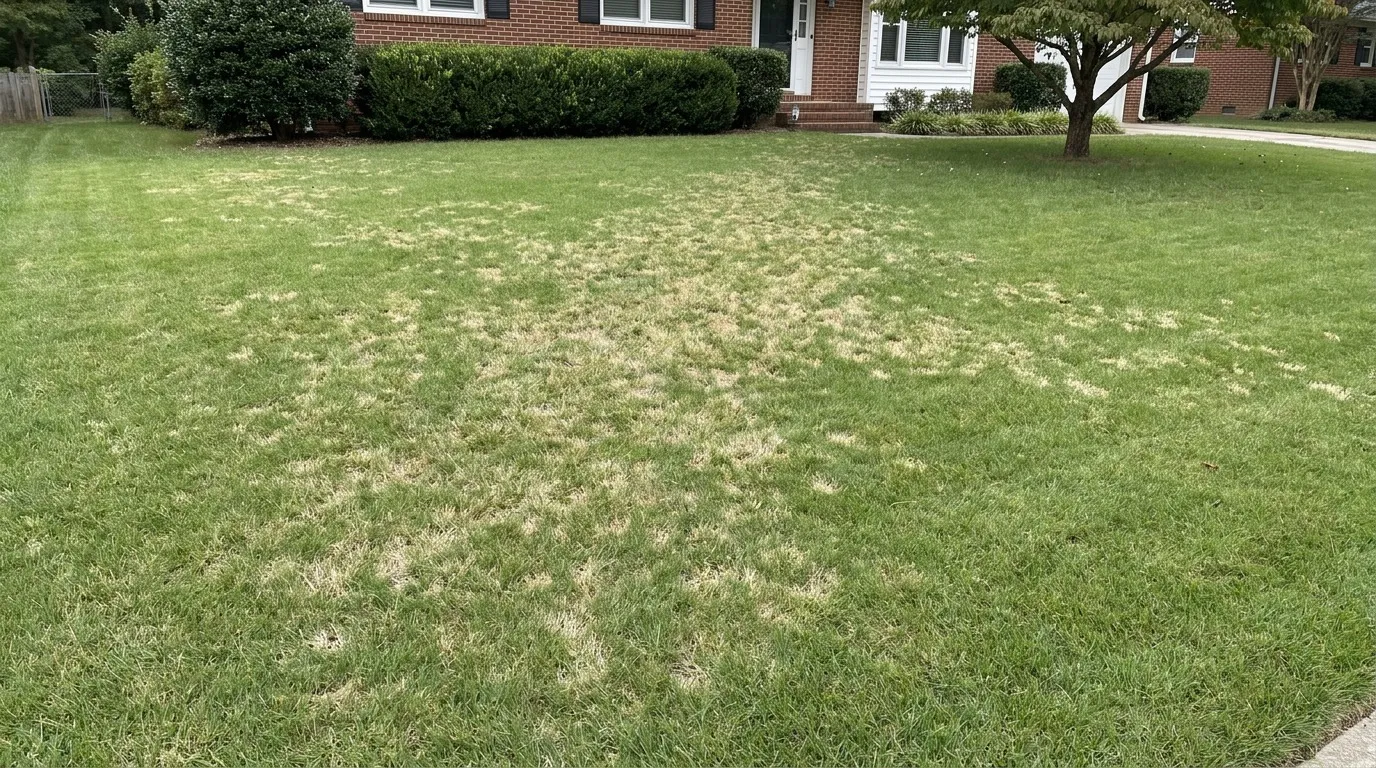
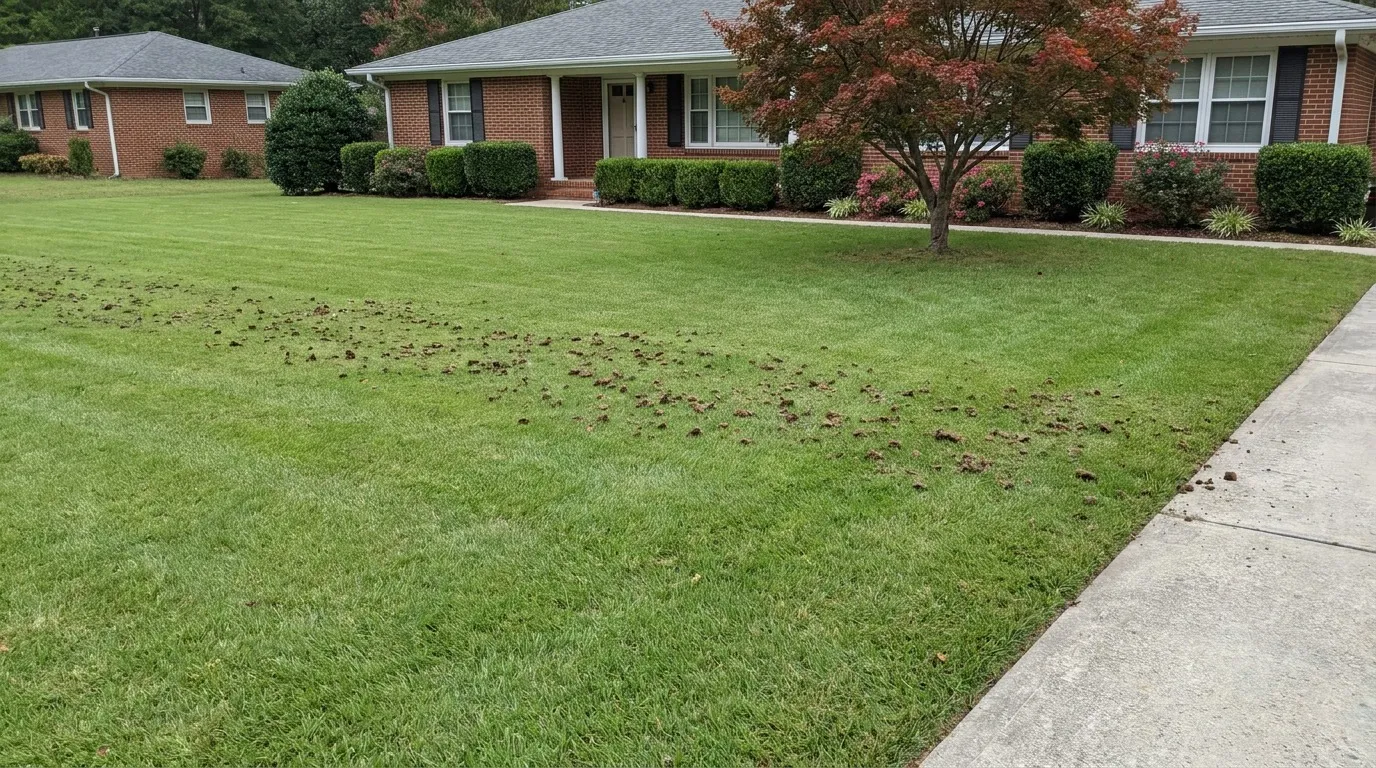
If your lawn looked healthy in early July and now shows small brown patches with grass mowed shorter than the rest of the yard, you are not imagining the change, and your mower did not do it. What most North Carolina homeowners are looking at in August is a caterpillar that only shows itself at dawn and at dusk. Sod webworms feed under the cover of darkness, retreat into silk-lined tunnels at first light, and leave a lawn that looks like it was scalped in patches by a mower running at the wrong height.
This guide walks you through the two free at-home confirmations any homeowner can run before scheduling a service call: the dawn silk-webbing scan and the dusk moth-flight watch. You will learn the field markers that separate sod webworm damage from drought stress, summer disease, and the other August pests active on North Carolina lawns. You will finish this article knowing whether the brown patches on your property call for the hose, the phone, or a two-week monitoring window.
Why Sod Webworms Only Show Themselves at Dawn and Dusk
Sod webworms are the caterpillar life stage of small pink, yellow, or light-brown moths belonging to the Crambus and Parapediasia genera. The adults are the moths you may already have noticed flying over the lawn at sunset in a nervous, zig-zag pattern about six to twelve inches above the canopy. Adults live only a few days, feed on dew, and mate in the air over the turf they were born from. The females drop eggs directly into the thatch layer during those flights, and within a week, the eggs hatch into caterpillars that cause the actual damage.
The caterpillars are strict night feeders. During daylight hours, they retreat into silk-lined tunnels they build at the soil line, waiting out the sun and the birds. Just after sunset, they emerge to feed on grass blades, cutting each blade at the thatch line and dragging the severed piece down into the tunnel to eat over the following hours. By dawn, they are back underground. This behavior is why the damage looks like nothing you ever catch happening, and why the lawn appears to get worse overnight without a visible cause in daylight.
The two visible signals are the silk itself and the moth flight. Fresh silk webbing shimmers in early morning dew before evaporation destroys it, usually vanishing within an hour of full sun. The dusk moth flight, running roughly from thirty minutes before sunset through the first fifteen minutes after, is a reliable population indicator: dozens of moths flying over a hundred-square-foot section of lawn means the next generation of caterpillars is already being seeded into that same area.
The Field Markers That Separate Sod Webworm Damage from Everything Else
Before you spend money on treatment, walk the lawn at first light and again at last light and check every marker on this list. Most North Carolina homeowners can rule sod webworms in or out inside a single day.
| Field Marker | Sod Webworm Damage | Drought Stress | Summer Disease |
|---|---|---|---|
| Location on lawn | Small irregular patches, often clustered in one section | Uniform across sunny, dry exposures | Circular patches with defined borders |
| Grass height inside patch | Noticeably shorter than surrounding turf | Same height, brown from the tip down | Same height, blade discoloration |
| Blade tips | Chewed, ragged, cut cleanly at thatch line | Curled, wilted, yellow-to-brown gradient | Discolored, sometimes with visible mycelium |
| Silk webbing at dawn | Yes, shimmers in dew for the first hour | None | Sometimes with brown patch fungus |
| Response to deep watering | No visible improvement | Greens up within 48 hours | No visible improvement |
| Moth activity at dusk | Zig-zag flights just above canopy | None | None |
| Peak damage window | July through August in NC | Any prolonged hot-dry stretch | June through September |
| Soap flush result | Larvae surface within 3-5 minutes | Nothing surfaces | Nothing surfaces |
The two most decisive markers are the grass-height difference inside the patch and the silk webbing at dawn. If the patch grass is clearly shorter than the surrounding turf and you can see a fine web catching dew in the early light, sod webworms are almost certainly your problem. If neither of those markers is present, you are looking at something else and you should walk through the four-culprit yellow patch diagnostic before doing anything else.
The Dawn Silk-Webbing Scan
Set your alarm for thirty to forty-five minutes before sunrise on a clear morning after a mild night. Head outside with a flashlight and a coffee. Walk the lawn slowly, especially the areas where you have noticed brown patches. What you are looking for is a fine, gauzy web draped low across the canopy and glued to individual grass blades by dew droplets.
Fresh sod webworm silk looks less like a spider web and more like the way a strand of hair reflects sunlight when it catches the right angle. You may need to crouch and look across the canopy at a low angle instead of straight down. The silk is easiest to see when the sun is still below the horizon and dew is heavy. Within an hour of direct sun the silk collapses and dries invisible, which is why the check has to happen at first light.
Silk in a patch confirms an active population feeding there. Silk across large sections of an otherwise healthy lawn indicates a heavy infestation that will continue to expand. If your dawn scan comes back clean two mornings in a row, sod webworms are not your primary problem and you should redirect the diagnostic effort somewhere else.
The Dusk Zig-Zag Moth Flight Watch
The second free confirmation happens at the other end of the day. Sit on the porch or the deck about twenty minutes before sunset with a clear view of the lawn. The zig-zag flight is unmistakable once you have seen it: small light-brown or pinkish-yellow moths flying about six to twelve inches above the canopy in a nervous, side-to-side pattern that looks nothing like a regular moth flight. Individual adults live only a few days and are usually mating during these flights, so the pattern comes in short bursts as different moths take their turn.
A dozen or more moths over a hundred-square-foot section of lawn during that thirty-minute window signals an active egg-laying population. The eggs those females drop tonight will hatch into the caterpillars feeding in your turf a week from now. This is why late July into early August is such a decisive monitoring window: the moths you see tonight are the outbreak you will see three weeks from now.
If the moth flight is heavy but the dawn silk scan comes back light, treatment can wait one to two weeks while the eggs hatch. If both signals are heavy at the same time, the population is already generational and the action threshold cheat sheet says treatment is warranted now.
The Two-Minute Soap Flush That Confirms the Population
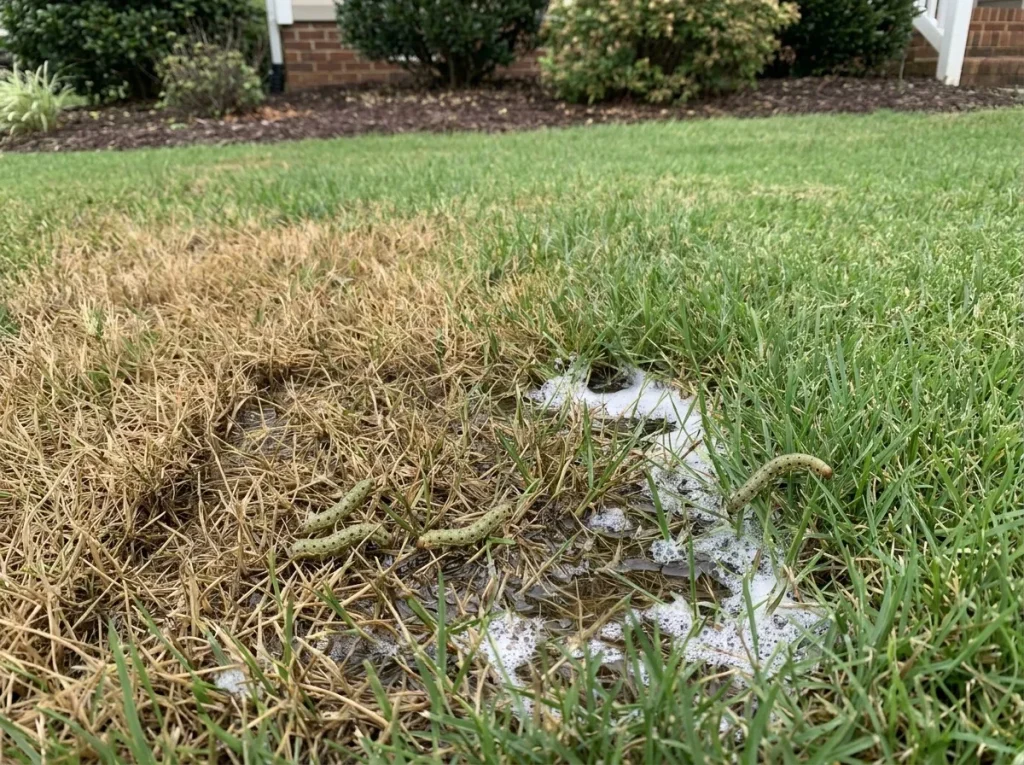
The soap flush test is the same procedure a state-licensed technician uses during an on-site species identification visit. It works because sod webworm caterpillars respond to soap in the thatch layer by surfacing within a few minutes, and it costs nothing beyond dish soap and a watering can.
What you need: One gallon of water. Two tablespoons of unscented dish soap. A watering can, bucket, or clean garden sprayer. A watch or timer.
How to run it:
- Walk to the edge of a suspect brown patch where damaged turf meets healthy turf. Mark off a one-square-foot section along that boundary.
- Mix two tablespoons of dish soap into one gallon of water. Cool water is fine.
- Pour the mixture slowly and evenly across the marked square, ensuring the soap solution reaches the thatch layer rather than just puddling on top.
- Start a five-minute timer.
- Watch for green-to-tan caterpillars, roughly three-quarters of an inch long at full size, crawling up out of the thatch. They will have dark spots along the body and a light-brown head capsule.
If you count three or more caterpillars per square foot in the flush zone, you are at or above the action threshold for sod webworm in North Carolina tall fescue and warm-season turf. Below that count, monitoring for another week is usually the right call because natural predators and biological soil activity often knock a light population back on their own. Above the threshold, targeted biological treatment during the next four to seven days is warranted before the population feeds through the next molt.
The soap flush works best at dawn or dusk when the caterpillars are still active in the upper thatch. Running it in the middle of a hot afternoon often produces false negatives because the population is buried deeper against the heat. If your first flush comes back clean but silk and moth flight both looked heavy, wait until the following morning and try again in cooler light.
Why Sod Webworms Peak in August on North Carolina Lawns
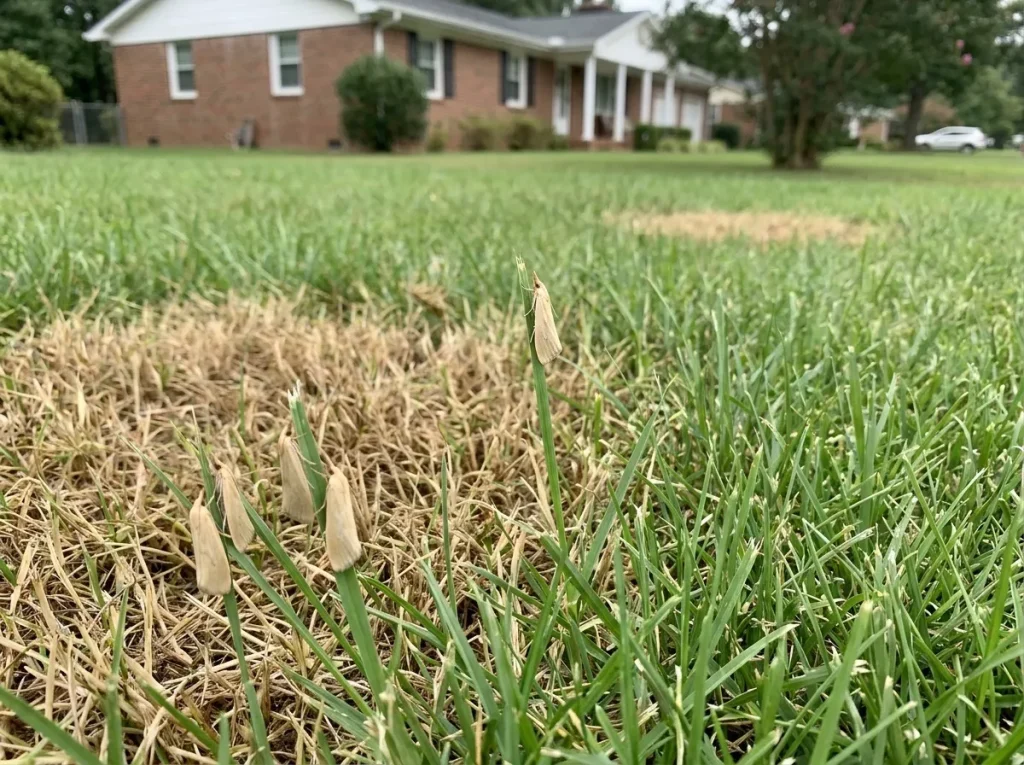
Sod webworm damage follows a predictable calendar in central North Carolina, driven by soil temperature, thatch buildup, and moisture stress on the turf. The pattern is worth knowing because it tells you when to monitor closely, when to expect the visible peak, and when the natural population collapse resets the lawn.
The first generation of adults typically emerges from overwintered pupae in the thatch during May and lays eggs through late May and early June. Those eggs hatch into the season's first caterpillar cohort in mid-June, which feeds through the end of that month, pupates in early July, and emerges as the second flight of adult moths in mid-July. That second flight is the one most North Carolina homeowners first notice, because it produces the caterpillar cohort that does the visible August damage.
Warm nights, moisture-stressed turf, and a thick thatch layer all push the second and third generations toward outbreak densities. Tall fescue lawns that were overseeded heavily the prior fall carry more thatch by summer and take heavier sod webworm pressure as a result. Warm-season turf under drought stress in August loses its natural defenses at the same time the caterpillar populations peak, which is why the damage looks so sudden and so severe..
Populations collapse when overnight temperatures consistently drop below 65 degrees, usually in late September or early October across the state. This is why sod webworm damage from mid-September onward is almost never the actual cause of new patches: the population is winding down and you should walk through the four-culprit yellow patch diagnostic instead of assuming the caterpillars are still active.
Which North Carolina Lawns Take the Heaviest Pressure
Sod webworms will feed on any turf species in the state, but the heaviest pressure in a typical year lands on tall fescue lawns in the Triad and Triangle areas that were heavily overseeded the previous fall. Overseeding builds thatch faster than a mature stand, and thicker thatch is where the caterpillars build their tunnels and where the moths drop the next generation of eggs. Warm-season lawns of bermudagrass and zoysiagrass across the Sandhills also take significant sod webworm pressure during hot dry stretches when the turf is already stressed and less able to outgrow the feeding damage.
A homeowner who ran solid core aeration in the previous fall is often surprised to see sod webworm damage the following August, because the two events feel disconnected. The connection is thatch. Aeration reduces thatch by mechanically removing turf cores; overseeding without aeration adds thatch through decomposing seedhead residue. The best defense against next August's sod webworm outbreak is often the aeration decision you make this September, not the treatment you run this month.
Why Biological Treatment Beats Broad-Spectrum Spray for Sod Webworms
Once you have confirmed sod webworms and the population is above the action threshold, treatment options fall into two camps: biological and broad-spectrum synthetic. For sod webworms specifically, the biological option is unusually effective because the caterpillars are strict foliar feeders and the biological control is a naturally occurring soil bacterium that only affects insects with specific gut chemistry.
Bacillus thuringiensis subspecies kurstaki (Bt-k) is a soil bacterium that produces a protein crystal toxic to the digestive tract of caterpillars but harmless to mammals, birds, fish, bees, and virtually every other insect that is not a caterpillar. When Bt-k is applied to the lawn in the evening (so that the caterpillars ingest it during their first hours of night feeding), the population collapses within three to five days without affecting the pollinators, predatory beetles, and beneficial soil organisms that keep the rest of the ecosystem in balance.
Broad-spectrum synthetic insecticides work faster but suppress the same predatory beetles and parasitic wasps that would otherwise control the sod webworm population. This is the trap most calendar-driven chemical services fall into: broad spray in June suppresses the beneficial insects that would have controlled the caterpillars naturally, which sets up a heavier outbreak in August that then requires another broad spray, and so on. The biological lawn insect control program breaks that cycle by treating only at threshold, only in the affected area, and only with materials that preserve the beneficial insects the lawn is already producing. The USDA SARE program identifies threshold-based biological IPM as the framework that reduces overall pesticide load while maintaining or improving pest control outcomes, which is the same discipline every technician follows on a North Carolina property.
Nature's Select® is affiliated with the NC State Beekeepers Association, which means every treatment window is checked against nearby bloom on flowering trees, shrubs, and lawn weeds. Bt-k is pollinator-safe by mechanism, but even the targeted synthetic materials used when the caterpillar population is late-instar and outside the Bt-k window are applied at the lowest effective rate, with bloom-avoidance protocols in place.
When to Call and When to Watch
Sod webworm damage does not always require professional intervention. A homeowner running the dawn scan, the dusk watch, and the soap flush with clear results can often manage a light infestation with a monitoring window and a well-timed Bt-k application from the garden center.
Two situations always warrant a professional visit. The first is any lawn where the sod webworm damage is compounded by other visible pressures at the same time: yellow patches from a suspected chinch bug infestation, disease-like patches with defined borders, or grub-driven canopy lift elsewhere on the property. Multiple pressures at once require on-site species identification because the treatment decision must account for all of them, not just the most obvious one. The second is any confirmed infestation on a property with young children, pets, pollinator plantings, or a nearby pond. In those cases the on-site diagnostic, threshold-based treatment, and pollinator-aware timing that come with a Nature's Select® on-property assessment matter more than the treatment itself.
A same-day written estimate follows every free on-property assessment, and every treatment falls under the Nature's Select® Guarantee: if a confirmed sod webworm population is not brought below threshold with the first application, the technician returns and re-treats at no additional cost. The Nature's Select® lawn insect service is built around the discipline of identifying species first and treating only what field data warrant, which is why the biological approach outperforms calendar-driven programs across North Carolina.
If your dawn scan comes back clean for two consecutive mornings and the soap flush counts remain under 3 per square foot, monitor for another week and reassess. If the numbers are moving in the wrong direction or the damage is compounding with anything else on the property, book the visit.
Key Takeaways
- Sod webworms are the caterpillar stage of Crambus and Parapediasia moths and feed only at night on tall fescue and warm-season turf across North Carolina from July through August.
- The two free at-home confirmations are the dawn silk-webbing scan (fine web catching dew in the first hour of light) and the dusk zig-zag moth flight watch (nervous side-to-side flight six to twelve inches above the canopy).
- The soap flush at a patch edge (two tablespoons dish soap per gallon of water, poured over a one-square-foot section) confirms population density; three or more caterpillars per square foot is the action threshold.
- Sod webworm damage looks like tightly cropped brown patches with chewed grass blade tips, cleanly cut at the thatch line, unlike drought stress (uniform yellowing) or disease (circular patches with defined borders).
- Peak damage runs mid-July through late August in central North Carolina and collapses when overnight temperatures drop below sixty-five degrees, usually in late September.
- Biological treatment with Bacillus thuringiensis subspecies kurstaki (Bt-k) is pollinator-safe and specifically toxic to caterpillars, making it the preferred first-line treatment for sod webworm populations above threshold.
- Tall fescue lawns that were heavily overseeded the prior fall build the thatch layer that sod webworms depend on; the aeration decision you make in September is often the strongest defense against next August's outbreak.
Frequently Asked Questions
How do I tell sod webworm damage from drought stress on my lawn?
Sod webworm damage produces small brown patches where the grass inside the patch is noticeably shorter than the surrounding turf, with chewed grass blade tips cut cleanly at the thatch line. Drought stress produces uniform yellowing across sunny exposures, with grass at the same height throughout and blades curled and wilted from the tip down. A deep one-inch watering greens up drought stress within 24 to 48 hours; sod webworm patches show no visible improvement from irrigation. If both symptoms are present, run the dawn silk-webbing scan and the soap flush before making any treatment decision.
What do sod webworm caterpillars look like when they surface in a soap flush?
Sod webworm caterpillars range from green to tan, grow up to about three-quarters of an inch long at full size, and have dark spots along the body with a light-brown head capsule. When they surface in a soap flush, they move quickly and often try to crawl back down into the thatch, so counting has to be immediate. They look distinctly different from armyworm caterpillars, which are darker and carry a distinctive inverted Y marking on the head. Sod webworms have no such head marking and are generally smaller and paler.
When do sod webworms cause the worst damage in North Carolina?
Peak sod webworm damage in central North Carolina runs from mid-July through late August, driven by the second and third caterpillar generations of the season. The first generation feeds in June but rarely produces visible damage. The August cohort is the one homeowners notice, because the caterpillar population is at its highest and the turf is already stressed from summer heat. Populations collapse when overnight temperatures drop below sixty-five degrees, usually in late September, which is why damage appearing in October is almost always something else.
Is Bt-k safe for my dog and my kids?
Bacillus thuringiensis subspecies kurstaki is a naturally occurring soil bacterium that produces a protein crystal toxic only to the digestive tract of caterpillars. It has no effect on mammals, birds, fish, bees, or almost any other insect. The re-entry window after application is typically the time it takes the lawn to dry, which is a few hours on a normal day. Every application under the Nature's Select® program leaves a written report at the property listing the exact re-entry window and any property-specific considerations.
Do I need a professional to treat sod webworms, or can I handle it myself?
A homeowner who runs the dawn scan, the dusk moth flight watch, and the soap flush with clear results, and whose count stays right at threshold, can often manage a light infestation with a Bt-k product from the garden center applied in the early evening. A professional visit becomes the right call when the damage is stacking with other visible pressures, when the population is well above threshold, when the affected area is large, or when there are young children, pets, pollinator plantings, or a nearby pond that require the pollinator-aware timing a licensed technician follows. The Nature's Select® Guarantee covers any confirmed population that is not brought below threshold on the first application.
Why do sod webworms hit my tall fescue lawn harder some years than others?
Sod webworm pressure tracks thatch depth, overnight temperature during the flight window, and the health of natural predator populations. Tall fescue lawns overseeded heavily the prior fall carry more thatch, which favors the caterpillars. Warm summer nights during the July flight window push more eggs into the turf, which drives higher August caterpillar densities. And a lawn that has been on a calendar broad-spectrum program tends to have suppressed populations of the big-eyed bugs, parasitic wasps, and predatory beetles that normally control sod webworms. The biological IPM approach preserves those natural checks, which is why outbreaks are less severe on lawns under long-term biological care.
Conclusion
The reason sod webworms catch so many North Carolina homeowners by surprise is that the pest hides in daylight and only shows itself at the two moments of the day almost nobody is watching the lawn. Once you know to look for the silk at dawn and the moth flight at dusk, and once you can run the two-minute soap flush at a patch edge, the diagnostic is straightforward. The treatment decision is straightforward, too: if the count stays below the threshold, monitor. If it crosses the threshold, treat only the affected area with the biological material designed for the job in the evening, while respecting pollinator timing.
If your dawn scan and soap flush confirm an active population, or if the damage is stacking with anything else on the property, book a free on-property assessment. A state-licensed technician will confirm the species, count the population density, walk the perimeter for cross-cluster clues, and put a written estimate in your hand the same day. Request a free on-property assessment or call (888) 786-9735, and we will route you to the office covering your address.