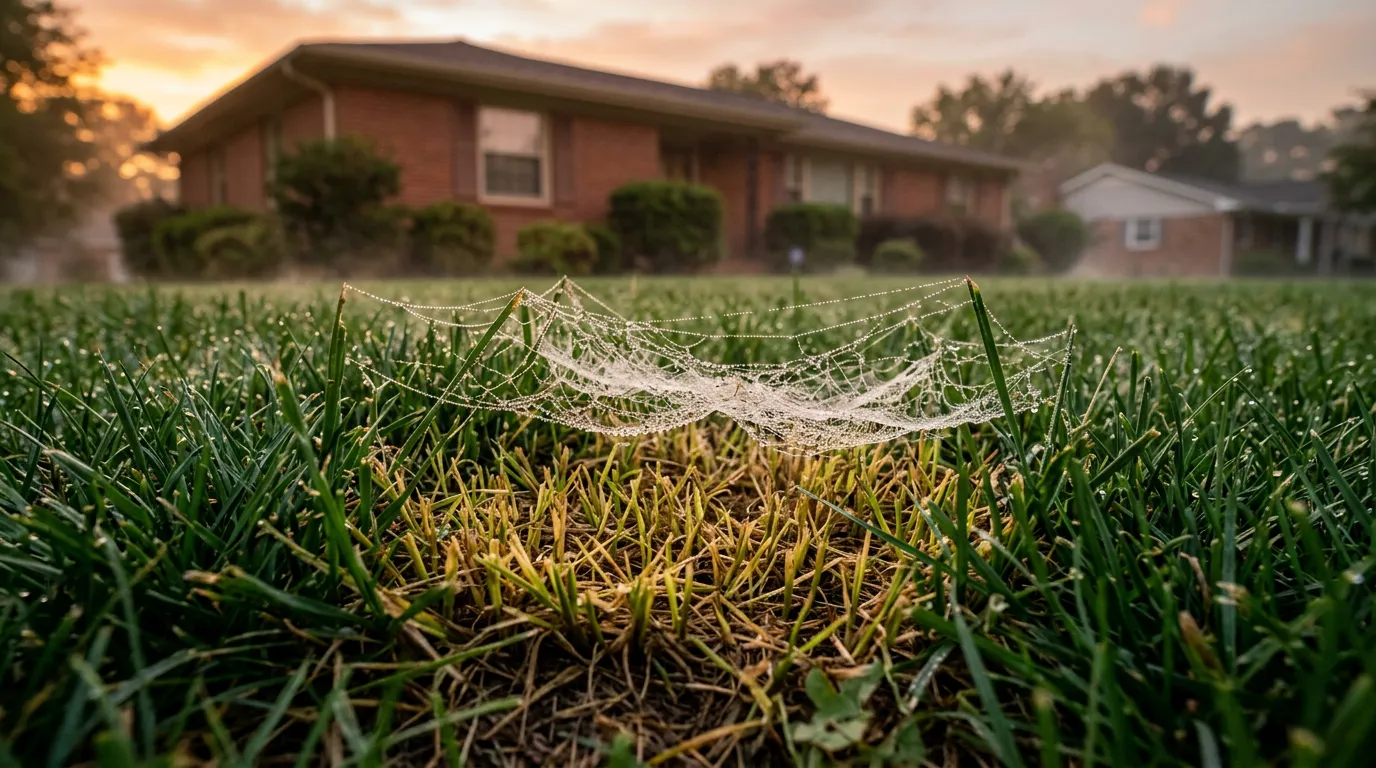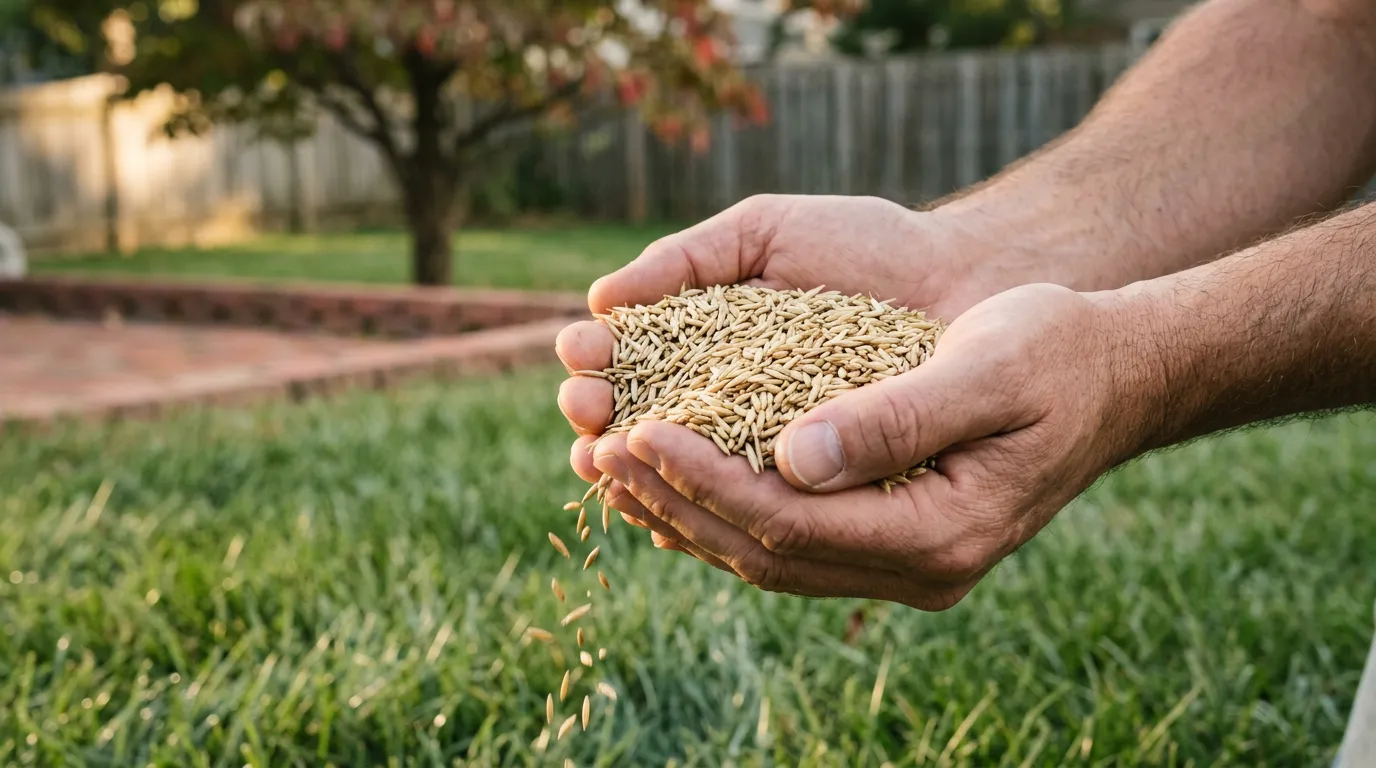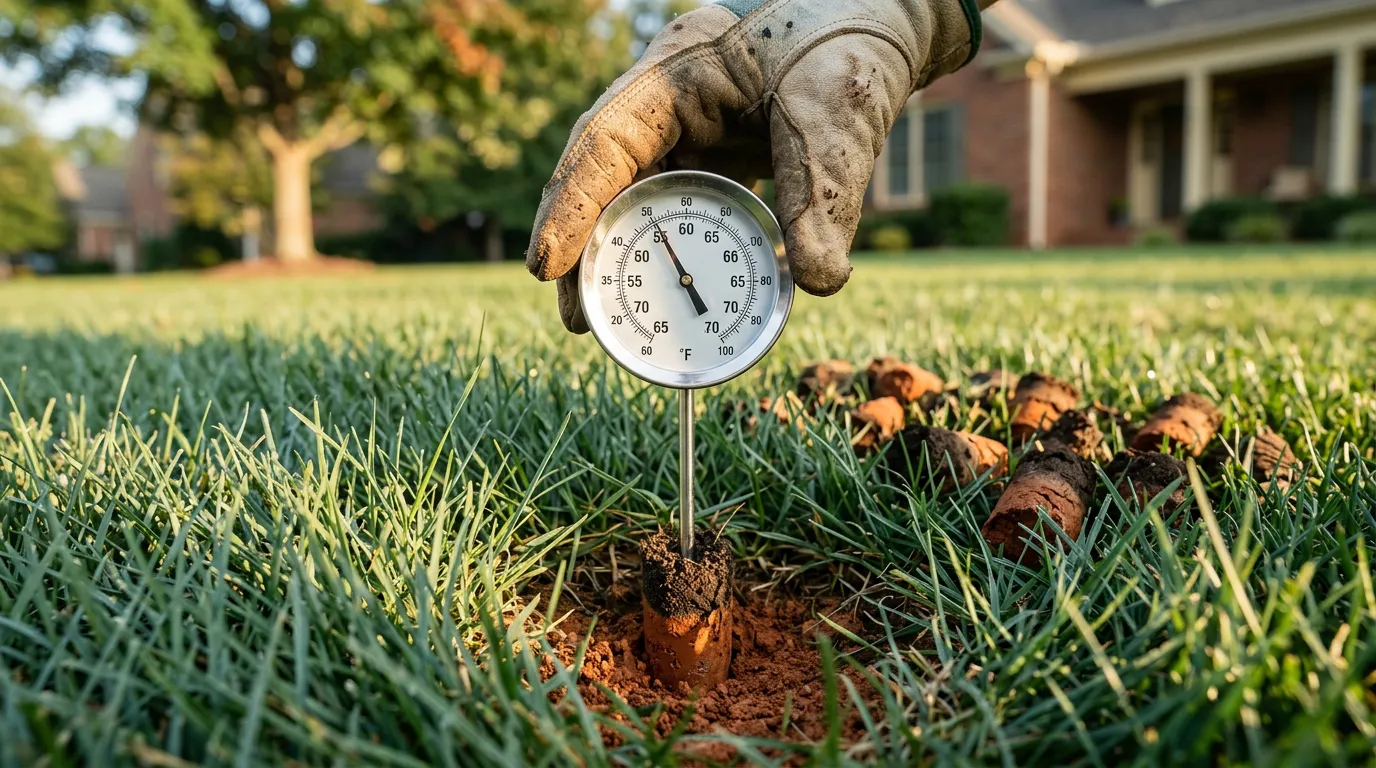
Core Aeration vs Liquid Aeration: Which Actually Works on NC Clay Soil?
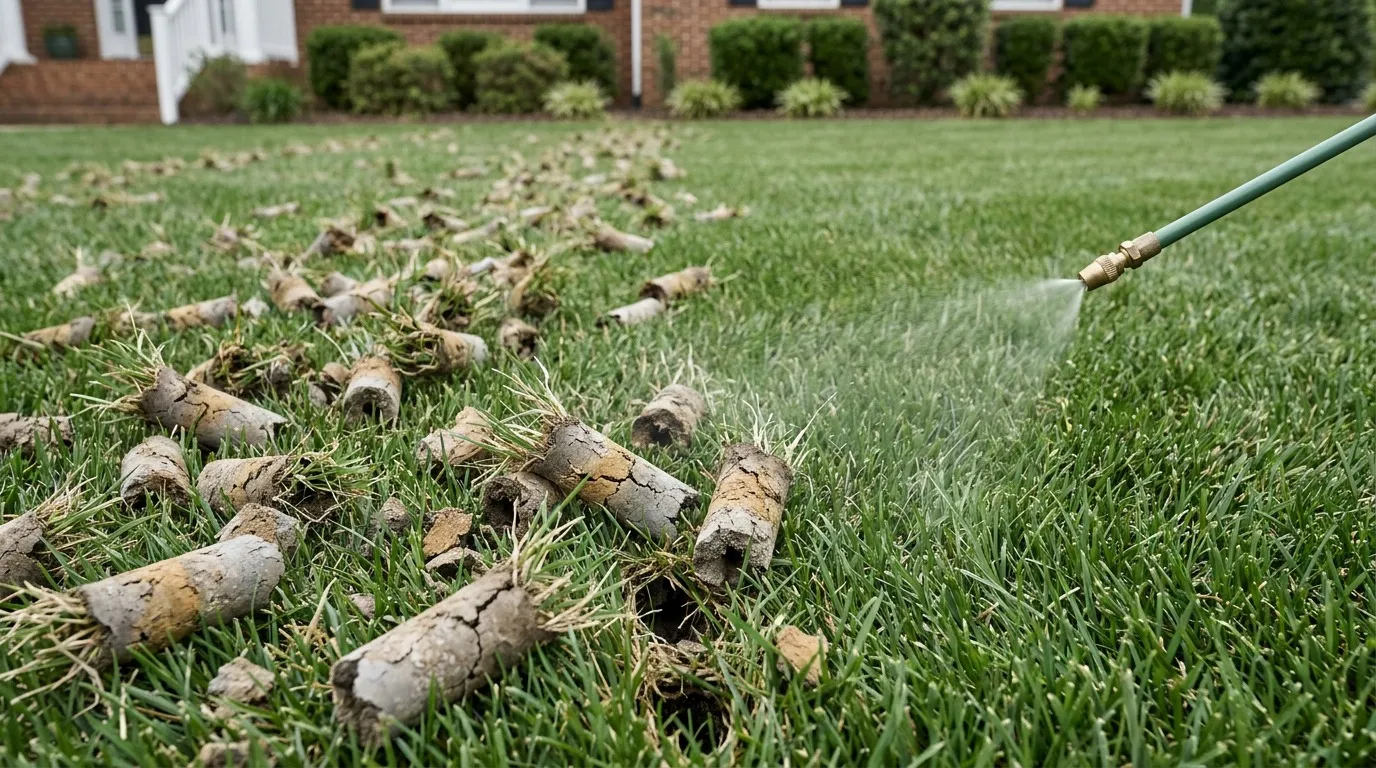
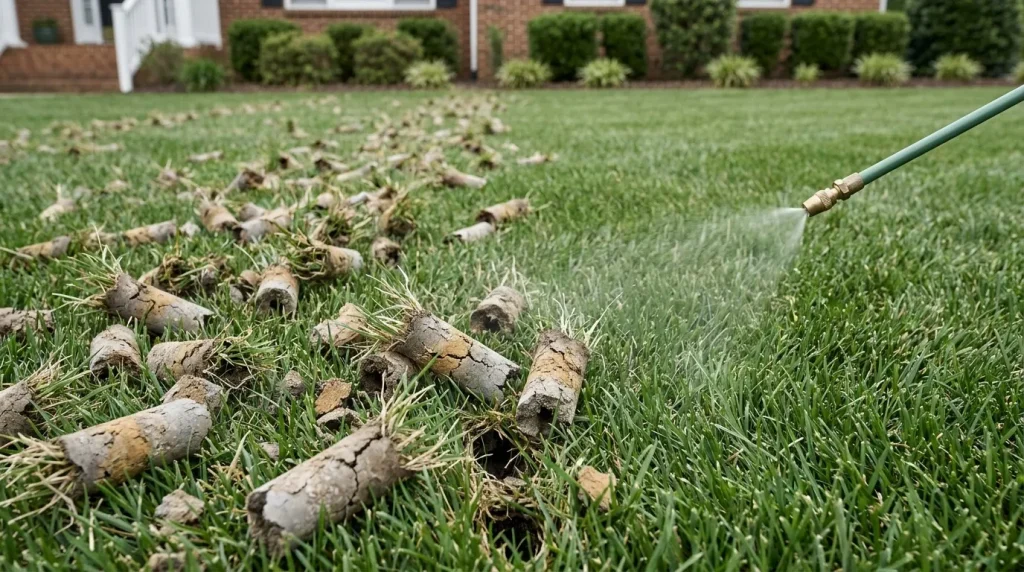
Core aeration relieves compaction in North Carolina clay by physically removing soil plugs, lowering bulk density and opening real channels for water and air. Liquid aeration sprays humic substances and surfactants that support soil biology and water movement, but no peer-reviewed research shows it reduces compaction in heavy clay. Use core aeration for structure and liquid products as support.
Walk into any garden center in September, and you will see two very different answers to the same problem. One is a heavy machine on a trailer that punches holes in your lawn and leaves plugs of soil scattered across the grass. The other is a jug on a shelf that promises the same result from a hose-end sprayer in twenty minutes with no mess.
Both are sold as lawn aeration. They are not the same thing, and on North Carolina clay the difference matters more than it would almost anywhere else.
This article compares the two methods on the one dimension that decides the outcome on heavy clay: does the treatment actually change soil structure where grass roots live? Along the way you will get three things.
- The mechanism behind each method, described in plain language.
- An honest account of what the research does and does not support for both.
- A decision framework you can run on your own lawn this weekend.
Every recommendation is grounded in NC State Cooperative Extension guidance and the soil-first lawn care methodology Nature's Select® has practiced across North Carolina since 1994.
What Core Aeration Actually Does to Compacted Soil
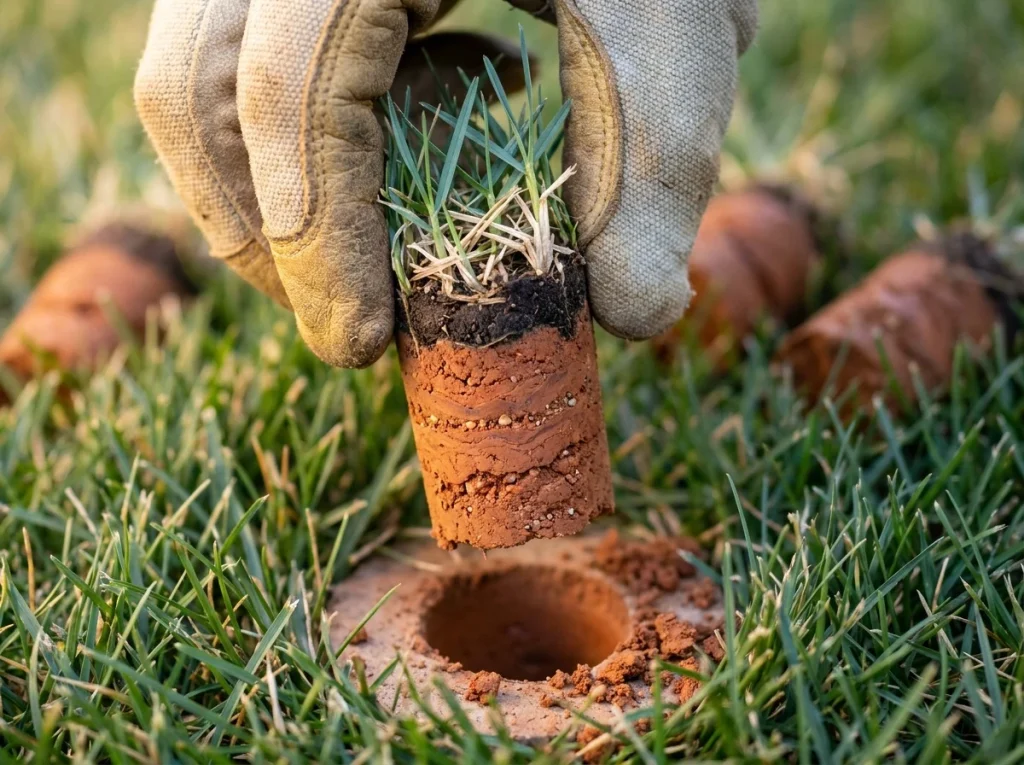
Homeowners run into three kinds of lawn aeration on the shelf and in service brochures: core, spike, and liquid. Only one removes material from the ground, and that detail decides everything else.
Core aeration, sometimes called plug aeration or hollow tine aeration, uses a machine called a lawn aerator to drive hollow tines into the ground and pull cylindrical plugs of soil out of the lawn. The plugs land on the surface. The holes stay open. That sounds simple, and it is, but the physics underneath is what separates core aeration from every other aeration method sold to homeowners.
Compaction Is a Density Problem, Not a Surface Problem
Healthy lawn soil is roughly half solid material and half pore space, with that pore space split between water and air. Roots, earthworms, and soil microbes all live in the pores, not in the solid particles. When soil compacts, the particles pack closer together, the large pores collapse first, and the ratio shifts toward solids. Soil scientists measure this as bulk density, the dry weight of soil per unit of volume.
The threshold matters because it varies by texture. According to USDA Natural Resources Conservation Service reference values, roots begin to struggle in clay soils at a bulk density near 1.4 grams per cubic centimeter, while sandy soils tolerate values closer to 1.8 before roots stall. Clay reaches its root-limiting density sooner than any other texture. That single fact shapes the entire core aeration vs liquid aeration decision in this state.
Removing Material Is the Only Way to Lower Density
To reduce bulk density in a fixed volume of soil, you have to remove solid material from that volume or push it somewhere else. Core aeration removes it. Each hollow tine extracts a plug roughly half an inch to three quarters of an inch across and two to three inches deep. What remains is a void that the surrounding soil relaxes into, dropping density in a zone around each hole.
Spike aeration does the opposite. A solid tine displaces soil sideways and downward, which compresses the walls of the hole and can raise density right where roots need it least. That is why extension programs and turf managers draw a hard line between hollow-tine and solid-tine work. Mechanical aeration only helps when material actually leaves the profile.
What Opens Up After the Plugs Come Out
The open channels do four things a compacted surface cannot.
- Rainfall and irrigation move down through the holes instead of running off toward the storm drain, so a larger share of every inch of water reaches the root zone.
- Oxygen diffuses into the profile, which supports root respiration and the microbial metabolism that converts organic matter into plant-available nutrients.
- Roots grow into the loosened zone around each core, and new root growth is the visible payoff homeowners notice the following spring.
- Fertilizer, seed, and biological inputs reach soil instead of resting on a sealed surface.
Nature's Select® runs two passes on most properties for exactly this reason. A single pass leaves too much untreated surface between holes to change how the lawn behaves through a North Carolina summer.
What Liquid Aeration Actually Is
Liquid aeration deserves a fair hearing, and a fair hearing starts with what is actually in the bottle. The category is not one product. It is a group of soil amendments sold under an aeration label, and the ingredients vary enough that a blanket verdict does the reader a disservice.
The pros and cons of liquid aeration only make sense once you know what liquid aerators contain, so start with the ingredient list rather than the marketing copy on the front of the jug.
The Three Ingredient Families
Most liquid aeration products draw from three families of active ingredients, often blended.
| Ingredient Family | What It Is | What It Is Documented to Do |
|---|---|---|
| Humic and fulvic substances | Carbon compounds extracted from ancient organic deposits such as leonardite | Feed soil microorganisms, chelate nutrients, support the formation of soil aggregates over time |
| Surfactants and wetting agents | Compounds that lower the surface tension of water | Help water spread and penetrate hydrophobic or water-repellent soil surfaces |
| Gypsum in suspension | Calcium sulfate, sometimes sold as a liquid | Displaces sodium and improves structure in sodic soils; supplies calcium and sulfur |
Every one of those effects is real and measurable in the right context. Wetting agents genuinely help water enter a hydrophobic soil. Humic substances genuinely feed the microbial community. Gypsum genuinely restructures sodic clay. None of that is marketing fiction.
Where the Marketing Outruns the Evidence
The problem is the leap from those documented effects to the specific claim that a spray reduces compaction the way a machine does. That claim is where the evidence thins out.
Soil compaction is a physical arrangement of particles held in place by the weight and history that created it. A liquid applied to the surface has to move that arrangement, and it has to do so at depth.
University extension programs that have looked at this report the same two findings.
- Liquid soil conditioners act mostly in the uppermost layer of soil, with limited movement downward.
- No peer-reviewed research has demonstrated a measurable reduction in bulk density in compacted turf from a liquid application alone.
That is not the same as saying the products do nothing. It means the specific job most homeowners buy them for, relieving soil compaction, is the job with the weakest supporting evidence. A product can improve water infiltration at the surface, support microbial activity, and still leave a compacted layer three inches down completely unchanged.
The Honest Version of the Liquid Aeration Pitch
Stripped of the aeration framing, most liquid products are soil conditioners. They are lawn care inputs that support soil health over time. Sold that way, they are a reasonable purchase for many lawns. Sold as a replacement for mechanical aeration on compacted clay, they set the homeowner up for disappointment and a wasted season.
Two claims are worth separating whenever you read a label.
- "Improves water penetration and soil health" is a supportable claim with real science behind it.
- "Relieves soil compaction without the mess of plugs" is the claim that the evidence does not currently back on heavy clay.
Head to Head: Core Aeration vs Liquid Aeration
The short version: core aeration physically removes plugs of soil from the profile, while liquid aeration uses a sprayer to apply chemistry to the surface and waits for soil biology to do the rest. Here is the full comparison on the dimensions that change the outcome. Both methods appear on their own merits, with no thumb on the scale.
| Dimension | Core Aeration | Liquid Aeration |
|---|---|---|
| Mechanism | Mechanical. Hollow tines remove soil plugs and lower bulk density in a zone around each hole | Chemical and biological. Humic substances and surfactants act on soil chemistry and water behavior |
| Effect on compaction | Direct and immediate at tine depth, roughly two to three inches | No peer-reviewed evidence of measurable bulk density reduction in compacted clay |
| Depth of action | Full tine depth, straight through any surface layer | Concentrated in the uppermost soil layer; depth of movement is limited |
| Time to result | Immediate. Infiltration improves with the next rainfall | Two to four weeks at minimum, and the change may not be measurable |
| Appearance during treatment | Soil plugs on the surface for two to three weeks | No visible change to the lawn |
| Application time | One to two hours for a typical residential lawn | Fifteen to thirty minutes with a sprayer |
| Seed-to-soil contact | Creates open holes that hold seed and moisture | Creates no openings for seed |
| Physical effort | High for a homeowner; the machine is heavy to load and steer | Low; a sprayer and a hose |
| Where it fits on clay | The structural intervention | A supporting input between core cycles |
The table makes the pattern clear. Liquid aeration wins on convenience, appearance, and effort. Core aeration wins on the single dimension that defines compaction relief: whether the soil density actually changes.
Why North Carolina Clay Changes the Answer
Most core aeration versus liquid aeration articles are written for a national audience and land on a soft verdict. North Carolina soils don't allow a soft verdict, and understanding why requires a short detour into clay chemistry.
Not All Clay Behaves the Same Way
Clay is a particle size class, not a single mineral. The clays that dominate soils in the western United States are frequently smectites such as montmorillonite, which have expanding layer structures. They swell when wet and shrink when dry, and that shrink-swell cycling naturally cracks and reorganizes the soil each season. Chemical amendments have something to work with on those soils.
North Carolina sits on deeply weathered ultisols dominated by kaolinite, the mineral that gives Cecil-series subsoil its red color. Kaolinite has a fixed, non-expanding layer structure. It does not shrink and swell meaningfully, which means it does not self-crack its way out of compaction the way a smectite clay does. Once North Carolina clay packs down, it stays packed until something physically opens it.
The Sodic Soil Confusion
The gypsum claim carried by some liquid products traces back to real agricultural science, but that science applies to sodic soils, where excess sodium disperses clay particles and destroys structure. Gypsum supplies calcium that displaces the sodium and lets particles flocculate back into aggregates. It works, and it works well, on sodic soils.
North Carolina ultisols are not sodic. They are acidic and low in exchangeable bases. Applying gypsum to a Cecil-series lawn may supply calcium and sulfur if a soil test shows a deficiency, but the structural mechanism that makes gypsum valuable out west simply is not present here. NC State Extension guidance on modifying soil points homeowners toward composted organic matter and physical intervention instead.
New Construction Makes It Worse
Most North Carolina subdivisions were graded with heavy equipment. The topsoil was scraped and hauled off, and the subsoil clay ended up at the surface under a thin layer of whatever was spread before sod or seed went down.
That yard starts life at a bulk density near or above the root-limiting threshold, with almost no organic matter to buffer it. A surface spray is not going to move that. If you want the full particle-level picture, our article on why NC clay changes the answer covers the soil science in depth.
Where Liquid Products Genuinely Earn Their Place
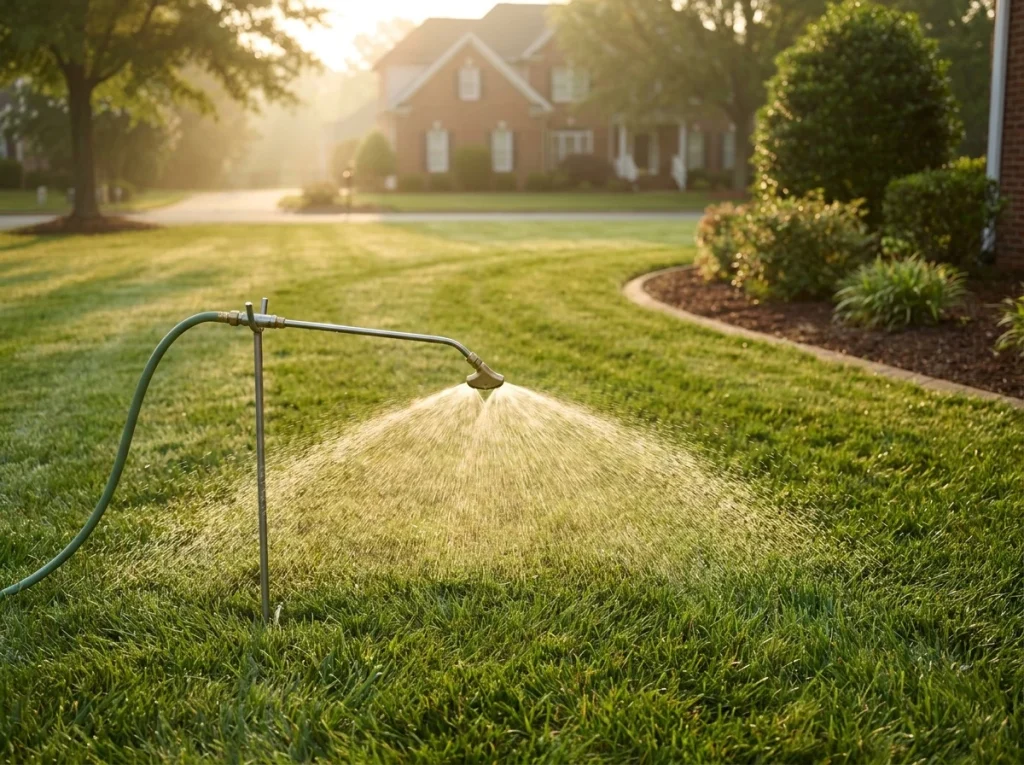
None of this makes liquid soil conditioners useless. They earn their place on North Carolina lawns in three specific situations, and being clear about those situations is more useful to a homeowner than a blanket dismissal.
Hydrophobic Soil and Localized Dry Spot
Some soils become water repellent when they dry out, especially sandy areas and spots with heavy organic residue. Water beads on the surface and runs off even though the soil underneath is bone dry. This is a wetting problem, not a compaction problem, and a surfactant is the correct tool for it. A wetting agent lowers surface tension and lets water enter. No amount of mechanical aeration fixes hydrophobicity by itself.
Feeding the Microbial Layer Between Core Cycles
Humic substances are food and habitat support for the soil microorganisms that build aggregates, cycle nutrients, and hold clay particles apart. Compacted, low-organic-matter clay starves that community. Applications of humic material through the growing season help maintain microbial populations in the months when no machine is scheduled to visit.
This is where liquid inputs fit inside a year-round lawn care program rather than competing with one. The mechanical work opens the structure once a year. The biological work maintains it for the other eleven months.
Lawns With Mild or No Compaction
If your soil is genuinely soft, if a screwdriver slides in six inches without a fight, you do not have a compaction problem and core aeration is not the highest-value spend for that season. A liquid soil conditioner, correct fertility, and consistent mowing height will do more. Before you buy either treatment, run through the six signs before you pick a method and the simple at-home screwdriver test so you know which problem you are solving.
The Overseeding Question Settles the Debate for Fescue Lawns
For cool-season lawns across the Triad and much of the Triangle, there is a second consideration that ends the discussion entirely. Tall fescue is a bunch-type grass. It does not spread by runners. The only way to rebuild canopy density on a fescue lawn is to put new seed into the ground and get it to germinate.
Germination requires seed-to-soil contact and consistent moisture at the seed. Core aeration produces both. Each hole does four things for a seed that an intact surface cannot.
- It holds the seed at soil depth instead of leaving it exposed on top of the canopy.
- It shades the seed, which slows evaporation between waterings.
- It shelters the seed from wind, birds, and foot traffic during the germination window.
- It puts the seed alongside loosened soil where the first roots can actually push down.
Overseeding into aeration holes is the standard practice on fescue for exactly this reason, and the tall fescue maintenance calendar from NC State builds the two operations into a single fall visit.
Liquid aeration leaves the surface intact. Seed broadcast onto an untouched, compacted clay surface sits on top, dries out between waterings, and germinates at a fraction of the rate. If overseeding is part of your fall plan, the method question is already answered.
Warm-season lawns around the Sandhills work differently. Bermuda and zoysia spread by rhizomes and stolons and close their own gaps, so they are aerated but not overseeded. The timing shifts too, which our guide to the three-week aeration window breaks down by grass type.
Cost, Effort, and What You Actually Get
Price comparisons on their own are misleading because the two treatments are not buying the same outcome. Here is the honest accounting.
| Line Item | Liquid Aeration | DIY Core Aeration | Professional Core Aeration |
|---|---|---|---|
| Typical cost | Thirty to forty dollars per bottle, covering three thousand to ten thousand square feet | Roughly one hundred dollars for a day rental, plus seed and fuel | Two hundred fifty to six hundred dollars for a typical North Carolina property, aeration and overseeding |
| Your time | Fifteen to thirty minutes | A full Saturday including pickup and return | None |
| Equipment condition | Consistent, straight from the bottle | Variable; rental tines wear blunt and punch instead of pulling | Maintained commercial tines that pull a clean plug |
| Timing driver | Whenever you buy it | Rental availability | Soil temperature and grass type |
| What changes in the soil | Surface chemistry and water behavior | Bulk density, if the tines are sharp and the timing is right | Bulk density, plus a matched seed blend and biological amendment |
| Result you can verify | Difficult to observe directly | Visible plugs; results depend on execution | Visible plugs, written estimate, written aftercare plan |
The number that usually surprises homeowners is the second row. The lowest-cost option in dollars is often the highest-cost option in results, because a season spent on the wrong intervention is a season the compaction kept getting worse.
How to Decide for Your Own Lawn
Skip the general debate and answer three questions about your specific property. The answers point to a method without much ambiguity.
Question One: Does a Screwdriver Go In?
Wait until the soil has been moist for a day, then push a six-inch screwdriver into the lawn in several spots.
- If it stops in the first three or four inches with hard resistance, you have compaction. Core aeration is the intervention.
- If it goes in most of the way with steady pressure, compaction is mild. A liquid conditioner and good fertility may be enough this season.
- If it slides in easily everywhere, your thin turf has a different cause. Shade, fertility, disease pressure, and grub damage that calls for lawn insect control are the usual suspects.
Question Two: Where Does the Water Go?
Run a sprinkler for twenty minutes and watch. Water that pools on the surface or runs toward the curb is telling you that infiltration has failed. On kaolinite clay, that is a structural failure, and structural failures need mechanical relief. Water that soaks in evenly but beads on isolated dry patches is telling you something different, and that is a wetting agent situation.
Question Three: Are You Overseeding This Fall?
If yes, and the lawn is tall fescue, core aeration is the method. The open holes are what make the seed investment pay off. If the lawn is bermuda or zoysia, you are not overseeding anyway, and the decision comes back to questions one and two.
What a Combined Protocol Looks Like on North Carolina Clay
The most useful framing is not core or liquid. It is core plus liquid, in sequence, with each doing the job it is actually good at.
A realistic annual protocol on a compacted fescue lawn breaks into four steps.
- In the fall, inside the soil-temperature window, run two passes of hollow tine aeration with a well-maintained aerator.
- Overseed with a multi-cultivar turf-type tall fescue blend directly into the open holes, the same day the plugs come out.
- Apply a biological soil amendment so the microbial community has something to work with in the newly opened profile.
- Leave the plugs where they land. They break down over two to three weeks and return organic matter to the surface.
Through the following growing season, maintain the soil biology with humic inputs and correct fertility. Use a wetting agent on any area that shows water repellency, then repeat the mechanical work the next fall. Annual aeration is the baseline on most compacted North Carolina lawns, and structural improvement compounds across two to three cycles rather than arriving in one.
Liquid aeration may still have a place in that plan. It is simply doing a different job than the machine, and a lawn care professional planning aeration services for a clay property will sequence the two rather than choose between them.
That sequencing is exactly what a year-round biological program is built to deliver, alongside lawn weed control and fertilization and lawn disease control timed to the same calendar. If you would rather have it planned and executed for you, professional hollow-tine core aeration from Nature's Select® includes the seed blend, the amendment, and a written aftercare plan in a single visit.
Key Takeaways
- Core aeration lowers bulk density because it physically removes soil plugs; liquid aeration acts on soil chemistry and water behavior without removing material.
- Roots begin to struggle in clay soils near a bulk density of 1.4 grams per cubic centimeter, a threshold clay reaches sooner than sand or silt.
- No peer-reviewed research has shown that a liquid application alone measurably reduces compaction in turf soil, and extension sources report the effect is limited to the uppermost layer.
- North Carolina kaolinite clay does not shrink and swell the way western smectite clays do, so it will not self-crack out of compaction and gypsum's structural mechanism does not apply here.
- Liquid products earn their place on hydrophobic soil, as microbial support between core cycles, and on lawns with little or no compaction.
- Overseeding a tall fescue lawn requires the seed-to-soil contact that only core aeration creates, which settles the method question for most cool-season lawns.
Frequently Asked Questions
Is liquid aeration worth the money on North Carolina clay?
It depends on what you expect from it. As a soil conditioner that supports microbial activity and helps water penetrate a water-repellent surface, it is a reasonable purchase. As a replacement for mechanical compaction relief on heavy kaolinite clay, it is not, because no peer-reviewed research supports that specific claim. Spend on core aeration first, then use liquid inputs to maintain the gains.
Does liquid aeration actually work?
Parts of it do. Surfactants measurably improve water penetration into hydrophobic soil, and humic substances measurably support soil microorganisms. What has not been demonstrated is that any of these ingredients reduce soil bulk density at root depth in compacted turf. So liquid aeration works for soil health and water movement at the surface, but not for the structural compaction most homeowners buy it to fix.
What type of lawn aeration is best for compacted clay soil?
Hollow tine core aeration. It is the only common method that removes material from the profile, which is what lowers bulk density and opens durable channels for water, air, and roots. Spike aeration displaces soil sideways and can compress the hole walls further. Liquid aeration leaves the physical arrangement of particles unchanged. On heavy clay, core aeration is the structural intervention.
Can you apply too much liquid aeration?
Yes. Over-application wastes product and can create excessive surfactant loading at the soil surface, which may hold too much water in the top inch and encourage disease in humid North Carolina conditions. Follow label rates precisely rather than assuming more will accelerate results. If the label rate has not produced a change after two or three applications, the underlying problem is probably physical compaction.
What time of year should you core aerate your lawn in North Carolina?
Timing follows the grass type. Tall fescue lawns are aerated and overseeded in the fall, when four-inch soil temperature falls into the germination range and the seedlings have enough growing weather to root before frost. Bermuda and zoysia are aerated in late spring during active growth, when the plant can close the cores quickly. Soil temperature drives the date, not the calendar month.
How deep should aeration holes be?
Two to three inches is the working range for residential turf, with plugs roughly half an inch to three quarters of an inch in diameter. That depth reaches the zone where compaction limits root growth on most North Carolina lawns. Soil moisture matters as much as machine settings: bone-dry clay produces shallow, cone-shaped plugs, while saturated soil lets the tines smear rather than pull.
Can I put down grass seed right after aerating?
Yes, and on a cool-season lawn that is the point of the timing. Seed broadcast immediately after core aeration falls into the open holes, where it gets seed-to-soil contact, shade, and moisture retention that a compacted surface cannot provide. Seed the same day the plugs come out. Do not remove the plugs first; they break down and feed the soil.
What should you do immediately after aerating a lawn?
Water lightly and frequently to keep the top inch consistently moist, especially if you overseeded, and keep foot traffic off the lawn while seedlings establish. Leave the soil plugs where they landed so they decompose over two to three weeks. Hold off on any pre-emergent herbicide, which would prevent your new seed from germinating along with the weeds.
Should you mow right after aerating?
Mow before you aerate rather than after. Cutting to a slightly lower height beforehand helps the tines reach the soil and improves seed-to-soil contact. After aerating and overseeding, wait until the new seedlings reach roughly three inches before the first mowing, which usually takes two to three weeks on tall fescue. Use a sharp blade and avoid turning sharply on soft ground.
Can you use core aeration and liquid aeration together?
Yes, and that is the most sensible use of both. Core aeration handles the physical structure once a year in the correct seasonal window. Liquid humic and biological inputs then support the microbial community that maintains that structure through the rest of the season. Applying a liquid conditioner shortly after aeration also lets it move down the open channels instead of sitting on the surface.
Conclusion
The core aeration vs liquid aeration debate gets muddy because both products are sold under the same word. Once you separate the mechanism from the marketing, the picture is straightforward. Compaction is a density problem, and lowering density on kaolinite clay requires removing material. Core aeration does that. Liquid products do useful work on soil biology and water behavior, and they are worth having in the program, but they are support rather than substitute on North Carolina soil.
If your screwdriver stops at three inches and your water runs off toward the curb, you have your answer. Request a free on-property assessment or call Nature's Select® at (888) 786-9735 for a same-day written estimate on aeration and overseeding matched to the grass type on your property.
Nathan Reeves is a Senior Content Strategist at Nature's Select®.